Bush Muhly
Muhlenbergia porteri
Last reviewed: September 2026
Toxicity unknown
Bush Muhly (Muhlenbergia porteri) is not listed by the ASPCA Animal Poison Control Center (opens in new tab) or the other sources we check, so we have no verdict for it either way. Absence from those lists is not a clearance. If your pet shows symptoms after eating any plant, call the ASPCA at (888) 426-4435.
The USDA PLANTS Database (opens in new tab) does not flag Bush Muhly as toxic to livestock.
Light
full sun
Water
low
Size
12"–24" H × 12"–24" W
Bloom
Jul, Aug, Sep, Oct
Native to
AZ, CA, CO, NM and 4 more states
Before you buy
Your city may pay you to plant this
Cities and water utilities offer rebates for replacing lawn with native and water-wise plants. We track 459 programs across 44 states, each with a link to the provider and the date we last checked it.
Find rebates in your areaPicture natives in your own yard
Upload a photo of your yard and Patch Vision shows a rendering of it planted with natives for your region, like Bush Muhly.


Browse plants for this ecoregion
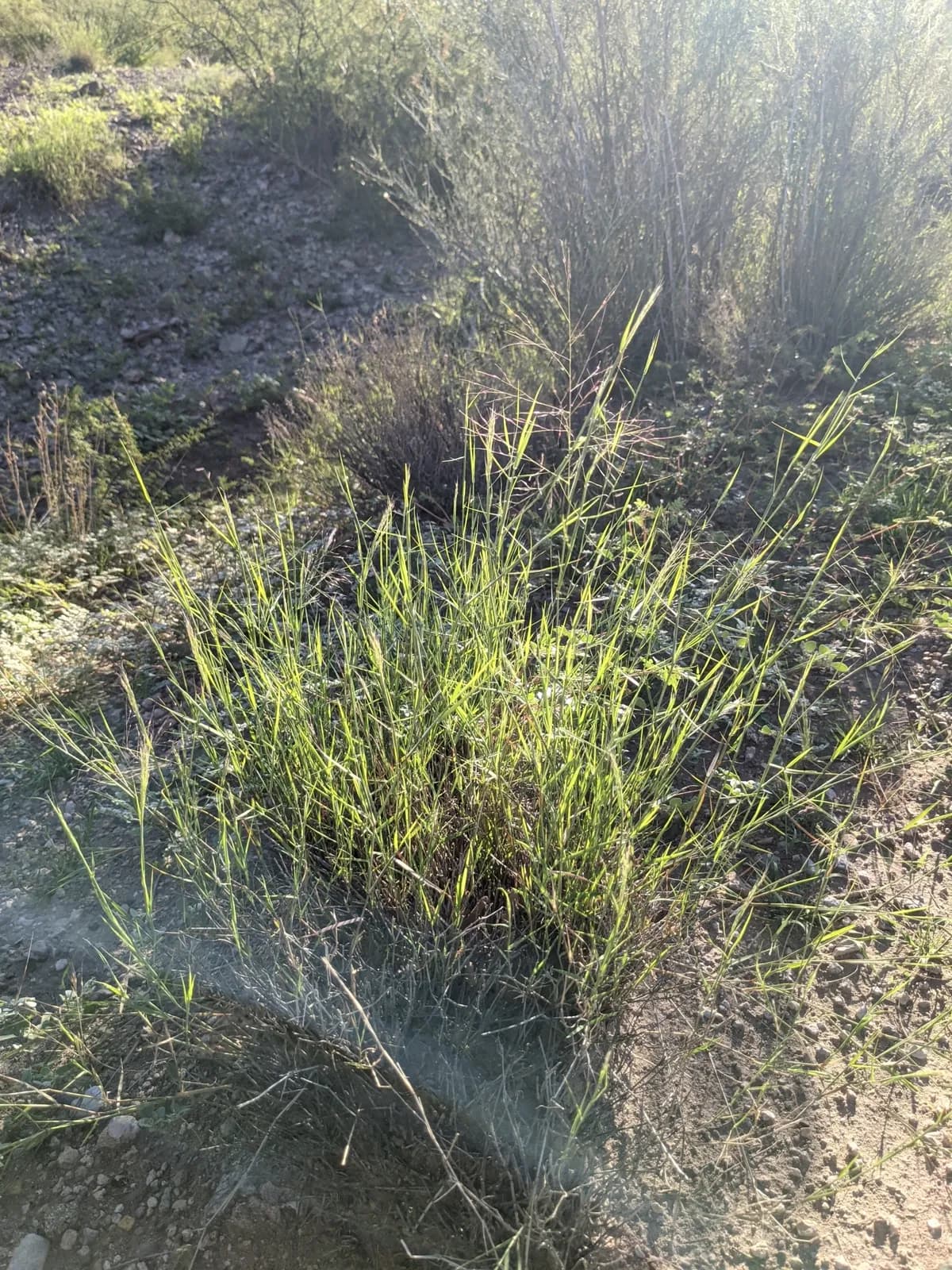
Bush muhly is a compact native bunch grass that forms neat, rounded clumps with fine-textured foliage. It produces delicate, airy flower spikes from summer through fall that add graceful movement to the landscape.
How to care for Bush Muhly, by region
How to care for Bush Muhly where it is actually grown: year-round basics plus what to do each season, region by region, with the sources for each.
Care guidance last updated: July 2026
Sonoran Basin and Range (includes Phoenix, AZ)
Year-round
Bush Muhly is an airy, see-through bunchgrass that thrives on Phoenix neglect. Give it full sun, fast-draining decomposed-granite soil, and water it deep but rarely once it is settled in.
- Plant in decomposed-granite or gravelly native soil in full sun, and skip fertilizer entirely because desert natives like this one weaken in rich soil.
- Water deep and infrequent, soaking the whole root zone to about 12 inches and then letting it dry out, rather than short daily sprinkles.
- Top the bed with decomposed-granite or gravel mulch, not wood bark, which looks out of place in a desert yard and holds moisture the wrong way here.
- The number one local killer is overwatering, so when in doubt, wait a few more days before you water an established plant.
A clean decomposed-granite bed with this grass spaced as a soft, tidy accent reads as intentional desert xeriscape, which is the expected HOA-friendly Phoenix front-yard look and helps you avoid a violation letter.
Fall
Fall is the prime season in Phoenix. The heat breaks, the plant is still fresh from monsoon growth, and this is the best time to plant a new Bush Muhly and to tidy an existing one.
- Plant new Bush Muhly in October or November so the roots settle in through the mild winter well before next summer's heat, and never plant it in the May-to-July heat.
- Water a brand-new fall planting deeply about once a week for the first few weeks, then stretch the gap as it establishes.
- After the reddish bloom fades, comb out or lightly trim the dead inner stems to keep the clump looking neat.
- Top off the decomposed-granite mulch around new plantings so the bed looks finished going into winter.
Cutting back the spent bloom and tidying the clump in fall keeps the grass reading as a maintained, intentional planting rather than a weedy tumble, which is what keeps a front yard on the right side of HOA-friendly expectations.
Winter
Winter in the Phoenix core is a mild cool season, not a hard dormancy. Bush Muhly needs very little from you now beyond the occasional deep drink.
- Water only during long dry winter stretches, giving one deep soak every 3 to 4 weeks at most, since the gentle Dec-to-Mar rains often cover the plant's needs.
- Leave the clump standing over winter, since it is frost-hardy in the Phoenix core and the dry stems give a little cover for the crown.
- Hold off on any fertilizer or rich amendments, which this grass does not want in any season.
- Save the real cutback and tidy work for fall rather than mid-winter, and just knock out any obvious dead stems if the plant looks messy.
Spring
Spring is a mild warming stretch for Bush Muhly, not its big show. Ease off the winter watering as the days heat up so the plant hardens off before summer.
- Taper the last of the winter waterings through March into May, giving one deep soak every 2 to 3 weeks only if the season is bone dry.
- Early spring is a weaker secondary planting window, so if you missed fall you can still set a new plant out in warm-but-not-hot March weather.
- Refresh any thin spots in the decomposed-granite mulch now while the weather is comfortable to work outside.
- Do not start heavy summer-style watering yet, since the warm-season growth and reddish bloom come later with the monsoon.
Summer
Summer is the stress season, but for Bush Muhly the monsoon is also when it wakes up and puts on its reddish haze of bloom from July into October. Ride the rains and do not drown it.
- In the dry, brutal June foresummer, give a young plant in its first summer or two an occasional deep soak, but leave a well-established clump alone.
- Once the monsoon rains start in July, let the storms do the watering and only add a deep soak during long dry gaps between downpours.
- Watch for the reddish flowering haze from July through October after the rains, which is the plant working normally, not a sign of stress.
- The biggest summer mistake here is watering on top of monsoon rain, which rots roots, so always check that the soil has dried before you add any.
Sources: Arizona-Sonora Desert Museum, Bush Muhly plant care sheet, USDA PLANTS Database, Muhlenbergia porteri profile (MUPO2), USDA NRCS, Bush Muhly Muhlenbergia porteri plant guide, University of Arizona Campus Arboretum, Muhlenbergia porteri Bush Muhly
In an HOA neighborhood
Bush Muhly is an HOA-friendly choice. Maintenance level: low. Tidiness: 4 out of 5.
Works well in: front yard, foundation, street edge, mid zone.
- Goes dormant in winter with brown foliage
Wildlife value
This grass provides nesting material and cover for small birds and ground-dwelling wildlife. The seeds feed quail, doves, and other desert birds.
Common questions
- How much sun does Bush Muhly need?
- Bush Muhly grows best in full sun conditions.
- When does Bush Muhly bloom?
- Bush Muhly blooms in July, August, September, and October.
- Where is Bush Muhly native?
- Bush Muhly (Muhlenbergia porteri) is native to AZ, CA, CO, NM and 4 more states, per vouchered herbarium specimen records and regional native plant society lists.
- Is Bush Muhly toxic to livestock?
- The USDA PLANTS Database does not flag Bush Muhly as toxic to livestock.
- Is Bush Muhly HOA-friendly?
- Bush Muhly is generally an HOA-friendly choice in the right placement, with low maintenance.
Native range data from vouchered herbarium specimen records and regional native plant society lists. Pollinator and host plant associations compiled from GBIF, iNaturalist, and published ecological literature.
If something looks wrong
Common plant problems, and what to check first
These come up on almost any plant. Each guide lists the likely causes in the order they are worth ruling out, with one thing to check before you act on any of them, and links to the source it came from.
- It is dying right after planting
- Leaves turning yellow
- Wilting even though I watered it
- Brown crispy leaf tips
- Bugs on the plant
Ready to grow Bush Muhly? Add it to your garden in Pollinator Patch to track it and get season-by-season care guidance.