California Fuchsia
Epilobium canum
Last reviewed: September 2026
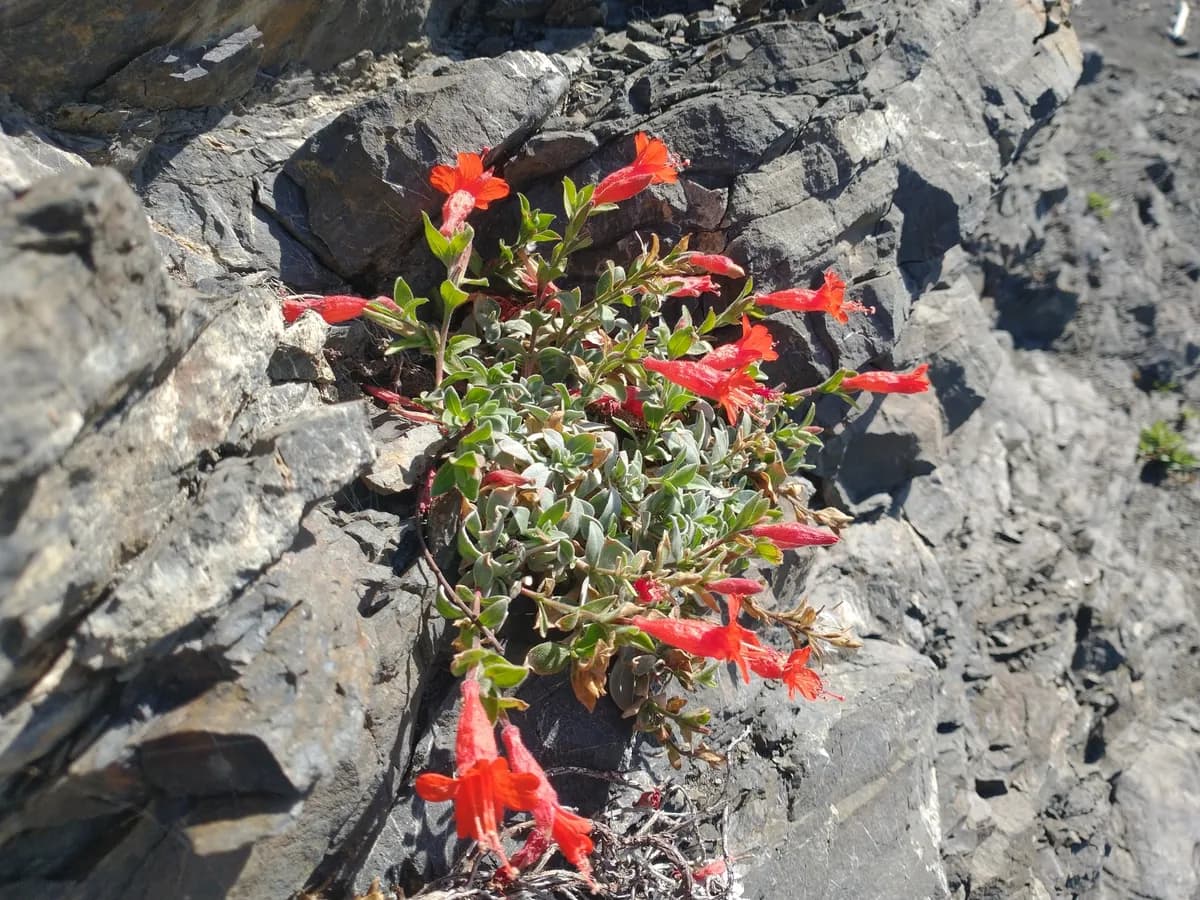
California Fuchsia is a low water, full sun shrub that produces tubular red-orange flowers from midsummer into fall, from around June through October. It suits dry slopes, rock gardens, and other low irrigation landscapes.
California Fuchsia (Epilobium canum) is not flagged as toxic to dogs or cats by Plants For A Future (PFAF) (opens in new tab) (last reviewed 2026-05-21). This verdict does not come from the ASPCA. If your pet shows symptoms after eating any plant, call the ASPCA at (888) 426-4435.
Light
full sun
Water
low
Size
12"–48" H × 12"–36" W
Bloom
Jun, Jul, Aug, Sep, Oct
Native to
AZ, CA, ID, NM and 4 more states
Pollinators
bees, hummingbirds, butterflies
Before you buy
Your city may pay you to plant this
Cities and water utilities offer rebates for replacing lawn with native and water-wise plants. We track 459 programs across 44 states, each with a link to the provider and the date we last checked it.
Find rebates in your areaPicture natives in your own yard
Upload a photo of your yard and Patch Vision shows a rendering of it planted with natives for your region, like California Fuchsia.


Browse plants for this ecoregion
Epilobium canum, commonly called fuchsia, is a drought-tolerant native shrub prized for its vibrant red-orange tubular flowers. It blooms profusely from summer through fall, creating a striking display when many other plants have finished flowering.
Growing California Fuchsia
Grow California Fuchsia in full sun and low water. Mature plants reach 12 to 48 inches tall and spread 12 to 36 inches wide. Expect moderate maintenance to keep it looking intentional in a front yard.
How to care for California Fuchsia, by region
How to care for California Fuchsia where it is actually grown: year-round basics plus what to do each season, region by region, with the sources for each.
Care guidance last updated: August 2026
Central California Foothills and Coastal Mountains (includes San Francisco, CA)
Year-round
California fuchsia is a low-fuss California native shrub grown for a late-season show of tubular scarlet flowers that opens right as most other bloomers are finishing for the year.
- Give it full sun for the fullest bloom, with a bit of afternoon shade in hot inland spots. It tolerates both clay and sandy soils and is not particular about the ground it is planted in.
- Water deeply but infrequently once established. In cooler, foggier gardens it often needs little to no extra summer water, while hotter yards do better with an occasional monthly soak.
- It spreads by underground rhizomes and can self seed, so give it room to wander or plan to pull strays each year from the edge of the bed.
- Cut the whole plant back close to the ground once flowering ends for the year, usually in late fall to early winter. It handles hard pruning well and comes back full and lush in spring.
- The Xerces Society lists California fuchsia as having special value to native bees, and it is one of the most reliable California native plants for feeding migrating hummingbirds in late summer and fall.
Fall
Fall is peak bloom, when California fuchsia's scarlet flowers are the main event and hummingbirds are working the beds hardest.
- Leave the flowers in place through fall. This is the plant's main bloom season and the reason most people grow it.
- If it has spread or self seeded more than wanted, this is a good time to note which areas to thin once bloom finishes, rather than cutting into an active bloom.
- Hummingbirds rely on this late nectar as they move through on migration, so hold off on cutback until flowering is clearly done.
Winter
Once flowering finishes for the year, winter is cutback time. This is the single most important yearly task for keeping the plant healthy and tidy.
- Cut the whole plant back close to the ground once the last flowers fade, usually late fall to early winter. It tolerates hard pruning well and returns full and lush in spring.
- Skip winter fertilizer and extra water. In cool, foggy climates the plant is largely dormant now, and rain is usually enough.
- If it has spread further than wanted, winter cutback is also the easiest time to dig out and thin unwanted rhizome growth before spring regrowth hides it.
A hard winter cutback keeps this from reading as a bare, twiggy shrub through the dormant season, so the front bed still looks tended rather than neglected.
Spring
Spring is recovery and light shaping time. New growth pushes out from the base after a winter cutback, and the plant is filling back in ahead of its late-summer bloom.
- If it was not cut back in late fall or winter, do that now before new growth gets going. Cutting nearly to the ground rejuvenates the plant for the season ahead.
- Pull or thin any rhizome suckers that have wandered past where you want them. Spring is the easiest time to spot them before surrounding plants fill in.
- Hold off on fertilizer. California fuchsia is adapted to lean soils, and rich feeding tends to produce weak, floppy growth.
A tidy spring cutback keeps the bed looking intentional along a front walkway or curb strip while the plant fills back in ahead of its fall bloom.
Summer
Plants are filling out through summer and setting up for their big late-summer to fall bloom. This is a season to hold back on water rather than add more.
- Water only occasionally, and let the top few inches of soil dry between waterings. Too much summer water in a cool, foggy garden can lead to weak, leggy growth.
- Watch for the first scarlet flowers to open in late summer, often before neighboring plants are finished for the year.
- Deadheading is not needed. Let the plant bloom on its own schedule into fall.
Sources: Calscape - California Fuchsia (Epilobium canum), Lady Bird Johnson Wildflower Center - Epilobium canum, UC Master Gardeners San Luis Obispo - California Fuchsia, East Bay CNPS - Plant California Fuchsias Now for Hummers, Bees, and Fall Color (community tip), UC Master Gardeners Placer County - How to Prune California Native Plants
Central California Valley (includes Sacramento, CA)
Year-round
California Fuchsia is a low-water perennial subshrub that saves its scarlet-orange show for late summer and fall, right when the spring wildflowers are long gone. It is one of the best dry-season hummingbird plants for a Sacramento front yard, and it is one of the few Valley natives that stays awake and blooming through the heat.
- Give it full sun and the sharpest drainage you can, since Central Valley clay holds water and this plant hates wet feet. Plant it on a slight mound so water drains away from the crown.
- It takes occasional deep summer water, unlike most summer-dormant natives. A deep soak every couple of weeks in July and August keeps the bloom going without rotting the roots (Calscape).
- Feeds hummingbirds, native bees, and butterflies from June through October, and it is a host plant, so leave it to do its work instead of spraying.
- Not listed on the ASPCA toxic plant database, so it is a low-worry choice around dogs, cats, and kids in a front yard.
Fall
Fall is the peak bloom finish for California Fuchsia and the best planting window if you want to add one. The scarlet-orange flowers carry hummingbirds right up to the first rains.
- Fall, roughly October and November, is the prime planting time. Set new plants in now so the winter rains establish their roots before next summer's drought (Calscape).
- Keep giving an established plant an occasional deep soak in early fall until the rains arrive, since the bloom is still going strong.
- Plant on a slight mound in the heavy Valley clay so the coming winter rain drains away from the crown instead of pooling.
- Leave the flowers up for the hummingbirds and let the plant wind down naturally as the weather cools.
A fall-planted native bed can look sparse to an HOA, so keep a clean, defined bed edge and even spacing when you plant, so the new bed reads as intentional rather than unfinished.
Winter
Winter is the rest-and-reset season for California Fuchsia. The bloom is finished and the plant looks spent, which is your cue to cut it back hard so it comes back denser next year.
- Once the plant looks tired in mid-winter and has been in the ground at least a year, cut it back hard, down to an inch or two above the ground, to force a fuller plant next season (Calscape).
- Let the winter rain and Tule fog handle moisture. An established plant needs little or no supplemental water from December through February.
- Do not overwater in winter. The number-one killer here is soggy clay around the crown, so make sure the mound and bed still drain.
- Pull any rhizome shoots that have spread outside the bed while you can see the bare ground clearly.
Cut the spent stems back in winter so the dormant plant reads as a tidy, intentional bed rather than dead brush, which is what keeps a summer-dormant native front yard from drawing a violation letter.
Spring
Spring is the wake-up and grow phase for California Fuchsia, not its bloom time. The plant pushes fresh green shoots off the crown while the soil is still moist from winter rain.
- Let winter and early-spring rain do the watering. In a normal Sacramento spring you should not need to irrigate an established plant at all through March and April.
- This is the season to thin or pull any rhizome shoots that have wandered where you do not want them, since the plant spreads slowly underground (Calscape).
- If you are adding one, fall is the better planting window, but a spring-planted one from a container will need deep water every week or two through its first summer to root in.
- As May warms and the soil dries, taper off any hand watering so the plant hardens off before the heat.
To keep the bed reading as intentional and avoid a violation letter, tidy the bed edge and pull stray rhizome shoots creeping into the lawn or walk in spring, since a spreader that jumps its edge is what reads as neglected.
Summer
Summer is prime time for California Fuchsia. While most Valley natives go dormant and want no water, this one stays active and starts its scarlet-orange bloom in the worst of the heat.
- This is one of the few Valley natives that welcomes summer water. Give an established plant a deep soak every couple of weeks in the Sacramento heat, then let the top of the soil dry before the next one (Calscape).
- Water at the base and deep, never a daily shallow sprinkle, so the crown stays dry and drainage in the heavy clay does not turn into rot.
- Expect scarlet-orange flowers to open from June and build through the summer, feeding hummingbirds when little else is blooming.
- Skip fertilizer and heavy pruning now. Just water, and let it flower.
Sources: Calscape, California Native Plant Society, Epilobium canum California Fuchsia plant page, ASPCA Animal Poison Control, toxic and non-toxic plant database, UC Master Gardeners, California Fuchsia plant profile, Las Pilitas Nursery, California Fuchsia Zauschneria horticultural notes, East Bay Chapter CNPS, Plant California Fuchsias Now for Hummers, Bees, and Fall Color
Mojave Basin and Range (includes Victorville, CA)
Year-round
California fuchsia settles into the Victorville area well once it has a full season to build roots. Give it a deep soak once or twice a week through its first summer so the roots can push down past the dry surface layer of desert soil. After that first year, this plant wants very little help. Established plants in the area usually only need a deep watering about once a month, and even less if planted near a lawn or another watered bed. It grows fine in the region's rocky, alkaline native soil and does not need rich dirt or added fertilizer. A two to three inch layer of gravel or bark mulch keeps roots cooler through the long, hot Mojave summer and cuts down on how often it needs water. The most common mistake in this climate is watering too often once the plant is established, which invites root rot and powdery mildew from wet soil more than from humid air. The second most common mistake is skipping the yearly cutback, which leaves a woody, straggly plant that blooms less each year.
- Water deeply once or twice a week the first summer to grow strong roots.
- After year one, water about once a month deeply, less if it sits near an irrigated bed.
- Plant in full sun in the area's native rocky or alkaline soil, no soil amending needed.
- Spread 2 to 3 inches of gravel or bark mulch to keep roots cool and hold moisture.
- Cut the whole plant back hard once a year or it turns woody and stops blooming well.
Fall
Fall is when California fuchsia keeps blooming into October in mild years before it starts to fade as nights cool. This is the recommended time for the plant's one big yearly cutback: once flowering is mostly done, usually October or November in the high desert, cut the whole plant back hard to just a few inches above the ground. That single cutback keeps it from turning into a woody, sprawling shrub and sets up a full flush of new growth in spring. It also removes the spent flower stalks, tidying the plant for its dormant winter look, which matters for a front-yard bed. Fall is also a good window to divide an established clump if it has outgrown its space, since this species spreads by rhizomes and USDA guidance notes fall and winter division works well for it.
- Once fall bloom fades, roughly October to November here, cut the whole plant back to a few inches tall.
- This single yearly cutback stops the plant from turning woody and keeps next year's bloom full.
- Removing spent flower stalks also tidies the plant for its dormant winter look.
- Divide an overgrown clump now into rooted sections if you want to spread it to a new spot.
- Do the cutback before several hard freezes hit, it's easier on the plant than a late-winter cutback.
The fall cutback is the best single thing to keep this plant from looking straggly in a front-yard bed. A clean, low cutback reads as tidy and intentional rather than neglected.
Winter
In Victorville's winter, California fuchsia goes fully dormant after the fall cutback, sitting low and mostly leafless through the cold season. High desert winter nights regularly drop into the 20s and low 30s, but established plants handle that fine, USDA lists this species across cold, high-elevation, arid parts of the West. Watering is generally not needed in winter unless the season turns unusually dry and mild with no rain or snow at all, in which case one deep soak a month is plenty. Do not be alarmed by the bare, twiggy look. This is exactly what a properly cut-back plant should look like until spring growth returns. If the fall cutback was missed, winter, before new growth starts, is still an acceptable time to do it.
- Expect the plant to sit dormant and mostly bare through winter after the fall cutback.
- Skip watering most winters, add one deep soak only during an unusually dry, mild stretch.
- Established plants handle high desert winter cold fine without extra protection.
- If the fall cutback was missed, do it now before new spring growth starts.
- A bare, twiggy winter look is normal and not a sign of a dead plant.
A dormant, cut-back California fuchsia reads as tidy and low rather than dead through winter, which works fine for an HOA-conscious front yard. No need to remove or replace it.
Spring
New growth pushes out from the woody base after the winter cutback. In Victorville's high desert climate this can start as early as March once nights warm above freezing, though a late frost into April is still possible. Spring is a good time to plant a new California fuchsia if starting fresh, since it gives the plant a full season to root before the next winter. Water new growth as it starts, since spring wind and low humidity in the high desert dry out topsoil fast. Watch soft new growth for slug or snail nibbling, and check for powdery mildew on cool spring mornings. USDA guidance ties both of those problems to soil staying too wet, so cut back watering rather than adding more if either shows up.
- Expect new stems from the base once nights stay above freezing, typically March.
- Plant a new California fuchsia now so it has a full season to root before winter.
- Water a young or newly planted specimen every few days until it's pushing steady new growth.
- Check soil moisture by hand rather than by calendar, spring wind dries topsoil fast.
- Slug damage or powdery mildew on new growth usually means too much water, not too little.
After the winter cutback the plant looks bare and twiggy for a few weeks before spring growth fills in. That is normal, not a dead plant, if a neighbor or HOA walk-through asks.
Summer
Summer is bloom season and the reason most people plant this species, flowering right through the hottest, driest stretch of the high desert year when little else is in bloom. In Victorville's summer heat, which regularly tops 100 degrees, give an established plant a deep soak about once a month, more often if leaves look wilted or crispy at the tips. Plantings under two years old still need more frequent water, closer to every one to two weeks during peak heat. Skip fertilizer, the USDA plant guide notes this species does well in nutrient-poor soil and does not need feeding. Hummingbirds depend on it heavily in summer, since USDA describes it as an important late-season nectar source when other flowers are scarce in the heat. Water at the soil line in the morning rather than overhead in the evening to avoid fungal leaf spots.
- Deep-water about once a month once established, the plant is built for exactly this dry stretch.
- Water plants under 2 years old more often, roughly every 1 to 2 weeks in peak heat.
- Crispy leaf tips or heavy leaf drop mean it's time to water, not a sign to give up on it.
- Skip fertilizer, it grows fine in nutrient-poor native soil.
- Water at the soil line in the morning rather than overhead in the evening.
Sources: USDA NRCS Plant Guide: California Fuchsia (Epilobium canum), Calscape: California Fuchsia (Epilobium canum), Lady Bird Johnson Wildflower Center: Epilobium canum (Hummingbird trumpet)
Sonoran Basin and Range (includes Phoenix, AZ)
Year-round
California Fuchsia is a low, spreading subshrub that throws red-orange trumpet flowers hummingbirds love, and it is built for tough Phoenix desert conditions. Give it full sun, fast-draining soil, and very little water once it is settled in.
- Plant in full sun in decomposed-granite or gravelly ground that drains fast, and skip any wood bark mulch since it holds moisture wrong for this plant.
- Water deep and infrequent once established, soaking the whole root zone and then letting the top few inches dry out before the next soak.
- Do not fertilize, since this desert native resents rich soil and grows leggy and weak when fed.
- Remember that overwatering is the number one way people kill it in Phoenix, so err dry rather than wet.
Fall
Fall is the prime season for this plant in Phoenix, with cooler air, its fall peak bloom, and the best planting window of the year. It is the time to get new plants in the ground and to tidy up finished growth.
- Plant in October or November so the roots establish through the mild winter before next summer's heat, which is the ideal Phoenix window.
- Enjoy the fall bloom peak, then cut the plant back by about a third to a half after the red-orange trumpets fade to keep it dense and neat.
- Water any new fall plantings deep but spaced out, soaking well then letting the top dry before the next round.
- Set new plants in decomposed-granite ground and keep them back from walkways so the spreading stems do not crowd a path.
Cutting back after the fall bloom keeps the plant reading as intentional and cared for, which is the calm xeriscape look Phoenix HOAs expect and helps you avoid a violation letter over a straggly front-yard plant.
Winter
Phoenix winters are mild and this plant treats them as a cool rest, not a hard dormancy. It is frost-hardy in the Phoenix core and needs almost no attention or water now.
- Water very little through December to February, since cool soil dries slowly and the plant is barely growing.
- Leave it uncovered in the Phoenix core where it is frost-hardy, and only lay a light cloth cover over it on the rare hard freeze night.
- Keep the decomposed-granite bed clear of fallen leaves and debris so the crown stays dry and the bed looks kept.
- Do not feed or heavily prune now, saving any shaping for after the fall bloom instead.
A clean decomposed-granite bed kept free of debris over winter reads as an intentional, well-kept front yard, which is the HOA-friendly desert look and keeps the plant from looking neglected during its quiet season.
Spring
Spring is warm-up time in Phoenix, not the main show for this plant, which saves its big bloom for later in the year. Use these mild weeks to taper off winter water and let it wake up on its own.
- Taper the last winter waterings as March and April warm up, letting the plant lean on its roots instead of frequent drinks.
- Do a light early-spring window planting only if you missed fall, but get it in before real heat arrives, never in May.
- Hold off on any fertilizer and let the plant push new growth naturally on lean desert soil.
- Top up the decomposed-granite mulch layer now so the root zone stays cool and tidy heading into summer.
Summer
Summer is the stress season in Phoenix, not the growing peak, so the job is to help this plant survive the heat rather than push it. The dry June foresummer is the hardest stretch, and the July to September monsoon changes the watering picture fast.
- In the dry June foresummer, give even this native an occasional deep soak in its first one to two summers to carry it through 110 degree heat.
- Once the monsoon rains arrive in July, cut back or pause your own watering so the plant is not sitting in soggy soil, since overwatering now is the top killer.
- Let the warm monsoon moisture and cooling nights feed its summer growth naturally instead of adding fertilizer.
- Never plant a new one from May through July, since fresh roots cannot handle the heat and it is the most common local timing mistake.
Sources: Arizona-Sonora Desert Museum, Zauschneria (Epilobium) plant care, Lady Bird Johnson Wildflower Center, Epilobium canum native range and pollinator value, Arizona Native Plant Society, winter care for low-desert native perennials, University of Arizona Cooperative Extension, low-desert irrigation and desert plant care, University of Arizona Cooperative Extension, fall planting window for desert natives, Desert Botanical Garden, summer monsoon watering guidance for desert plants
Southern California/Northern Baja Coast (includes Los Angeles, CA)
Year-round
California Fuchsia is a low native subshrub for full sun and low water that becomes a top late-season hummingbird plant, blooming through the hot dry months when little else does.
- Give it full sun and lean, well-drained soil, since it hates soggy roots.
- Plan on one hard cutback a year to keep it dense and tidy, covered in the winter row.
- Let it spread by underground runners where you want groundcover, or edge it back to keep it contained.
- Skip fertilizer and rich compost, because it flowers best in poor soil.
- It is native to coastal Southern California and a strong nectar source for hummingbirds and native bees.
Fall
Fall brings the first rains and the best planting window, while the plant finishes its long bloom into October.
- If you want more of it, plant now so roots settle in over the cool wet winter.
- Ease off any summer watering once the rains start and let nature take over.
- Let the late flowers feed hummingbirds fueling up before they move on.
- Leave the top growth standing for now, the big cutback comes in winter.
- Clear fallen leaves off the crown so it does not stay damp and rot.
Winter
Winter is cutback time, shear the whole plant down to a few inches to force a dense, tidy flush and stop it from looking scraggly.
- Cut all the stems down to two or three inches in late winter, this is the key yearly task.
- Do it once the plant has finished blooming and looks tired, usually December into February.
- Rake out the old stems and thin any runners that wandered too far.
- Coastal winters here rarely freeze, so no frost protection is needed.
- Fresh growth flushes from the base as the soil warms, giving a fuller shape.
A hard late-winter cutback reads as deliberate seasonal care and keeps this spreading plant from looking scraggly or overgrown, which is the look that usually draws a violation letter, so it stays HOA-friendly at the curb.
Spring
Spring is easy here, ride the last of the winter rains and let the plant push fresh growth before the summer heat.
- Pull weeds around the base while the soil is still soft from winter rain.
- Only water if spring turns dry and the plant actually wilts, otherwise leave it alone.
- Pinch back any long floppy shoots once to nudge it toward a bushier shape.
- Refresh a thin gravel or leaf mulch, keeping it off the crown.
- Watch for the first rhizome runners and trim any headed where you do not want them.
Summer
Summer is this plant's moment, it blooms in the heat, and unlike most natives it will take an occasional deep drink.
- Enjoy peak bloom from June on, this is when hummingbirds work it hardest.
- Give an established plant a deep soak about once a month if it looks stressed, then let it dry out.
- Water a first-year plant a bit more to get roots down, but never keep the crown wet.
- Deadheading is optional, it keeps blooming whether you snip spent flowers or not.
- Hold off on any hard pruning now, save the real cutback for late winter.
Sources: Calscape (California Native Plant Society) - Epilobium canum, USDA PLANTS - Epilobium canum plant guide (EPCA3)
In an HOA neighborhood
California Fuchsia is an HOA-friendly choice in the right placement. Maintenance level: moderate. Tidiness: 3 out of 5.
Works well in: foundation, mid zone.
- Can look scraggly if not pruned annually
- May spread and appear unkempt without maintenance
- Winter appearance can be somewhat dormant-looking
Wildlife value
Host plant for Mormon Metalmark.
Fuchsia is an excellent hummingbird attractor, serving as a critical late-season nectar source. It also supports native bees and butterflies.
Common questions
- When does California Fuchsia bloom?
- California Fuchsia typically flowers from June through October, with the display often peaking in late summer and early fall.
- Does California Fuchsia attract hummingbirds?
- Yes. The tubular red-orange flowers are a strong nectar source for hummingbirds, and bees and butterflies visit them as well.
- How much water does California Fuchsia need?
- This shrub is drought tolerant and prefers low water once established, though it can handle occasional moderate watering in garden settings.
- What kind of light does California Fuchsia need?
- It grows best in full sun and can also tolerate part sun, especially in hotter inland climates where some afternoon shade helps.
- Is California Fuchsia evergreen?
- It is semi-evergreen to semi-woody, often keeping some foliage in mild climates but dying back partially where winters are cold.
- Is California Fuchsia toxic to dogs?
- California Fuchsia is not flagged as toxic to dogs by Plants For A Future (PFAF). This verdict does not come from the ASPCA.
- Is California Fuchsia toxic to cats?
- California Fuchsia is not flagged as toxic to cats by Plants For A Future (PFAF). This verdict does not come from the ASPCA.
- Is California Fuchsia HOA-friendly?
- California Fuchsia is generally an HOA-friendly choice in the right placement, with moderate maintenance.
These answers were drafted with an AI model from this plant's data. Verify care details with a local expert.
Native range data from vouchered herbarium specimen records and regional native plant society lists. Pollinator and host plant associations compiled from GBIF, iNaturalist, and published ecological literature.
If something looks wrong
Common plant problems, and what to check first
These come up on almost any plant. Each guide lists the likely causes in the order they are worth ruling out, with one thing to check before you act on any of them, and links to the source it came from.
- It is dying right after planting
- Leaves turning yellow
- Wilting even though I watered it
- Brown crispy leaf tips
- Bugs on the plant
Ready to grow California Fuchsia? Add it to your garden in Pollinator Patch to track it and get season-by-season care guidance.