Cape Honeysuckle
Tecomaria capensis
Last reviewed: September 2026
Toxicity unknown
Cape Honeysuckle (Tecomaria capensis) is not listed by the ASPCA Animal Poison Control Center (opens in new tab) or the other sources we check, so we have no verdict for it either way. Absence from those lists is not a clearance. If your pet shows symptoms after eating any plant, call the ASPCA at (888) 426-4435.
Light
full sun
Water
low
Size
48"–120" H × 48"–96" W
Bloom
Sep, Oct, Nov, Dec
Pollinators
hummingbirds
Native alternatives to Cape Honeysuckle
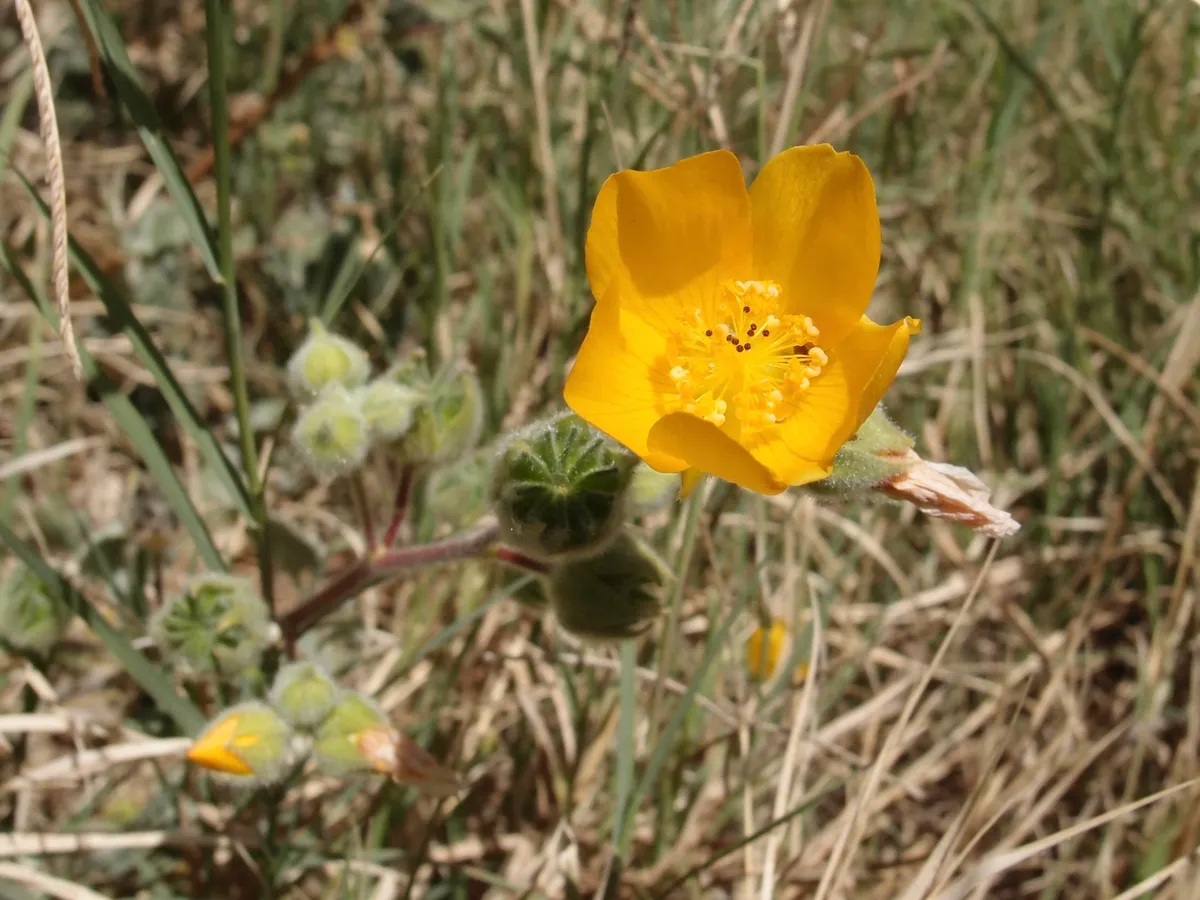
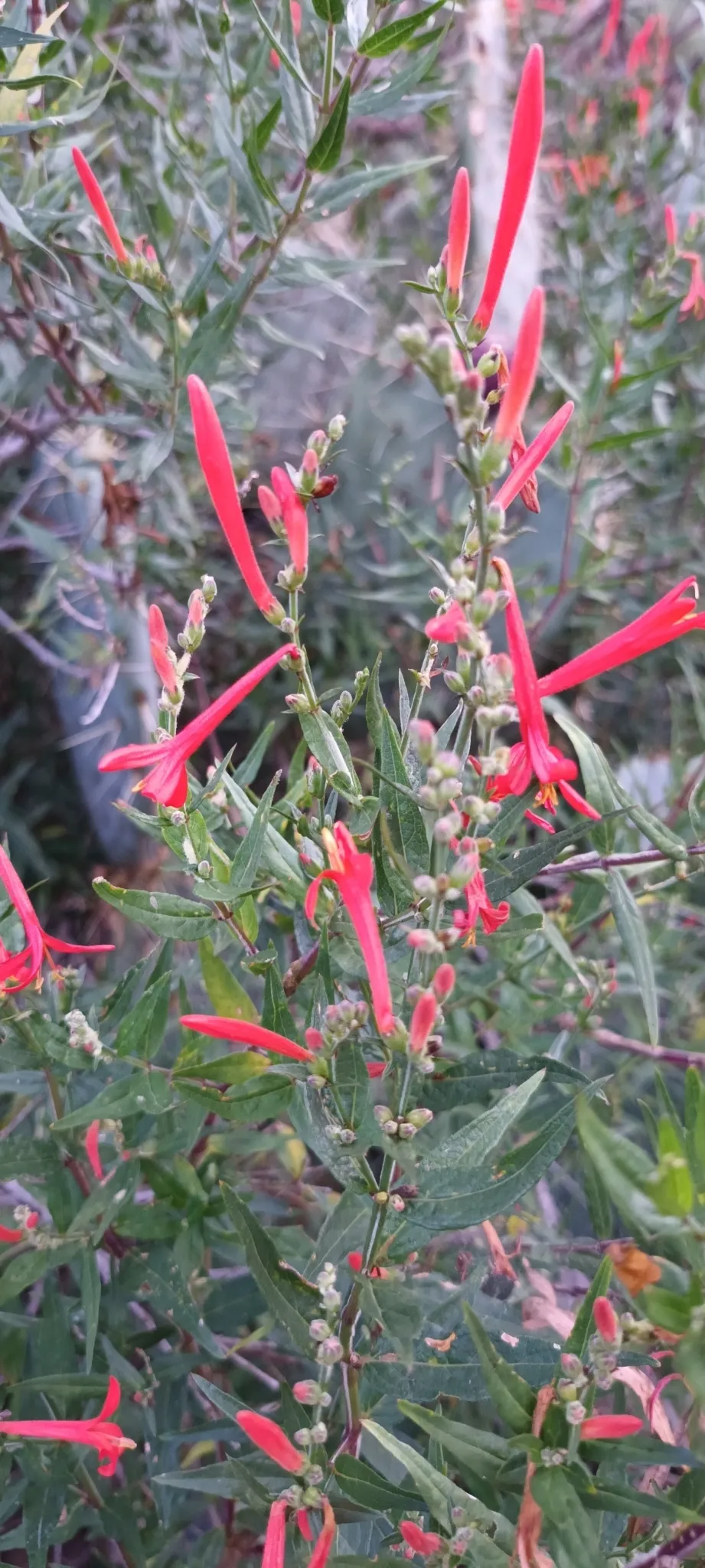
Cape Honeysuckle is not native to the United States. These natives fill a similar role in a planting, matched on bloom season, bloom color and mature size.

Before you buy
Your city may pay you to plant this
Cities and water utilities offer rebates for replacing lawn with native and water-wise plants. We track 452 programs across 44 states, each with a link to the provider and the date we last checked it.
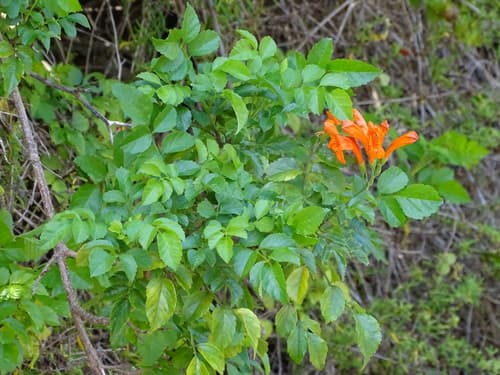
Find rebates in your areaA vigorous, evergreen shrub that can also be trained as a loose vine, grown for its clusters of tubular orange flowers that appear in fall and into winter, when little else is blooming. Its glossy, dark green leaves stay attractive year-round in mild climates.
How to care for Cape Honeysuckle, by region
How to care for Cape Honeysuckle where it is actually grown: year-round basics plus what to do each season, region by region, with the sources for each.
Care guidance last updated: September 2026
Southern Coastal Plain (includes Houston, TX)
Year-round
Cape Honeysuckle is an evergreen shrub native to southern Africa, grown for its clusters of trumpet-shaped orange, red, or yellow flowers that bloom from fall into spring. It can be kept as a rounded shrub or trained as a loose vine, hedge, or espalier.
- Give it full sun to partial shade and moist, well-drained soil; it tolerates sandy and clay soils and, once established, handles periods of drought well.
- Left unpruned it can reach 3 to 10 feet tall and 7 to 10 feet wide, so plan on regular pruning to keep it in bounds for a hedge or foundation planting.
- In the Houston area's mild winters, hard freezes below about 25 degrees Fahrenheit can kill leaves and branches back to the ground; established plants generally resprout from the roots.
- Its nectar-rich flowers attract hummingbirds, butterflies, and honey bees, especially valuable in fall and winter when fewer other plants are in bloom.
Kept pruned into a neat hedge or espalier against a fence, it reads as tidy and intentional; left to sprawl as a loose vine it can look unkempt, so plan on a regular pruning schedule.
Fall
Fall is the start of the main bloom season, with clusters of trumpet-shaped flowers opening as temperatures cool.
- Reduce watering frequency as temperatures drop, but do not let the soil dry out completely during bloom.
- Hold off on major pruning now, since it removes the flowering wood the plant needs for its fall-to-spring bloom.
- Enjoy the nectar-rich flowers, which draw hummingbirds and butterflies through fall.
Winter
Bloom continues into winter in mild years, but a hard freeze below about 25 degrees Fahrenheit, which does occur in the Houston area, can kill leaves and stems back to the ground.
- Do not prune away frost-damaged growth immediately; wait until after the last frost risk has passed, since the damaged wood can help protect the crown.
- Cut back any dead or blackened stems to live wood once new spring growth confirms where the plant survived.
- Reduce watering during cool, wet winter weather to avoid waterlogged soil.
A hard freeze can leave the shrub looking bare and twiggy for a few weeks; letting it resprout before cutting back keeps the eventual pruning cleaner and less drastic.
Spring
Spring is a growth phase, and flowering from the fall-to-spring bloom cycle tapers off as the plant pushes new leaves.
- Cut back any winter freeze damage once new growth clearly shows where the plant is resprouting.
- Water regularly while new growth establishes, letting the top couple inches of soil dry between waterings.
- Prune lightly to shape the plant and encourage denser branching for the coming season.
Summer
Summer is mostly a foliage and establishment season ahead of the main fall bloom, though some flowering can continue in warm climates.
- It handles Houston's summer heat well and, once established, needs only occasional deep watering during dry stretches.
- Prune as needed to control size and density; frequent light pruning through summer encourages more flowering wood for fall.
- Watch new plantings for wilting during extended dry heat and water deeply if the top soil dries out.
Sources: NC State Extension Gardener Plant Toolbox, Tecomaria capensis
Want these tasks as reminders timed to your yard? Pollinator Patch turns this guidance into a season-by-season care plan for the plants you actually grow.
In an HOA neighborhood
Cape Honeysuckle is an HOA-friendly choice in the right placement. Maintenance level: moderate. Tidiness: 3 out of 5.
Works well in: hedge, screen planting, trellis or fence line.
- fast, vigorous grower that needs regular pruning to keep a tidy shape and stay within bounds
Wildlife value
A dependable fall and winter nectar source for hummingbirds when many other flowers have finished for the season.
Common questions
- How much sun does Cape Honeysuckle need?
- Cape Honeysuckle grows best in full sun conditions.
- When does Cape Honeysuckle bloom?
- Cape Honeysuckle blooms in September, October, November, and December.
- What pollinators does Cape Honeysuckle attract?
- Cape Honeysuckle draws hummingbirds.
- Is Cape Honeysuckle HOA-friendly?
- Cape Honeysuckle is generally an HOA-friendly choice in the right placement, with moderate maintenance.
Pollinator and host plant associations compiled from GBIF, iNaturalist, and published ecological literature.
If something looks wrong
Common plant problems, and what to check first
These come up on almost any plant. Each guide lists the likely causes in the order they are worth ruling out, with one thing to check before you act on any of them, and links to the source it came from.
- It is dying right after planting
- Leaves turning yellow
- Wilting even though I watered it
- Brown crispy leaf tips
- Bugs on the plant
Ready to grow Cape Honeysuckle? Add it to your garden in Pollinator Patch to track it and get season-by-season care guidance.
Planning a bed around it? Start a free plan with this plant
Not sure where to start? Take the 2-minute yard quiz