Checker-mallow
Sidalcea malviflora
Last reviewed: September 2026
Sidalcea malviflora, or checker-mallow, sends up spikes of pink to rose-purple flowers from April through July. It thrives in open grasslands, coastal bluffs, and dry woodland edges, and tolerates low water once established.
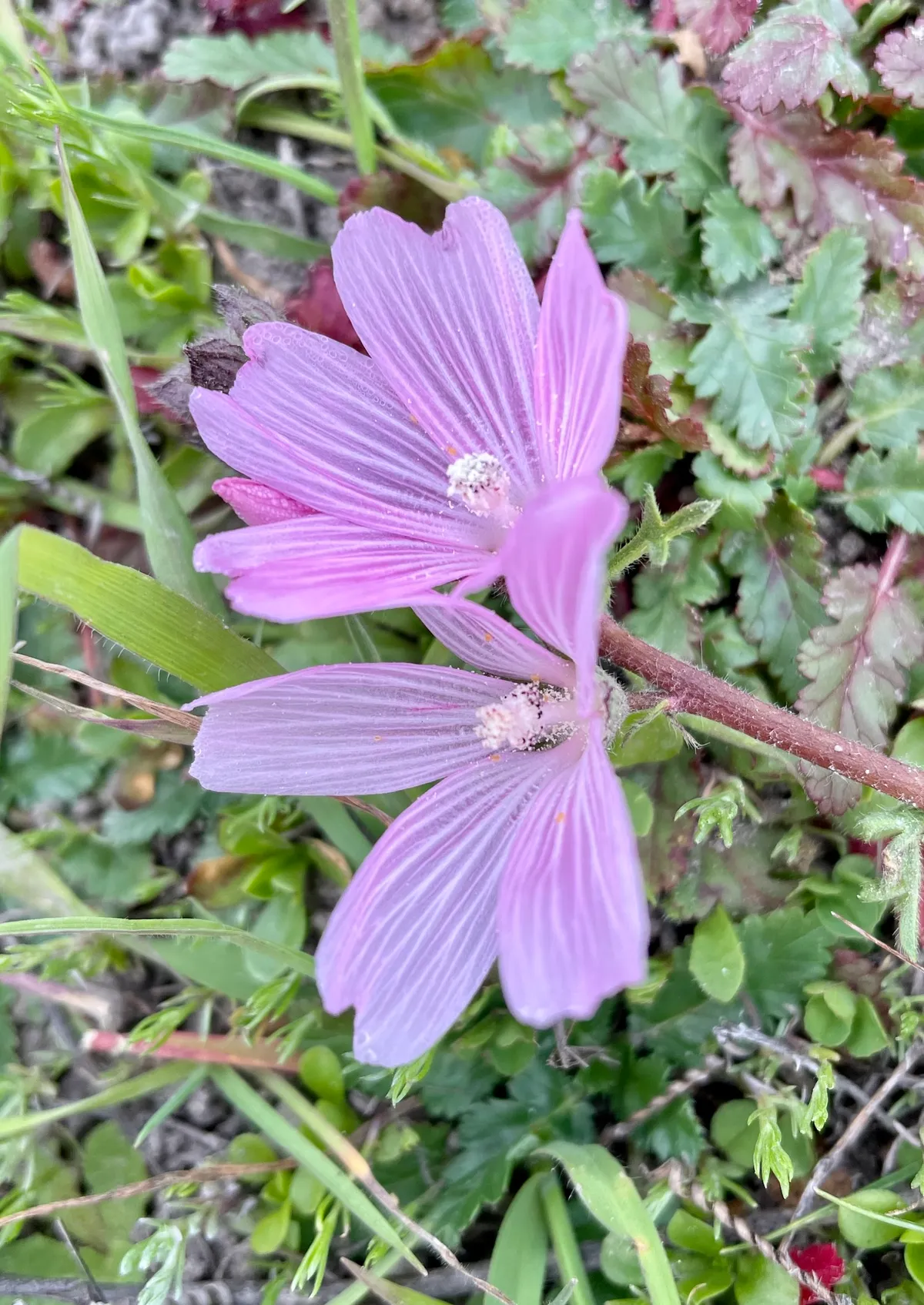
Checker-mallow (Sidalcea malviflora) is not flagged as toxic to dogs or cats by Plants For A Future (PFAF) (opens in new tab) (last reviewed 2026-05-21). This verdict does not come from the ASPCA. If your pet shows symptoms after eating any plant, call the ASPCA at (888) 426-4435.
Light
full sun
Water
low
Size
12"–36" H × 12"–24" W
Bloom
Apr, May, Jun, Jul
Native to
CA, OR
Pollinators
bees, butterflies
Before you buy
Your city may pay you to plant this
Cities and water utilities offer rebates for replacing lawn with native and water-wise plants. We track 459 programs across 44 states, each with a link to the provider and the date we last checked it.
Find rebates in your areaPicture natives in your own yard
Upload a photo of your yard and Patch Vision shows a rendering of it planted with natives for your region, like Checker-mallow.


Browse plants for this ecoregion
Checker-mallow produces pink to rose-colored, hollyhock-like flowers on upright stems from spring through summer. This attractive native perennial forms a low mound of foliage with delicate blooms rising above, creating a lovely accent in borders or wildflower gardens.
Growing Checker-mallow
Grow Checker-mallow in full sun and low water. Mature plants reach 12 to 36 inches tall and spread 12 to 24 inches wide. Expect moderate maintenance to keep it looking intentional in a front yard.
How to care for Checker-mallow, by region
How to care for Checker-mallow where it is actually grown: year-round basics plus what to do each season, region by region, with the sources for each.
Care guidance last updated: September 2026
Southern California/Northern Baja Coast (includes Los Angeles, CA)
Year-round
Checkerbloom (Sidalcea malviflora) is a low, clumping mallow relative native to the grassy slopes and mesas around Los Angeles, and it settles into a yard here without much fuss.
- Give it half a day of sun to full sun. In hot inland parts of LA a little afternoon shade keeps the leaves from looking scorched.
- Water regularly during the cooler wet months and taper off once summer heat arrives. This plant is built around a wet winter and a dry summer nap.
- It tolerates a wide range of soil types as long as the spot drains reasonably well.
- Pink flower spikes open in the morning and twist closed again by evening, blooming from spring into early summer.
- It has special value to native bees, and it does not appear on the ASPCA toxic plant list for dogs.
Fall
Fall is planting and seeding season for checkerbloom in Los Angeles, timed just ahead of the winter rains.
- Fall is the best time to plant new checkerbloom or sow seed, right before the rainy season takes over the watering.
- If you are starting from seed, soak it in hot water overnight first. This softens the hard seed coat and speeds up sprouting.
- Water in any new plantings by hand until the rains become reliable.
- Established plants need little to no extra water yet. They are still coming off their summer rest.
Winter
Winter is when checkerbloom does its underground growing in Los Angeles, powered by the rainy season.
- Let winter rain handle the watering. Only step in with a hose during an unusually dry stretch.
- This is the time to divide crowded clumps if you want more plants, cutting the root crown into two or three pieces and spacing them out.
- Make sure the spot drains well. Soggy soil in a wet winter is more of a risk to this plant than dry soil in summer.
- Pull winter weeds from around the base before they crowd out the new spring growth.
Clearing winter weeds from around the base keeps the bed looking cared for heading into spring bloom.
Spring
Spring is checkerbloom's big show in Los Angeles, with pink blooms opening morning after morning.
- Keep the soil evenly moist through spring since this is the plant's main active growth and flowering stretch.
- Watch for native bees working the blooms in the morning hours, then closing again by evening.
- New growth from the rhizomes can sprawl a bit. A light stake helps only if floppy stems bother you, it is not required.
- If a few early flower spikes finish blooming, you can snap them off, but the plant will keep flowering either way.
Snapping off a few spent flower spikes keeps the front bed looking tended for anyone walking by, though skipping it will not hurt the plant.
Summer
By summer in Los Angeles checkerbloom is winding down and wants a dry rest, not more water.
- Ease off watering as summer heat sets in. This plant expects a dry summer, and keeping it too wet now risks rot.
- Once flowering fades, cut the spent stalks back to the low basal leaves. It sometimes rewards this with a smaller second flush.
- Leave a few seed heads on the plant if you want it to reseed itself for next year.
- The foliage may look rough or partly dormant in a hot, dry stretch. That is normal for this plant, not a sign something is wrong.
Cutting the spent flower stalks back once bloom fades keeps the front yard looking intentional instead of leggy through late summer.
Sources: Calscape: Checker Bloom (Sidalcea malviflora), Lady Bird Johnson Wildflower Center: Sidalcea malviflora, Calflora: Sidalcea malviflora county distribution, ASPCA: Toxic and Non-Toxic Plant List, Dogs
In an HOA neighborhood
Checker-mallow is an HOA-friendly choice. Maintenance level: moderate. Tidiness: 3 out of 5.
Works well in: front yard, foundation, mid zone.
- Can look somewhat informal when not in bloom
- May need deadheading to maintain tidy appearance
Wildlife value
Checker-mallow is valuable to native bees and butterflies, providing nectar during its long bloom period. It serves as a larval host plant for certain butterfly species.
Common questions
- When does checker-mallow bloom?
- Sidalcea malviflora typically blooms from April through July, with flower spikes opening in succession along the stem.
- What pollinators visit checker-mallow?
- Bees and butterflies commonly visit the open, saucer-shaped flowers of Sidalcea malviflora for pollen and nectar.
- How much water does checker-mallow need?
- Checker-mallow does well with low water once established, though it can also handle occasional moisture during its spring and summer growth period.
- What light conditions suit checker-mallow best?
- Full sun to part sun gives the strongest flowering, though plants can persist with a bit more shade, especially in warmer inland sites.
- What kind of habitat does checker-mallow grow in?
- It is typically found in open grasslands, coastal scrub, and dry meadows with well-drained soil and a distinct summer dry season.
- Is Checker-mallow toxic to dogs?
- Checker-mallow is not flagged as toxic to dogs by Plants For A Future (PFAF). This verdict does not come from the ASPCA.
- Is Checker-mallow toxic to cats?
- Checker-mallow is not flagged as toxic to cats by Plants For A Future (PFAF). This verdict does not come from the ASPCA.
- Is Checker-mallow HOA-friendly?
- Checker-mallow is generally an HOA-friendly choice in the right placement, with moderate maintenance.
These answers were drafted with an AI model from this plant's data. Verify care details with a local expert.
Native range data from the World Checklist of Vascular Plants (Kew). Pollinator and host plant associations compiled from GBIF, iNaturalist, and published ecological literature.
If something looks wrong
Common plant problems, and what to check first
These come up on almost any plant. Each guide lists the likely causes in the order they are worth ruling out, with one thing to check before you act on any of them, and links to the source it came from.
- It is dying right after planting
- Leaves turning yellow
- Wilting even though I watered it
- Brown crispy leaf tips
- Bugs on the plant
Ready to grow Checker-mallow? Add it to your garden in Pollinator Patch to track it and get season-by-season care guidance.