Desert lavender
Condea emoryi
Last reviewed: October 2026
Desert lavender (Condea emoryi) is a perennial shrub native to AZ, CA. It blooms in February, March, April, and May. The flowers draw bees, hummingbirds, and butterflies.
Toxicity unknown
Desert lavender (Condea emoryi) is not listed by the ASPCA Animal Poison Control Center (opens in new tab) or the other sources we check, so we have no verdict for it either way. Absence from those lists is not a clearance. If your pet shows symptoms after eating any plant, call the ASPCA at (888) 426-4435.
Light
full sun
Water
low
Size
48"–144" H × 48"–96" W
Bloom
Feb, Mar, Apr, May
Native to
AZ, CA
Pollinators
bees, hummingbirds, butterflies
Before you buy
Your city may pay you to plant this
Cities and water utilities offer rebates for replacing lawn with native and water-wise plants. We track 459 programs across 44 states, each with a link to the provider and the date we last checked it.
Find rebates in your areaPicture natives in your own yard
Upload a photo of your yard and Patch Vision shows a rendering of it planted with natives for your region, like Desert lavender.


Browse plants for this ecoregion
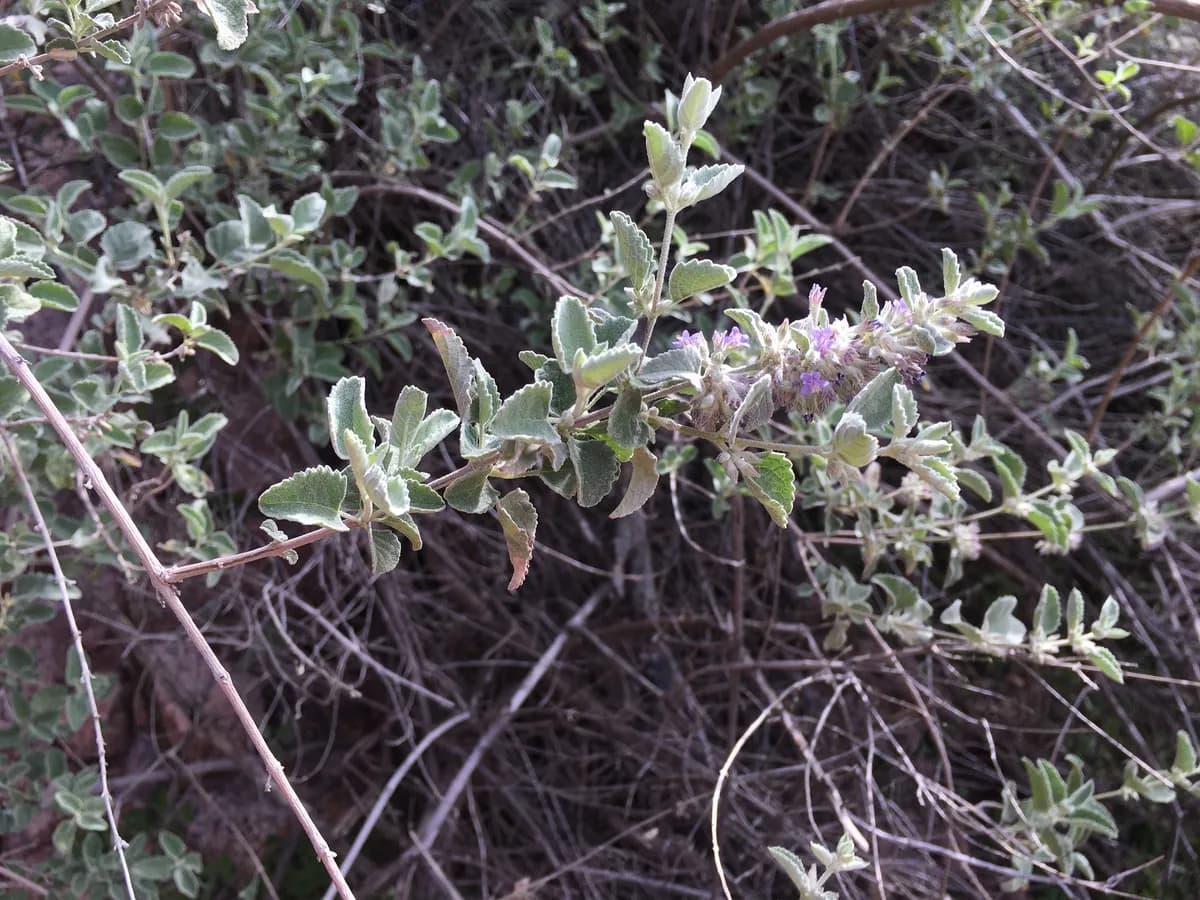
A fast-growing, silvery-leaved desert shrub with an open, airy habit and small fragrant tubular lavender flowers borne in dense whorls along the stems.
Growing Desert lavender
Grow Desert lavender in full sun and low water. Mature plants reach 48 to 144 inches tall and spread 48 to 96 inches wide.
How to care for Desert lavender, by region
How to care for Desert lavender where it is actually grown: year-round basics plus what to do each season, region by region, with the sources for each.
Care guidance last updated: August 2026
Southern California/Northern Baja Coast (includes Los Angeles, CA)
Year-round
Desert lavender is a fast growing evergreen shrub built for hot, dry desert washes in the Mojave and Sonoran deserts, not for the LA basin itself. Give it a full sun spot with fast draining soil and treat it like a true desert plant rather than a coastal one.
- Give it full sun and soil that drains fast, such as a raised bed, a slope, or native soil worked with extra sand or gravel.
- Water deeply but rarely once established. It comes from desert washes that stay dry most of the year.
- This plant is not native to the LA basin. It grows naturally in low desert washes of the south Mojave and Sonoran deserts in southeast California, so LA's cooler, wetter climate is a stretch for it, not its home ground.
- Purple flower spikes bloom over a long season and bring in hummingbirds and bees.
- Skip rich potting mix or heavy fertilizer. Lean, gritty soil is closer to what it grows in naturally.
Fall
Fall is a good time to shape desert lavender as bloom slows and before winter rain returns.
- Prune lightly to control size and remove leggy growth. Fast growers like this one can get rangy without an occasional trim.
- Ease off supplemental water as temperatures drop and any rain returns.
- This is a good window to double check drainage before LA's wetter months, since the plant's native desert washes stay dry most of the year.
A fall trim keeps the shrub's shape neat and HOA-conscious before winter.
Winter
Winter is the riskiest season for desert lavender in LA, since it comes from desert washes that see far less winter rain than the LA basin does.
- Do not add supplemental water in winter. Let rain be the only water it gets, and only where the soil drains fast.
- Watch for root rot signs, like blackened stems or dropped leaves, if the planting spot holds water after storms.
- It tolerates occasional light frost down to around 10 degrees Fahrenheit in its native range, so LA's mild winters are usually not a concern for cold.
- If growth looks leggy, a light winter shaping keeps the silhouette tidy without stressing the plant before spring.
A tidy winter silhouette from light shaping reads as HOA-friendly, especially in a front yard bed.
Spring
Spring is prime growing time for desert lavender. New growth pushes out and flowering often starts, drawing in bees and hummingbirds.
- Check that the soil stayed well drained through LA's winter rain. If the base looks soggy or leaves have yellowed, improve drainage before summer heat arrives.
- Trim back any winter dieback or leggy stems now while the plant is actively growing.
- Hold off on heavy fertilizer. A light feeding is plenty for a plant used to lean desert soil.
- Bloom typically runs from spring into fall, so expect hummingbird and bee visits starting now.
A light spring shaping keeps the shrub tidy and HOA-friendly heading into its main growing season.
Summer
Summer heat is when desert lavender does its best work. It is built for hot, dry desert summers and keeps blooming through the season.
- Water deeply but infrequently. Let the soil dry out between waterings rather than keeping it moist.
- Full sun and reflected heat from pavement or walls are fine for this plant, unlike many coastal-climate shrubs.
- Watch for stress signs like wilting mainly if the planting spot has heavy clay soil that holds water. That is the main way LA's climate differs from its native desert washes.
- Flower spikes keep attracting bees and hummingbirds through summer.
Sources: Theodore Payne Foundation Native Plant Database: Hyptis emoryi, Mountain States Wholesale Nursery: Hyptis emoryi (Desert Lavender)
Wildlife value
One of the most valuable desert nectar shrubs, drawing large numbers of native bees, hummingbirds, and butterflies through much of the year.
Common questions
- How much sun does Desert lavender need?
- Desert lavender grows best in full sun conditions.
- When does Desert lavender bloom?
- Desert lavender blooms in February, March, April, and May.
- Where is Desert lavender native?
- Desert lavender (Condea emoryi) is native to AZ, CA, per vouchered herbarium specimen records and regional native plant society lists.
- What pollinators does Desert lavender attract?
- Desert lavender draws bees, hummingbirds, and butterflies.
Native range data from vouchered herbarium specimen records and regional native plant society lists. Pollinator and host plant associations compiled from GBIF, iNaturalist, and published ecological literature.
If something looks wrong
Common plant problems, and what to check first
These come up on almost any plant. Each guide lists the likely causes in the order they are worth ruling out, with one thing to check before you act on any of them, and links to the source it came from.
- It is dying right after planting
- Leaves turning yellow
- Wilting even though I watered it
- Brown crispy leaf tips
- Bugs on the plant
Ready to grow Desert lavender? Add it to your garden in Pollinator Patch to track it and get season-by-season care guidance.