Dwarf poinciana
Caesalpinia pulcherrima
Last reviewed: October 2026
Dwarf poinciana (Caesalpinia pulcherrima) is a perennial shrub. It blooms in May, June, July, August, September, and October. The flowers draw hummingbirds, butterflies, and bees.
Dwarf poinciana is toxic to dogs and cats.
Listed as toxic by the ASPCA Animal Poison Control Center (opens in new tab) (last reviewed 2026-09-22). If your pet has been exposed, call the ASPCA Animal Poison Control Center at (888) 426-4435 and your veterinarian's emergency line.
Pollinator Patch flags toxic plants so you can choose a pet-safe native alternative for your yard.
Light
full sun
Water
low
Size
60"–120" H × 48"–72" W
Bloom
May, Jun, Jul, Aug, Sep, Oct
Pollinators
hummingbirds, butterflies, bees
Native alternatives to Dwarf poinciana
Dwarf poinciana is not native to the United States. These natives fill a similar role in a planting, matched on bloom season, bloom color and mature size.
Before you buy
Your city may pay you to plant this
Cities and water utilities offer rebates for replacing lawn with native and water-wise plants. We track 460 programs across 44 states, each with a link to the provider and the date we last checked it.
Find rebates in your areaPicture natives in your own yard
Wondering what could grow where Dwarf poinciana is now? Upload a photo of the spot and Patch Vision shows a rendering of it replanted with natives for your region.


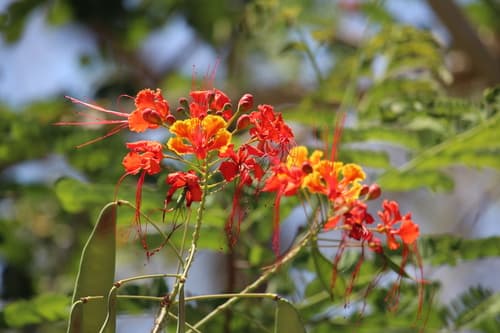
A fast-growing, loosely branched shrub with airy, fern-like compound leaves and showy, ruffled clusters of orange-red flowers edged in yellow, each with long, prominent red stamens. Blooms nearly continuously through warm weather.
Growing Dwarf poinciana
Grow Dwarf poinciana in full sun and low water. Mature plants reach 60 to 120 inches tall and spread 48 to 72 inches wide. Expect moderate maintenance to keep it looking intentional in a front yard.
How to care for Dwarf poinciana, by region
How to care for Dwarf poinciana where it is actually grown: year-round basics plus what to do each season, region by region, with the sources for each.
Care guidance last updated: August 2026
Cross Timbers (includes Fort Worth, TX)
Year-round
This tropical shrub isn't native to Texas, thrives in the heat, and pulls in pollinators, but count on it dying back hard or completely most winters in this part of the state.
- Give it full sun, six hours or more of direct light a day, for the fullest bloom.
- It wants well drained soil and does fine in either alkaline or acidic ground. Soggy, waterlogged roots are what actually kill it.
- Once it's established it's drought tolerant. Water deeply and less often rather than a light daily sprinkle.
- Orange red flower clusters (some varieties run yellow) show up from summer into fall and pull in hummingbirds, butterflies, and other pollinators, according to Texas A&M AgriLife Extension.
- In this part of Texas this plant regularly freezes back to the ground or dies back hard most winters, then regrows from the root the following spring. It's one of the slowest plants in the yard to wake back up.
- ASPCA lists Caesalpinia pulcherrima as toxic to both dogs and cats, causing vomiting and diarrhea if chewed or eaten. Keep pets from grazing on the leaves, flowers, or seed pods.
- This is a non-native ornamental grown for its long bloom season, not a plant with documented native range in Texas.
Fall
Fall is still bloom season right up until the first hard frost, then this plant will look rough almost overnight. That's expected, not something you did wrong.
- Expect flowering to continue right up until the first hard freeze. This plant doesn't slow down early the way some perennials do.
- Stop fertilizing by late summer or early fall so you're not pushing tender new growth right before a freeze.
- When the first hard frost or freeze hits, the leaves and stems typically blacken and collapse within a day or two. In this part of Texas that's the normal pattern, not a sign the plant is dying for good.
- Leave the frozen stems standing through the rest of fall rather than cutting them back right away. The dead top growth can help insulate the crown until the real cutback in late winter.
- Keep an eye on the extended forecast for the season's first hard freeze so the sudden dieback doesn't catch you off guard.
Winter
By winter this plant is usually cut down to bare or blackened stems here. That's the normal cycle for it in this climate, not a plant you need to replace.
- Hard freezes reliably knock Caesalpinia pulcherrima back to the ground, or close to it, in this part of Texas. Texas A&M AgriLife Extension describes it as behaving like an annual, a perennial, or a woody shrub depending purely on how cold the winter gets.
- Resist pulling it out in December or January just because it looks dead. The root system is very likely still alive underground.
- Hold off on the hard cutback until late winter, once the worst freezes have passed. Cutting too early can expose the crown to another hit.
- A layer of mulch over the root zone before the first freeze gives the crown some extra insulation through the cold snaps.
- If a neighbor or HOA committee asks about the bare stalks, it helps to know this is expected seasonal dieback for a tropical shrub, not neglect.
Bare or blackened stems through winter are the normal look for this plant here, not a sign of neglect. A light layer of mulch keeps the bed looking intentional until the spring cutback.
Spring
Spring is a waiting game for this plant. It's one of the last things in the yard to wake up, so don't give up on it just because everything else has already leafed out.
- Pride of Barbados is one of the last plants in the yard to break dormancy. Texas A&M AgriLife Extension notes that nurseries wait until late May or June to start selling it because the growers are waiting on the same wakeup.
- If your plant froze back over winter, give it time before deciding it's dead. Once it does emerge it can go from bare stems to full color in about 60 days.
- Cut back any blackened, freeze killed wood down to live green tissue. This is the late winter or early spring cutback Texas A&M AgriLife Extension recommends for a bushier, tidier shrub.
- Hold off on fertilizer until you actually see new growth. Feeding a still dormant root system doesn't help it wake up faster.
- A spot with more southern sun exposure will typically come back faster in spring than a shadier northern exposure spot.
Cutting back the freeze killed stems once new growth starts keeps the bed looking tended instead of a tangle of bare dead branches in a front yard planting.
Summer
Summer is when this plant does its real work. Full sun, real heat, and non-stop orange red blooms with very little fuss from you.
- This is peak bloom season. Expect continuous orange red flower clusters from early summer into fall.
- Established plants are drought tolerant in summer heat. Deep, occasional watering works better than a light daily sprinkle.
- Skip heavy nitrogen fertilizer. It pushes leafy growth at the expense of flowers.
- Deadheading spent flower clusters is optional. It's mainly a way to keep the plant looking neat and blooming, not something the plant needs to survive.
- Expect the bright orange red flower clusters to bring plenty of visitors to the yard through the season.
Deadheading spent blooms through summer keeps the shrub looking tidy and continuously in flower, which matters if it's in a visible front bed.
Sources: ASPCA Toxic and Non-Toxic Plants: Barbados Pride, Texas A&M AgriLife Extension (Travis County): Don't Give Up on Pride of Barbados Plants, Texas Superstar: Pride of Barbados, Texas A&M AgriLife Extension (Bexar County): Pride of Barbados, a Great Heat Loving Plant
Texas Blackland Prairies (includes Dallas, TX)
Year-round
This tropical shrub isn't native to Texas, thrives in the heat, and pulls in pollinators, but count on it dying back hard or completely most winters in this part of the state.
- Give it full sun, six hours or more of direct light a day, for the fullest bloom.
- It wants well drained soil and does fine in either alkaline or acidic ground. Soggy, waterlogged roots are what actually kill it.
- Once it's established it's drought tolerant. Water deeply and less often rather than a light daily sprinkle.
- Orange red flower clusters (some varieties run yellow) show up from summer into fall and pull in hummingbirds, butterflies, and other pollinators, according to Texas A&M AgriLife Extension.
- In this part of Texas this plant regularly freezes back to the ground or dies back hard most winters, then regrows from the root the following spring. It's one of the slowest plants in the yard to wake back up.
- ASPCA lists Caesalpinia pulcherrima as toxic to both dogs and cats, causing vomiting and diarrhea if chewed or eaten. Keep pets from grazing on the leaves, flowers, or seed pods.
- This is a non-native ornamental grown for its long bloom season, not a plant with documented native range in Texas.
Fall
Fall is still bloom season right up until the first hard frost, then this plant will look rough almost overnight. That's expected, not something you did wrong.
- Expect flowering to continue right up until the first hard freeze. This plant doesn't slow down early the way some perennials do.
- Stop fertilizing by late summer or early fall so you're not pushing tender new growth right before a freeze.
- When the first hard frost or freeze hits, the leaves and stems typically blacken and collapse within a day or two. In this part of Texas that's the normal pattern, not a sign the plant is dying for good.
- Leave the frozen stems standing through the rest of fall rather than cutting them back right away. The dead top growth can help insulate the crown until the real cutback in late winter.
- Keep an eye on the extended forecast for the season's first hard freeze so the sudden dieback doesn't catch you off guard.
Winter
By winter this plant is usually cut down to bare or blackened stems here. That's the normal cycle for it in this climate, not a plant you need to replace.
- Hard freezes reliably knock Caesalpinia pulcherrima back to the ground, or close to it, in this part of Texas. Texas A&M AgriLife Extension describes it as behaving like an annual, a perennial, or a woody shrub depending purely on how cold the winter gets.
- Resist pulling it out in December or January just because it looks dead. The root system is very likely still alive underground.
- Hold off on the hard cutback until late winter, once the worst freezes have passed. Cutting too early can expose the crown to another hit.
- A layer of mulch over the root zone before the first freeze gives the crown some extra insulation through the cold snaps.
- If a neighbor or HOA committee asks about the bare stalks, it helps to know this is expected seasonal dieback for a tropical shrub, not neglect.
Bare or blackened stems through winter are the normal look for this plant here, not a sign of neglect. A light layer of mulch keeps the bed looking intentional until the spring cutback.
Spring
Spring is a waiting game for this plant. It's one of the last things in the yard to wake up, so don't give up on it just because everything else has already leafed out.
- Pride of Barbados is one of the last plants in the yard to break dormancy. Texas A&M AgriLife Extension notes that nurseries wait until late May or June to start selling it because the growers are waiting on the same wakeup.
- If your plant froze back over winter, give it time before deciding it's dead. Once it does emerge it can go from bare stems to full color in about 60 days.
- Cut back any blackened, freeze killed wood down to live green tissue. This is the late winter or early spring cutback Texas A&M AgriLife Extension recommends for a bushier, tidier shrub.
- Hold off on fertilizer until you actually see new growth. Feeding a still dormant root system doesn't help it wake up faster.
- A spot with more southern sun exposure will typically come back faster in spring than a shadier northern exposure spot.
Cutting back the freeze killed stems once new growth starts keeps the bed looking tended instead of a tangle of bare dead branches in a front yard planting.
Summer
Summer is when this plant does its real work. Full sun, real heat, and non-stop orange red blooms with very little fuss from you.
- This is peak bloom season. Expect continuous orange red flower clusters from early summer into fall.
- Established plants are drought tolerant in summer heat. Deep, occasional watering works better than a light daily sprinkle.
- Skip heavy nitrogen fertilizer. It pushes leafy growth at the expense of flowers.
- Deadheading spent flower clusters is optional. It's mainly a way to keep the plant looking neat and blooming, not something the plant needs to survive.
- Expect the bright orange red flower clusters to bring plenty of visitors to the yard through the season.
Deadheading spent blooms through summer keeps the shrub looking tidy and continuously in flower, which matters if it's in a visible front bed.
Sources: ASPCA Toxic and Non-Toxic Plants: Barbados Pride, Texas A&M AgriLife Extension (Travis County): Don't Give Up on Pride of Barbados Plants, Texas Superstar: Pride of Barbados, Texas A&M AgriLife Extension (Bexar County): Pride of Barbados, a Great Heat Loving Plant
Western Gulf Coastal Plain (includes Houston, TX)
Year-round
A tropical, heat-loving flowering shrub that is not native to Texas but is a common Houston-area landscape plant, and it is toxic to pets if chewed or eaten.
- Not native to Texas or the Gulf Coast. It is native to the West Indies and tropical America, and does not appear in the Lady Bird Johnson Wildflower Center's native plant database because that database covers only species native to North America north of Mexico.
- Needs full sun and very well drained soil, and needs only low supplemental water once established. In Houston's heavier clay soils, overwatering is more of a risk than underwatering.
- A deciduous flowering shrub, generally reaching about 5 to 8 feet tall and similarly wide, with showy orange-red and yellow flower clusters blooming from summer into fall.
- Attracts hummingbirds and butterflies while in bloom, and is considered deer resistant.
- Toxic to dogs, cats, and horses if chewed or eaten. The toxic principles are GI irritants and tannins, and clinical signs are vomiting and diarrhea.
- Roots are cold hardy to around 15 degrees F, but the top growth is frost tender and commonly freezes back in Houston winters.
Fall
Fall in Houston still brings blooms, and it is the season to start protecting the root zone ahead of winter freezes.
- Blooming continues into fall before cooler weather arrives, since the plant's flowering window runs from summer through fall.
- Mulch heavily in fall to protect the root zone. The roots are hardy to about 15 degrees F even though the top growth is frost tender, so a good mulch layer matters most for the roots.
- No pruning is needed yet beyond shaping. Hold off on removing any frost-damaged wood until winter's freezes have actually happened.
- As a deciduous shrub, it is normal for foliage to start looking ragged and eventually drop as nights cool. That is expected, not a sign of a sick plant.
Winter
Winter is dormancy and freeze dieback season for this plant in Houston, and the top growth commonly dies back even though the roots usually survive.
- Houston winters bring freezing temperatures that damage or kill the above-ground growth. In Gulf Coast winters, this plant commonly freezes all the way to the ground.
- Roots are cold hardy to about 15 degrees F even though the top growth is not, so freeze dieback above ground does not necessarily mean the plant is dead.
- Keep mulch in place over the root zone through winter to help protect against hard freezes.
- Younger or smaller plants can be slower to resprout after a hard freeze than established plants, so patience into spring is normal.
- Wait until after the last frost risk has passed before cutting back visibly dead or blackened growth. The standing stems can offer the root crown a little extra winter protection in the meantime.
Blackened, frost-killed stems can look untidy from the street through winter. Leaving them in place until after the last frost is a tradeoff between curb appeal and protecting the plant, and fresh mulch around the base helps it look intentional in the meantime.
Spring
Spring in Houston is recovery season, when winter freeze damage gets cleaned up and new growth resumes.
- Once the last frost date has passed (commonly mid-March in the Houston area), cut back any winter-killed or blackened stems. Plants that froze fully to the ground typically resprout from the roots.
- New growth can be slower to emerge on younger or smaller plants after a hard freeze than on established, older plants.
- Prune mainly for shape once new growth is underway. Beyond removing frost damage, this plant does not need heavy pruning.
- Roots are cold hardy to about 15 degrees F, so a plant that looks completely dead above ground in early spring often still has live roots and is worth waiting on before pulling it out.
Cutting back blackened, frost-damaged stems once the last frost has passed keeps the shrub tidy and visible from the street while new growth fills back in.
Summer
Summer is the main bloom season, and the plant wants heat and sun but very little extra water once established.
- This is the peak bloom period, with continuous orange-red and yellow flower clusters from summer into fall.
- Needs full sun and only low supplemental water once established. During humid Gulf Coast summers, overwatering is a bigger risk than underwatering.
- Attracts hummingbirds and butterflies while flowering.
- Heat tolerant and described as a dependable, reliable performer through Houston's hot summers.
Sources: Lady Bird Johnson Wildflower Center, expert Q&A on Caesalpinia pulcherrima native range, ASPCA, Dwarf Poinciana toxic plant listing, City of Austin Grow Green, Red Bird of Paradise plant guide, Central Texas Gardener, Pride of Barbados care resource
In an HOA neighborhood
Dwarf poinciana takes more care to keep looking intentional in a front yard. Maintenance level: moderate. Consider it for backyard or mid-zone beds rather than the street edge.
Works well in: foundation planting, mixed border, specimen shrub.
- dies back to the ground in a hard freeze and needs spring cleanup
- stems carry small spines
Wildlife value
Host plant for orange-barred sulphur.
A long, heavy bloom season provides a steady nectar source for hummingbirds and butterflies, and the foliage serves as a larval host for orange-barred sulphur butterflies.
Common questions
- How much sun does Dwarf poinciana need?
- Dwarf poinciana grows best in full sun conditions.
- When does Dwarf poinciana bloom?
- Dwarf poinciana blooms in May, June, July, August, September, and October.
- Is Dwarf poinciana toxic to dogs?
- Yes. Dwarf poinciana is listed as toxic to dogs by the ASPCA Animal Poison Control Center (aspca.org). If your pet has been exposed, call the ASPCA Animal Poison Control Center at (888) 426-4435.
- Is Dwarf poinciana toxic to cats?
- Yes. Dwarf poinciana is listed as toxic to cats by the ASPCA Animal Poison Control Center (aspca.org). If your cat has been exposed, call the ASPCA Animal Poison Control Center at (888) 426-4435.
- What butterflies or moths does Dwarf poinciana host?
- Dwarf poinciana is a larval host plant for orange-barred sulphur.
- Is Dwarf poinciana HOA-friendly?
- Dwarf poinciana takes more care to look intentional in a front yard. Consider it for backyard or mid-zone beds rather than the street edge.
Pollinator and host plant associations compiled from GBIF, iNaturalist, and published ecological literature.
If something looks wrong
Common plant problems, and what to check first
These come up on almost any plant. Each guide lists the likely causes in the order they are worth ruling out, with one thing to check before you act on any of them, and links to the source it came from.
- It is dying right after planting
- Leaves turning yellow
- Wilting even though I watered it
- Brown crispy leaf tips
- Bugs on the plant
Pollinator Patch flags toxic plants like Dwarf poinciana and shows pet-safe natives for your ecoregion instead.