Engelmann's Hedgehog Cactus
Echinocereus engelmannii
Last reviewed: September 2026
Echinocereus engelmannii is a low water hedgehog cactus that thrives in full sun across hot desert and rocky slope habitats in the Southwest, with magenta blooms typically appearing April through June.
Toxicity unknown
Engelmann's Hedgehog Cactus (Echinocereus engelmannii) is not listed by the ASPCA Animal Poison Control Center (opens in new tab) or the other sources we check, so we have no verdict for it either way. Absence from those lists is not a clearance. If your pet shows symptoms after eating any plant, call the ASPCA at (888) 426-4435.
Light
full sun
Water
low
Size
4"–12" H × 4"–12" W
Bloom
Apr, May, Jun
Native to
AZ, CA, NV, UT
Pollinators
bees, beetles
Before you buy
Your city may pay you to plant this
Cities and water utilities offer rebates for replacing lawn with native and water-wise plants. We track 459 programs across 44 states, each with a link to the provider and the date we last checked it.
Find rebates in your areaPicture natives in your own yard
Upload a photo of your yard and Patch Vision shows a rendering of it planted with natives for your region, like Engelmann's Hedgehog Cactus.


Browse plants for this ecoregion
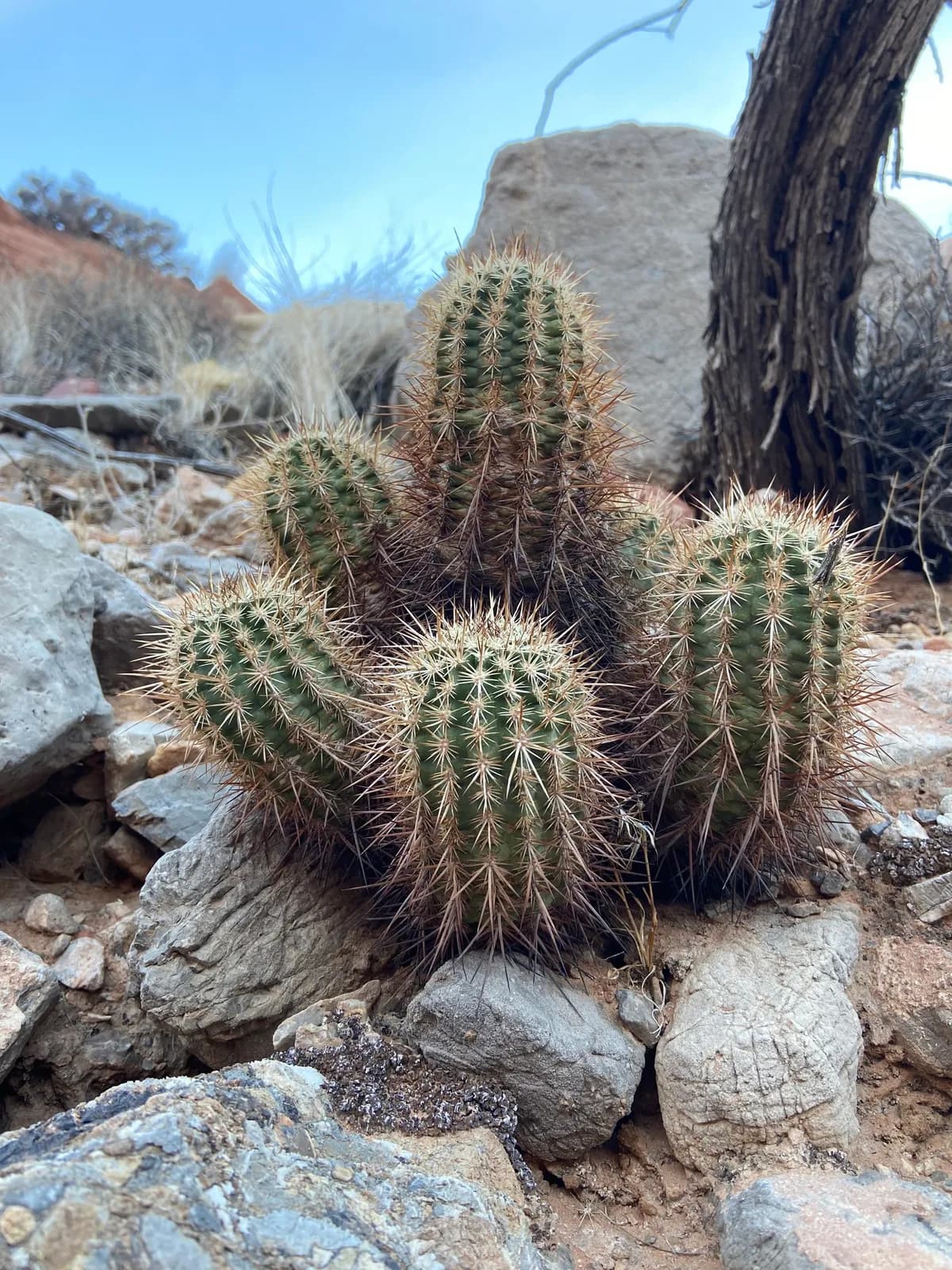
Engelmann's hedgehog cactus is a compact, barrel-shaped cactus that forms small clumps close to the ground. It produces showy magenta to pink flowers in spring that create a striking display against the green succulent stems. This drought-tolerant native requires minimal care once established and maintains its neat appearance year-round.
Growing Engelmann's Hedgehog Cactus
Grow Engelmann's Hedgehog Cactus in full sun and low water. Mature plants reach 4 to 12 inches tall and spread 4 to 12 inches wide. Expect low maintenance to keep it looking intentional in a front yard.
How to care for Engelmann's Hedgehog Cactus, by region
How to care for Engelmann's Hedgehog Cactus where it is actually grown: year-round basics plus what to do each season, region by region, with the sources for each.
Care guidance last updated: July 2026
Sonoran Basin and Range (includes Phoenix, AZ)
Year-round
Engelmann's hedgehog cactus is a tough clumping cactus built for the Phoenix low desert. It wants full sun, fast-draining gravelly soil, and almost no help from you once it settles in.
- Plant in decomposed granite or native caliche soil that drains fast, on a slight mound if your bed holds water, never in a low spot where runoff pools.
- Top-dress the bed with decomposed granite or gravel mulch, never wood bark, which traps moisture against the base and rots the roots here.
- Skip fertilizer entirely, these desert natives grow poorly in rich soil and rot when pushed.
- Water deep and infrequent only, and remember overwatering is the number one killer of cacti around Phoenix.
A single hedgehog cactus set in a clean decomposed-granite bed reads as an intentional desert planting, which is the expected HOA-friendly front-yard look across Phoenix and keeps the bed from drawing a violation letter for looking unkempt.
Fall
Fall is the prime season and the best time to plant a new hedgehog cactus. Cooler days let the roots settle in before next summer's heat.
- Plant new hedgehog cactus in October or November so roots establish through the mild winter, this is by far the best planting window in Phoenix.
- Set new plantings in decomposed granite, water once at planting to settle the soil, then wait a couple of weeks before any second light watering.
- Space clumps so they are not crowding walkways or each other, and keep the spiny form back from paths where people brush past.
- Tidy the decomposed-granite bed now while the weather is mild, clearing blown-in leaves and debris from around the base.
Setting the cactus back from walkways and driveways and keeping the gravel bed tidy in fall reads as a cared-for, intentional planting, which keeps the front yard HOA-friendly and avoids a violation letter over a spiny plant crowding a public path.
Winter
Winter is a mild, slow-growing cool season in Phoenix, not a deep dormancy. The main job is to keep the cactus dry so any rare cold snap does no damage.
- Give almost no water in winter, gentle Dec through March rains are enough, and a soggy cactus is far more likely to be harmed by cold than a dry one.
- This cactus is frost-hardy in the Phoenix core, so no cover is needed for normal winter nights.
- On the rare hard freeze warning, keeping the plant dry going in is the best protection, more than any wrap or blanket.
- Hold off on planting now, winter is a fine time to plan bed layout but wait for fall, or the weaker February window, to put new cactus in the ground.
Spring
Spring is bloom time, when the plant throws big magenta-pink flowers that draw native bees. Enjoy the show and start easing off water as the days warm.
- Expect the magenta-pink blooms roughly April through June, which feed native bees, so leave the flowers to open and fade on their own.
- Taper off your last winter waterings as spring warms, giving one deep soak only if you get a long dry stretch with no rain.
- Do a quick check for any soft or discolored spots at the base now, before summer heat arrives, since a mushy base means water was sitting too long.
- Early spring is a weak secondary planting window if you missed fall, but the main rule still holds, never plant heading into the May through July heat.
Summer
Summer is the stress season, not the growing peak. The real danger now is too much water, especially once the July monsoon rains start soaking the ground.
- Once monsoon storms begin in July, turn off any drip to this cactus, the warm downpours are plenty and extra water on top of them is what rots it.
- In the dry June foresummer before the rains, an established plant needs nothing, water only if it is in its first or second summer, and then just one deep soak.
- Make sure the base sits above grade on gravel so monsoon runoff drains away fast instead of pooling against the plant.
- The single most common local mistake is watering cacti on a schedule through the monsoon, so let the rain do the work and keep the soil on the dry side.
Sources: Arizona-Sonora Desert Museum, Echinocereus engelmannii species account, USDA PLANTS Database, Echinocereus engelmannii native range including Arizona, Desert Botanical Garden, fall planting window for desert natives in the low desert, Arizona Native Plant Society, planting and spacing desert cacti, University of Arizona Cooperative Extension, low-desert cactus watering guidance, Arizona-Sonora Desert Museum, keeping cacti dry through winter cold
In an HOA neighborhood
Engelmann's Hedgehog Cactus is an HOA-friendly choice. Maintenance level: low. Tidiness: 4 out of 5.
Works well in: front yard, foundation, street edge, mid zone.
Wildlife value
The bright spring blooms attract native bees and beetles that rely on cactus flowers for nectar and pollen. The dense spines provide nesting sites for small desert birds.
Common questions
- When does Engelmann's hedgehog cactus bloom?
- It typically flowers from April through June, producing funnel shaped magenta blossoms at the tips of its ribbed stems.
- How much water does this cactus need?
- It is adapted to low water conditions and prefers to dry out fully between waterings, matching the arid desert climates where it is commonly grown.
- What pollinates Engelmann's hedgehog cactus?
- Bees and beetles are the primary pollinators, visiting the flowers during the spring bloom period for pollen and nectar.
- What growing conditions suit this cactus best?
- Full sun and well drained, gritty or rocky soil work best, similar to the open desert slopes and flats where it naturally thrives.
- Is Engelmann's Hedgehog Cactus HOA-friendly?
- Engelmann's Hedgehog Cactus is generally an HOA-friendly choice in the right placement, with low maintenance.
These answers were drafted with an AI model from this plant's data. Verify care details with a local expert.
Native range data from vouchered herbarium specimen records and regional native plant society lists. Pollinator and host plant associations compiled from GBIF, iNaturalist, and published ecological literature.
If something looks wrong
Common plant problems, and what to check first
These come up on almost any plant. Each guide lists the likely causes in the order they are worth ruling out, with one thing to check before you act on any of them, and links to the source it came from.
- It is dying right after planting
- Leaves turning yellow
- Wilting even though I watered it
- Brown crispy leaf tips
- Bugs on the plant
Ready to grow Engelmann's Hedgehog Cactus? Add it to your garden in Pollinator Patch to track it and get season-by-season care guidance.