Farkleberry
Vaccinium arboreum
Last reviewed: September 2026
Vaccinium arboreum, or farkleberry, is a small understory tree that blooms March through May with white bell shaped flowers, favoring dry sandy woodlands and rocky slopes across the southeastern and south-central United States.
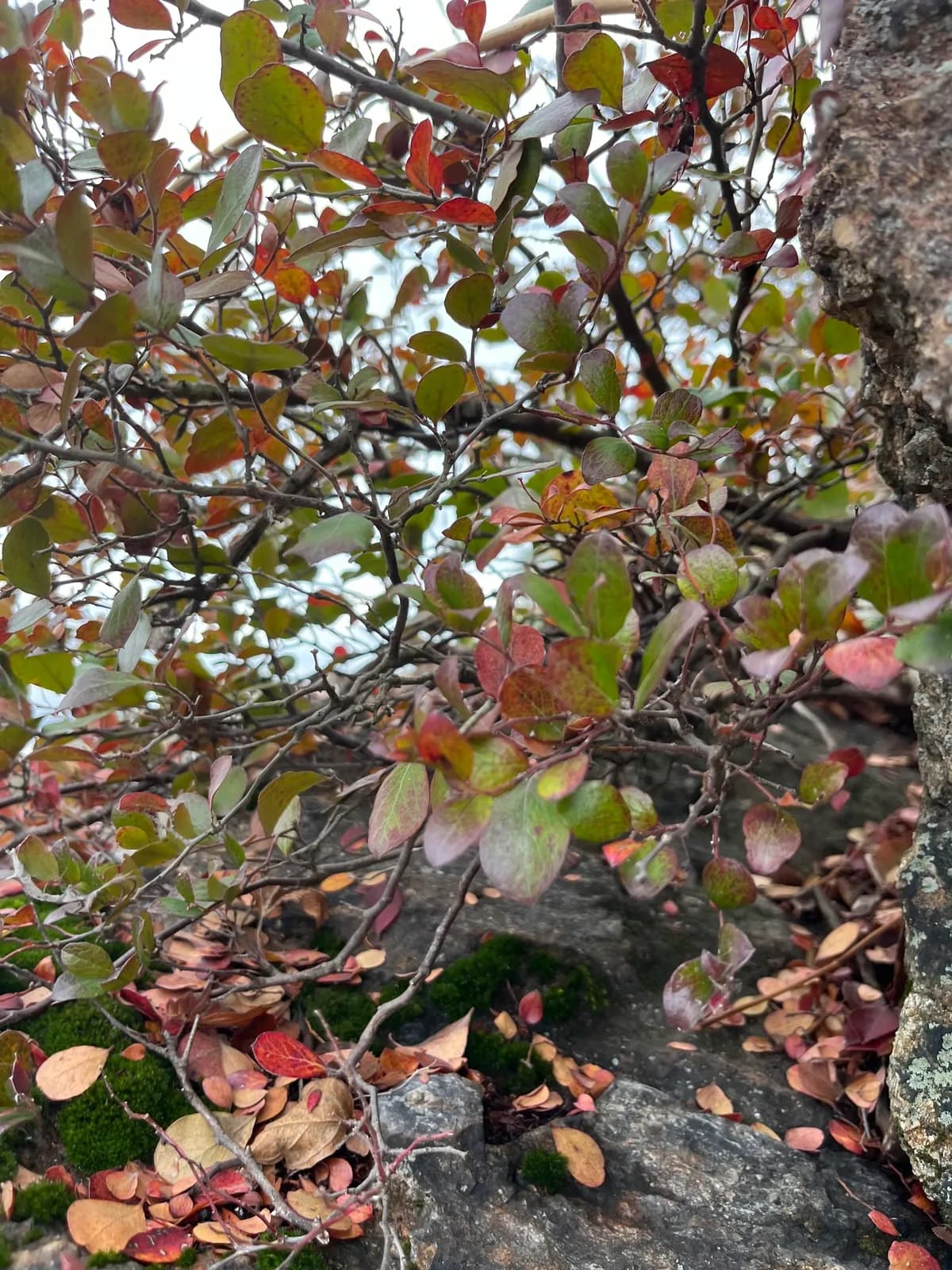
Toxicity unknown
Farkleberry (Vaccinium arboreum) is not listed by the ASPCA Animal Poison Control Center (opens in new tab) or the other sources we check, so we have no verdict for it either way. Absence from those lists is not a clearance. If your pet shows symptoms after eating any plant, call the ASPCA at (888) 426-4435.
The USDA PLANTS Database (opens in new tab) does not flag Farkleberry as toxic to livestock.
Light
part sun
Water
medium
Size
144"–180" H × 120"–144" W
Bloom
Mar, Apr, May
Native to
AL, AR, FL, GA and 13 more states
Pollinators
butterflies, bees
Before you buy
Your city may pay you to plant this
Cities and water utilities offer rebates for replacing lawn with native and water-wise plants. We track 452 programs across 44 states, each with a link to the provider and the date we last checked it.
Find rebates in your areaBrowse plants for this ecoregion
Farkleberry is a small native tree that produces clusters of white bell-shaped flowers in spring followed by small dark berries. This semi-evergreen species develops an attractive branching structure and provides year-round interest in the landscape.
Growing Farkleberry
Grow Farkleberry in part sun and medium water. Mature plants reach 144 to 180 inches tall and spread 120 to 144 inches wide. Expect moderate maintenance to keep it looking intentional in a front yard.
How to care for Farkleberry, by region
How to care for Farkleberry where it is actually grown: year-round basics plus what to do each season, region by region, with the sources for each.
Care guidance last updated: September 2026
Mississippi Valley Loess Plains (includes Memphis, TN)
Year-round
Farkleberry is native throughout most of Tennessee and makes a slow-growing, low-maintenance native shrub for Memphis yards, valued for its twisted branches, small white spring flowers, and berries that feed birds through winter.
- Grow in sun to light shade in well-drained soil, it tolerates both acidic and, unusually for a Vaccinium, neutral to alkaline soil.
- Expect a slow to medium growth rate reaching 8 to 15 feet tall over time, plan for its mature size when siting it.
- It needs no fertilizer or special soil amendment once established, and tolerates a wide range of soil types.
- It is a documented larval host plant for the Striped Hairstreak and Henry's Elfin butterflies, and carries special value to native bees.
Its slow growth and tidy, twisted branch structure make it a good HOA-friendly native shrub for a foundation planting or mixed border.
Fall
Fall brings farkleberry's black berries to full ripeness and its foliage to crimson red in Memphis, a two-season native for color and wildlife value.
- Leave ripening berries on the shrub, they persist into winter and are an important food source for birds and mammals.
- Fall is a good time to plant a new shrub, cooler weather reduces transplant stress.
- No fertilizing needed heading into fall, let growth slow naturally.
- Rake fallen leaves away from the base if the site tends to stay damp, otherwise no fall cleanup is required.
Winter
As a Tennessee native, farkleberry is well matched to Memphis winters, and its persistent black berries continue feeding birds and mammals through the cold months.
- No winter protection needed, this native shrub is fully adapted to Memphis's cold season.
- Its semi-evergreen leaves and reddish, exfoliating bark provide winter garden interest even without flowers or fruit.
- Late winter, before new growth starts, is the best time for any structural pruning.
- Leave leaf litter under the shrub in place over winter, it breaks down into the kind of soil this species prefers.
Spring
Farkleberry blooms in Memphis from May into June, with small white flowers tinged pink along its branches that draw native bees.
- No pruning needed before bloom, farkleberry flowers on the previous year's wood.
- Water newly planted shrubs through spring while roots establish, mature plants need little extra water.
- Avoid heavy fertilizer at planting, it is adapted to lean, sandy or rocky native soils.
- Leave the area under the shrub unsprayed during bloom since native bees rely on it.
Summer
Through the Memphis summer, farkleberry's small green fruit ripens toward black, and the shrub itself needs very little care once established.
- Established plants tolerate Memphis's summer heat and dry spells without supplemental water.
- No summer fertilizing needed, over-feeding pushes soft growth this species does not need.
- Prune only to shape or remove dead wood, farkleberry has a naturally attractive irregular branch structure worth keeping.
- Watch for yellowing leaves in a very alkaline spot, this is one of the few Vacciniums that tolerates neutral to alkaline soil but strongly acid soil is still its preference.
Sources: Lady Bird Johnson Wildflower Center - Vaccinium arboreum, Tennessee Smart Yards - Vaccinium arboreum
Want these tasks as reminders timed to your yard? Pollinator Patch turns this guidance into a season-by-season care plan for the plants you actually grow.
In an HOA neighborhood
Farkleberry is an HOA-friendly choice in the right placement. Maintenance level: moderate. Tidiness: 4 out of 5.
Works well in: front yard, mid zone.
- Trees often require HOA/ARC approval even when allowed.
- Verify setbacks from sidewalks, driveways, utilities, and structures.
- Confirm mature height/canopy limits and sightline rules for corners.
Wildlife value
The spring blooms attract bees and butterflies, while the berries feed birds and small mammals throughout fall and winter.
Common questions
- When does farkleberry bloom?
- Farkleberry typically flowers from March through May, producing small white bell shaped blossoms along its branches before the dark berries develop in late summer and fall.
- What pollinates farkleberry flowers?
- Bees and butterflies are the main visitors to farkleberry blossoms, drawn to the nectar of the small white flowers that appear in spring.
- How much water does farkleberry need?
- Farkleberry prefers medium moisture but tolerates drier conditions well once established, making it suited to sandy or rocky soils that drain quickly.
- How much sun does farkleberry need to grow well?
- It grows best with part sun but adapts to fuller sun or somewhat shadier woodland edges, often appearing as an understory tree beneath taller pines and oaks.
- Does farkleberry keep its leaves year round?
- Farkleberry is semi-evergreen, holding onto many of its leathery leaves through winter in warmer parts of its range while dropping more foliage in cooler areas.
- Is Farkleberry toxic to livestock?
- The USDA PLANTS Database does not flag Farkleberry as toxic to livestock.
- Is Farkleberry HOA-friendly?
- Farkleberry is generally an HOA-friendly choice in the right placement, with moderate maintenance.
These answers were drafted with an AI model from this plant's data. Verify care details with a local expert.
Native range data from vouchered herbarium specimen records and regional native plant society lists. Pollinator and host plant associations compiled from GBIF, iNaturalist, and published ecological literature.
If something looks wrong
Common plant problems, and what to check first
These come up on almost any plant. Each guide lists the likely causes in the order they are worth ruling out, with one thing to check before you act on any of them, and links to the source it came from.
- It is dying right after planting
- Leaves turning yellow
- Wilting even though I watered it
- Brown crispy leaf tips
- Bugs on the plant
Ready to grow Farkleberry? Add it to your garden in Pollinator Patch to track it and get season-by-season care guidance.
Planning a bed around it? Start a free plan with this plant
Not sure where to start? Take the 2-minute yard quiz