Flowering Dogwood
Cornus florida
Last reviewed: October 2026
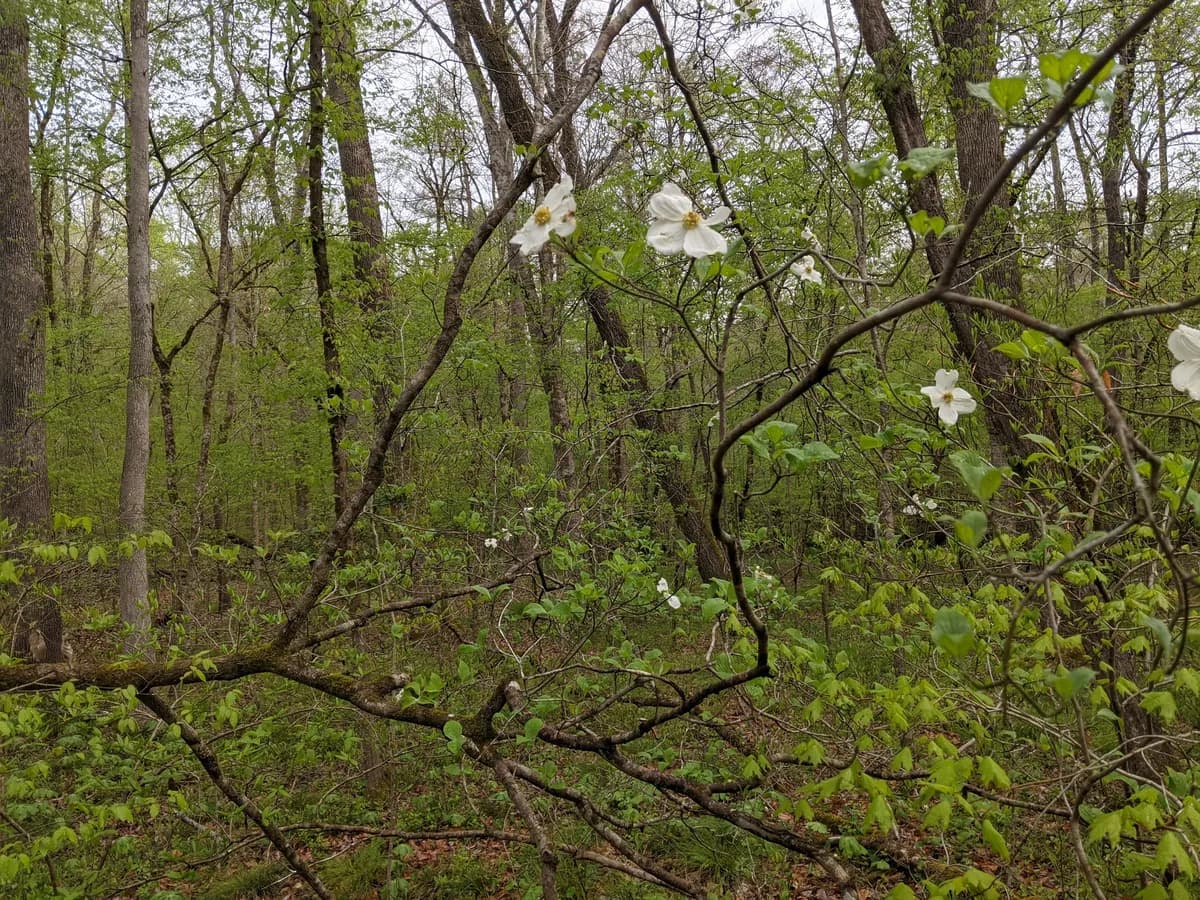
Flowering dogwood is a small understory tree that blooms in April and May, producing white bracts before its leaves fully expand. It grows best in part shade with medium moisture in woodland and edge settings.
Toxicity unknown
Flowering Dogwood (Cornus florida) is not listed by the ASPCA Animal Poison Control Center (opens in new tab) or the other sources we check, so we have no verdict for it either way. Absence from those lists is not a clearance. If your pet shows symptoms after eating any plant, call the ASPCA at (888) 426-4435.
Light
part shade
Water
low
Size
180"–300" H × 96"–180" W
Bloom
Apr, May
Native to
AL, AR, CT, DE and 27 more states
Pollinators
bees, butterflies, beetles
Before you buy
Your city may pay you to plant this
Cities and water utilities offer rebates for replacing lawn with native and water-wise plants. We track 459 programs across 44 states, each with a link to the provider and the date we last checked it.
Find rebates in your areaPicture natives in your own yard
Upload a photo of your yard and Patch Vision shows a rendering of it planted with natives for your region, like Flowering Dogwood.


Browse plants for this ecoregion
Flowering dogwood is a beloved native tree known for its showy white or pink bracts in spring and brilliant red fall foliage. This medium-sized tree develops an attractive horizontal branching pattern and provides year-round interest with its distinctive bark and berries.
Growing Flowering Dogwood
Grow Flowering Dogwood in part shade and low water. Mature plants reach 180 to 300 inches tall and spread 96 to 180 inches wide. Expect high maintenance to keep it looking intentional in a front yard.
How to care for Flowering Dogwood, by region
How to care for Flowering Dogwood where it is actually grown: year-round basics plus what to do each season, region by region, with the sources for each.
Care guidance last updated: October 2026
Atlantic Coastal Pine Barrens (includes Riverhead, NY)
Year-round
Flowering dogwood is a small tree that wants well-drained, organically rich soil and cool roots.
- Plant in full sun to partial shade. In hot sites it may need more shade, especially in the afternoon.
- Use well-drained, organically rich soil with a slightly acidic to neutral pH.
- Listed hardy in USDA zones 5a through 9b. It is a small tree 15 to 25 feet tall.
- It does not tolerate pollution and can be difficult to grow in urban settings.
Fall
Fall brings the color and a good time to check for leaf diseases.
- Fall color is red to reddish purple.
- Leaf spot, septoria leaf spot, and canker are listed diseases to watch for.
- Deer browse the foliage.
Winter
Winter is quiet, so plan for next year's disease resistance.
- Hardy in USDA zones 5a through 9b.
- If spot anthracnose has been a problem, 'Cherokee Princess' is noted as highly resistant and 'Plena' as immune when you replant.
- Deer browse the foliage, so check for damage.
Spring
Spring is mulch and scouting time.
- A 2 to 4 inch layer of mulch helps keep the roots cool and moist in hot summers.
- Spot anthracnose is more common than dogwood anthracnose, which occurs only at roughly 1,800 feet or higher.
- Powdery mildew is a listed susceptibility, so watch the leaves as they come out.
Summer
Keep roots cool and moist, and look for scale and borers.
- Mulch 2 to 4 inches deep to keep the roots cool and moist in hot summers.
- In hot spots, afternoon shade helps.
- Pests include dogwood borer, calico scale, oyster shell scale, and dogwood sawfly.
Eastern Corn Belt Plains (includes Columbus, OH)
Year-round
Flowering dogwood is native to Ohio, where it naturally grows as a woodland understory tree along stream banks and shaded wood edges. In a Columbus yard it does best in part shade to full sun with moist, slightly acidic, well drained soil, similar to the conditions it grows in on its own. It is a four season plant, with spring bracts, red fall fruit and foliage, and a horizontal winter branching pattern, but Columbus's humid summers also bring real disease pressure from powdery mildew and anthracnose that this care plan accounts for.
- Plant in part shade to full sun with moist, slightly acidic, well drained soil, similar to its natural woodland edge habitat
- Keep a 2 to 3 inch mulch ring out to the drip line, pulled back a few inches from the trunk
- Water deeply during dry summer stretches, especially for the first two years after planting
- Prune and space for open airflow through the canopy to reduce powdery mildew and anthracnose
- Protect the thin bark near the trunk base from mower and trimmer damage
Fall
Fall is the dogwood's second show in Columbus, with burgundy red foliage and red fruit clusters that birds rely on heading into winter. It is also a solid planting and pruning window once the tree drops its leaves and goes dormant, generally after the first frost in mid October. If the tree showed powdery mildew or anthracnose spots over summer, cleaning up fallen leaves now helps since the fungus can overwinter in leaf litter.
- Rake and remove fallen leaves this fall if the tree showed mildew or anthracnose spots over summer
- Plant new trees at least four to six weeks before the ground freezes so roots can establish
- Prune dead or crossing branches once the tree is fully dormant in late fall
- Leave some fruit clusters in place for migrating and overwintering birds
Raking up fallen leaves keeps the yard tidy for fall curb appeal.
Winter
Columbus winters, generally USDA zone 6a, typically drop into the teens and 20s Fahrenheit and occasionally colder, which is enough to stress a young or newly planted dogwood. Dormancy makes this the best window for any structural pruning, since the tree is not actively growing and disease organisms are inactive. The bare horizontal branching also makes it easier to see and shape the tree without cutting off next spring's bloom buds.
- Do structural pruning once the coldest stretch of winter has passed, and avoid cutting on very cold days to reduce dieback
- Check mulch depth and refresh it before the ground freezes to protect the root zone
- Hold off on fertilizing until the tree is actively growing again in spring
- Inspect young trunks for frost cracks or sunscald, especially on the southwest side
Winter pruning shapes the tree while it is dormant, keeping it tidy without sacrificing next spring's bloom.
Spring
Spring is when Columbus area dogwoods put on their main show, with bracts opening from mid April into May. It is also the better of the two planting windows here, since a spring planted tree gets a full growing season to establish roots before its first Ohio winter. Watch the local last frost date, usually in the second half of April, before making any pruning cuts.
- Plant balled and burlapped or container trees once the soil can be worked in spring
- Water new transplants weekly through their first spring if rainfall is light
- Hold off on fertilizer until after bloom so you are not pushing soft growth into a late frost
- Check leaf undersides for early powdery mildew as humidity climbs later in spring
Summer
Columbus summers are hot and humid, and that combination is exactly what dogwood powdery mildew favors, with the fungus showing up regularly on Ohio trees in humid years. Keep the tree evenly watered through dry stretches rather than letting it swing between drought and soaking, since a drought stressed dogwood is more prone to problems like borers. This is also a season to leave the pruning shears alone.
- Water deeply about once a week during dry summer stretches, aimed at the root zone rather than the leaves
- Watch for a white powdery coating on leaves, common on dogwoods in humid Ohio summers
- Skip pruning until the tree is dormant in late fall or winter, summer cuts add stress during heat
- Keep mulch topped up to 2 to 3 inches to buffer soil moisture swings
Sources: Lady Bird Johnson Wildflower Center, Cornus florida native range and habitat, Ohio State University BYGL, Dogwood Powdery Mildew, University of Maryland Extension, Growing Flowering Dogwood Trees
In an HOA neighborhood
Flowering Dogwood takes more care to keep looking intentional in a front yard. Maintenance level: high. Consider it for backyard or mid-zone beds rather than the street edge.
Works well in: backyard only.
- Poor cold hardiness for zone 3-4 winters
- Likely to suffer winter damage or die
Wildlife value
Host plant for Spring Azure, Cecropia Moth, Dogwood Thyatirin Moth.
The flowers attract bees, butterflies, and beetles in spring, while the bright red berries feed over 35 bird species. The tree also hosts several butterfly caterpillars and provides nesting sites for birds.
Common questions
- When does flowering dogwood bloom?
- Flowering dogwood typically blooms in April and May, with showy white bracts appearing before or as the leaves emerge.
- What kind of light does flowering dogwood need?
- It tolerates conditions from full sun to fairly deep shade, but flowers most heavily and stays healthiest with part shade or dappled light, especially as an understory tree.
- How much water does flowering dogwood require?
- This tree prefers medium, evenly moist soil and does not tolerate prolonged drought or standing water well.
- What pollinators visit flowering dogwood?
- Bees, butterflies, and beetles visit the flowers for nectar and pollen, making it a useful early season resource in woodland gardens.
- How large does flowering dogwood get?
- It is a small tree, usually reaching 15 to 30 feet tall with a broad, layered crown, which makes it suitable for yards and woodland edges rather than open fields.
- Is Flowering Dogwood HOA-friendly?
- Flowering Dogwood takes more care to look intentional in a front yard. Consider it for backyard or mid-zone beds rather than the street edge.
These answers were drafted with an AI model from this plant's data. Verify care details with a local expert.
Native range data from vouchered herbarium specimen records and regional native plant society lists. Pollinator and host plant associations compiled from GBIF, iNaturalist, and published ecological literature.
If something looks wrong
Common plant problems, and what to check first
These come up on almost any plant. Each guide lists the likely causes in the order they are worth ruling out, with one thing to check before you act on any of them, and links to the source it came from.
- It is dying right after planting
- Leaves turning yellow
- Wilting even though I watered it
- Brown crispy leaf tips
- Bugs on the plant
Ready to grow Flowering Dogwood? Add it to your garden in Pollinator Patch to track it and get season-by-season care guidance.