Fremont's mahonia
Mahonia fremontii
Last reviewed: September 2026
Toxicity unknown
Fremont's mahonia (Mahonia fremontii) is not listed by the ASPCA Animal Poison Control Center (opens in new tab) or the other sources we check, so we have no verdict for it either way. Absence from those lists is not a clearance. If your pet shows symptoms after eating any plant, call the ASPCA at (888) 426-4435.
Light
full sun
Water
low
Size
108"–192" H × 36"–72" W
Bloom
Apr, May
Native to
AZ, CA, CO, NM and 2 more states
Pollinators
bees
Before you buy
Your city may pay you to plant this
Cities and water utilities offer rebates for replacing lawn with native and water-wise plants. We track 452 programs across 44 states, each with a link to the provider and the date we last checked it.
Find rebates in your areaBrowse plants for this ecoregion
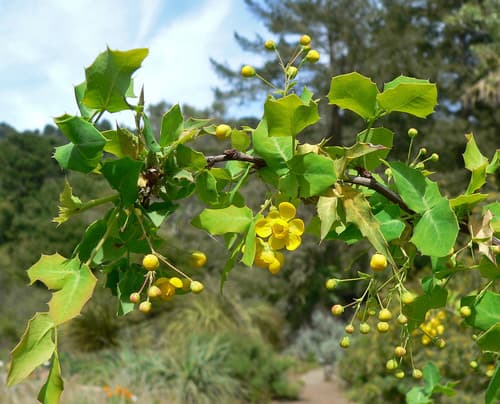
A tall, upright evergreen shrub in the barberry family with stiff, spiny, holly-like blue-green leaflets and small clusters of yellow flowers in early spring, followed by berries that fade from yellow to dark purple. It forms a dense, thorny screen well suited to dry slopes and rocky soils.
How to care for Fremont's mahonia, by region
How to care for Fremont's mahonia where it is actually grown: year-round basics plus what to do each season, region by region, with the sources for each.
Care guidance last updated: September 2026
Arizona/New Mexico Mountains (includes Prescott, AZ)
Year-round
Fremont's mahonia is a tall, spiny evergreen shrub native to the southwestern U.S., at home in Prescott's pinyon-juniper and ponderosa pine foothills.
- Plant in full sun to light shade with well-drained, rocky soil typical of the Prescott area's foothills.
- Water deeply but infrequently once established; this shrub tolerates the area's dry summers and cold winter nights.
- Keep it away from walkways and play areas because of its spiny, holly-like leaves.
- Prune only to remove dead or damaged wood; it naturally holds a dense, upright form.
Its evergreen, dense structure works well as a natural screening hedge along property lines.
Fall
Fall is a second good planting window in Prescott as summer heat eases, and mature shrubs need little attention as growth slows.
- Cooler fall temperatures let new plantings establish roots before winter cold arrives.
- Reduce watering for established shrubs as temperatures drop.
- No pruning or fertilizing is needed heading into fall.
Evergreen foliage holds its color through fall, so no seasonal cleanup is required.
Winter
Fremont's mahonia stays evergreen through Prescott's cold winters, which can include snow, and needs little supplemental water while dormant.
- No winter protection is necessary; the shrub tolerates the area's freezing nights and occasional snow.
- Water only occasionally in winter, mainly during extended dry spells.
- Late winter is the best time to prune out any dead or damaged wood before spring growth begins.
Its evergreen structure provides year-round screening with no winter dieback to manage.
Spring
Spring is a good planting season in Prescott, and established shrubs produce their main flush of bright yellow flowers before summer heat arrives.
- Plant new shrubs once the last hard freeze has passed, watering weekly until new growth appears.
- This desert-adapted shrub rarely needs fertilizer.
- Bright yellow spring flower clusters draw early-season pollinators.
Spring flowering adds seasonal interest without extra upkeep.
Summer
During Prescott's warm, dry summer, established Fremont's mahonia needs only occasional deep watering.
- Water deeply every 3 to 4 weeks in summer for established shrubs; more often for anything planted in the past year.
- Summer monsoon rains, when they arrive, can cover most watering needs.
- Berries ripen from yellow to dark purple through summer and are eaten by birds.
Its low summer water needs make it a reliable choice under typical watering restrictions.
Sources: USDA PLANTS Database, Berberis fremontii, NC State Extension Gardener Plant Toolbox
Arizona/New Mexico Plateau (includes Albuquerque, NM)
Year-round
Fremont's mahonia is a tall, spiny evergreen shrub native to the southwestern U.S., well suited to Albuquerque's high desert climate of hot summers and cold winters.
- Plant in full sun with well-drained, rocky or sandy soil typical of the Albuquerque area.
- Water deeply but infrequently once established; this shrub tolerates the region's low rainfall and occasional summer monsoon downpours.
- Site it away from walkways, patios, and play areas because of its spiny, holly-like leaves.
- Prune only to remove dead or damaged wood; it holds a naturally dense, upright shape.
Its dense, year-round evergreen form makes a tidy screening hedge along property lines.
Fall
Fall is a second good planting window in Albuquerque once summer heat eases, and mature shrubs need very little care as growth slows for the year.
- Cooler fall temperatures give new plantings time to root in before winter.
- Reduce watering for established shrubs as days shorten and temperatures drop.
- No pruning or fertilizing is needed heading into fall.
Evergreen foliage holds its color through fall, so no seasonal cleanup is needed.
Winter
Fremont's mahonia stays evergreen through Albuquerque's cold winters and needs little to no supplemental water while dormant.
- No winter protection is necessary; the shrub tolerates the region's freezing nights.
- Water only occasionally in winter, mainly during extended dry spells.
- Late winter is the best time to prune out any dead or damaged wood before spring growth begins.
Its evergreen structure provides year-round screening with no winter dieback to clean up.
Spring
Spring is prime planting season in Albuquerque, and established shrubs put on their main flush of bright yellow flowers before summer heat sets in.
- Plant new shrubs after the last hard freeze, watering weekly until new growth appears.
- No fertilizer is typically needed for this desert-adapted shrub.
- Enjoy the bright yellow spring flower clusters, which draw early-season pollinators.
Spring bloom adds color with no extra maintenance required.
Summer
During Albuquerque's hot summer, established Fremont's mahonia needs only occasional deep watering, supplemented naturally by monsoon rains when they arrive.
- Water deeply every 3 to 4 weeks in summer for established shrubs; more often for anything planted within the past year.
- Let monsoon rains substitute for scheduled watering when they occur in July and August.
- Berries ripen from yellow to dark purple through summer and are eaten by birds.
Low summer water needs keep it compliant with typical municipal watering schedules.
Sources: USDA PLANTS Database, Berberis fremontii, NC State Extension Gardener Plant Toolbox
Mojave Basin and Range (includes Victorville, CA)
Year-round
Fremont's mahonia is a tall, spiny evergreen shrub native to the southwestern U.S., including the high desert around Victorville. It thrives in full sun, well-drained soil, and needs very little water once established.
- Give it full sun and sharp drainage; it is well adapted to the Mojave Desert's rocky, alkaline soils.
- Water deeply but infrequently during the first year or two, then rely on natural rainfall except in extended drought.
- Plant it away from walkways and play areas since the holly-like leaves are spiny.
- Prune only to remove dead wood; its naturally upright, dense form needs little shaping.
Its dense, evergreen structure works well as a low-maintenance screening hedge that stays neat year-round.
Fall
Fall is a good second planting window in Victorville once summer heat breaks, and mature shrubs need little attention as growth slows.
- Cooler fall weather is a good time to plant, giving roots months to establish before next summer.
- Continue watering established shrubs only occasionally; fall rains, when they occur, may cover most needs.
- No pruning or fertilizing is necessary heading into fall.
The evergreen foliage keeps its color through fall, so there is no seasonal cleanup.
Winter
Fremont's mahonia stays evergreen through Victorville's mild high-desert winters and needs only occasional water if the season is dry.
- No winter protection is needed; this shrub is hardy well into cold winter nights.
- Water only occasionally in winter, mainly if there has been no rain for several weeks.
- Leave pruning until late winter if any dead or damaged wood needs removing.
Its evergreen, spiny form provides year-round privacy screening with no winter dieback to manage.
Spring
Spring brings Fremont's mahonia's main bloom of small yellow flower clusters, and it's an easy season to plant new shrubs before summer heat arrives.
- Plant new shrubs in early spring while temperatures are mild, watering weekly until roots establish.
- Enjoy the bright yellow spring flower clusters, which need no special care.
- Hold off on fertilizing; this desert-adapted shrub rarely needs it.
Spring flowers add seasonal color without any extra upkeep.
Summer
Through Victorville's hot, dry summer, established Fremont's mahonia needs only occasional deep watering and tolerates full desert sun without stress.
- Water established shrubs deeply once every 3 to 4 weeks in summer; more often for shrubs planted within the last year.
- No misting or extra humidity is needed; this shrub is built for dry desert air.
- Berries ripen from yellow to dark purple through summer, feeding birds and other wildlife.
Minimal summer watering makes it a dependable choice under desert water restrictions.
Sources: USDA PLANTS Database, Berberis fremontii, NC State Extension Gardener Plant Toolbox
Want these tasks as reminders timed to your yard? Pollinator Patch turns this guidance into a season-by-season care plan for the plants you actually grow.
In an HOA neighborhood
Fremont's mahonia is an HOA-friendly choice. Maintenance level: low. Tidiness: 4 out of 5.
Works well in: foundation planting, screening hedge, xeriscape bed.
- Spiny foliage benefits from a buffer along walkways
Wildlife value
Host plant for moths.
The spring flowers provide early-season nectar for native bees, the foliage supports moth larvae, and the berries that follow feed birds and other wildlife into fall and winter.
Common questions
- How much sun does Fremont's mahonia need?
- Fremont's mahonia grows best in full sun conditions.
- When does Fremont's mahonia bloom?
- Fremont's mahonia blooms in April and May.
- Where is Fremont's mahonia native?
- Fremont's mahonia (Mahonia fremontii) is native to AZ, CA, CO, NM and 2 more states, per vouchered herbarium specimen records and regional native plant society lists.
- What butterflies or moths does Fremont's mahonia host?
- Fremont's mahonia is a larval host plant for moths.
- Is Fremont's mahonia HOA-friendly?
- Fremont's mahonia is generally an HOA-friendly choice in the right placement, with low maintenance.
Native range data from vouchered herbarium specimen records and regional native plant society lists. Pollinator and host plant associations compiled from GBIF, iNaturalist, and published ecological literature.
If something looks wrong
Common plant problems, and what to check first
These come up on almost any plant. Each guide lists the likely causes in the order they are worth ruling out, with one thing to check before you act on any of them, and links to the source it came from.
- It is dying right after planting
- Leaves turning yellow
- Wilting even though I watered it
- Brown crispy leaf tips
- Bugs on the plant
Ready to grow Fremont's mahonia? Add it to your garden in Pollinator Patch to track it and get season-by-season care guidance.
Planning a bed around it? Start a free plan with this plant
Not sure where to start? Take the 2-minute yard quiz