Golden Blue-eyed Grass
Sisyrinchium californicum
Last reviewed: October 2026
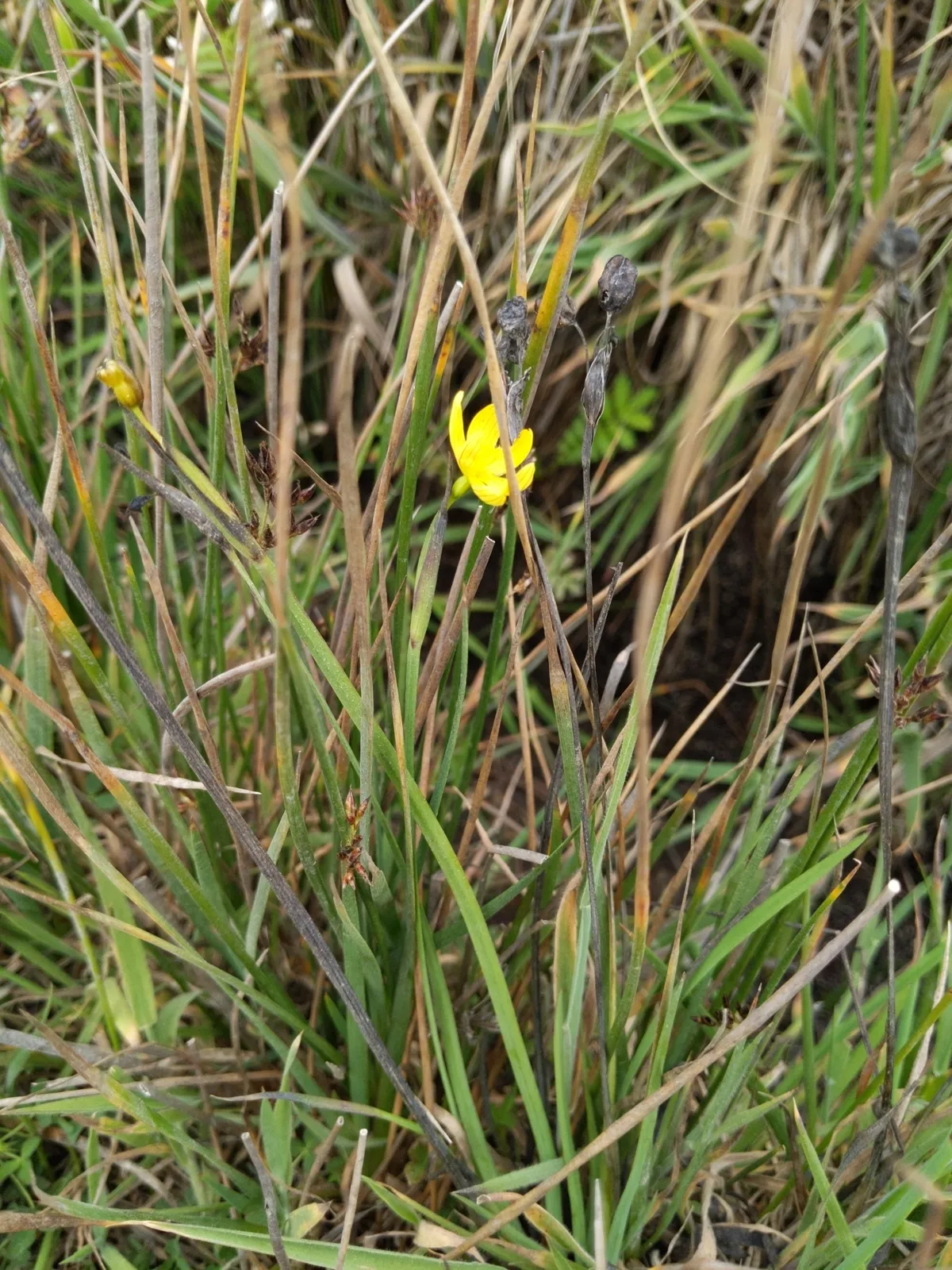
Sisyrinchium californicum is a native Pacific Northwest wildflower that produces bright yellow blooms from April through July. This low-water perennial thrives in full sun and attracts bees and butterflies.
Toxicity unknown
Golden Blue-eyed Grass (Sisyrinchium californicum) is not listed by the ASPCA Animal Poison Control Center (opens in new tab) or the other sources we check, so we have no verdict for it either way. Absence from those lists is not a clearance. If your pet shows symptoms after eating any plant, call the ASPCA at (888) 426-4435.
Light
full sun
Water
medium
Size
6"–12" H × 4"–8" W
Bloom
Apr, May, Jun, Jul
Native to
CA, OR, WA
Pollinators
bees, butterflies
Before you buy
Your city may pay you to plant this
Cities and water utilities offer rebates for replacing lawn with native and water-wise plants. We track 459 programs across 44 states, each with a link to the provider and the date we last checked it.
Find rebates in your areaPicture natives in your own yard
Upload a photo of your yard and Patch Vision shows a rendering of it planted with natives for your region, like Golden Blue-eyed Grass.


Browse plants for this ecoregion
Golden blue-eyed grass forms compact clumps of narrow, grass-like foliage topped with small yellow flowers from spring through midsummer. This petite perennial stays evergreen and maintains a tidy appearance year-round, making it perfect for borders or small spaces.
Growing Golden Blue-eyed Grass
Grow Golden Blue-eyed Grass in full sun and medium water. Mature plants reach 6 to 12 inches tall and spread 4 to 8 inches wide. Expect low maintenance to keep it looking intentional in a front yard.
How to care for Golden Blue-eyed Grass, by region
How to care for Golden Blue-eyed Grass where it is actually grown: year-round basics plus what to do each season, region by region, with the sources for each.
Care guidance last updated: October 2026
Central California Foothills and Coastal Mountains (includes San Francisco, CA)
Year-round
Golden blue-eyed grass is a small clumping perennial in the iris family, native to the San Francisco Bay Area's wet meadows and freshwater marsh edges, with grassy leaves and yellow star-shaped flowers.
- Plant in a spot that stays consistently moist, since this species comes from wetland and marsh-edge habitat
- Full sun works well near the coast and fog belt, part shade is better a few miles inland
- Works well in a rain garden, low spot, or an area that gets regular irrigation
- Divide congested clumps every couple of years to keep blooms strong
- Straplike leaves stay fairly low, under a foot, so it reads as a tidy front-border plant
Its neat, grassy habit and bright spring flowers make it a good HOA-friendly edging plant for a moist bed or rain garden along a front path.
Fall
As San Francisco's rainy season returns in October and November, this plant slows down and you can ease off supplemental watering.
- Cut back watering as fall rains take over the job
- Fall is a good time to divide overgrown clumps, replanting divisions right away
- Clear fading foliage to keep the bed looking neat through the wet months ahead
- Good window for adding new plants before the cool, wet winter settles in
Winter
San Francisco winters are mild and wet, rarely dropping to frost, so this plant stays low and semi-dormant rather than needing protection.
- No frost protection is typically needed in San Francisco's coastal climate
- Make sure the planting spot drains reasonably well during heavy winter rain, standing water in a garden bed can cause rot even for a wetland-native species
- Good season to divide and transplant while the plant is resting
- Leave some of the winter rain to do the watering for you
Spring
Spring is peak bloom for golden blue-eyed grass in San Francisco, with yellow flowers opening on and off through May and June.
- Keep soil evenly moist as bloom ramps up, especially if spring rain tapers off early
- Deadhead spent flower stems to keep the clump looking tidy and encourage more buds
- Watch for slugs and snails on new growth, common in San Francisco's damp spring gardens
- A light topdressing of compost at the base helps this moisture-loving species along
Summer
San Francisco summers are cool and dry, which is a mismatch for a plant that naturally grows in wet meadows, so this is the season it needs the most help from you.
- Water on a regular schedule since the fog belt's summer rainfall is close to zero
- Mulch around the base to slow evaporation between waterings
- Trim back any foliage that yellows or browns from summer dryness
- Full-sun coastal plantings dry out faster than part-shade inland ones, adjust watering accordingly
Sources: Calflora: Sisyrinchium californicum distribution records (San Francisco, Marin, San Mateo, Alameda, Contra Costa, Santa Clara, Sonoma counties), Calscape: Golden Yellow-Eyed Grass plant profile
Puget Lowland (includes Seattle, WA)
Year-round
Year-round care for golden blue-eyed grass around Seattle, WA: full sun and soil that stays medium to wet.
- It does best in full sun and can handle light shade.
- It prefers medium to wet soil and tolerates somewhat drier conditions.
- Calscape lists moderate water, up to once a week in summer once established, and says it grows in moist places.
- It forms a tuft of narrow, grass-like leaves 8 to 12 inches tall.
- It is winter hardy in USDA zones 8 to 10.
- Plants self-seed freely when conditions suit them.
- Bloom runs from May to June, and the flowers close by noon each day.
Its tidy grass-like tufts suit the front edge of a bed.
Sources: Missouri Botanical Garden: Sisyrinchium californicum, Calscape: Sisyrinchium californicum
In an HOA neighborhood
Golden Blue-eyed Grass is an HOA-friendly choice. Maintenance level: low. Tidiness: 4 out of 5.
Works well in: front yard, foundation, street edge, mid zone.
Wildlife value
The bright yellow flowers attract native bees and small butterflies during its extended bloom period. Its compact size makes it valuable for creating pollinator habitat in smaller garden spaces.
Common questions
- When does Golden Blue-eyed Grass bloom?
- Sisyrinchium californicum blooms from April through July, producing small yellow flowers that attract pollinators.
- What pollinators visit Golden Blue-eyed Grass?
- This native plant attracts bees and butterflies, making it a valuable addition to pollinator gardens in the Pacific Northwest.
- Where is Sisyrinchium californicum native?
- Golden Blue-eyed Grass is native to Washington state and other parts of the Pacific Northwest region.
- Is Golden Blue-eyed Grass HOA-friendly?
- Golden Blue-eyed Grass is generally an HOA-friendly choice in the right placement, with low maintenance.
These answers were drafted with an AI model from this plant's data. Verify care details with a local expert.
Native range data from the World Checklist of Vascular Plants (Kew). Pollinator and host plant associations compiled from GBIF, iNaturalist, and published ecological literature.
If something looks wrong
Common plant problems, and what to check first
These come up on almost any plant. Each guide lists the likely causes in the order they are worth ruling out, with one thing to check before you act on any of them, and links to the source it came from.
- It is dying right after planting
- Leaves turning yellow
- Wilting even though I watered it
- Brown crispy leaf tips
- Bugs on the plant
Ready to grow Golden Blue-eyed Grass? Add it to your garden in Pollinator Patch to track it and get season-by-season care guidance.