Leafy Jacob's-ladder
Polemonium foliosissimum
Last reviewed: September 2026
Toxicity unknown
Leafy Jacob's-ladder (Polemonium foliosissimum) is not listed by the ASPCA Animal Poison Control Center (opens in new tab) or the other sources we check, so we have no verdict for it either way. Absence from those lists is not a clearance. If your pet shows symptoms after eating any plant, call the ASPCA at (888) 426-4435.
Light
part shade
Water
medium
Size
12"–24" H × 8"–16" W
Bloom
May, Jun, Jul
Native to
AZ, CO, NM, UT
Pollinators
bees, butterflies
Before you buy
Your city may pay you to plant this
Cities and water utilities offer rebates for replacing lawn with native and water-wise plants. We track 459 programs across 44 states, each with a link to the provider and the date we last checked it.
Find rebates in your areaPicture natives in your own yard
Upload a photo of your yard and Patch Vision shows a rendering of it planted with natives for your region, like Leafy Jacob's-ladder.


Browse plants for this ecoregion
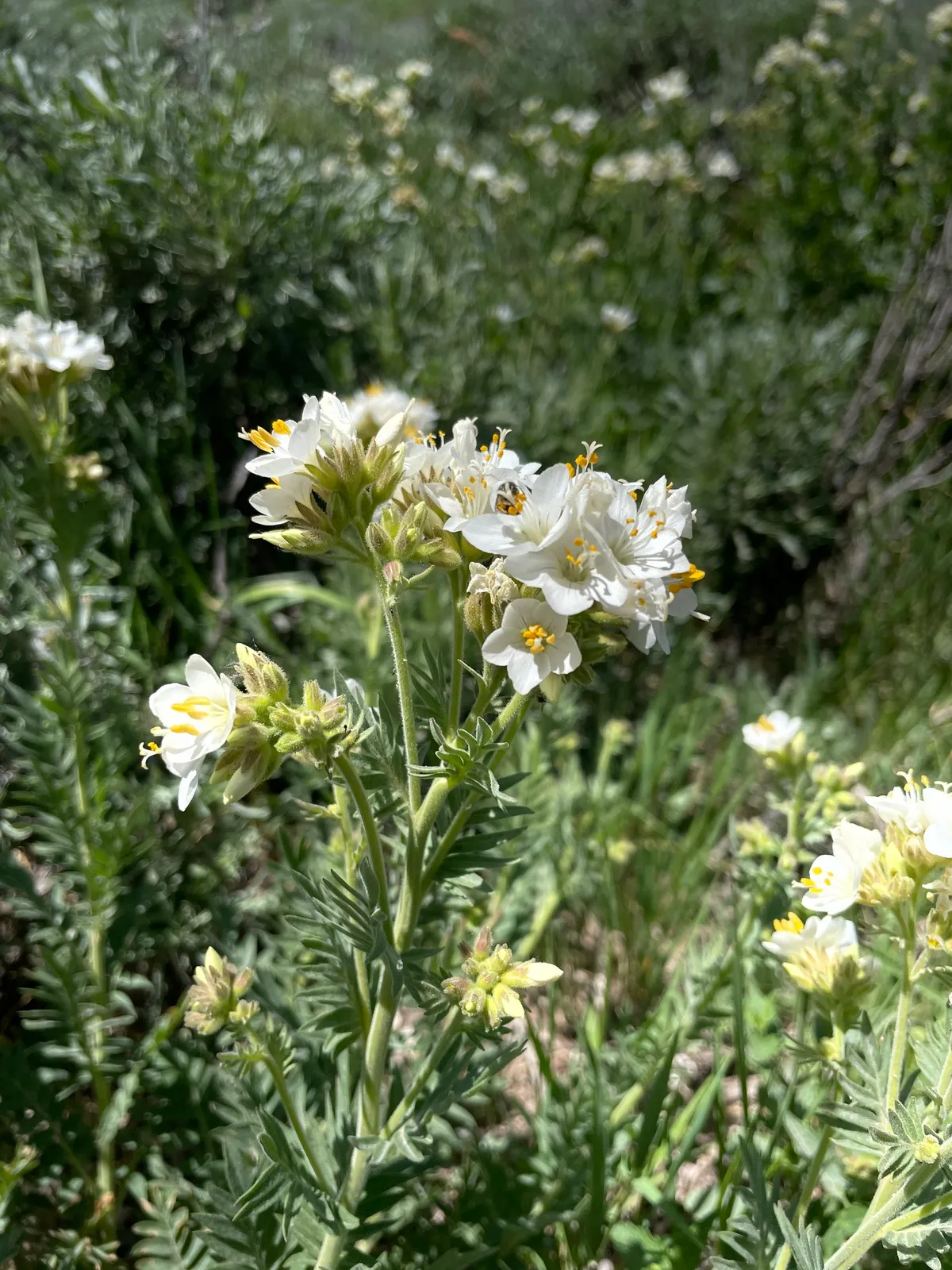
Leafy jacob's-ladder is a native perennial with delicate, ladder-like compound leaves and clusters of small blue to purple flowers. It grows in a compact, well-behaved clump that stays under 2 feet tall and blooms from May through July. This woodland native prefers partial shade and regular water, making it ideal for cooler spots in the garden.
How to care for Leafy Jacob's-ladder, by region
How to care for Leafy Jacob's-ladder where it is actually grown: year-round basics plus what to do each season, region by region, with the sources for each.
Care guidance last updated: September 2026
Southeastern Plains (includes Tallahassee, FL)
Year-round
Leafy Jacob's-ladder is a Rocky Mountain wildflower native to Arizona, New Mexico, Colorado, and Utah, and it is a poor match for Tallahassee's hot, humid lowland climate. It is not native to Florida, Georgia, or Texas.
- In its native range it grows along cool mountain stream banks and open woods at higher elevations.
- Polemonium species as a group are documented as intolerant of the high heat and humidity of Deep South summers, and this species comes from an even cooler, drier climate than most garden Polemonium.
- Give it the coolest, shadiest, most consistently moist spot available, and treat it as an experiment rather than a reliable perennial here.
- Expect it to decline or die out during Tallahassee's hot summer stretch.
Fall
Fall's cooler temperatures may bring some new growth if the plant survived summer, but do not expect a strong recovery in this climate.
- Check in early fall whether any crown survived the summer heat.
- If it did, keep soil moist as temperatures ease.
- If it did not, fall is not a good time to replant, since summer heat will return before it gets established.
Winter
Winter is mild in Tallahassee, so cold is not a concern for this plant, its native high-elevation range sees far colder winters.
- No winter protection is needed for cold in Tallahassee's zone 8b to 9a climate.
- If any plant survived the year, keep soil from fully drying out during winter dry spells.
- Given how poorly suited this species is to the regional climate overall, it is a reasonable call not to replant it here.
Spring
Spring is the best window to plant it and to enjoy any bloom before summer heat arrives.
- Plant in rich, moist, well-drained soil in part shade after the last frost.
- Spring is when this plant is closest to the cool conditions it needs, so growth and any flowering will look best now.
- Keep soil consistently moist, since dry soil stresses this species quickly.
Summer
Summer is the season most likely to end this plant's run in Tallahassee, since sustained heat and humidity are outside what it can handle.
- Deep shade and constant moisture are the only ways to buy it more time through summer heat.
- Watch for wilting and dieback as a sign the plant is failing in the heat, this is expected rather than a sign of a fixable problem.
- Do not expect this plant to rebloom or thrive through a full Tallahassee summer.
Sources: Lady Bird Johnson Wildflower Center - Polemonium foliosissimum, Missouri Botanical Garden Plant Finder - Polemonium caeruleum (genus heat and humidity note)
In an HOA neighborhood
Leafy Jacob's-ladder is an HOA-friendly choice. Maintenance level: low. Tidiness: 4 out of 5.
Works well in: front yard, foundation, mid zone.
Wildlife value
The nectar-rich flowers attract native bees and butterflies during the late spring and summer blooming period. The dense foliage also provides shelter for beneficial insects.
Common questions
- How much sun does Leafy Jacob's-ladder need?
- Leafy Jacob's-ladder grows best in part shade conditions.
- When does Leafy Jacob's-ladder bloom?
- Leafy Jacob's-ladder blooms in May, June, and July.
- Where is Leafy Jacob's-ladder native?
- Leafy Jacob's-ladder (Polemonium foliosissimum) is native to AZ, CO, NM, UT, per vouchered herbarium specimen records and regional native plant society lists.
- What pollinators does Leafy Jacob's-ladder attract?
- Leafy Jacob's-ladder draws bees and butterflies.
- Is Leafy Jacob's-ladder HOA-friendly?
- Leafy Jacob's-ladder is generally an HOA-friendly choice in the right placement, with low maintenance.
Native range data from vouchered herbarium specimen records and regional native plant society lists. Pollinator and host plant associations compiled from GBIF, iNaturalist, and published ecological literature.
If something looks wrong
Common plant problems, and what to check first
These come up on almost any plant. Each guide lists the likely causes in the order they are worth ruling out, with one thing to check before you act on any of them, and links to the source it came from.
- It is dying right after planting
- Leaves turning yellow
- Wilting even though I watered it
- Brown crispy leaf tips
- Bugs on the plant
Ready to grow Leafy Jacob's-ladder? Add it to your garden in Pollinator Patch to track it and get season-by-season care guidance.