Mat Penstemon
Penstemon caespitosus
Last reviewed: September 2026
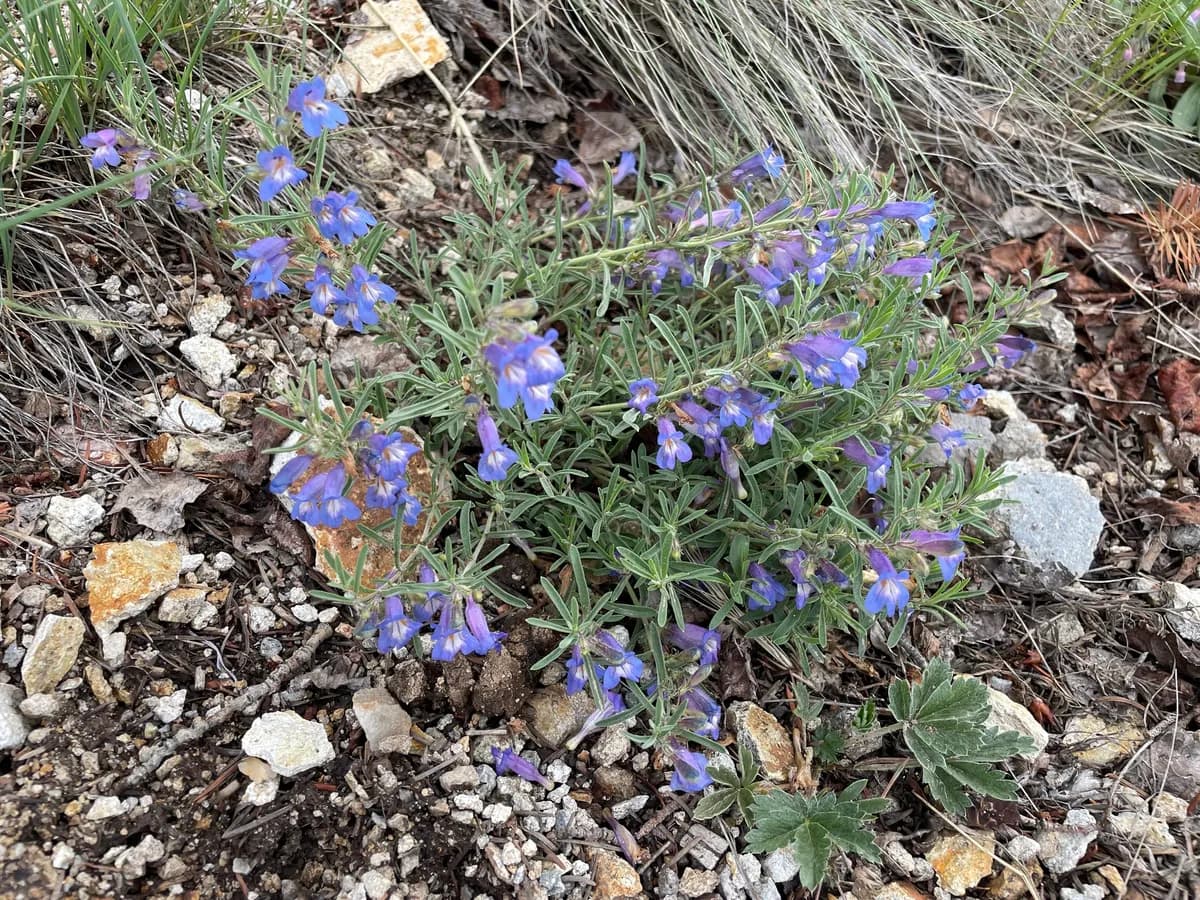
Mat Penstemon is a low, cushion-forming perennial that spreads into tight mats and produces lavender-purple flowers from May through July. It thrives in full sun with low water once established, making it a good fit for rocky, dry gardens.
Toxicity unknown
Mat Penstemon (Penstemon caespitosus) is not listed by the ASPCA Animal Poison Control Center (opens in new tab) or the other sources we check, so we have no verdict for it either way. Absence from those lists is not a clearance. If your pet shows symptoms after eating any plant, call the ASPCA at (888) 426-4435.
Light
full sun
Water
low
Size
2"–8" H × 6"–12" W
Bloom
May, Jun, Jul
Native to
AZ, CO, UT, WY
Pollinators
bees, hummingbirds
Before you buy
Your city may pay you to plant this
Cities and water utilities offer rebates for replacing lawn with native and water-wise plants. We track 459 programs across 44 states, each with a link to the provider and the date we last checked it.
Find rebates in your areaPicture natives in your own yard
Upload a photo of your yard and Patch Vision shows a rendering of it planted with natives for your region, like Mat Penstemon.


Browse plants for this ecoregion
Mat penstemon forms a low, compact cushion of small evergreen leaves that stays neat year-round. In late spring and early summer, it produces tubular purple-blue flowers that rise just above the foliage. This hardy perennial thrives in full sun with minimal water once established.
Growing Mat Penstemon
Grow Mat Penstemon in full sun and low water. Mature plants reach 2 to 8 inches tall and spread 6 to 12 inches wide. Expect low maintenance to keep it looking intentional in a front yard.
How to care for Mat Penstemon, by region
How to care for Mat Penstemon where it is actually grown: year-round basics plus what to do each season, region by region, with the sources for each.
Care guidance last updated: October 2026
Arizona/New Mexico Plateau (includes Flagstaff, AZ)
Year-round
Year-round care for mat penstemon around Flagstaff, AZ: sun to part sun, fast-draining gritty soil, little water.
- It grows in sun to part sun.
- It wants dry, gritty, gravelly or sandy well-drained soil with low organic content, so crowns stay dry.
- Water needs are low. It does not like to be over-watered.
- Give some extra water in the first year, then it generally needs none.
- It forms a mat 1 to 2 inches tall and 12 to 14 inches across. Avoid high-traffic areas.
- Cutting plants back after flowering may increase longevity. It is hardy in zones 4 to 7.
A low, even mat along a bed edge or between stones looks tidy and intentional.
Sources: Plant Select: Penstemon caespitosus, Santa Fe Botanical Garden: Penstemon caespitosus
Central Basin and Range (includes Salt Lake City, UT)
Year-round
Year-round care for mat penstemon around Salt Lake City, UT: sun to part sun, well-drained soil.
- The selected form listed here grows in sun to part sun.
- It dislikes excess moisture, with water needs low to xeric.
- It adapts to clay, loam, sandy and gravelly soils.
- It grows 1 to 2 inches tall and 12 to 14 inches wide in circular evergreen mats.
- Trim young tips to promote branching.
- The stems turn semi-woody, so keep it out of high-traffic spots.
- It is listed for zones 4 to 7.
A flat evergreen mat that stays low and tidy at a bed edge.
Sources: Plant Select: Penstemon caespitosus
Colorado Plateaus (includes Grand Junction, CO)
Year-round
Mat penstemon is a tiny, spreading plant that likes well-drained soil and little water.
- It likes sun or part sun.
- Water needs are low to xeric, and it does not like to be over-watered.
- It grows in clay, loam, sandy or gravelly soil but prefers good drainage.
- It reaches only 1 to 2 inches tall and spreads 12 to 14 inches.
A low, tidy mat that suits dry beds and rock gardens.
Fall
Fall is a good time to leave the mat alone.
- It develops semi-woody branches, so avoid planting where people walk.
- It can grow slowly.
- Keep water light.
Winter
This plant is rated hardy for zones 4 to 7, which includes zone 7a.
- Hardy in USDA zones 4 to 7.
- Well-drained soil matters most.
- Plants may need replacing after 5 to 10 years.
Spring
Spring is the time to trim young plants so they branch.
- Trim young plants to encourage branching.
- Keep water light since it does not like to be over-watered.
- Plant in well-drained soil.
Summer
Flowers show in early summer. Keep watering light.
- Blue to light purple flowers appear from June through early July.
- Water needs are low to xeric.
- Sun or part sun works.
Southern Rockies (includes Durango, CO)
Year-round
Mat penstemon is a tough, low-growing mountain native that hugs the ground and only asks for full sun and fast-draining soil.
- Native to Colorado and the Southern Rockies, so it belongs in Durango yards.
- Forms a tight mat only 2 to 8 inches tall, ideal between pavers or as front-of-bed edging.
- Wants full sun and lean, gritty or rocky soil that drains fast.
- Its purple to blue tubular flowers feed native bees and hummingbirds.
- The main way people kill it is too much water and heavy, wet soil.
Kept as a low, even mat along a bed edge or path, it reads as intentional and cared-for, which helps a front yard avoid a violation letter.
Fall
Early fall is a second planting window, and it is the time to stop fussing and let the plant wind down.
- Early fall is a good second planting window so roots settle before the ground freezes.
- Ease off watering as nights cool and the plant heads toward dormancy.
- Leave the dried flower stalks and seedheads standing for insects and birds.
- Do not cut the mat back now, the old growth helps protect the crown over winter.
- Check that the spot still drains fast before the wet, freezing months arrive.
Winter
Through Durango's cold, snowy winter the plant is fully dormant, so the best care is to leave it alone.
- The mat is dormant and hardy through the zone 5b to 6a winter, so no care is needed.
- Leave the dried stalks standing until spring.
- Do not water, frozen wet soil is the fastest way to rot the crown.
- Snow cover is fine and actually protects the low mat.
- Wait until early spring to cut the old growth back.
Standing dried stalks can read as neglect, so a clean bed edge and knowing they are intentional winter cover keeps the yard looking deliberate and helps avoid a violation letter.
Spring
Spring is for a quick cleanup and, once frost is done, for setting out new plants.
- Wait until the last hard frost passes, usually late May, before planting.
- Cut last year's dried stalks back down to the green mat in early spring.
- Water a new plant lightly to settle the roots, then let the soil dry between drinks.
- Pull early weeds by hand so they do not crowd the low mat.
- Skip rich compost or mulch that holds water against the crown.
A quick early-spring trim of the dead stalks keeps the mat looking neat and intentional, which reads as cared-for and helps avoid a violation letter.
Summer
Summer is the short bloom season, when the plant feeds pollinators and needs very little water.
- Blooms purple to blue from about May into July through the short mountain summer.
- The flowers feed native bees and hummingbirds, so leave them be while blooming.
- Water deeply but rarely, only when the soil is dry an inch down.
- Skip extra water during July and August monsoon storms, since the rain is usually enough.
- Watch for soft, yellow growth, a sign the soil is staying too wet.
Sources: USDA PLANTS: Penstemon caespitosus, Lady Bird Johnson Wildflower Center: Penstemon caespitosus, Xerces Society: pollinator-friendly native plants, Colorado State University Extension: yard and garden
Wasatch and Uinta Mountains (includes Logan, UT)
Year-round
Year-round care for mat penstemon around Logan, UT: sun to part sun, fast-draining gritty soil, little water.
- It grows in sun to part sun.
- It wants dry, gritty, gravelly or sandy well-drained soil with low organic content, so crowns stay dry.
- Water needs are low. It does not like to be over-watered.
- Give some extra water in the first year, then it generally needs none.
- It forms a mat 1 to 2 inches tall and 12 to 14 inches across. Avoid high-traffic areas.
- Cutting plants back after flowering may increase longevity. It is hardy in zones 4 to 7.
A low, even mat along a bed edge or between stones looks tidy and intentional.
Sources: Plant Select: Penstemon caespitosus, Santa Fe Botanical Garden: Penstemon caespitosus
In an HOA neighborhood
Mat Penstemon is an HOA-friendly choice. Maintenance level: low. Tidiness: 4 out of 5.
Works well in: front yard, foundation, street edge, mid zone.
Wildlife value
The tubular flowers attract bees and hummingbirds during the May through July bloom period. This native plant provides reliable nectar sources during hot summer months when many other flowers have faded.
Common questions
- When does Mat Penstemon bloom?
- Mat Penstemon typically flowers from May through July, producing small tubular purple blooms held just above its mat of foliage.
- How much water does Mat Penstemon need?
- Mat Penstemon is adapted to low water conditions and prefers well-drained, rocky or sandy soil that dries out between waterings. Overwatering or heavy, wet soil can cause it to decline.
- What kind of light does Mat Penstemon need?
- This plant grows best in full sun and can tolerate some part sun, especially at higher elevations where afternoon light is intense.
- What pollinators visit Mat Penstemon?
- Bees and hummingbirds are the main visitors to Mat Penstemon flowers, drawn to the tubular blooms during its spring and summer flowering period.
- Is Mat Penstemon a good groundcover?
- Yes, its low, spreading, mat-forming habit makes it useful as a small-scale groundcover in rock gardens or dry border edges.
- Is Mat Penstemon HOA-friendly?
- Mat Penstemon is generally an HOA-friendly choice in the right placement, with low maintenance.
These answers were drafted with an AI model from this plant's data. Verify care details with a local expert.
Native range data from vouchered herbarium specimen records and regional native plant society lists. Pollinator and host plant associations compiled from GBIF, iNaturalist, and published ecological literature.
If something looks wrong
Common plant problems, and what to check first
These come up on almost any plant. Each guide lists the likely causes in the order they are worth ruling out, with one thing to check before you act on any of them, and links to the source it came from.
- It is dying right after planting
- Leaves turning yellow
- Wilting even though I watered it
- Brown crispy leaf tips
- Bugs on the plant
Ready to grow Mat Penstemon? Add it to your garden in Pollinator Patch to track it and get season-by-season care guidance.