Narrowleaf Silkgrass
Pityopsis graminifolia
Last reviewed: September 2026
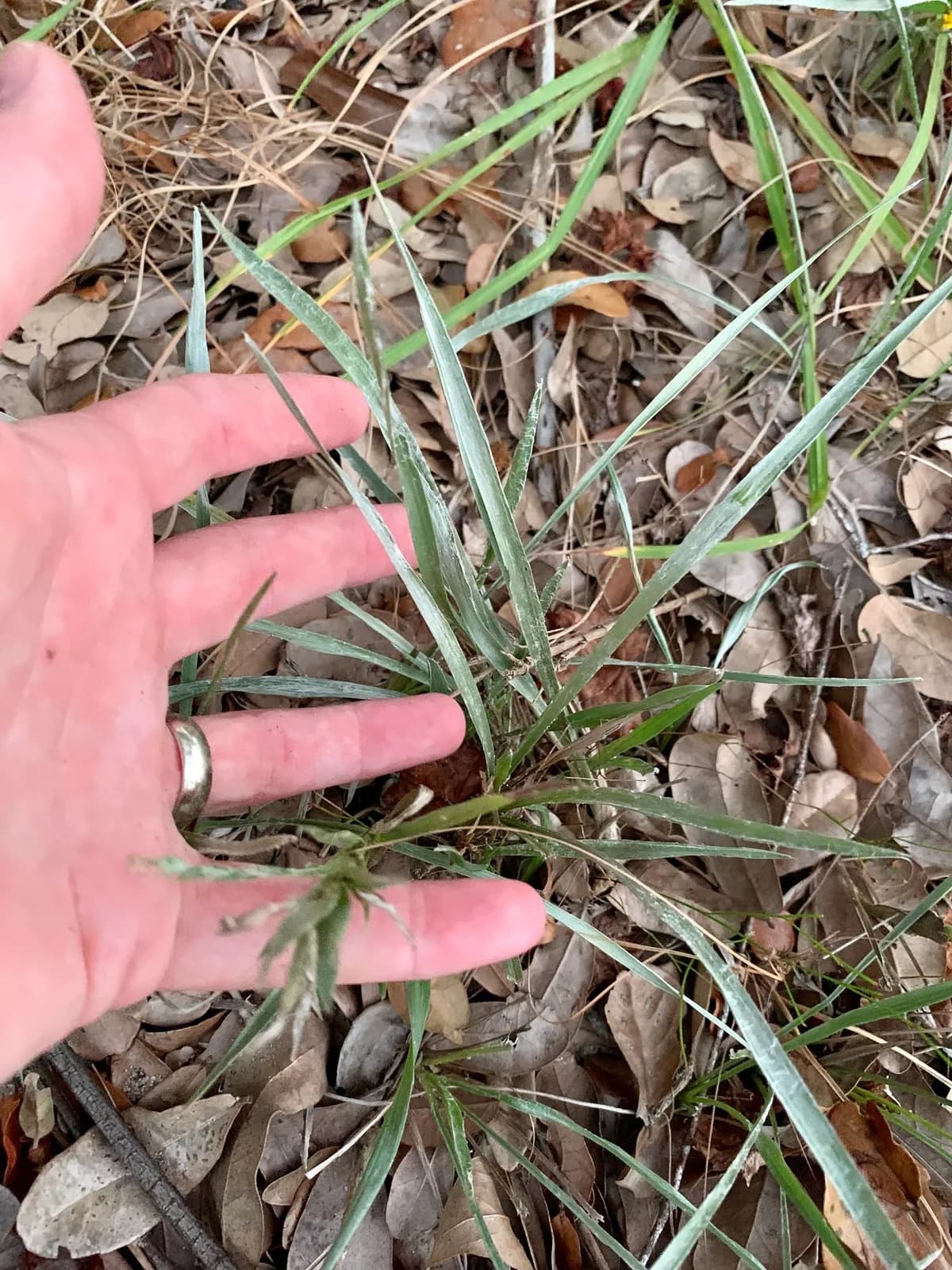
Narrowleaf silkgrass is a low water forb with silvery grasslike leaves and small yellow daisy flowers, blooming from June through November in open sandy sites and pine woodlands across the southeastern and mid-Atlantic United States.
Toxicity unknown
Narrowleaf Silkgrass (Pityopsis graminifolia) is not listed by the ASPCA Animal Poison Control Center (opens in new tab) or the other sources we check, so we have no verdict for it either way. Absence from those lists is not a clearance. If your pet shows symptoms after eating any plant, call the ASPCA at (888) 426-4435.
The USDA PLANTS Database (opens in new tab) does not flag Narrowleaf Silkgrass as toxic to livestock.
Light
full sun
Water
low
Size
12"–24" H × 12"–24" W
Bloom
Jun, Jul, Aug, Sep, Oct, Nov
Native to
AL, AR, DE, FL and 13 more states
Pollinators
butterflies, bees
Before you buy
Your city may pay you to plant this
Cities and water utilities offer rebates for replacing lawn with native and water-wise plants. We track 452 programs across 44 states, each with a link to the provider and the date we last checked it.
Find rebates in your areaBrowse plants for this ecoregion
Narrowleaf Silkgrass is a compact native perennial with narrow, grass-like foliage and bright yellow daisy-like flowers. It blooms reliably from summer through late fall, providing consistent color when many other plants are declining. The plant maintains a neat, clumping habit that works well in designed landscapes.
Growing Narrowleaf Silkgrass
Grow Narrowleaf Silkgrass in full sun and low water. Mature plants reach 12 to 24 inches tall and spread 12 to 24 inches wide. Expect low maintenance to keep it looking intentional in a front yard.
How to care for Narrowleaf Silkgrass, by region
How to care for Narrowleaf Silkgrass where it is actually grown: year-round basics plus what to do each season, region by region, with the sources for each.
Care guidance last updated: August 2026
Blue Ridge (includes Asheville, NC)
Year-round
Narrowleaf silkgrass is a native, silvery, clumping perennial that blooms yellow in late summer and fall, and in the Blue Ridge the whole job is keeping it in lean, sharply drained ground so the year round rain does not rot it.
- This plant is native to North Carolina, so it belongs in a Blue Ridge yard rather than being something you are forcing to live here.
- It is hardy from USDA zone 5 through zone 9, which covers both Asheville valley (about 7a) and the lower, slightly warmer Wilkes County band (about 7b).
- Give it full sun. It will live in part shade, but flowering drops off and the stems get floppy.
- The one thing that keeps it alive here is drainage. It does poorly only when soils are too rich and damp, and the Blue Ridge gets around 45 inches of rain with no real dry season.
- Plant it on a slope, a berm, a raised bed, or a gravelly strip, and work coarse sand or fine gravel into heavy loam before planting.
- The flowers are a real nectar source for butterflies and bees late in the season, which is when most other blooms are gone.
Fall
This is the show season, so let it bloom, plant more of it early in the fall, and resist the urge to tidy the whole patch down.
- Expect bright yellow daisy flowers from late August through October here, peaking about when the first frost arrives in late October.
- Leave the flowers standing while they bloom. They are a nectar source for butterflies and bees at a point in the year when little else is open.
- Early fall is a good planting window in the Blue Ridge, roughly six weeks ahead of the late October first frost, so roots settle in before the ground cools.
- Seed blows around and starts new plants, so clip a few spent stems along the front edge if you want the spread kept in bounds.
- Do not blanket the crowns with heavy mulch or wet leaves. Damp material sitting on the silvery foliage is what rots this plant.
- Skip any fall feeding. Lean soil is the point.
Trimming the spent stems along the front two feet of the bed and keeping a crisp edge reads as intentional to a passing board member while the rest of the patch keeps blooming for pollinators.
Winter
Leave the silvery clumps standing all winter and spend your attention on drainage, because wet feet hurt this plant here far more than cold does.
- The foliage is semi evergreen, so the silvery tufts stay visible through Blue Ridge winter instead of disappearing.
- Cold is not the problem. This plant is hardy from zone 5, well below Asheville lows in the teens and the milder Wilkes County band.
- Leave everything standing until late February. Cutting early costs you the winter structure and gains nothing.
- Keep mulch, matted leaves, and snow pushed off the crowns. Wet material sitting on the clump through a freeze and thaw cycle is the real killer here.
- Walk the bed after a heavy rain or snowmelt and note anywhere water ponds near the clump, then regrade or move it in spring.
- Nothing else is needed. No watering, no feeding, no cover.
The silvery clumps hold a tidy, deliberate shape through winter, which keeps the front bed looking maintained during the season when bare, flattened perennials most often draw a violation letter.
Spring
Cut the old clumps back in late February or early March before new leaves push, then leave the plant alone and do not feed it.
- Cut last year's foliage back just before new leaves emerge, which in this part of the Blue Ridge is late February into early March.
- Hold off on setting out new plants or divisions until after the mid April last frost, once the soil has warmed.
- Skip compost and fertilizer entirely. Rich soil is what makes this plant flop and rot here, not what makes it grow.
- Cool wet Blue Ridge springs can bring leaf spot to the silky foliage. Space plants about a foot apart for airflow and let the plant grow through it, since treatment is usually not needed.
- Water new plantings through their first spring, then taper off. Established clumps do not need it.
- It slowly spreads by underground stems and windblown seed into a patch, and USDA NRCS notes it does not displace other plants, so you can let it fill in.
Cutting the clumps back in late winter before new growth starts keeps the bed reading as intentional rather than neglected right when spring walk-throughs happen.
Summer
Summer is a hands off season, and the main risk in the Blue Ridge is giving it more water than the sky already does.
- Do not water established clumps. USDA NRCS says established stands tolerate dry conditions and will not require irrigation.
- Rain falls fairly evenly here all summer, so keep this plant out of irrigated beds and away from downspouts and low spots that stay soggy.
- First year plants only need help in a genuinely dry stretch, and even then a deep soak once beats frequent sprinkling.
- If stems start leaning, the cause is almost always too much shade or too rich a soil, not thirst. Note it and move the clump in fall.
- Flower buds form in late summer, so stop any trimming or mowing around the patch once you see them.
- No spraying needed. Aside from leaf spot in wet weather, this plant has no serious pest problems in cultivation.
Sources: Lady Bird Johnson Wildflower Center, Pityopsis graminifolia (Narrowleaf silkgrass), USDA NRCS Plant Fact Sheet, Narrowleaf Silkgrass (PIGR4), North Carolina Extension Gardener Plant Toolbox, Pityopsis graminifolia, South Carolina Native Plant Society, Pityopsis graminifolia
Ridge and Valley (includes Harrisburg, PA)
Year-round
Narrowleaf Silkgrass is hardy enough for the Harrisburg area (extension sources rate it USDA zone 5a to 9b), but it is being asked to grow outside the sandy, lean soils it prefers farther south. Give it full sun and fast draining soil and expect the foliage to brown back in winter rather than stay evergreen year round. It is not on the ASPCA toxic plant list for dogs or cats.
- Plant in full sun and soil that drains quickly after rain. Central Pennsylvania's clay heavy soils hold more moisture than this species likes, so work in coarse sand or grit, or use a raised or sloped bed.
- Treat the leaf retention as semi evergreen to deciduous here rather than fully evergreen. Extension sources note it does poorly in rich, damp soil, and colder winters like Harrisburg's tend to brown the foliage back.
- It is not on the ASPCA toxic plant list for dogs or cats.
- The silvery, grass like foliage and low mounded habit read as tidy and HOA-friendly, and the only regular task is one cutback of old foliage each year.
Fall
Fall is this plant's showiest season here. Expect the bright yellow, daisy like flowers to open from late summer into November, right up until Harrisburg's average first frost in late October.
- Leave the yellow flower clusters up through fall. They are a nectar source and draw butterflies during this bloom window.
- Do not cut the plant back in fall. Leaving the foliage standing over winter protects the crown better than a fall cutback would.
- First frost typically arrives in Harrisburg by late October. Frost will brown the flowers, but the plant does not need to be covered or moved.
Leaving the fall flowers and foliage standing reads as an intentional wildlife planting rather than an unkept bed, as long as the surrounding edges stay trimmed.
Winter
Winter is this plant's dormant season in Harrisburg. Even though it is hardy enough for the area's USDA zone, expect the foliage to brown and flatten rather than stay silvery green, and leave it alone until the late winter cutback.
- Expect foliage to brown and go semi dormant over winter rather than stay evergreen. That is normal for this species this far north and not a sign of a dying plant.
- Leave the dead foliage in place through winter. It insulates the crown, and cutting it back is a late winter to early spring task, not a winter one.
- Avoid piling snow or walking on the crown. Compacted, wet snow cover can rot the base faster than cold alone.
Spring
Spring in Harrisburg is cutback and drainage check season. Clear the browned winter foliage before new growth starts, usually once the average last frost passes in mid April, and make sure spring rain is not sitting around the crown.
- Cut old top growth back to a few inches once hard freezes are behind you, generally by mid April in Harrisburg (average last frost is around April 12), and before new leaves push.
- Check drainage during spring rains. This plant fails faster from wet, heavy soil than from cold, so improve drainage now if water is pooling around the base.
- New growth is slow to start. Do not water or fertilize it on the same schedule as faster growing spring perennials nearby.
A late winter to early spring cutback of the old foliage reads as an intentional bed refresh rather than leftover winter debris, which helps the bed avoid a violation letter.
Summer
Summer heat and humidity in Harrisburg are within this plant's comfort range as long as the soil stays on the dry side. Established plants need little supplemental water, and flower buds begin forming toward late summer.
- Water only during extended dry spells once established. Overwatering in humid Harrisburg summers is the more common problem than underwatering.
- Deadhead spent flower clusters if a tidier look is wanted, though it is not required for the plant's health.
- Watch for a mushy base or a yellowing center after a run of humid, rainy weeks, a sign of crown rot, and improve drainage if it shows up.
Sources: ASPCA Toxic and Non-Toxic Plants: Dogs, ASPCA Toxic and Non-Toxic Plants: Cats, NC State Extension Plant Toolbox: Pityopsis graminifolia, Lady Bird Johnson Wildflower Center Native Plant Database: Pityopsis graminifolia, Almanac.com Frost Dates: Harrisburg, Dauphin County, PA (community tip)
Southern Coastal Plain (includes Orlando, FL)
Year-round
Narrowleaf silkgrass is built for Orlando's sandy, well-drained soil and needs very little help once established, wet feet are a bigger risk than drought. Skip rich soil, heavy mulch, and a regular watering schedule.
- This plant is native to Florida and much of the southeastern US, and does well in Central Florida's sandy scrub and flatwoods soils.
- Give it full sun to light shade, it blooms most heavily in full sun.
- Plant in dry, sandy, well-drained soil, it performs poorly in rich, damp, or heavily amended garden beds.
- Water only to get it established, after that it needs little supplemental irrigation even through Orlando's dry spring.
- Keep mulch light, a thick or rich layer holds too much moisture against the crown in Florida's humidity.
- It spreads by underground rhizomes, so give it room or plan to divide it if it outgrows its spot.
Its low, grassy habit reads as tidy from the street, though its spreading rhizomes are worth containing at a bed edge so it doesn't wander into the lawn.
Fall
Fall is peak bloom for narrowleaf silkgrass in Central Florida, with bright yellow flowers drawing butterflies into early winter. No deadheading is needed, and established plants rarely need extra water.
- This is peak bloom, bright yellow daisy-like flowers cover the plant from late summer into early winter and draw butterflies and other pollinators.
- No deadheading is needed, let the blooms run their course into fall for the pollinators and for seed if you want it to spread.
- Skip watering unless Orlando has an unusually dry fall, established plants handle it on their own.
- This is a good time to collect seed or divide rhizome clumps if you want to expand the planting.
Winter
Cut narrowleaf silkgrass back close to the ground in February, right before new growth starts, this is its one significant pruning of the year. Central Florida winters are mild enough that no frost protection is needed.
- Cut the whole clump back close to the ground in February, just before new growth emerges, to keep it tidy for the next season.
- Central Florida winters are mild enough that this plant needs no frost protection, occasional cold snaps won't hurt the roots.
- Hold off on the hard cutback until late winter rather than right after bloom, the old seed heads feed birds through the cooler months.
- No watering or feeding needed while it's dormant over winter.
Spring
Spring, Central Florida's dry season, is the best time to divide or transplant narrowleaf silkgrass clumps before summer humidity arrives. New growth fills in on its own after a late-winter cutback.
- Late winter into spring, Central Florida's dry season, is the easiest time to divide or transplant clumps before summer humidity sets in.
- New leaf growth should be filling in by spring after a February cutback, no fertilizer needed to push it along.
- Water new divisions or transplants during dry spring weeks until roots take hold, established clumps can go without.
- Watch for it filling in bare, sandy patches on its own, this is normal spreading behavior, not a problem.
Summer
Orlando's heavy summer rain rarely bothers narrowleaf silkgrass as long as the bed drains fast. Avoid fertilizing or watering on a schedule, since both encourage floppy growth and fungal problems in the humidity.
- Orlando's heavy summer rains rarely bother this plant, it tolerates wet spells as long as the soil drains fast, which is typical for Central Florida sand.
- Resist the urge to fertilize or water on a schedule, too much of either encourages floppy growth and fungal problems in summer humidity.
- Foliage stays low and grassy through summer, flower buds start forming as days shorten toward late summer.
- If a bed stays soggy for days after storms, that spot is too wet for silkgrass, consider moving it to higher, sandier ground.
Sources: Lady Bird Johnson Wildflower Center: Pityopsis graminifolia, Florida Native Plant Society: Pityopsis graminifolia, Florida Wildflower Foundation: Narrowleaf Silkgrass (community tip)
Texas Blackland Prairies (includes Dallas, TX)
Year-round
Narrowleaf silkgrass is a tidy little clumping perennial with silvery, grass-like leaves and cheerful yellow aster flowers from June into November. It loves full sun, wants very little water, and shrugs off heat and drought once it is settled in. The big thing to know for a Dallas yard is that this is a sandy-soil plant from the southeast and Gulf Coast, so it hates the wet, heavy black clay we have around here. Give it your best-drained, sunniest spot and go easy on the water. It is native across Texas per USDA PLANTS, and it is not on the ASPCA toxic plant list, so it is a safe pick around pets.
- Pick the sunniest, best-drained spot you have, avoid low areas that stay wet
- Water lightly and let the soil dry out between drinks once established
- In heavy clay, plant a little high or mix in coarse sand or grit for drainage
- Leave the silvery clump alone in winter, it stays evergreen
- Great front-edge or border plant since it stays compact and neat
- Not on the ASPCA toxic plant list, so safe around dogs and cats
Stays a compact, tidy silvery clump, which makes it an easy HOA-friendly choice for a front-edge planting.
Fall
Fall is the best time to plant narrowleaf silkgrass in Dallas, and it is still blooming through much of it since flowers run into November. Planting now lets the roots settle in during our cooler, wetter fall before the plant faces a Texas summer. The flowers are a late-season food source for pollinators when not much else is open. As with every season here, the trick is drainage, so plant high and go light on water. Once the last blooms fade you can leave the tidy silvery clump standing for winter.
- Plant now for the best root establishment before next summer's heat
- Still set plants high on a mound so fall rain drains off the crown
- Enjoy the late blooms, they feed pollinators when little else is flowering
- Water new plantings only lightly, our fall rain usually does the job
- Leave faded flower stalks and the clump in place heading into winter
Winter
Winter is the quiet season for narrowleaf silkgrass in Dallas, and this is when the heavy clay is most likely to work against it. Our winters are mild with only light freezes, so the plant stays evergreen and holds its silvery clump, but wet, cold clay sitting around the roots is the real danger. The best thing you can do is nothing that adds water and make sure the plant is not parked in a spot that puddles. Hold off on cutting it back until late winter or early spring. It handles our zone 8a freezes without any cover.
- Do not water, winter wet in clay is the biggest threat to this plant
- Make sure no downspout or runoff pools around the crown
- Leave the evergreen clump uncut until late winter or early spring
- No frost cloth needed, it takes our light zone 8a freezes fine
- If you must tidy, wait for the coldest weather to pass before trimming
Spring
Spring is the second-best time to plant narrowleaf silkgrass in Dallas, right after fall. Our spring rains hit the Blackland clay hard, so the make-or-break job is drainage. Set new plants a little high on a mound or berm so water drains away from the crown, and hold off on heavy watering while the ground is already soggy. As days warm up you will see fresh silvery growth push out from the clump. This is a good window to divide an overgrown clump if you want more plants.
- Plant in early to mid spring on a raised spot so spring rain drains away fast
- Do not add extra water during our wet spring stretches, the clay holds plenty
- Divide crowded clumps now while the plant is waking up
- Skip heavy fertilizer, this is a lean-soil plant that gets floppy when overfed
- Pull spring weeds around the young clump so it is not crowded out
Summer
Summer is when narrowleaf silkgrass earns its keep in Dallas. It thrives in the 95 to 100F heat and long dry spells that make other plants sulk, and its yellow aster flowers start opening in June and keep going. The main risk here is not drought, it is overwatering the heavy clay during a rainy stretch or from a sprinkler, which can rot the crown. Water deeply but rarely, only when the plant looks a little dull, and let the soil dry well between drinks. Bumblebees and butterflies will work the blooms all summer.
- Water deeply but infrequently, let the clay dry out fully between waterings
- Do not run lawn sprinklers onto this plant, standing water rots the crown
- Expect yellow blooms starting in June that feed bees and butterflies
- No midday shade needed, full blazing sun is exactly what it wants
- A thin gravel or grit mulch helps keep the crown dry better than bark mulch
Sources: USDA PLANTS Database, Pityopsis graminifolia profile (native distribution incl. Texas), ASPCA Animal Poison Control, toxic and non-toxic plant list (not listed as toxic), Lady Bird Johnson Wildflower Center, Pityopsis graminifolia, Xerces Society, golden asters (Pityopsis) as pollinator and native bee forage, Florida Wildflower Foundation, Pityopsis graminifolia (bloom, pollinators, drainage), North Carolina Extension Gardener Plant Toolbox, Pityopsis graminifolia (soil, drainage, dividing)
Want these tasks as reminders timed to your yard? Pollinator Patch turns this guidance into a season-by-season care plan for the plants you actually grow.
In an HOA neighborhood
Narrowleaf Silkgrass is an HOA-friendly choice. Maintenance level: low. Tidiness: 4 out of 5.
Works well in: front yard, foundation, street edge, mid zone.
Wildlife value
This plant is an excellent pollinator magnet, attracting both butterflies and native bees throughout its extended bloom period. The long flowering season makes it particularly valuable for supporting pollinators from summer into fall.
Common questions
- When does narrowleaf silkgrass bloom?
- Narrowleaf silkgrass typically flowers from June through November, with clusters of small yellow ray flowers held above the grasslike foliage.
- What kind of light and soil does narrowleaf silkgrass need?
- This plant does best in full sun and well drained, sandy or gravelly soils, and it tolerates dry conditions once established.
- What pollinators visit narrowleaf silkgrass?
- Bees and butterflies are commonly seen visiting the flowers of narrowleaf silkgrass for nectar and pollen during its late summer and fall bloom period.
- Does narrowleaf silkgrass keep its leaves year round?
- The grasslike basal foliage is silvery and often persists through mild winters, though it can die back in colder parts of its range.
- Is Narrowleaf Silkgrass toxic to livestock?
- The USDA PLANTS Database does not flag Narrowleaf Silkgrass as toxic to livestock.
- Is Narrowleaf Silkgrass HOA-friendly?
- Narrowleaf Silkgrass is generally an HOA-friendly choice in the right placement, with low maintenance.
These answers were drafted with an AI model from this plant's data. Verify care details with a local expert.
Native range data from the World Checklist of Vascular Plants (Kew). Pollinator and host plant associations compiled from GBIF, iNaturalist, and published ecological literature.
If something looks wrong
Common plant problems, and what to check first
These come up on almost any plant. Each guide lists the likely causes in the order they are worth ruling out, with one thing to check before you act on any of them, and links to the source it came from.
- It is dying right after planting
- Leaves turning yellow
- Wilting even though I watered it
- Brown crispy leaf tips
- Bugs on the plant
Ready to grow Narrowleaf Silkgrass? Add it to your garden in Pollinator Patch to track it and get season-by-season care guidance.
Planning a bed around it? Start a free plan with this plant
Not sure where to start? Take the 2-minute yard quiz