Oak gooseberry
Ribes quercetorum
Last reviewed: October 2026
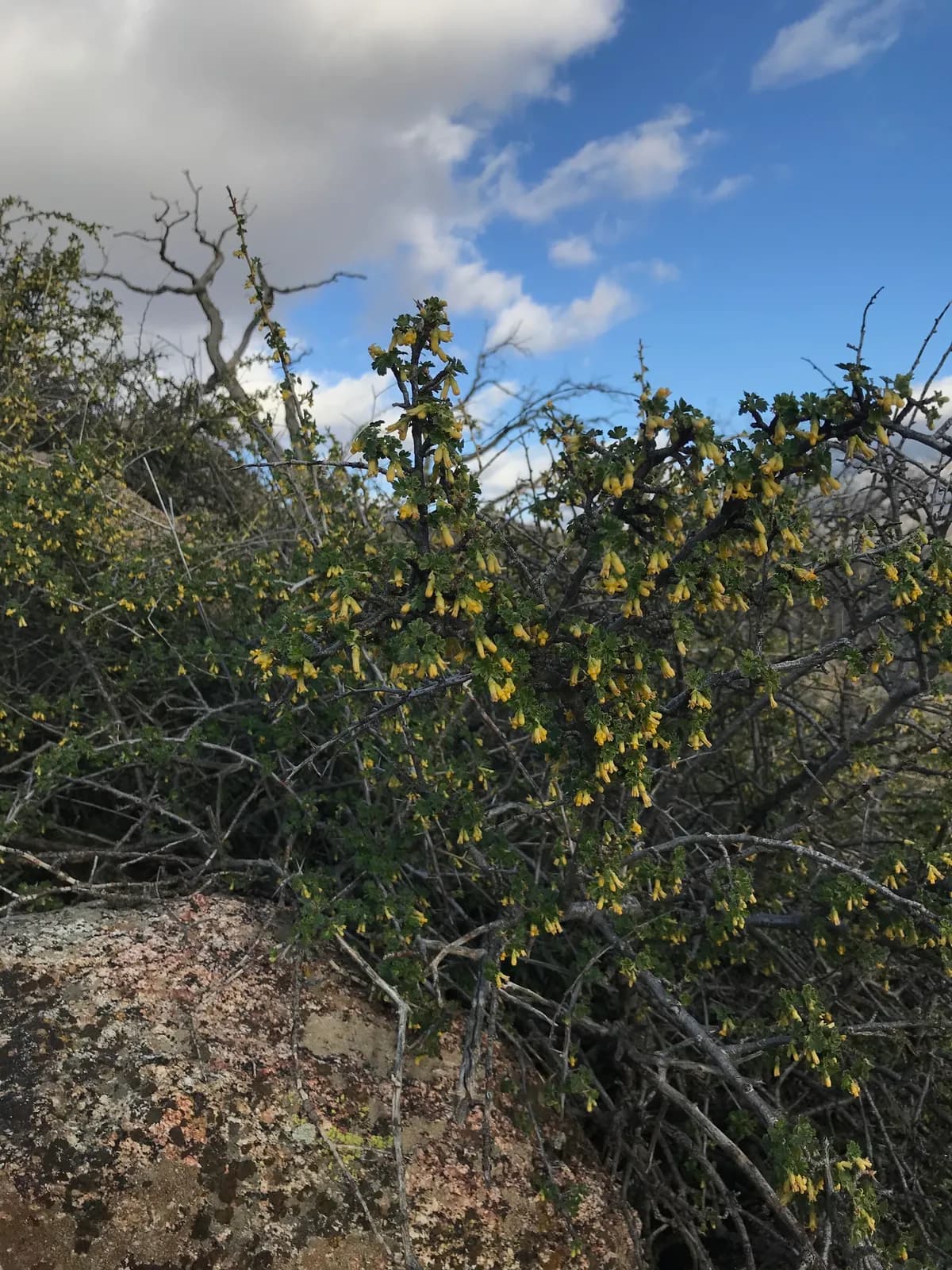
Oak gooseberry (Ribes quercetorum) is a perennial shrub native to CA. It blooms in January, February, and March. The flowers draw bees and hummingbirds.
Toxicity unknown
Oak gooseberry (Ribes quercetorum) is not listed by the ASPCA Animal Poison Control Center (opens in new tab) or the other sources we check, so we have no verdict for it either way. Absence from those lists is not a clearance. If your pet shows symptoms after eating any plant, call the ASPCA at (888) 426-4435.
Light
part sun
Water
low
Size
24"–60" H × 24"–48" W
Bloom
Jan, Feb, Mar
Native to
CA
Pollinators
bees, hummingbirds
Before you buy
Your city may pay you to plant this
Cities and water utilities offer rebates for replacing lawn with native and water-wise plants. We track 460 programs across 44 states, each with a link to the provider and the date we last checked it.
Find rebates in your areaPicture natives in your own yard
Upload a photo of your yard and Patch Vision shows a rendering of it planted with natives for your region, like Oak gooseberry.


Browse plants for this ecoregion
Spiny, deciduous shrub with small lobed leaves and drooping clusters of pale yellow flowers in late winter, followed by spiny berries. Grows in the understory of oak woodlands, going dormant in the dry season.
Growing Oak gooseberry
Grow Oak gooseberry in part sun and low water. Mature plants reach 24 to 60 inches tall and spread 24 to 48 inches wide.
Wildlife value
Early flowers provide nectar for bees and hummingbirds before most other plants bloom, and the berries are eaten by birds.
Common questions
- How much sun does Oak gooseberry need?
- Oak gooseberry grows best in part sun conditions.
- When does Oak gooseberry bloom?
- Oak gooseberry blooms in January, February, and March.
- Where is Oak gooseberry native?
- Oak gooseberry (Ribes quercetorum) is native to CA, per vouchered herbarium specimen records and regional native plant society lists.
- What pollinators does Oak gooseberry attract?
- Oak gooseberry draws bees and hummingbirds.
Native range data from vouchered herbarium specimen records and regional native plant society lists. Pollinator and host plant associations compiled from GBIF, iNaturalist, and published ecological literature.
If something looks wrong
Common plant problems, and what to check first
These come up on almost any plant. Each guide lists the likely causes in the order they are worth ruling out, with one thing to check before you act on any of them, and links to the source it came from.
- It is dying right after planting
- Leaves turning yellow
- Wilting even though I watered it
- Brown crispy leaf tips
- Bugs on the plant
Ready to grow Oak gooseberry? Add it to your garden in Pollinator Patch to track it and get season-by-season care guidance.