Pale Purple Coneflower
Echinacea pallida
Last reviewed: October 2026
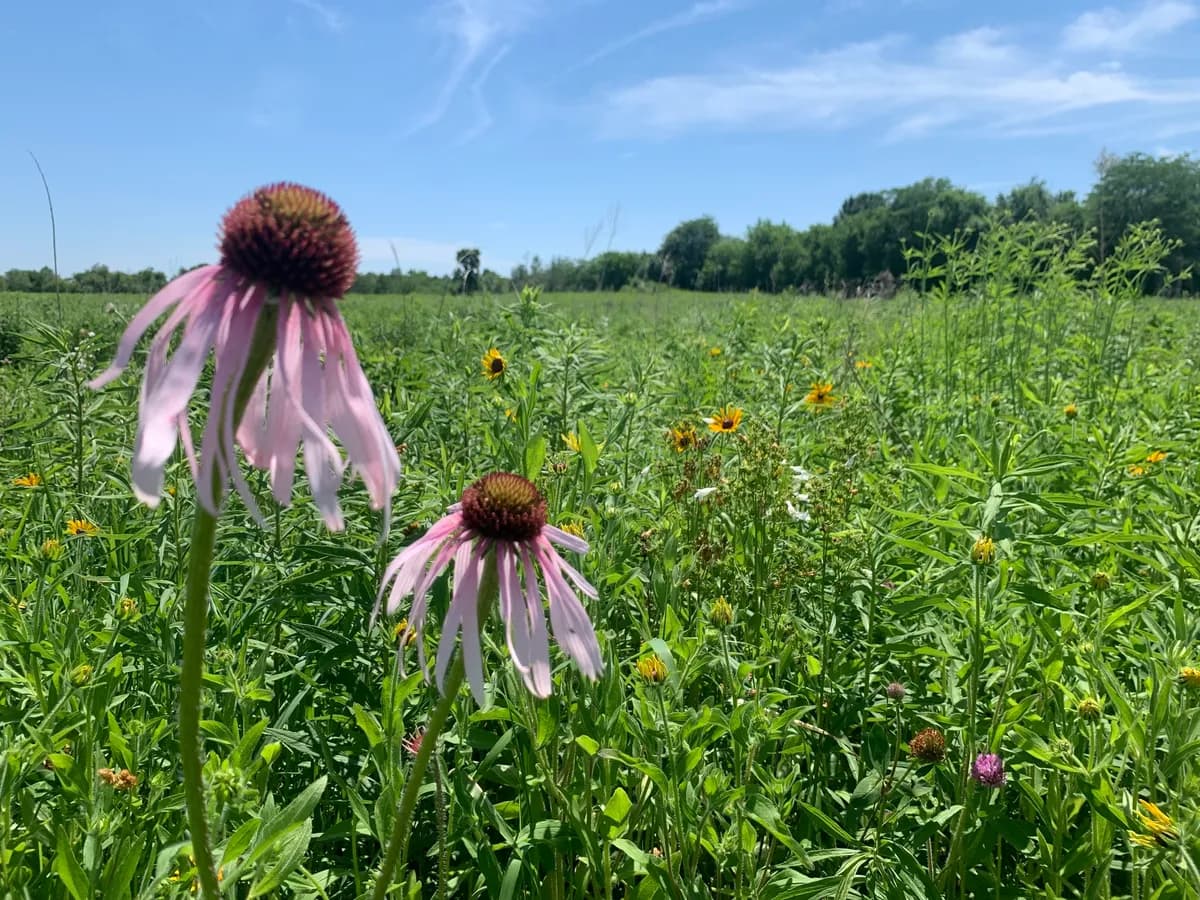
Echinacea pallida is a drought tolerant prairie forb that blooms June through August with narrow, drooping pale pink petals. It grows best in full sun and well drained soil, attracting bees, butterflies, and beetles.
Toxicity unknown
Pale Purple Coneflower (Echinacea pallida) is not listed by the ASPCA Animal Poison Control Center (opens in new tab) or the other sources we check, so we have no verdict for it either way. Absence from those lists is not a clearance. If your pet shows symptoms after eating any plant, call the ASPCA at (888) 426-4435.
The USDA PLANTS Database (opens in new tab) does not flag Pale Purple Coneflower as toxic to livestock.
Light
full sun
Water
medium
Size
24"–48" H × 12"–24" W
Bloom
Jun, Jul, Aug
Native to
AL, AR, GA, IA and 13 more states
Pollinators
bees, butterflies, beetles, moths
Deer
Resistant (per Prairie Moon Nursery)
Before you buy
Your city may pay you to plant this
Cities and water utilities offer rebates for replacing lawn with native and water-wise plants. We track 459 programs across 44 states, each with a link to the provider and the date we last checked it.
Find rebates in your areaPicture natives in your own yard
Upload a photo of your yard and Patch Vision shows a rendering of it planted with natives for your region, like Pale Purple Coneflower.


Browse plants for this ecoregion
Pale echinacea is a drought-tolerant native perennial with delicate pink to white flowers that bloom from June through August. The narrow, drooping petals surround prominent dark centers, creating an elegant wildflower appearance. This sturdy plant forms neat clumps and requires minimal care once established.
Growing Pale Purple Coneflower
Grow Pale Purple Coneflower in full sun and medium water. Mature plants reach 24 to 48 inches tall and spread 12 to 24 inches wide. Expect low maintenance to keep it looking intentional in a front yard.
How to care for Pale Purple Coneflower, by region
How to care for Pale Purple Coneflower where it is actually grown: year-round basics plus what to do each season, region by region, with the sources for each.
Care guidance last updated: October 2026
Central Corn Belt Plains (includes Chicago, IL)
Year-round
Pale purple coneflower is within its native range in the Chicago area, part of the tallgrass prairie flora Illinois is known for. It wants full sun, well-drained soil, and once its long taproot is established it needs very little upkeep.
- Plant in full sun, 6 or more hours of direct light. It will grow in part shade but flowers less.
- Needs soil that drains well. It tolerates sandy, loamy, or clay soils as long as they do not stay soggy.
- The long taproot makes it very drought tolerant once established, which suits Chicago's dry midsummer stretches.
- Not on the ASPCA toxic plant list for dogs, cats, or horses. Any plant eaten in quantity can still cause an upset stomach.
- Low maintenance. Divide crowded clumps every 3 to 4 years, and pair it with prairie grasses or other upright neighbors since it can flop without support.
This is a native Illinois prairie plant with a recognizable daisy-like bloom, which makes the case for an HOA-conscious front-yard planting easier than with a less familiar native.
Fall
Illinois falls turn crisp fast, with the first freeze in the Chicago area averaging mid-October. This is prime division and dormant-seeding season before the ground closes up for winter.
- First freeze in the Chicago area averages around October 19. Top growth will die back after that.
- Good time to divide overcrowded clumps, every 3 to 4 years, while the soil is still workable.
- Dormant, untreated seed can be sown directly outdoors in November or December here too. It needs the winter cold to break dormancy on its own.
- Leave seed heads standing instead of cutting the plant back. They feed birds through fall and hold up through the first frosts.
Winter
Chicago winters are genuinely cold, but this species comes from exactly that kind of prairie climate and needs no protection.
- Fully cold hardy in this region. It is rated hardy to USDA zone 3, and Chicago sits in zone 5b to 6a, well within its range.
- No mulching or winter protection needed for an established plant.
- Leaving old stems and seed heads up over winter shelters overwintering insects and keeps a food source available for birds through the coldest months.
- If you clear old growth for a tidier look, do it in late winter, just before new growth starts, rather than cutting back in fall.
Standing winter stems read as meadow-style rather than manicured. If the HOA expects a tidy look through winter, a late-winter cutback keeps most of the wildlife value while meeting that expectation.
Spring
Chicago springs stay cool longer than the calendar suggests, with an average last freeze in late April. Planting and dividing both wait for that date.
- Wait until after the average last spring freeze for the Chicago area, about April 21, before setting out new transplants or moving divisions outdoors.
- If starting from seed, plan on 2 to 4 months of cold, moist stratification in the refrigerator before sowing in spring, or skip that step by sowing dormant seed outdoors the previous fall.
- New growth resumes from the crown once the ground warms. No fertilizer is needed for an established plant.
- Spring is also a good time to divide a crowded clump, once new growth is a few inches tall.
Summer
Chicago summers are warm and humid, with this plant's bloom window running from late spring into early summer. Once established, it is one of the least demanding plants in a Midwest perennial bed.
- Main bloom runs from late spring into early summer. Deadhead spent flowers to tidy the look, or leave them for goldfinches, which eat the seeds.
- Water new, first-year plants during a dry stretch. Established plants rarely need supplemental water thanks to the deep taproot.
- Give it room and good airflow. It is an aggressive spreader and can flop without competition from upright neighbors like prairie grasses.
- Watch for Japanese beetles, a common pest on this species in the Midwest. Handpicking in the morning is the lowest-fuss control.
Sources: Lady Bird Johnson Wildflower Center - Echinacea pallida native range profile, NC State Extension Gardener Plant Toolbox - Echinacea pallida, ASPCA Animal Poison Control - Echinacea (toxic and non-toxic plants), USDA NRCS Plant Guide - Pale Purple Coneflower (Echinacea pallida), National Weather Service Chicago (LOT office) - Last Spring Freeze, Chicago IL, National Weather Service Chicago (LOT office) - Normal First Freeze Information
Central Irregular Plains (includes Kansas City, MO)
Year-round
Pale purple coneflower is a tough, drought-tolerant perennial that likes sun and well-drained soil.
- It grows best in full sun but also takes part shade.
- Clay, loam, or sand all work as long as the soil drains well.
- Its long taproot helps it get through dry spells, so it needs little extra water once established.
- Clumps can be divided every 3 to 4 years and the plant can spread, so give it room.
- Deer tend to leave it alone.
Tall, drooping pale pink petals look natural and open, so it fits best in a mixed bed with some neat edging.
Fall
Fall needs almost nothing from you.
- Established plants do not need extra water.
- If a clump has spread too far, fall is a fine time to plan a division for next year.
Winter
Winter is a rest period for this hardy perennial.
- This plant is hardy in USDA zones 3 to 10, so cold is not a worry.
- Keep the soil well drained so roots do not sit wet.
Spring
In spring the plant wakes up and builds its clump before blooming.
- Divide crowded clumps every 3 to 4 years if they have outgrown their spot.
- Keep the soil well drained, since the plant does not need much water.
- Kansas records show blooms starting as early as May.
Summer
Summer is bloom time, and the plant needs very little care.
- Blooms typically open from early June to late July and last about 3 weeks.
- Plants reach about 2 to 3 feet tall.
- Established plants handle dry spells well because of the deep taproot.
- Bees, butterflies, and hummingbirds visit the flowers.
Sources: NC State Plant Toolbox: Echinacea pallida, Kansas Wildflowers and Grasses: Echinacea pallida
Cross Timbers (includes Fort Worth, TX)
Year-round
Pale purple coneflower grows wild in the eastern Cross Timbers north of the Fort Worth and Dallas area, mostly in surviving Silveus dropseed prairie remnants. It is native here but genuinely local and uncommon, so treat garden plantings as bringing back something that used to be more common. It likes full sun and well drained prairie soil.
- Documented in the eastern Cross Timbers north of Dallas in Silveus dropseed prairie remnants, and mapped for the region by BONAP.
- Wants full sun and well drained soil. Rocky or sandy prairie ground suits it.
- Not on the ASPCA toxic plant list, and the USDA plant guide reports no toxicity to dogs, cats, horses, livestock, or people.
- Special value to native bees per the Xerces Society, plus goldfinch seed later in the year.
- Pair with native bunchgrasses for support and to match its wild prairie setting.
The upright 2 to 4 foot clumps look intentional in a bordered bed, an HOA-friendly way to grow a locally uncommon prairie native.
Fall
Fall dries the cones and brings the finches. In the Fort Worth area you can leave the stalks up so goldfinches pick the seed, or tidy them for a cleaner bed. A few dropped seeds help the small local patch spread.
- Leave seed heads standing. Goldfinches feed on the dried seed through late summer and fall, per the USDA plant guide.
- Let a few cones drop seed to slowly grow the patch, which matters for a locally uncommon native.
- No fertilizer. Lean prairie soil is what it wants.
- Standing hollow stems shelter beneficial insects into winter, per NPSOT.
Cut the front edge and leave a back row of seed heads standing if you want both a neat border and bird food.
Winter
Winter is dormancy. In the Fort Worth area the plant dies back to the ground and rests. Cut the old stalks now or wait until late winter after the birds finish the seed. A bare crown is normal and healthy.
- The plant is dormant. Bare, cut-back crowns return on their own in spring.
- Cut stems to a few inches above ground in late winter, just before new growth.
- No winter watering needed thanks to the deep taproot.
- Seed that fell in fall gets the cold it needs to sprout, so light self-sowing is welcome.
Spring
Spring wakes the plant up. In the Fort Worth area the low rosette of leaves appears as soil warms, then flower stems shoot up by late spring. Keep the area weeded and go easy on water so the taproot digs deep.
- Let the basal rosette come up on its own and clear any weeds crowding it.
- Water sparingly. A dry spring pushes the taproot down and builds drought toughness.
- Set out new transplants now so they root before summer heat.
- Late winter into early spring is the last clean window to cut old stalks before new leaves hide them.
Summer
Summer brings the flowers. In the Fort Worth area the pale lavender, drooping rays open May through July over the spiny cones, and native bees work them steadily. Deadhead for more blooms or leave the cones for birds.
- Blooms May through July per NPSOT and the Wildflower Center, with pale lavender rays that droop from the cone.
- Deadhead just below a faded flower for more bloom, or leave cones for goldfinch seed later.
- Special value to native bees per Xerces, so avoid spraying insecticide on or near the flowers.
- Water deeply only in a long drought. Established clumps handle normal summer heat.
Sources: BONAP, Echinacea pallida county distribution map, Native Plant Society of Texas, Echinacea pallida, ASPCA Animal Poison Control, Echinacea (toxic and non-toxic plants), USDA NRCS Plant Guide, Echinacea pallida, Xerces Society, Special Value to Native Bees (NPIN collection), The Old Farmer's Almanac, Coneflowers (Echinacea) care (community tip)
East Central Texas Plains (includes College Station, TX)
Year-round
Pale purple coneflower belongs in the Post Oak Savanna around College Station. It grows in oak savannas, old fields, and open prairie patches of East Central Texas, which is the kind of ground this region has. Give it full sun and soil that drains, and it settles into a deep-rooted, drought-tough perennial.
- Native habitat includes oak savannas and open prairie of eastern and East Central Texas, per the Wildflower Center and NPSOT.
- Full sun and well drained soil, including sandy or clay-loam, suit it here.
- Not on the ASPCA toxic plant list, and the USDA plant guide reports no toxicity to dogs, cats, horses, livestock, or people.
- Special value to native bees per Xerces, with goldfinches taking the seed in fall.
- Grow it with native grasses like little bluestem to prop up the tall flower stems.
Neat 2 to 4 foot clumps in a defined bed read as an intentional, HOA-friendly planting rather than a wild patch.
Fall
Fall dries the cones and draws finches. Around College Station leave the stalks up so goldfinches pick the seed, or tidy them for a cleaner edge. Let a few seeds drop if you want the patch to fill in.
- Leave seed heads standing. Goldfinches feed on the dried seed through fall, per the USDA plant guide.
- Allow some cones to drop seed for a slowly spreading patch.
- No fertilizer. Lean soil keeps it sturdy.
- Standing hollow stems shelter beneficial insects into winter, per NPSOT.
Trim the front row and leave a back row of seed heads if you want a tidy border plus bird food.
Winter
Winter is rest. Around College Station the plant dies back to the ground. Cut the old stalks now or wait until late winter after birds finish the seed. A bare crown is normal and will return.
- The plant is dormant. Bare crowns come back in spring on their own.
- Cut stems to a few inches above ground in late winter before new growth.
- Skip winter watering. The deep taproot covers it.
- Fall-dropped seed uses the winter cold to sprout, so a little self-sowing is a plus.
Spring
Spring is startup. Around College Station the rosette leafs out as soil warms and flower stems rise by late spring. Weed around it and water lightly so the taproot reaches down.
- Let the basal rosette emerge and clear competing weeds.
- Go easy on water. A drier spring builds the deep, drought-tolerant taproot.
- Plant transplants now so roots set before summer heat.
- Clear any leftover old stalks in early spring before new leaves cover them.
Summer
Summer is bloom season. Around College Station the pale lavender, drooping flowers open May through July on tall stems and pull in native bees. Deadhead for more flowers or leave the cones to feed birds.
- Blooms May through July per the Wildflower Center and NPSOT.
- Deadhead below a spent flower for a longer show, or leave cones for goldfinch seed.
- Special value to native bees per Xerces, so keep insecticides away from the blooms.
- Deep-water only during a long dry stretch. Established plants handle the summer here.
Sources: Lady Bird Johnson Wildflower Center, Echinacea pallida, Native Plant Society of Texas, Echinacea pallida, ASPCA Animal Poison Control, Echinacea (toxic and non-toxic plants), USDA NRCS Plant Guide, Echinacea pallida, Xerces Society, Special Value to Native Bees (NPIN collection), Clemson HGIC, Echinacea (coneflower) care
Mississippi Alluvial Plain (includes Memphis, TN)
Year-round
Pale coneflower is a tall, tough perennial once it settles in around Memphis. Give it full sun and soil that drains well and it should come back reliably year after year with little fuss.
- Plant it somewhere it gets at least six hours of direct sun a day, in soil that drains well. It does not do well in low spots that stay wet.
- It grows a long taproot that reaches deep into the ground. That root is what lets an established plant shrug off Memphis's dry summer stretches, but a newly planted one still needs regular water its first year while that root develops.
- Look for narrow, pale pink to lavender petals that droop down around a spiky, dark center cone, blooming from late spring into mid summer.
- Deer mostly leave it alone, but Japanese beetles will chew on the leaves and flowers in summer, and leaf spot can show up during humid stretches.
- Every three to four years a clump can get crowded in the middle. Dig it up and split it into smaller pieces to keep it blooming well.
- This plant is not on the ASPCA toxic plant list for dogs, cats, or horses. Eating any amount of plant material can still upset a pet's stomach.
Fall
First frost in Memphis typically lands in early November, so fall is when the foliage dies back on its own and there is a choice to make about how tidy to keep the bed through winter.
- First frost in Memphis usually lands in early November, with a hard freeze following a week or two later. The foliage will brown and die back on its own after that.
- You can cut the dead stems down to a few inches once they have browned, or leave them standing through winter. The dried seed heads can feed goldfinches and other birds into the colder months.
- If a clump needs dividing, fall works as well as spring. Dig and split it while the ground is still workable, several weeks before the average first freeze.
- Fall is also a fine time to plant new pale coneflower. Get it in the ground well before the average freeze date so the roots have time to settle before winter.
A cut-back bed reads as more HOA-friendly through the winter months than one left standing, if how the yard looks from the street matters here.
Winter
Memphis winters are mild with only occasional hard freezes, well within what pale coneflower can handle, so there is little active care needed this season.
- Pale coneflower is hardy across USDA zones 3 through 10, well beyond Memphis's zone 8a winters, so established plants do not need mulching or covering for cold.
- The plant is dormant through winter and needs little to no water unless Memphis has a long dry, mild stretch with no rain for several weeks.
- If the stems were not cut back in fall, that is still fine to do now. Trim them down to a few inches before new growth starts, usually by early to mid March.
- Skip fertilizing over winter. Wait until active growth resumes in spring, and even then this plant usually does not need feeding in average soil.
Spring
Memphis springs bring plenty of rain and a last freeze that is usually done by mid March, so this is the season new growth returns and the plant is easiest to divide or move.
- New leaves usually show up as the soil warms through March. Established plants handle Memphis's mild winters fine and come back on their own without help.
- If a clump needs dividing or moving, do it in early spring before the new growth gets tall.
- Water new transplants regularly while roots establish. Established plants usually get enough from spring rain and do not need extra water.
- Memphis's wet spring weeks can bring out slugs and snails on tender new leaves. Check the crown of the plant and clear away any old mulch piled against it.
- Skip the fertilizer. This plant does fine in average soil, and rich, well fed soil tends to make the stems flop over.
Summer
Summer is bloom season for pale coneflower, and Memphis's hot, humid stretches are when its deep taproot earns its keep.
- Flowers usually run from late spring into mid summer here. Snipping off spent blooms can encourage a few more flushes, though the plant keeps going even if you leave them.
- Once established, this plant handles Memphis's hot, dry summer stretches without extra watering. A plant that only went in the ground this spring may still need a deep soak during a long dry spell.
- Watch for Japanese beetles chewing on leaves and petals through summer. Handpicking them off in the morning and dropping them in soapy water is the simplest way to keep numbers down.
- Humid, still air can bring on leaf spot. Good airflow between plants and watering the soil instead of the leaves helps keep it in check.
Keeping the flower heads trimmed as they fade helps a front-yard bed read as tended and HOA-friendly, without changing anything about how the plant is grown.
Sources: NC State Extension Gardener Plant Toolbox: Echinacea pallida, Lady Bird Johnson Wildflower Center: Echinacea pallida, ASPCA: Toxic and Non-Toxic Plants, Echinacea, National Weather Service Memphis: Freeze Data, Johnson's Nursery: Pale Purple Coneflower care sheet
Ouachita Mountains (includes Hot Springs, AR)
Year-round
Pale purple coneflower is a native wildflower of the Ouachita Mountains that surround Hot Springs, so it is a strong fit for sunny, well drained sites here. A long taproot makes it very drought tolerant once it is established, but it will not tolerate soil that stays wet.
- Give it full sun to light shade and average to dry, well drained soil. Rocky, sandy, or lean ground is fine.
- Skip rich soil and heavy fertilizer. Both push floppy growth with fewer flowers.
- Divide crowded clumps about every three to four years, in spring or fall, to keep the planting healthy.
Fall
Fall is when to decide how tidy you want the bed to look through winter. You can cut the plant back after bloom for a clean look, or leave the seed heads up since goldfinches feed on them into winter.
- If you want a tidy bed now, cut stems to the ground after flowering finishes.
- If you want winter bird activity, leave seed heads standing. Goldfinches will work them through the colder months.
- Fall is also a good window to divide an overcrowded three to four year old clump.
- Skip fertilizer and heavy mulch piled against the crown. Both work against this plant's drought adapted roots.
A clean fall cutback reads as deliberate seasonal care instead of a neglected bed, if a tidy look matters more here than the winter birds.
Winter
Winters around Hot Springs are mild, so this plant needs no protection. If seed heads were left up in fall, this is when they earn their keep as food for goldfinches and other small birds.
- No mulching or covering needed. It is winter hardy through this region without help.
- If stems are still standing, leave them until late winter, then cut back to a few inches before new growth starts.
- Hollow stems left up can shelter overwintering beneficial insects, another reason to wait on cutback.
- A hard freeze on bare ground will not hurt an established plant. The risk here is wet feet, not cold.
A winter stand of seed heads can look unkempt from the street. Mentioning it is meant as a bird feeding bed, or switching to a clean fall cutback, keeps it reading as intentional care rather than an HOA violation.
Spring
Spring is wet in the Ouachita Mountains, so the main job is making sure new growth is not sitting in soggy ground. If last year's stems were left up over winter, cut them back before new basal leaves get very tall.
- Cut old stalks down to a few inches once new growth starts. This also lets overwintering beneficial insects emerge from the hollow stems.
- Check that the site drains well after spring rain. Standing water, not cold, is what actually kills this plant here.
- Divide any clump older than three to four years now if you skipped dividing it in fall.
- Do not fertilize. Established plants do not need it, and it just encourages weak, floppy stems.
Summer
Hot Springs summers are hot and humid, which this plant handles well once it has a season of root growth behind it. New plantings still need regular water through their first summer, while established clumps only need extra water after a long dry stretch.
- Water new transplants deeply about once a week through their first summer, tapering off as the plant settles in.
- Once established, water only during an extended dry spell of eight or more weeks with little rain.
- Deadhead spent blooms if you want a tidier look. The plant reblooms fine either way.
- Avoid overhead sprinklers in humid weather. Wetting the foliage repeatedly invites leaf spot.
Sources: Lady Bird Johnson Wildflower Center: Echinacea pallida, Clemson HGIC: Echinacea (Coneflower) Factsheet, Missouri Botanical Garden Plant Finder: Echinacea pallida, NC State Extension Gardener Plant Toolbox: Echinacea pallida
Piedmont (includes Atlanta, GA)
Year-round
Pale purple coneflower is a deep-taprooted prairie perennial. Its native range reaches south into Georgia, though it's uncommon this far east of the Mississippi River, so in the Atlanta area it does best treated as a tough, low-input garden plant.
- Plant in full sun, at least 6 hours of direct light a day. It tolerates a bit of afternoon shade but blooms less.
- Needs soil that drains well. Atlanta's clay holds water, so work in compost or plant on a slight mound so the taproot does not sit wet.
- Once it's through its first year, the taproot makes it very drought tolerant. Skip routine watering on an established plant.
- Not on the ASPCA toxic plant list for dogs, cats, or horses. Any plant eaten in quantity can still cause an upset stomach.
- Low maintenance overall. Divide crowded clumps every 3 to 4 years in spring or fall if you want to spread it to other beds.
A tidy, recognizable coneflower reads as an HOA-friendly choice for a front bed once it's established and blooming.
Fall
Fall in the Atlanta area is mild and dry-ish, with the first frost typically landing in mid to late November. It is a good season for dividing plants and letting the bed transition toward winter.
- First frost in the Atlanta area averages around November 20. Foliage dies back after that.
- Good time of year to divide overcrowded clumps, every 3 to 4 years, while the weather is cool.
- Fall is also when you can sow dormant, untreated seed directly outdoors, in November or December, and let it germinate on its own the following spring.
- Leave the seed heads up rather than cutting the plant back. Birds feed on them through fall and into winter.
Winter
Atlanta winters are mild for this plant. It is cold hardy well beyond what the region ever sees, so the main winter task is deciding how much of the dead growth to leave standing.
- Fully cold hardy here. This species is rated hardy to USDA zone 3, far colder than anything the Atlanta area sees, so no winter protection is needed.
- Leaving old stems and seed heads standing over winter shelters overwintering insects and keeps seed available for birds.
- If you do clear old growth for a tidier look, wait until late winter, just before the plant breaks dormancy, rather than cutting back in fall.
- Mild spells during an Atlanta winter can bring on some early green growth at the crown. That is normal for the region and nothing to manage around.
Standing dead stems look more meadow than manicured. If a tidy winter look matters for the HOA, cut back in late winter instead of leaving everything up, and explain the bird value if asked.
Spring
Spring in the Atlanta area is mild and sometimes wet, with a last frost around late March. Plants break dormancy early, and this is the main planting and dividing window.
- Wait until after the average last frost, about March 29 in the Atlanta area, before setting out new transplants.
- New growth resumes from the crown in early spring on its own. No fertilizer is needed for an established plant.
- Starting from seed needs 8 or more weeks of cold, moist stratification before an early spring sowing, or sow dormant, untreated seed the previous November or December instead.
- Watch for Japanese beetles starting to show up by late spring in the Southeast. Handpicking them off in the morning keeps numbers down without spraying.
Summer
Atlanta summers are hot, humid, and prone to scattered thunderstorms. This is coneflower's bloom season, and its deep root handles the heat well once established.
- Flowers run from late May into early July, so by mid-summer the main bloom is usually finished.
- The taproot carries it through hot, dry stretches. Water only new, first-year plants during a dry spell; leave established plants alone.
- Good airflow between plants matters more than watering. Crowded, humid conditions in the Southeast invite southern blight, a soil-borne fungal disease.
- Water at the base in the morning rather than overhead in the evening. Wet foliage overnight in humid weather encourages disease.
- Leave spent flower heads in place if you want goldfinches to feed on the seeds, or trim them back to tidy the bed.
Sources: Lady Bird Johnson Wildflower Center - Echinacea pallida native range profile, NC State Extension Gardener Plant Toolbox - Echinacea pallida, ASPCA Animal Poison Control - Echinacea (toxic and non-toxic plants), USDA NRCS Plant Guide - Pale Purple Coneflower (Echinacea pallida), Almanac.com Frost Dates for Atlanta, GA (NOAA 1991-2020 data) (community tip)
South Central Plains (includes Beaumont, TX)
Year-round
Pale purple coneflower fits the Piney Woods around Beaumont. Its native habitat includes pinelands and open, wooded hillsides of East Texas, so it belongs in this region on open, sunny, well drained spots. Keep it out of deep shade and soggy ground and it becomes a deep-rooted, drought-tough perennial.
- Native habitat includes pinelands and open wooded slopes of East Texas, per the Wildflower Center and USDA.
- Needs full sun. It tolerates light shade but blooms best in the open, so use a sunny gap between the pines.
- Prefers well drained soil. Avoid low, wet spots common in this high-rainfall region.
- Not on the ASPCA toxic plant list, and the USDA plant guide reports no toxicity to dogs, cats, horses, livestock, or people.
- Special value to native bees per Xerces, and goldfinches take the seed in fall.
Grouped in a sunny, edged bed the upright clumps look deliberate, an HOA-friendly way to bring a pineland native into a front yard.
Fall
Fall dries the cones and brings finches. Around Beaumont leave the stalks up so goldfinches pick the seed, or tidy them for a cleaner bed. Let a few seeds drop to fill in the patch.
- Leave seed heads standing. Goldfinches feed on the dried seed through fall, per the USDA plant guide.
- Allow some cones to self-sow for a slowly spreading patch.
- No fertilizer needed in this rich-rainfall region. Lean soil keeps stems sturdy.
- Standing hollow stems shelter beneficial insects into winter, per NPSOT.
Cut the front edge and leave a back row of seed heads if you want a neat border and bird food together.
Winter
Winter is dormancy. Around Beaumont the plant dies back to the ground and rests through the cool, wet season. Cut old stalks now or wait until late winter after the birds finish the seed. A bare crown is normal.
- The plant is dormant. Bare, cut-back crowns return in spring.
- Cut stems to a few inches above ground in late winter before new growth.
- Do not water. Winter here is wet enough, and the taproot needs no help.
- Make sure the crown is not sitting in a wet low spot over winter, which is the main cold-season risk here.
Spring
Spring is startup in the Piney Woods. Around Beaumont the rosette leafs out as soil warms and stems rise by late spring. Keep the spot sunny and weeded, and do not overwater in an already wet region.
- Let the basal rosette emerge and clear weeds and encroaching shade around it.
- Do not overwater. Spring rain is usually plenty here, and wet feet hurt this plant.
- Set out transplants now in the sunniest well drained spot you have.
- Clear any old stalks in early spring before new leaves hide them.
Summer
Summer is bloom season. Around Beaumont the pale lavender, drooping flowers open May through July and native bees work them. Deadhead for more flowers or leave the cones for birds. Watch that summer downpours drain away fast.
- Blooms May through July per the Wildflower Center.
- Deadhead below a spent flower for a longer show, or leave cones for goldfinch seed.
- Special value to native bees per Xerces, so keep insecticide off the blooms.
- Make sure heavy summer rain drains. This plant rots in standing water more than it suffers from heat.
Sources: Lady Bird Johnson Wildflower Center, Echinacea pallida, USDA NRCS Plant Guide, Echinacea pallida, ASPCA Animal Poison Control, Echinacea (toxic and non-toxic plants), Xerces Society, Special Value to Native Bees (NPIN collection), The Old Farmer's Almanac, Coneflowers (Echinacea) care (community tip), Clemson HGIC, Echinacea (coneflower) care
Texas Blackland Prairies (includes Dallas, TX)
Year-round
Pale purple coneflower is a good fit for the Blackland Prairies around Dallas. It grows wild in mesic to dry Blackland prairie soils, so it handles the region's clay as long as the spot drains and gets full sun. Give it 2 to 4 feet of height and a deep taproot that reaches for water once it settles in.
- Native to mesic to dry Blackland prairies, which is exactly the soil around Dallas, per the Lady Bird Johnson Wildflower Center and the Native Plant Society of Texas.
- Wants full sun and well drained ground. Heavy clay is fine if water does not pool after rain.
- Not on the ASPCA toxic plant list, and the USDA plant guide reports no toxicity to dogs, cats, horses, livestock, or people.
- Has special value to native bees per the Xerces Society, and the dried seed heads feed goldfinches into fall and winter.
- Plant it in a small group with native bunchgrasses like little bluestem so the tall stems have support.
A clumping 2 to 4 foot upright coneflower reads as a tidy perennial, an HOA-friendly look when planted in a defined bed with a mown or edged border.
Fall
Fall is the seed head payoff. As blooms fade around Dallas the cones dry out and goldfinches start picking them over. You can leave the stalks standing for the birds and winter interest, or tidy them if your bed needs a cleaner edge.
- Leave the dried seed heads up. Goldfinches feed on the seeds through late summer and fall, per the USDA plant guide.
- Let a few cones drop seed if you want the patch to slowly fill in. Deadheading everything prevents that reseeding.
- No fertilizer needed. This prairie native does best in lean soil.
- Standing stems also give hollow-stem shelter for beneficial insects into winter, per NPSOT.
If standing seed heads read as messy to your HOA, cut the front row and leave a back row up. That keeps a tidy edge while still feeding birds.
Winter
Winter is the quiet dormant season. Around Dallas the plant dies back to the ground and rests. You can cut the old stalks now or wait until late winter after the birds have finished the seed. There is nothing to worry about when it looks bare.
- The plant is dormant now. Bare, cut-back crowns are normal and will return in spring.
- Cut stems to a few inches above the ground in late winter, right before new growth starts, if you have not already.
- Skip winter watering. The deep taproot handles cold-season dry spells on its own.
- Leftover seed that fell in fall may need the winter cold to sprout, so a little self-sowing is a bonus, not a problem.
Spring
Spring is when the new rosette pushes up and the buds form. Around Dallas the plant leafs out as the soil warms, and buds start climbing on tall stems by late spring for a May bloom. Hold off on heavy watering so the deep taproot keeps reaching down.
- Let the basal rosette emerge on its own. Pull any winter weeds crowding it rather than fertilizing.
- Water only if spring is dry. The taproot grows deep and stays drought tolerant when you do not baby it early.
- If you cut the old stalks in late winter, spring is your last easy window to clear the dead stems before new growth hides them.
- Plant new nursery transplants now so roots settle before summer heat.
Summer
Summer is bloom time. Around Dallas the lavender, drooping ray flowers open in May through July on top of the spiny cones. Bees work the flowers hard now. You can deadhead for a few more blooms or leave the cones to feed birds later.
- Blooms May through July per the Wildflower Center and NPSOT. Expect pale lavender rays that hang down from a spiny cone.
- Deadhead spent flowers just below the base if you want a longer show. Leave some cones if you want goldfinch seed later.
- This is peak native bee traffic. Xerces lists the plant as having special value to native bees, so skip insecticides near the blooms.
- Water deeply only during a long dry stretch. Established plants shrug off normal Dallas summer heat.
Sources: Lady Bird Johnson Wildflower Center, Echinacea pallida, Native Plant Society of Texas, Echinacea pallida, ASPCA Animal Poison Control, Echinacea (toxic and non-toxic plants), USDA NRCS Plant Guide, Echinacea pallida, Xerces Society, Special Value to Native Bees (NPIN collection), The Old Farmer's Almanac, Coneflowers (Echinacea) care (community tip)
Western Gulf Coastal Plain (includes Houston, TX)
Year-round
Pale echinacea does well in a sunny, well-drained Houston bed once you deal with the clay, and it is not on the ASPCA toxic plant list for dogs, cats, or horses.
- Needs full sun, six or more hours a day, for the best flowering. It tolerates a few hours of shade but blooms less there.
- Insists on well drained soil. Houston's clay heavy yards often need help here: raising the bed four to six inches or working expanded shale or coarse sand into the top foot keeps roots from sitting wet, which is the main way this plant struggles locally.
- Once established it is drought tolerant on a long taproot, so overwatering during Houston's humid, rainy stretches is a bigger risk than underwatering.
- Flowers bring in bees, butterflies, skippers, and hummingbirds.
- Not on the ASPCA toxic plant list for dogs, cats, or horses.
- Its documented range runs from Wisconsin and Kansas south to Georgia and eastern Texas, in prairies and open woods. That does not confirm it as native to the Houston Gulf Coast specifically, so it is best treated here as a well behaved garden perennial rather than a confirmed local native.
Fall
Fall is division and second planting season here, plus the point where deadheading stops so birds get the seed heads through winter.
- Stop deadheading by late summer into fall and let the seed heads stand. Goldfinches and other birds feed on echinacea seed through fall and into winter.
- Fall, alongside spring, is one of the two windows to divide congested clumps, roughly every three to four years, to keep a planting from thinning out in the middle.
- This species spreads assertively on its own. NC State's extension profile notes it needs competing plants such as prairie grass to limit its spread, so an underplanting of a native bunchgrass or another clump forming companion helps keep it contained in a small bed.
- Clear out old, diseased foliage left over from summer's leaf spot or mildew this fall rather than letting it sit through winter. Sanitation now reduces the fungus load carried into next year's humid season.
- Houston's fall, roughly October into November, is also a good time to plant new divisions or nursery starts, alongside late winter and early spring.
Leaving seed heads up through fall looks a little wilder than a fresh deadhead, but it is a deliberate choice for the birds, not neglect. A clean edge or mulch ring around the bed keeps the front yard reading as tended.
Winter
Houston winters are mild enough that this plant is rarely in real danger here, so winter care is mostly about tidying, not protecting it from cold.
- Houston's mild zone 9a winters sit well inside this plant's USDA hardiness range of zone 3a through 10b, so freeze dieback is not the concern here that it is farther north.
- Foliage is described as semi evergreen, so some green growth can persist through a typical Houston winter rather than dying back completely.
- Cut back old stems and foliage any time from late fall through winter into early spring, before new growth starts, following general Echinacea maintenance guidance. Doing it in one clean pass keeps the front bed tidy for the season.
- Winter is also a fine time, alongside fall, to divide overcrowded three to four year old clumps if that did not get done in autumn.
A late winter cutback right before new growth starts gives the front bed a fresh, tended look heading into spring, without cutting so early that you lose the seed heads birds were still using.
Spring
Spring in Houston is a good planting window for pale echinacea, but soil prep for the clay and soil level watering matter more here than up north.
- Late winter through early spring, roughly February into March, is one of the two good local planting windows for this plant, along with fall.
- Before planting, work expanded shale or coarse sand into heavy clay, or raise the bed. Texas A&M AgriLife research points to expanded shale as effective for loosening clay ahead of drought tolerant perennials like this one.
- New spring growth is when aphids tend to show up. Insecticidal soap handles them without reaching for a harsher spray.
- A light application of a slow release fertilizer in late March into April, before new growth fills out, is enough. This plant does not need heavy feeding.
- Once plants are growing, water at the soil line instead of overhead. Wetting the foliage in Houston's spring humidity raises the odds of leaf disease.
Summer
Summer is peak bloom and peak humidity for this plant in Houston, so watering habits and a couple of pest and disease checks matter most now.
- This is peak bloom and peak humidity together. Keep watering at the soil line rather than overhead to hold down powdery mildew and leaf spot in Houston's hot, muggy stretches.
- Deadheading spent blooms through early and mid summer keeps the bed tidy and encourages more flowers, since this plant reblooms readily when cut back.
- Watch for aphids, treatable with insecticidal soap, and for tiny eriophyid mites that distort the flower buds. If buds look swollen or oddly greenish, cut those stems out and remove the debris rather than composting it.
- Southern Blight, a soil fungus that thrives in hot, humid ground, is one of the diseases NC State's extension plant database flags for this species. Good drainage and keeping mulch off the base of the stem cuts the risk.
- Established plants handle Houston summer heat on minimal supplemental water thanks to the taproot. Save watering for true dry stretches.
Deadheading through summer keeps the front bed looking tended without changing the plant's shape, which reads well from the street.
Sources: Lady Bird Johnson Wildflower Center, Echinacea pallida plant profile, NC State Extension Plant Toolbox, Echinacea pallida, ASPCA Toxic and Non-Toxic Plants, Echinacea, Clemson HGIC Factsheet, Echinacea, Central Texas Gardener, Coneflower growing guide (community tip), Gardening Know How, Should You Deadhead Coneflowers (community tip)
In an HOA neighborhood
Pale Purple Coneflower is an HOA-friendly choice. Maintenance level: low. Tidiness: 4 out of 5.
Works well in: front yard, foundation, street edge, mid zone.
- May look sparse in winter when dormant
Wildlife value
The flowers attract bees, butterflies, and beetles during summer blooms. Seeds provide food for goldfinches and other birds in fall and winter.
Common questions
- When does Echinacea pallida bloom?
- Echinacea pallida typically flowers from June through August, producing tall stems topped with drooping pale pink to lavender petals.
- What pollinators visit Echinacea pallida?
- Bees, butterflies, and beetles regularly visit the flowers for nectar and pollen, making it a useful addition to prairie and meadow pollinator plantings.
- How much water does Echinacea pallida need?
- This plant tolerates low water conditions once established and prefers well drained soil, making it suitable for dry prairie or open meadow sites.
- How much sunlight does Echinacea pallida require?
- It performs best in full sun locations with at least six hours of direct light per day, which supports sturdy stems and abundant flowering.
- Is Pale Purple Coneflower toxic to livestock?
- The USDA PLANTS Database does not flag Pale Purple Coneflower as toxic to livestock.
- Is Pale Purple Coneflower HOA-friendly?
- Pale Purple Coneflower is generally an HOA-friendly choice in the right placement, with low maintenance.
These answers were drafted with an AI model from this plant's data. Verify care details with a local expert.
Native range data from the World Checklist of Vascular Plants (Kew). Pollinator and host plant associations compiled from GBIF, iNaturalist, and published ecological literature.
If something looks wrong
Common plant problems, and what to check first
These come up on almost any plant. Each guide lists the likely causes in the order they are worth ruling out, with one thing to check before you act on any of them, and links to the source it came from.
- It is dying right after planting
- Leaves turning yellow
- Wilting even though I watered it
- Brown crispy leaf tips
- Bugs on the plant
Ready to grow Pale Purple Coneflower? Add it to your garden in Pollinator Patch to track it and get season-by-season care guidance.