Rattlesnake Master
Eryngium yuccifolium
Last reviewed: October 2026
Eryngium yuccifolium is a tall prairie forb with spiky, greenish white flower heads blooming June through August. It grows best in full sun on dry to medium soils and draws bees, butterflies, and beetles.
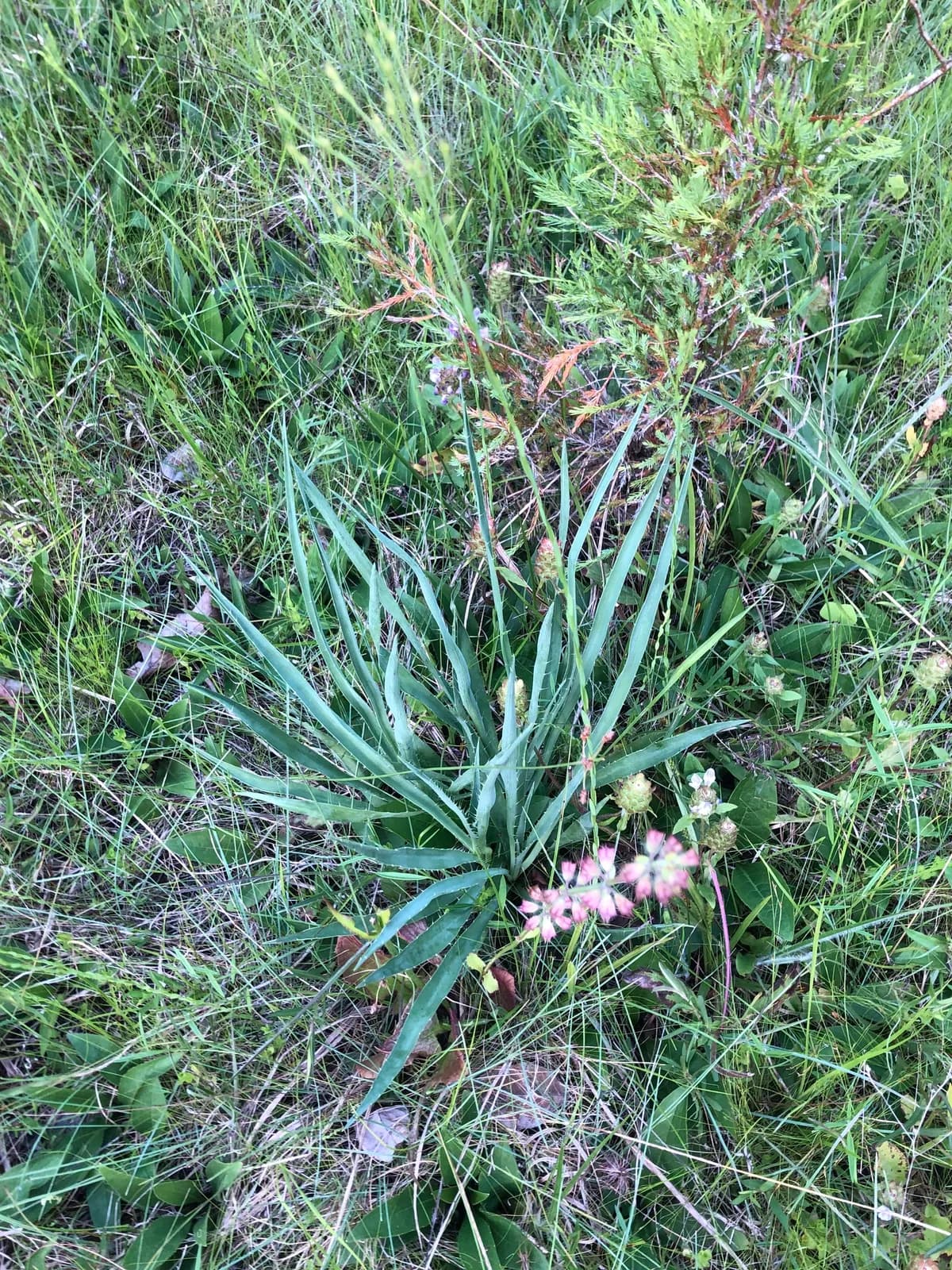
Toxicity unknown
Rattlesnake Master (Eryngium yuccifolium) is not listed by the ASPCA Animal Poison Control Center (opens in new tab) or the other sources we check, so we have no verdict for it either way. Absence from those lists is not a clearance. If your pet shows symptoms after eating any plant, call the ASPCA at (888) 426-4435.
Light
full sun
Water
medium
Size
36"–72" H × 6"–12" W
Bloom
Jun, Jul, Aug
Native to
AL, AR, FL, GA and 21 more states
Pollinators
bees, butterflies, beetles
Deer
Resistant (per Prairie Moon Nursery)
Before you buy
Your city may pay you to plant this
Cities and water utilities offer rebates for replacing lawn with native and water-wise plants. We track 459 programs across 44 states, each with a link to the provider and the date we last checked it.
Find rebates in your areaPicture natives in your own yard
Upload a photo of your yard and Patch Vision shows a rendering of it planted with natives for your region, like Rattlesnake Master.


Browse plants for this ecoregion
Rattlesnake-master is a distinctive native prairie plant with sword-like leaves and unusual spiky white flower heads that bloom through summer. This drought-tolerant perennial forms neat clumps and requires minimal care once established. The architectural flower heads add vertical interest and dry well for winter structure.
Growing Rattlesnake Master
Grow Rattlesnake Master in full sun and medium water. Mature plants reach 36 to 72 inches tall and spread 6 to 12 inches wide. Expect low maintenance to keep it looking intentional in a front yard.
How to care for Rattlesnake Master, by region
How to care for Rattlesnake Master where it is actually grown: year-round basics plus what to do each season, region by region, with the sources for each.
Care guidance last updated: October 2026
Arkansas Valley (includes Fort Smith, AR)
Year-round
Rattlesnake master is a tough, deep rooted native prairie plant that thrives in Fort Smith's hot, sunny summers and needs very little help once it settles in.
- Give it full sun, at least 6 hours a day, and well drained soil. it tolerates the rocky, clay ground common in the Arkansas River Valley.
- Pick a permanent spot before planting. the long taproot resents being moved or grown in a container long term.
- Skip fertilizer entirely. rich soil makes the tall stems flop instead of standing upright.
- It is native to Arkansas prairies and open woodlands, per the Lady Bird Johnson Wildflower Center range map, and it carries a special value rating for native bees there, making it a strong pick for a wildlife friendly Fort Smith yard.
- It is not on the ASPCA's list of plants toxic to cats or dogs, though it is still smart to keep pets from chewing the spiky foliage.
Fall
Fall is cleanup and seed season. flower heads brown and dry as Fort Smith's growing season heads toward its mid November average first frost.
- Seed heads shift from green to brown through September and October and can be left standing for winter texture and bird food.
- This plant can self seed aggressively. cut flower stalks before seeds fully ripen and drop if you want to keep it in check.
- No need to fertilize or amend the soil heading into fall. lean ground suits this plant year to year.
- Fort Smith's average first frost lands around mid November. expect growth to slow and foliage to bronze around then.
- Once the worst heat breaks in late September, it is a reasonable window to carefully divide or transplant.
Leaving the upright seed heads through fall reads as an intentional native planting rather than a neglected bed, especially with a clean mulch edge.
Winter
Rattlesnake master goes fully dormant in winter. the tough taproot rests underground while the dried stalks stand through Fort Smith's cold stretches.
- The plant dies back to the ground. dried flower stalks and seed heads can stand all winter for texture and bird food.
- Fort Smith's mild zone 7b to 8a winters rarely harm an established plant. the taproot sits well protected underground.
- If a tidier look matters more than winter interest, cut the dead stalks back to the crown in late winter, before new growth starts.
- No watering or feeding is needed. the plant is fully dormant and drought tolerant this time of year.
- Watch for voles feeding on the crown in mild, wet winters, though this is not a common problem.
A single late winter cutback keeps the bed looking cared for heading into spring, without losing the standing seed heads that carried it through winter.
Spring
Spring wakes rattlesnake master up from winter dormancy, with new strappy leaves showing before Fort Smith's mid March last frost passes.
- Clear away last year's dried stalks by early March, before new growth pushes up from the crown.
- Fort Smith's average last frost lands around mid March. wait until after that to plant new starts or divide crowded clumps.
- Handle the taproot gently when planting or dividing. it does not transplant well once established.
- Expect a low rosette of stiff, blue green, yucca like leaves at first. taller flower stalks do not show up until early summer.
- Water new plantings weekly until roots establish. established clumps rarely need help this early.
Clearing winter's dried stalks in early spring gives the bed a tidy, intentional look right as neighbors start noticing yards again.
Summer
Summer is rattlesnake master's big show. tall stems topped with round, greenish white flower heads pull in bees and butterflies right through Fort Smith's hottest, driest stretch.
- Blooms typically run May into August, with spherical flower heads on stiff stems 3 to 5 feet tall.
- The deep taproot lets this plant shrug off Fort Smith's hot, dry July and August without extra watering once established.
- The Lady Bird Johnson Wildflower Center rates it as having special value to native bees, so expect steady pollinator visits through summer.
- Stake stems only if they lean. this mostly happens in richer soil or too much shade, not in lean, dry ground.
- Keep fertilizer out of this bed all summer. lean soil keeps the tall flower stems standing upright.
Sources: Lady Bird Johnson Wildflower Center, Eryngium yuccifolium, ASPCA Toxic and Non-Toxic Plants, NC State Extension Gardener Plant Toolbox, Eryngium yuccifolium
Central Corn Belt Plains (includes Chicago, IL)
Year-round
Rattlesnake master is a long-lived, low-maintenance prairie perennial that does well in the Chicago area once it settles in, thanks to a deep taproot and comfort in both dry and average garden soil.
- Give it full sun and well-drained soil. It tolerates dry, sandy, or rocky ground and also grows fine in average garden soil that is not soggy.
- It grows one deep taproot, so pick its permanent spot before planting. It does not transplant or divide well once established.
- This plant is native to Illinois prairies and open woodlands, along with much of the central and eastern United States.
- Expect stiff, spiky, blue-gray leaves shaped like yucca, topped in summer with round, greenish-white flower heads on 3 to 4 foot stems.
- The leaf edges are spiny, so wear gloves when weeding around it or cutting it back.
- Established plants handle Chicago's dry summer stretches without extra watering, once they have had a full season to root in.
Its upright, structured form and gray-green foliage read as an intentional planting rather than a wild patch, which fits an HOA-conscious front bed.
Fall
In fall, rattlesnake master finishes blooming and dries down for winter. This is the season to decide how much to leave standing for wildlife.
- Flower heads fade to tan or brown and seeds ripen through October. Leaving some seed heads up feeds birds and lets the rattlesnake-master borer moth, which depends on this plant, lay eggs that overwinter on the stems.
- There is no need to cut the plant back for winter. The dry stems and basal leaves handle Chicago's freezes fine on their own.
- If you prefer a tidier look, wait until after a hard frost and the foliage has fully browned, usually late October into November here, before cutting stems down.
- Hold off on fertilizer and heavy watering. The plant is going dormant and is built to dry down naturally.
- Avoid transplanting or dividing in fall. The deep taproot makes a fall move risky, since the plant has little time left to reestablish roots before winter.
Cutting the dried stems back to a few inches after frost gives a tidy, HOA-conscious look for winter, though leaving some standing is better for overwintering insects and birds, and can still be trimmed in late winter instead.
Winter
Winter is a dormant, hands-off season for rattlesnake master here. Chicago's cold is well within this plant's normal range, so it needs no protection.
- No watering, fertilizing, or other care is needed. The plant is dormant below ground, and its long taproot sits well below the frost line.
- Chicago's winter lows fall within this plant's normal cold-hardiness range, so it does not need mulch or winter covering.
- If stems were left standing in fall, late winter, before new growth starts, is a good time to cut them down if you want a cleaner bed for spring.
- Try not to repeatedly walk on or compact the soil over the crown during winter thaw-freeze cycles, since the taproot does not like disturbance.
- Hold off on planting new rattlesnake master until spring, after the ground has thawed and dried out enough to dig.
Standing dry stems can look untidy to an HOA eye through a snowy winter. Cutting them to a few inches in late winter keeps the bed looking kept without harming the plant.
Spring
Spring is planting season for rattlesnake master in the Chicago area. Wait until after the last frost and give new transplants time to settle in before summer heat arrives.
- Plant new nursery-grown rattlesnake master after Chicago's average last frost, which typically falls in mid to late April, once the soil has dried out enough to dig.
- In early spring, established plants send up a low rosette of stiff, blue-gray, sword-shaped leaves before the flower stalk rises later in the season.
- Water new transplants regularly through spring, about once a week if there has been no rain, while the taproot gets established.
- Skip fertilizer. This plant is used to lean prairie soil, and rich soil tends to make it grow floppy and weak-stemmed.
- Because of the deep taproot, avoid digging up or moving an established plant this time of year. Choose its final spot at planting.
Summer
Summer is bloom season. Round, greenish-white flower heads open from June into September and draw a wide range of pollinators through Chicago's hot, humid stretch.
- Full sun and well-drained soil keep the stems upright through summer. In heavy clay or a wetter spot, stems can flop over.
- Established plants handle Chicago's summer dry spells on their own, thanks to the deep taproot. Extra watering usually is not needed once a plant is a year or two old.
- The flower heads are a strong draw for native bees, sweat bees, wasps, and other pollinating insects. A single plant can carry over a thousand small flowers.
- If you want to limit self-seeding, cut the flower heads off before they dry and drop seed. Leave some standing if you want the plant to spread on its own.
- A small hole near the base of a stem, or one wilting stalk among healthy ones, can be the work of the rattlesnake-master borer moth, whose larvae tunnel into the stem. This moth depends entirely on this plant and is a conservation-priority species in Illinois, not a pest to treat.
Sources: Lady Bird Johnson Wildflower Center, Native Plant Database: Eryngium yuccifolium, Missouri Botanical Garden Plant Finder: Eryngium yuccifolium, University of Illinois Extension, Hort Answers: Rattlesnake Master, Xerces Society: Weird and Wonderful Plants for Pollinators, Rattlesnake Master, U.S. Fish & Wildlife Service, Species Status Assessment: Rattlesnake-master Borer Moth, Almanac.com: Frost Dates for Chicago, IL (community tip)
Central Great Plains (includes Oklahoma City, OK)
Year-round
Rattlesnake master is native to Oklahoma prairies and settles in well in a sunny Oklahoma City yard. Once its deep taproot is established it needs almost no upkeep, and it feeds a wide range of pollinators through the growing season.
- Plant in full sun with well-drained soil. It tolerates the clay and rocky ground common around Oklahoma City once it is growing.
- This plant is native to Oklahoma, so it is genuinely at home in local soil and rainfall patterns.
- It grows a long taproot early on. Choose its permanent spot once, since it does not move well later.
- Water new plantings regularly through the first year to help roots establish, then let rainfall carry most of the work.
- Its round white flower heads draw bees, wasps, flies, and butterflies, including black swallowtail caterpillars that feed on the foliage.
Fall
Blooms fade into September and October as seed heads mature, and the plant heads toward dormancy ahead of Oklahoma City's early November average first frost.
- Let seed heads mature and darken through September. Birds feed on the seed into fall.
- You can leave the whole plant standing. Its stiff, upright form reads as a deliberate prairie planting rather than an overgrown bed.
- Cut and remove seed heads before they fully ripen if you want to limit self-seeding.
- Skip fertilizing this time of year. The plant is heading into its natural dormant period.
Leaving the seed heads up through fall reads as an intentional prairie-style planting rather than neglect, which helps if an HOA committee is watching for a tidy look.
Winter
Rattlesnake master goes fully dormant through an Oklahoma City winter. Dried seed heads and stiff stems can stay up for winter interest and bird food, with a cutback before spring growth starts.
- The plant is dormant and needs no water or feeding through winter.
- Leaving stems standing gives seed-eating birds a food source and gives the bed structure through the cold months.
- Cut old stems back to a few inches by late February, before new growth starts pushing up.
- It is cold hardy well north into the Great Plains, so an Oklahoma City winter is well within its range.
A standing bed of dried seed heads can look untidy to a neighbor who does not know it is deliberate. Cutting it back to a low, neat clump or adding a small native-planting sign can help it read as intentional.
Spring
New growth pushes up from the taproot as Oklahoma City warms toward its mid-April average last frost. This is the window for getting a nursery-grown plant into the ground.
- Wait until after the mid-April average last frost to set out new plants.
- Pick the permanent spot now. The taproot makes this plant a poor candidate for moving later.
- Water new plantings well through spring while roots get established.
- Clear old winter stems away from new shoots if you have not cut back yet.
Summer
Rattlesnake master hits peak bloom during Oklahoma City's hot stretch, usually July into August, and its drought tolerance means it needs little to no watering once established.
- Skip supplemental watering on established plants. This prairie native handles Oklahoma summer heat and dry spells on its own.
- Round, greenish-white flower heads open roughly July through August.
- Bees, wasps, and butterflies work the flowers all summer with no spraying needed.
- Good drainage matters more than water in summer. Soggy soil during a wet stretch causes root trouble faster than dry heat does.
Sources: USDA NRCS Plant Guide: Button Eryngo (Eryngium yuccifolium), USDA PLANTS Profile: Eryngium yuccifolium (button eryngo), NC State Extension Gardener Plant Toolbox: Eryngium yuccifolium
Cross Timbers (includes Fort Worth, TX)
Year-round
A tough prairie perennial with spiky, yucca-like leaves and round white flower clusters, easy to grow in full sun with well-drained soil.
- Full sun and well-drained soil are really all it needs. It handles clay, sandy, or loamy soil once it gets going.
- It grows from a long taproot, so once established it shrugs off dry spells and does not need regular watering.
- The stiff, blue-green leaves look like yucca blades with small prickly points along the edges, so give it a spot away from foot traffic.
- It is not on the ASPCA toxic plant list for dogs, cats, or horses.
- Round white flower clusters open in summer and draw in bees, wasps, and flies. The plant is also a known host for the rattlesnake master stem borer moth.
Fall
Fall is seed control and cutback season, or you can leave the dried stalks up for a natural winter look.
- Seed heads dry out and turn brown this time of year. This is when most self-seeding happens, so remove them now if you want to keep the plant from spreading.
- You can cut the whole plant down to the ground for a neater look, or leave the dried stalks standing for winter texture.
- No fertilizer or extra water needed. This plant is used to going dormant in lean, dry prairie soil.
A fall cutback gives the front bed a clean, tended look through winter if standing dead stalks would look messy from the street.
Winter
Winter is dormant season. The plant needs nothing but a decision about whether to leave the dried stalks up.
- The above ground growth dies back completely. That is normal, it regrows from the taproot once spring warms up.
- No watering, feeding, or covering needed. An established plant handles winter here without any help.
- Leaving the dried stalks up over winter gives small birds a place to perch and feed on the seeds.
Leaving the dried stalks up over winter is a natural look. Cut them back anytime before spring growth starts if a tidier front bed is preferred.
Spring
Spring is cleanup time. Cut back any leftover dead stalks before the new rosette of leaves fills in.
- If you left last year's dried flower stalks standing, cut them down to the ground now before new leaves push through.
- New growth comes up as a low clump of spiky, blue-green blades. That is normal, the flower stalk will not show up until early summer.
- Established plants do not need spring watering beyond normal rain. Only water a plant that went into the ground within the last year.
A quick cutback of last year's dead stalks tidies up the front bed before new growth fills in.
Summer
Summer is bloom season. Round, spiky white flower heads open and pollinators show up in force.
- Round, spiky white flower clusters open on tall stalks from about early summer into early fall.
- The deep taproot makes it tough through Texas summer heat. Water only if the leaves start to wilt during a long dry stretch.
- Bees, wasps, and flies visit the blooms heavily this time of year, so expect a lot of insect activity right around the plant.
- Cut off spent flower heads before they dry and drop seed if you want to keep the plant from spreading on its own.
Deadheading spent blooms before they dry keeps the bed looking tended and stops volunteer seedlings from popping up nearby.
Sources: ASPCA Toxic and Non-Toxic Plants, letter R, Prairie Moon Nursery: Eryngium yuccifolium (Rattlesnake Master), USDA Forest Service, Plant of the Week: Rattlesnake Master, Lady Bird Johnson Wildflower Center, Eryngium yuccifolium
East Central Texas Plains (includes College Station, TX)
Year-round
Rattlesnake master is native to the East Central Texas Plains, the Post Oak Savanna around College Station (Native Plant Society of Texas). It grows in the region's prairies and sandy open woods. Full sun, well-drained soil, and a hands-off approach are all it asks. Expect blue-green sword leaves and round white flower heads on stiff stalks.
- Native to the East Central Texas Plains per the Native Plant Society of Texas, so it belongs in the College Station area.
- Fits the savanna's range of soils, from sand to loam to clay, as long as the spot drains and gets sun.
- Grows in prairies and sandy open woods, so a sunny savanna-edge bed suits it (Lady Bird Johnson Wildflower Center).
- Not on the ASPCA toxic plant list for dogs or cats.
- Its stiff, spiny leaves are unpalatable to browsers, which reads as deer resistance (Native Plant Society of Texas).
The upright rosette and clean round flower heads give a deliberate accent-plant look that keeps a Post Oak Savanna planting reading as intentional.
Fall
In fall the heads dry to tan seed heads that hold their shape. This plant self-seeds freely, so fall is the moment to decide: cut most heads to keep it in bounds, or leave a few to reseed and feed seed-eating birds. Fall is also a solid second planting window around College Station.
- Self-seeds heavily, so trim most spent heads in fall to control the spread (Lady Bird Johnson Wildflower Center).
- Leave a few dried heads standing for winter structure and for birds.
- Fall planting works well in the savanna. Cooler soil helps roots settle.
- Cut back watering as the plant slows for the season.
The dried tan seed heads look deliberate in fall, which reads better out front than floppy spent foliage.
Winter
Rattlesnake master is a hardy perennial that dies back to its rosette over a College Station winter. Mild East Central Texas winters are well within range. Leave the dried stalks for structure and cut them to the base in late winter before new growth. No winter watering needed.
- Fully hardy here. It returns from the crown each spring, so a winter die-back is normal.
- Leave dried stalks up for texture, or tidy them for a cleaner look.
- Cut old growth to the base in late winter, just before new shoots.
- No winter watering needed for the dormant taproot.
Spring
Spring pushes fresh sword leaves from the crown. Around College Station, plant in early spring while the soil holds moisture, so the taproot can settle before summer. Water new plants through spring, then taper as they root in.
- Plant nursery starts in early spring so the taproot digs in before summer heat.
- Water new plantings once or twice a week through spring, then ease off.
- Trim last year's dead stalks to the base if you left them standing.
- Skip fertilizer. This plant prefers lean savanna soil and flops when overfed.
Summer
Summer is peak bloom. The white golf-ball heads open May into August and draw native bees, small butterflies, and beetles for nectar and pollen (Native Plant Society of Texas). Established plants need little water through a College Station summer, and the stiff stalks stand upright without support.
- Blooms May through August and feeds native bees, butterflies, and beetles (Native Plant Society of Texas).
- Low water once established. Deep-soak only during an extended dry stretch.
- Leave flower heads up while they bloom so pollinators keep visiting.
- Not on the ASPCA toxic plant list, so pets and kids near the blooms is not a poisoning concern (leaf tips are just stiff).
The pale round heads on straight stalks hold a clean, architectural look through the heat when softer plants start to fade.
Sources: Native Plant Society of Texas, Eryngium yuccifolium, Lady Bird Johnson Wildflower Center, Eryngium yuccifolium, GrowItBuildIt, Rattlesnake Master complete guide (community tip), USDA NRCS Plant Materials, Eryngium yuccifolium planting guide
Edwards Plateau (includes San Antonio, TX)
Year-round
Rattlesnake master is a tough, sculptural prairie plant native to the Edwards Plateau, including the Balcones Canyonlands (Native Plant Society of Texas). It sends up blue-green, yucca-like sword leaves and topping them, round golf-ball flower heads on stiff stalks. Give it full sun and any well-drained soil, clay or limestone-based included. It handles low to medium water once its deep taproot is set, which suits Hill Country conditions around San Antonio.
- Native to the Edwards Plateau per the Native Plant Society of Texas, so it belongs in Hill Country soils around San Antonio.
- Plant it in full sun. Shade makes the flower stalks flop and weakens the plant.
- It grows a deep taproot, so pick the spot carefully. Established plants resent being moved.
- Not on the ASPCA toxic plant list for dogs or cats, so it is a calm choice around pets.
- Its spiny leaves are unpalatable to grazing animals, which is why it reads as deer-resistant on the Plateau (Native Plant Society of Texas).
The upright blue-green rosette and neat spherical flower heads read as an intentional accent plant, not a weed, which helps it sit well in a tidy front bed.
Fall
In fall the flower heads dry to a tan seed head that holds its shape for weeks. This plant is a profuse self-seeder, so fall is your decision point. Snip the heads before they scatter if you want to keep it in bounds, or leave a few to reseed and to feed seed-eating birds. Fall is also a fine second window for planting in San Antonio.
- It self-seeds heavily, so remove most spent heads in fall if you want to control the spread (Lady Bird Johnson Wildflower Center).
- Leave a few dried heads standing for winter structure and for birds that pick at the seeds.
- Fall is a good second planting window here. Cooler soil helps roots settle before winter.
- Cut back watering as the plant slows for the season.
The dried tan seed heads look deliberate and sculptural in fall, which reads better in a front yard than floppy spent foliage.
Winter
Rattlesnake master is a cold-hardy perennial that dies back to its rosette in winter around San Antonio. Mild Hill Country winters rarely bother it. You can leave the dried stalks up for structure and cut everything to the base in late winter before new spring growth. No winter watering needed on the Plateau.
- It is fully winter-hardy here and returns from the crown each spring, so a die-back is normal, not a dead plant.
- Leave dried stalks standing through winter for texture, or tidy them if you prefer a cleaner bed.
- Cut old stalks to the base in late winter, just before new growth pushes.
- Skip winter watering. The dormant taproot does not need it.
Spring
Spring is when the rosette wakes up and pushes new sword leaves. Around San Antonio, do your planting and any dividing early, while soil is still cool and moist, so roots settle before summer heat. Water new plants regularly through spring, then start backing off as they root in.
- Plant nursery starts in early spring so the taproot can dig in before summer.
- Water new plantings once or twice a week through spring, then taper as they establish.
- Clip off last year's dead flower stalks at the base now if you left them standing over winter.
- Hold off on fertilizer. Lean Hill Country soil is what this plant wants, and rich soil makes it flop.
Summer
Summer is the show. The greenish-white golf-ball heads open from May into August and draw native bees, small butterflies, and beetles for nectar and pollen (Native Plant Society of Texas). Established plants need very little water in San Antonio summers. The stiff stalks stand up to heat and stay upright without staking.
- Flower heads bloom May through August and feed native bees, butterflies, and beetles (Native Plant Society of Texas).
- Established plants are low water. Deep-soak only during a long dry stretch, then let the soil dry out.
- Leave some flower heads for the pollinators rather than cutting everything back mid-bloom.
- Not on the ASPCA toxic plant list, so kids and pets brushing past the blooms is not a poisoning worry (the leaf tips are just stiff and can poke).
In peak summer the round pale flower heads on straight stalks give a clean, architectural look that stays presentable while other plants fade.
Sources: Native Plant Society of Texas, Eryngium yuccifolium, Lady Bird Johnson Wildflower Center, Eryngium yuccifolium, GrowItBuildIt, Rattlesnake Master complete guide (community tip), USDA NRCS Plant Materials, Eryngium yuccifolium planting guide
Erie Drift Plain (includes Buffalo, NY)
Year-round
Rattlesnake master wants full sun and well-drained soil, and it is a low-fuss perennial for Buffalo's cold winters.
- Give it 6 or more hours of direct sun.
- It is listed hardy in zones 3 to 8, so Buffalo winters are within range.
- Lean, loamy sandy soil with little organic matter suits it. Rich soil or too much shade can make stems flop.
The leaves end in stiff spines, so plant it a few feet back from a sidewalk edge.
Fall
Early fall is a good time to divide it, ahead of Buffalo's first frost in early October.
- Early fall is a listed time to divide plants.
- It can self-seed, so pull seedlings you do not want.
- Leave the seed heads standing.
Winter
Leave the stems standing through the snow, since uncut plants add winter interest.
- Leaving plants uncut through winter adds interest.
- Voles may feed on the crowns in winter, so watch for chewed spots.
Spring
In Buffalo, wait until the last frost in mid-May has passed, then plant or divide in late spring.
- Late spring is a listed time to divide plants.
- It can also be grown from seed.
- Check crowns for vole damage left over from winter.
Summer
Flowers show from June to August, and this plant handles dry spells fairly well.
- Round flower heads change from greenish white to blue as they mature.
- It is moderately drought tolerant, but the flowers can fade if it runs short of moisture.
- Stems may flop in rich soil and need staking.
Sources: NC State Extension Gardener Plant Toolbox, Eryngium yuccifolium, Chicago Botanic Garden Plant Finder, rattlesnake master
Middle Atlantic Coastal Plain (includes Philadelphia, PA)
Year-round
Rattlesnake master is a tough, sun-loving perennial that needs very little fuss once it settles in.
- Give it full sun, at least 6 hours a day.
- It handles clay, loam, sand and rocky soil, and does best in well-drained ground.
- Expect a plant about 4 to 5 feet tall and 2 to 3 feet wide, so leave it room.
- The leaves have stiff spines, so keep it away from walkways.
Its spiky blue-green leaves and round white flower heads look intentional in a tidy bed. Edge it with a low border to keep the look neat.
Fall
Fall is when the flower heads turn into seed, so decide whether you want more plants next year.
- Flowers fade from green-white to blue and then dark brown seedheads.
- Cut seedheads off after they brown if you do not want volunteers.
- Fall is a fine time to divide clumps.
- Leave a few seedheads standing for winter looks.
Winter
Winter needs almost nothing from you. Leave the dried plant standing.
- The dark brown seedheads hold their shape and add winter interest.
- No watering is needed once the ground is cold.
- Check the crown for vole tunnels, since voles may feed there in winter.
- Wait until early spring to tidy up.
Spring
Spring is the time to let new growth come up and to divide or move clumps if you need to.
- Water new plants regularly until they root in, then ease off.
- Skip rich compost. Lean soil keeps stems from flopping.
- Divide clumps in late spring if you want more plants.
- Watch for vole damage at the crown after winter.
Summer
Summer is bloom time, and established plants mostly look after themselves.
- White, globe-shaped flower heads open from June through August.
- Established plants are listed as drought tolerant, so water only in long dry spells.
- If stems lean in shade or rich soil, stake them.
- Pull unwanted seedlings while they are small.
Sources: NC State Extension Plant Toolbox: Eryngium yuccifolium, Lady Bird Johnson Wildflower Center: Eryngium yuccifolium
Mississippi Valley Loess Plains (includes Memphis, TN)
Year-round
Rattlesnake master is native to Tennessee and grows well in a sunny Memphis yard once its deep taproot settles in. It asks for almost nothing after the first year and feeds a wide range of pollinators.
- Plant in full sun with well-drained soil. It adapts to the loam and clay soils common around Memphis.
- This plant is native to Tennessee, so it is naturally suited to local rainfall and soil.
- It grows a long taproot early on. Choose its permanent spot, since it does not move well later.
- Water new plantings through their first year, then let rainfall handle most of it.
- Its globe-shaped white flower heads draw bees, wasps, flies, and butterflies, including black swallowtail caterpillars that feed on the foliage.
Fall
Blooms fade into September as seed heads mature, and the plant moves toward dormancy ahead of Memphis's early November average first frost.
- Let seed heads mature and darken through September and October. Birds will feed on the seed.
- You can leave the plant standing through fall. Its upright form reads as a deliberate prairie-style planting.
- Cut and remove seed heads before they drop if you want to limit self-seeding.
- Skip fertilizer this time of year as the plant heads into dormancy.
Leaving the dried seed heads up through fall reads as an intentional native planting rather than a neglected bed, which helps if your HOA is watching for tidiness.
Winter
Rattlesnake master goes dormant through the Memphis winter. Stiff stems and seed heads can stay up for structure and bird food, with a cutback before spring growth starts.
- The plant is dormant and needs no water or feeding through winter.
- Leaving the stems up gives birds a seed source and gives the bed winter structure.
- Cut old stems back to a few inches by late February, before new spring growth starts.
- It is cold hardy well beyond Memphis's winter lows, so cold is not a concern here.
A standing winter bed of seed heads can read as unkempt to someone who does not know the plan behind it. Cutting it back to a low, neat clump or adding a small native-planting sign can help it read as intentional.
Spring
New growth emerges from the taproot as Memphis warms toward its late March average last frost, a good window for planting nursery-grown starts.
- Wait until after the late March average last frost to set out new plants.
- Pick the permanent spot now. Its taproot makes it a poor candidate for moving later.
- Water new plantings well through spring while roots establish in Memphis's humid spring weather.
- Clear away old winter stems before new shoots crowd them, if you did not cut back already.
Summer
Rattlesnake master blooms through the Memphis summer heat, typically June into August, and established plants need little to no watering even during a dry Mid-South stretch.
- Skip watering established plants except during an extended drought. It handles Memphis summer heat well on its own.
- Flower heads open roughly June through August.
- Bees, wasps, and butterflies work the flowers all summer with no spraying needed.
- Good drainage matters more than extra water. Memphis's humid summers make root trouble from soggy soil more of a risk than dry spells.
Sources: USDA NRCS Plant Guide: Button Eryngo (Eryngium yuccifolium), USDA PLANTS Profile: Eryngium yuccifolium (button eryngo), NC State Extension Gardener Plant Toolbox: Eryngium yuccifolium
Northeastern Coastal Zone (includes New York, NY)
Year-round
Rattlesnake-master is a stiff, upright perennial with spiky, yucca-like blue-gray leaves and round white flower heads, and it grows well in New York City gardens in full sun and well-drained soil.
- Give it a full-sun spot, six or more hours of direct sun a day, for the sturdiest stems and the best bloom.
- It tolerates New York City's clay and rocky urban soils as long as drainage is decent, and it actually does better in lean, sandy ground than in a rich, damp bed.
- Water a new plant regularly through its first season while the long taproot establishes, then let it mostly fend for itself once it is settled in.
- Once established, avoid moving or dividing it if you can help it. The taproot resents disturbance, and a transplanted plant can sulk or die back for a season.
- Bees, wasps, and butterflies visit the round flower heads through the growing season.
Fall
By fall the flower heads dry to a warm tan and begin dropping seed, and early fall is also a second good window for dividing a crowded clump.
- This plant can self-seed readily. If you do not want volunteer seedlings coming up nearby, cut and remove the drying flower heads in September before they shed seed.
- Early fall, before the ground cools too much, is the other good time to divide an overcrowded clump, alongside late spring.
- Hold off on a full cutback. Leaving the stiff stems standing through New York's winter gives the bed some structure and shelters overwintering insects.
- New York City's typical first fall frost lands in mid October, but this plant is unaffected by ordinary frost and needs no protection going into winter.
Removing spent flower heads before they drop seed in early fall keeps rattlesnake master from volunteering into the lawn or walkway of a front bed.
Winter
Standing dried stems and seed heads carry rattlesnake master's winter interest, while the hardy root system rests below ground through the cold.
- Leave the stiff brown stems and round seed heads standing through winter rather than cutting the plant to the ground. They hold their shape well in snow and add texture to an otherwise bare bed.
- This plant is rated hardy from zone 3a through 8b, well beyond the cold New York City sees, so no wrapping or mulching is needed for winter protection.
- Wait until early spring to do the actual cutback, once you can see fresh basal growth at the crown.
- Avoid walking on or compacting the soil over the crown during a freeze and thaw winter. The taproot below is what carries the plant through to spring.
Leaving upright dried stems standing through winter reads as deliberate structure in an HOA-conscious front yard, rather than an uncut or neglected bed.
Spring
In spring, new blue-gray leaf rosettes push up from the crown while last year's dried flower stalks are usually still standing.
- Cut back the previous year's dried stems and seed heads in early spring, once you can see fresh growth at the base, rather than leaving them standing into summer.
- In New York City, new growth typically shows by mid to late April as the ground warms, which is close to the average last frost in early May, so there is no need to rush winter protection.
- If a clump has gotten crowded, late spring is a good window to divide it, since the plant handles disturbance better while it is still low and before the taproot has grown deep for the season.
- Skip the fertilizer. This plant is used to lean prairie soil, and rich feeding tends to make the stems flop and need staking later.
Cutting back last year's dried stalks once new growth appears keeps a front bed looking tended before the leaves fill back in.
Summer
Summer is bloom season, when tight round white flower heads open atop tall branched stems and draw a steady stream of pollinators.
- Flower heads open from around June into August in the New York City area, a bit later than in the warmer parts of this plant's range.
- Once established, plants handle New York summer dry spells well and need extra water only during an extended stretch without rain.
- Bees, wasps, and butterflies work the flower heads all summer, so hold off on deadheading right away if you want to keep feeding them.
- Tall stems grown in rich soil or too much shade can lean or flop. Stake loosely if needed instead of cutting the plant back.
Staking a leaning stem keeps a front-yard planting looking upright and tended through peak bloom instead of sprawling into the walkway.
Sources: Lady Bird Johnson Wildflower Center, Native Plant Database: Eryngium yuccifolium, NC State Extension Gardener Plant Toolbox: Eryngium yuccifolium
Ouachita Mountains (includes Hot Springs, AR)
Year-round
Rattlesnake Master (Eryngium yuccifolium) is native across Arkansas, including the prairie remnants, glades, and open woodlands typical of the Ouachita Mountains region around Hot Springs, and it is built for the dry, rocky, well drained ground common there. Give it full sun and be patient, its long taproot means it establishes slowly and does not tolerate being dug up and moved once settled. Deer generally leave it alone.
- Full sun, at least 6 hours of direct light a day
- Well drained soil matters more than rich soil, it tolerates clay, sand, and shallow rocky ground
- Pick a permanent spot at planting time, the taproot does not like being moved later
- Deer tend to skip it, which helps in areas with heavy browse pressure
- The common name comes from an old folk belief that the root could treat rattlesnake bites, that is historical background only, not a plant care instruction
Fall
By fall the flower heads have dried into spiky, blue tinged seed heads that stay upright through frost. This plant self seeds aggressively in good conditions, so if you do not want volunteers spreading into nearby beds or turf, cut and remove the spent seed heads before they drop, otherwise it is fine to leave them standing. Leaving the seed heads up will not hurt the plant, it is a choice about looks and seed control, not plant health.
- Seed heads mature and dry out through fall, turning tan to blue gray
- This plant self seeds aggressively in favorable soil, deadhead before drop if you want to limit spread
- No need to cut the plant back for its health, this is purely a looks and seed control decision
- A standing dried seed head bed generally reads as deliberate structure rather than an unkept yard
Leaving the dried seed heads standing through fall reads as intentional structure, not neglect, so there is no need to rush a cutback purely for appearances on an HOA-conscious front yard.
Winter
Winters in this part of Arkansas are mild enough that the dried seed heads and rigid stems typically stay standing on their own without special protection, giving the bed winter structure and shelter for overwintering insects in the hollow stems. The bigger risk in winter is not cold, it is wet soil, since standing water at the crown in cold, soggy ground is harder on the plant than frost is. Voles can also feed on the crown in winter, so keep mulch pulled a little away from the base.
- Leave dried stems and seed heads standing through winter, no cutback needed for cold protection
- Standing stems can shelter overwintering insects over the winter months
- Good drainage matters more in winter than in summer, soggy winter soil is the bigger risk to the plant, not frost
- Keep mulch pulled back from the crown, voles are known to feed there in winter
- A trimmed edge around a standing winter planting keeps the bed reading as tended rather than overgrown
Spring
In spring the plant is just a low rosette of stiff, blue green, yucca like leaves, it will not look like much before early summer. Skip heavy fertilizer and avoid overly wet spring soil, since rich or damp conditions tend to produce floppy growth later rather than helping the plant. Spring is the best time to put a new nursery plant in the ground, before summer heat sets in.
- Expect only basal leaves this early, the flowering stalk comes later in the growing season
- Skip heavy fertilizer, lean soil is what this plant is built for
- Keep a newly planted spring transplant watered while its roots establish, then taper off
- Stems can flop later in the season if the spring soil was too rich or shaded, so choose a lean, sunny spot from the start
Summer
Summer is bloom season, from late June into August, when the globe shaped, greenish white flower heads open with a mild honey like scent and draw in a wide range of bees, wasps, and other insects. The flowers are considered of special value to native bees. Established plants are drought tolerant in summer heat and rarely need extra water once their roots are in.
- Bloom window runs from late June through August
- Flower heads draw bumble bees, sweat bees, yellow faced bees, wasps, and beetles
- Considered of special value to native bees by conservation and horticulture sources
- Drought tolerant once established, water deeply only during extended dry stretches
- Stems can flop in rich or shady soil, staking helps if that happens
Sources: Lady Bird Johnson Wildflower Center, Eryngium yuccifolium plant profile, Arkansas Native Plant Society, Know Your Natives: Rattlesnake Master, Xerces Society blog, Rattlesnake Master pollinator profile (community tip), NC State Extension Plant Toolbox, Eryngium yuccifolium
Piedmont (includes Atlanta, GA)
Year-round
Rattlesnake master is a low maintenance native prairie plant that handles Atlanta's humid summers and red clay soil well once it is established.
- Choose a full sun spot, 6 or more hours a day. it struggles and flops over in Atlanta's shadier, more humid corners.
- Atlanta's Piedmont clay works fine as long as it drains. work in coarse sand or grit if water tends to pool there after storms.
- It is native to Georgia's prairies and open woodlands, per the Lady Bird Johnson Wildflower Center range map, and it carries a special value rating for native bees there, a strong fit for a wildlife friendly Atlanta yard.
- Skip fertilizer entirely. rich soil plus Atlanta's frequent summer rain is a recipe for flopping stems.
- It is not on the ASPCA's list of plants toxic to cats or dogs, though it is still smart to keep pets from chewing the spiky foliage.
Fall
Fall is seed and cleanup season. flower heads brown and dry as Atlanta's growing season winds toward its mid November average first frost.
- Seed heads shift from green to tan through September and October and can be left standing for winter texture and bird food.
- This plant can self seed aggressively. cut stalks before seeds fully ripen if that is a concern in your bed.
- No fall fertilizing or amending is needed. this plant does best left alone in lean soil.
- Atlanta's average first frost lands around November 13. expect foliage to bronze and growth to stop around then.
- Once summer heat breaks in early fall, it is a reasonable window to divide or transplant with care.
Leaving the seed heads up through fall reads as an intentional native bed rather than an untended one, especially with a clean mulch edge.
Winter
Rattlesnake master goes dormant for winter, resting on its deep taproot while the dried stalks stay standing through Atlanta's mild cold season.
- The plant dies back to a below ground crown. dried stalks and seed heads can stand all winter for texture and bird food.
- Atlanta's mild zone 7b to 8a winters are gentle enough that an established plant needs no protection.
- If a neater look matters more than winter interest, cut stalks back to the crown in late winter, before new growth starts.
- No water or fertilizer is needed during dormancy.
- Watch for vole activity around the crown in wet winters, though it is not a common problem in most Atlanta yards.
A single late winter cutback keeps the bed tidy heading into spring, without losing the standing seed heads that carried it through winter.
Spring
Spring brings rattlesnake master out of dormancy with spiky new leaves, and Atlanta's later, mid to late March last frost is the cue to plant or divide.
- Clear away last year's dried stalks in early to mid March, before new growth pushes up from the crown.
- Atlanta's average last frost lands around March 21. wait until after that to plant new starts or move divisions.
- Handle the taproot gently. it does not transplant well once established, so plan its final spot with care.
- Spring's frequent Piedmont rain is usually plenty for young plants. extra watering is rarely needed even in a wet spring.
- New growth is a low rosette of stiff, blue green leaves. taller flower stalks will not show until early summer.
Tidying the winter stalks in early spring keeps the bed looking deliberate just as neighbors start paying attention to yards again.
Summer
Summer is when rattlesnake master flowers, tall stems topped with round, greenish white blooms that draw bees and butterflies through Atlanta's hot, humid stretch.
- Blooms typically run May into August, with spherical flower heads on stems 3 to 5 feet tall.
- Atlanta's summer thunderstorms are usually enough water on their own. this plant prefers lean, well drained conditions and dislikes constantly wet feet.
- The Lady Bird Johnson Wildflower Center rates it as having special value to native bees, so expect a steady stream of pollinator visits.
- Stake stems only if they lean. this is more common in Atlanta's humid, rich clay beds than in lean, well drained soil.
- Keep fertilizer off this bed all summer. lush growth makes the tall flower stems weak and prone to flopping.
Sources: Lady Bird Johnson Wildflower Center, Eryngium yuccifolium, ASPCA Toxic and Non-Toxic Plants, NC State Extension Gardener Plant Toolbox, Eryngium yuccifolium
Ridge and Valley (includes Harrisburg, PA)
Year-round
Rattlesnake master wants full sun and well-drained soil, and it fits Harrisburg's hot, humid summers.
- Give it 6 or more hours of direct sun.
- It is listed hardy in zones 3 to 8, which covers Harrisburg.
- In rich soil or shade, stems may flop and need staking, which is more likely in lush humid summers.
The leaves end in stiff spines, so plant it a few feet back from a sidewalk edge.
Fall
Early fall is a good time to divide it, well before Harrisburg's first frost in mid-October.
- Early fall is a listed time to divide plants.
- It can self-seed, so pull extra seedlings.
Winter
Leave the stems standing for winter interest.
- Leaving plants uncut through winter adds interest.
- Voles may feed on the crowns in winter.
Spring
Plant or divide it in late spring, once Harrisburg's late April frost risk is past.
- Late spring is a listed time to divide plants.
- Seed is another way to start new plants.
Summer
Flowers show from June to August and the plant tolerates some dry weather.
- Flower heads shift from greenish white to blue.
- It is moderately drought tolerant, but flowers can fade without enough moisture.
- Skip rich soil to cut down on flopping stems.
Sources: NC State Extension Gardener Plant Toolbox, Eryngium yuccifolium, Chicago Botanic Garden Plant Finder, rattlesnake master
South Central Plains (includes Beaumont, TX)
Year-round
Rattlesnake master reaches the East Texas Piney Woods through the western Gulf Coastal Plain, where it grows in pinelands, savannas, and sandy open woods (Lady Bird Johnson Wildflower Center). Around Beaumont, give it a sunny opening rather than deep pine shade. It wants full sun, well-drained sandy soil, and little fuss.
- Found in pinelands and sandy open woods of the Gulf Coastal Plain, so it belongs in sunny openings around Beaumont (Lady Bird Johnson Wildflower Center).
- Give it full sun. It will not thrive under a closed pine canopy.
- Sandy, well-drained Piney Woods soil suits it well.
- Not on the ASPCA toxic plant list for dogs or cats.
- Spiny leaves are unpalatable to browsers, which reads as deer resistance (Native Plant Society of Texas).
The upright blue-green rosette and clean round flower heads read as a deliberate accent, which helps a Piney Woods planting look intentional in a front yard.
Fall
In fall the heads dry to tan seed heads that hold shape for weeks. This plant self-seeds freely, so fall is the moment to decide: trim most heads to keep it in bounds, or leave a few to reseed and feed seed-eating birds. Beaumont's mild fall is also a strong second planting window.
- Self-seeds heavily, so cut most spent heads in fall to control the spread (Lady Bird Johnson Wildflower Center).
- Leave a few dried heads standing for winter structure and for birds.
- Fall planting works well here. Warm, moist soil helps roots settle before winter.
- Reduce watering as the plant slows for the season.
The dried tan seed heads look deliberate and sculptural in fall, which reads better out front than floppy spent foliage.
Winter
Rattlesnake master is a hardy perennial that dies back to its rosette over a mild Piney Woods winter. Beaumont winters are easy on it. Leave the dried stalks for structure and cut them to the base in late winter before new growth. No winter watering needed.
- Easily hardy in East Texas. It returns from the crown each spring, so winter die-back is normal.
- Leave dried stalks up for texture, or clip them for a tidier bed.
- Cut old growth to the base in late winter, before new shoots appear.
- No winter watering needed for the dormant taproot.
Spring
Spring pushes fresh sword leaves from the crown. Around Beaumont, plant in early spring in a sunny opening while the sandy soil holds spring moisture, so the taproot can settle before summer. Water new plants through spring, then taper as they root in.
- Plant nursery starts in early spring in a sunny spot so roots dig in before summer.
- Water new plantings once or twice a week through spring, then ease off.
- Trim last year's dead stalks to the base if you left them standing.
- Skip fertilizer. Lean, sandy Piney Woods soil is what this plant wants.
Summer
Summer is peak bloom. The white golf-ball heads open May into August and draw native bees, small butterflies, and beetles for nectar and pollen (Native Plant Society of Texas). Established plants handle Piney Woods heat and humidity with little water. The stiff stalks stay upright through the season.
- Blooms May through August and feeds native bees, butterflies, and beetles (Native Plant Society of Texas).
- Low water once established. In a humid East Texas summer you may rarely need to water.
- Leave flower heads up during bloom so pollinators keep visiting.
- Not on the ASPCA toxic plant list, so pets and kids near the blooms is not a poisoning concern (leaf tips are just stiff).
The pale round heads on straight stalks give a clean architectural look through the humid heart of summer.
Sources: Lady Bird Johnson Wildflower Center, Eryngium yuccifolium, Native Plant Society of Texas, Eryngium yuccifolium, USDA NRCS Plant Materials, Eryngium yuccifolium planting guide, GrowItBuildIt, Rattlesnake Master complete guide (community tip)
Southern Coastal Plain (includes Orlando, FL)
Year-round
Rattlesnake master is a native Florida wildflower found in prairies, wet flatwoods, and coastal flatwoods statewide, including central Florida. It forms a clump of spiky, yucca-like leaves topped by round greenish-white flower heads from early to late summer, and it holds up well in a low-water, full-sun spot.
- Give it full sun and let the soil dry out between waterings once it is established. It also tolerates sandy, rocky, or clay soil as long as water drains away.
- It is native to Florida, growing wild in prairies, wet flatwoods, and coastal flatwoods statewide, including central Florida.
- The narrow leaves end in stiff spines, so give the plant room away from walkways, patios, and play areas.
- Its round flower heads draw native bees, wasps, butterflies, skippers, and moths.
Fall
By fall the flowers of rattlesnake master have faded into round, spiny seed heads, and the plant begins settling into its winter dormancy in central Florida's mild autumn.
- Faded flower heads turn into round, spiny seed clusters that stay on the stem into winter.
- Fall is also a good time to divide an established clump, along with spring.
- If self-seeding is not wanted in a tidy front-yard bed, cut the seed heads off before they drop. Left alone, this plant seeds itself readily.
- Watering needs drop further as the plant heads into its winter dormant period.
Winter
Rattlesnake master goes dormant in winter in central Florida, and the dried, spiny seed heads left standing on bare stems are the main thing to plan around this time of year.
- The plant is winter dormant, so do not expect new green growth until it warms up again in spring.
- Leaving the dried seed heads standing through winter adds visual interest and can feed birds, so it does not need to be cut back right away.
- Watch for voles, which can damage the crown of the plant over winter.
The bare, spiky seed stalks left standing through winter can look unkempt to some neighbors, even though extension guidance recommends leaving them up for winter interest. Cutting them back to the ground in late winter, right before spring growth starts, keeps the bed tidier for an HOA-conscious front yard without hurting the plant.
Spring
Spring is when rattlesnake master puts out fresh basal leaves, and it is the best window in central Florida to plant new ones or divide an established clump before the flower stalks and summer heat arrive.
- Spring is a good time to plant new rattlesnake master or divide an existing clump so roots settle in before summer heat.
- Keep new growth in full sun, at least 6 hours of direct light a day.
- Water it while roots are establishing, then ease off once the plant is settled in. Established plants prefer things on the dry side.
- This is when the spiky, yucca-like basal leaves put on their main growth before the flower stalks rise in early summer.
Summer
Summer is bloom season for rattlesnake master in central Florida. Round greenish-white flower heads open on tall stems from about June into August and draw a steady stream of pollinators.
- Flower heads open from June into August, going from greenish-white to a slightly blue tint as they mature.
- The blooms are a strong draw for native bees, wasps, butterflies, skippers, and moths.
- Water only during extended dry spells. This plant prefers things on the dry to medium side even in peak summer.
- In rich soil or a spot with too much shade, the flower stems can flop and may need staking.
Tall flower stems can lean or flop, especially in rich soil, and staking a stem this stiff rarely looks tidy. Planting rattlesnake master in a small group instead of a single plant lets the stems lean on each other for a neater, more HOA-friendly look.
Sources: Florida Native Plant Society - Eryngium yuccifolium, Atlas of Florida Plants - Eryngium yuccifolium, NC State Extension Gardener Plant Toolbox - Eryngium yuccifolium, Missouri Botanical Garden Plant Finder - Eryngium yuccifolium, Lady Bird Johnson Wildflower Center - Eryngium yuccifolium
Texas Blackland Prairies (includes Dallas, TX)
Year-round
Rattlesnake master is a true Blackland Prairie native and an important prairie indicator plant (Native Plant Society of Texas). Around Dallas it thrives in the heavy clay that defines this region. Give it full sun and let it be. The blue-green sword leaves and round white flower heads bring an architectural look to a prairie-style front yard.
- Native to the Texas Blackland Prairies per the Native Plant Society of Texas, so it is a natural fit for Dallas-area clay soils.
- Handles the region's tight black clay as long as the spot drains and gets full sun.
- It is an important prairie indicator species, a sign of healthy native grassland (Native Plant Society of Texas).
- Not on the ASPCA toxic plant list for dogs or cats, so it is calm around pets.
- Deep taproot means it settles in for the long haul but does not like being transplanted once established.
Its stiff upright form and tidy round flower heads read as a chosen accent, which helps a Blackland prairie planting look intentional rather than unkempt.
Fall
In fall the heads dry to tan seed heads that hold shape for weeks. This plant self-seeds freely, so fall is your call: trim most heads to keep it in bounds, or leave a few to reseed the prairie planting and feed seed-eating birds. Fall is also a good second planting window in the Dallas area.
- Self-seeds heavily, so cut most spent heads in fall if you want to limit the spread (Lady Bird Johnson Wildflower Center).
- Leave a few dried heads for winter structure and for birds.
- Fall planting works well here. Cooler clay helps roots settle before winter.
- Reduce watering as the plant winds down for the season.
The dried tan seed heads look sculptural and deliberate in fall, a better front-yard look than collapsed foliage.
Winter
This is a cold-hardy perennial that dies back to its rosette over a Dallas winter. Blackland Prairie winters are well within its range. Leave the dried stalks for structure and cut them to the base in late winter before spring growth. No winter watering needed.
- Fully hardy in the Dallas area. It returns from the crown each spring, so winter die-back is expected.
- Leave dried stalks up for texture, or clip them if you prefer a tidier bed.
- Cut old growth to the base in late winter, right before new shoots appear.
- No winter watering needed for the dormant taproot.
Spring
Spring brings fresh sword leaves out of the crown. In the Dallas Blackland Prairie, plant in early spring while the clay still holds moisture, so the taproot can dig in before summer bakes it. Water new plants steadily through spring, then ease off as they root.
- Plant nursery starts in early spring so roots establish before the summer heat.
- Water new plantings regularly through spring, then taper once they are settled.
- Cut away last season's dead stalks at the base if you left them over winter.
- Do not fertilize. Blackland clay already carries plenty for this lean-loving prairie plant.
Summer
Summer is peak bloom. The white golf-ball heads open May into August and pull in native bees, small butterflies, and beetles for nectar and pollen (Native Plant Society of Texas). Established plants shrug off Dallas summer heat with little water. The stiff stalks hold upright through the season.
- Blooms May through August and feeds native bees, butterflies, and beetles (Native Plant Society of Texas).
- Low water once established. Deep-soak only in a long dry spell, then let the clay dry down.
- Leave flower heads up during bloom so pollinators keep working them.
- Not on the ASPCA toxic plant list, so pets and kids near the blooms is not a poisoning concern (the leaf tips are just sharp).
The pale round heads on straight stems keep a clean architectural profile right through the hottest part of a Dallas summer.
Sources: Native Plant Society of Texas, Eryngium yuccifolium, Lady Bird Johnson Wildflower Center, Eryngium yuccifolium, USDA NRCS Plant Materials, Eryngium yuccifolium planting guide, GrowItBuildIt, Rattlesnake Master complete guide (community tip)
Western Gulf Coastal Plain (includes Houston, TX)
Year-round
Rattlesnake master is a signature Gulf Coast Prairie native and an important prairie indicator plant (Native Plant Society of Texas). Around Houston it grows in the coastal prairies and marsh-edge grasslands. Full sun and well-drained soil suit it best. The blue-green sword leaves and round white flower heads give a strong architectural anchor to a coastal-prairie planting.
- Native to the Gulf Coast Prairies and Marshes per the Native Plant Society of Texas, so it is a natural fit for the Houston area.
- Wants full sun and well-drained soil. In heavy coastal clay, plant on a slight rise so the crown does not sit wet.
- It is an important prairie indicator species, a marker of healthy coastal grassland (Native Plant Society of Texas).
- Not on the ASPCA toxic plant list for dogs or cats.
- Spiny leaves are unpalatable to browsers, which reads as deer resistance (Native Plant Society of Texas).
The stiff upright form and tidy round flower heads read as a chosen accent, helping a coastal-prairie front bed look intentional rather than overgrown.
Fall
In fall the heads dry to tan seed heads that hold shape. This plant self-seeds freely, so fall is your decision point: cut most heads to keep it in bounds, or leave a few to reseed and feed seed-eating birds. The long, mild Houston fall is also a strong second planting window.
- Self-seeds heavily, so trim most spent heads in fall to control the spread (Lady Bird Johnson Wildflower Center).
- Leave a few dried heads for winter structure and for birds.
- Houston's mild fall is a great planting window. Roots settle well in warm, moist soil.
- Reduce watering as the plant winds down.
The dried tan seed heads look sculptural and deliberate, a better front-yard look than collapsed foliage.
Winter
Rattlesnake master is a hardy perennial that dies back to its rosette over a mild Houston winter. Gulf Coast winters are easy on it. Leave the dried stalks for structure and cut them to the base in late winter before new growth. No winter watering needed.
- Easily hardy on the Gulf Coast. It returns from the crown each spring, so winter die-back is normal.
- Leave dried stalks up for texture, or clip them for a tidier bed.
- Cut old growth to the base in late winter, before new shoots appear.
- No winter watering needed for the dormant taproot.
Spring
Spring brings fresh sword leaves from the crown. Around Houston, plant in early spring while soil is workable, and set the crown a little high in heavy clay so spring rains do not rot it. Water new plants through spring, then taper as they root.
- Plant nursery starts in early spring so the taproot settles before summer.
- In heavy Gulf Coast clay, plant on a slight mound so the crown drains after spring rain.
- Water new plantings regularly through spring, then ease off once established.
- Skip fertilizer. Lean soil keeps the stalks upright and strong.
Summer
Summer is peak bloom. The white golf-ball heads open May into August and draw native bees, small butterflies, and beetles for nectar and pollen (Native Plant Society of Texas). Established plants handle Houston heat and humidity with little supplemental water. The stiff stalks stay upright through summer storms.
- Blooms May through August and feeds native bees, butterflies, and beetles (Native Plant Society of Texas).
- Low water once established. In a wet Gulf Coast summer you may not need to water at all.
- Leave flower heads up during bloom so pollinators keep working them.
- Not on the ASPCA toxic plant list, so pets and kids near the blooms is not a poisoning concern (the leaf tips are just sharp).
The pale round heads on straight stalks keep a clean, architectural profile through Houston's hottest, wettest months.
Sources: Native Plant Society of Texas, Eryngium yuccifolium, Lady Bird Johnson Wildflower Center, Eryngium yuccifolium, GrowItBuildIt, Rattlesnake Master complete guide (community tip), USDA NRCS Plant Materials, Eryngium yuccifolium planting guide
In an HOA neighborhood
Rattlesnake Master is an HOA-friendly choice. Maintenance level: low. Tidiness: 4 out of 5.
Works well in: mid zone, foundation, front yard.
- Unusual appearance may seem unfamiliar to some neighbors
- Can look sparse in early spring before growth emerges
Wildlife value
The unique globe-shaped flowers attract a wide variety of pollinators including native bees, butterflies, and beneficial beetles. Seeds provide food for birds in fall and winter.
Common questions
- When does rattlesnake master bloom?
- Rattlesnake master blooms from June through August, sending up tall stems topped with round, spiky, greenish white flower clusters.
- What pollinators visit rattlesnake master?
- Bees, butterflies, and beetles regularly visit the flower heads of rattlesnake master, making it a valued nectar plant in prairie and meadow plantings.
- What growing conditions does rattlesnake master need?
- This forb does best in full sun with low to medium soil moisture, tolerating dry, well-drained sites similar to open prairies and glades.
- What does rattlesnake master look like?
- It forms a basal clump of stiff, yucca-like leaves with parallel veins, then sends up branching stems bearing round, thistle-like flower heads.
- Is Rattlesnake Master HOA-friendly?
- Rattlesnake Master is generally an HOA-friendly choice in the right placement, with low maintenance.
These answers were drafted with an AI model from this plant's data. Verify care details with a local expert.
Native range data from vouchered herbarium specimen records and regional native plant society lists. Pollinator and host plant associations compiled from GBIF, iNaturalist, and published ecological literature.
If something looks wrong
Common plant problems, and what to check first
These come up on almost any plant. Each guide lists the likely causes in the order they are worth ruling out, with one thing to check before you act on any of them, and links to the source it came from.
- It is dying right after planting
- Leaves turning yellow
- Wilting even though I watered it
- Brown crispy leaf tips
- Bugs on the plant
Ready to grow Rattlesnake Master? Add it to your garden in Pollinator Patch to track it and get season-by-season care guidance.