Scarlet Bugler
Penstemon centranthifolius
Last reviewed: September 2026
Scarlet Bugler is a slender perennial forb of dry slopes and chaparral in California, sending up spikes of tubular red-orange flowers from April through June that draw hummingbirds and bees.
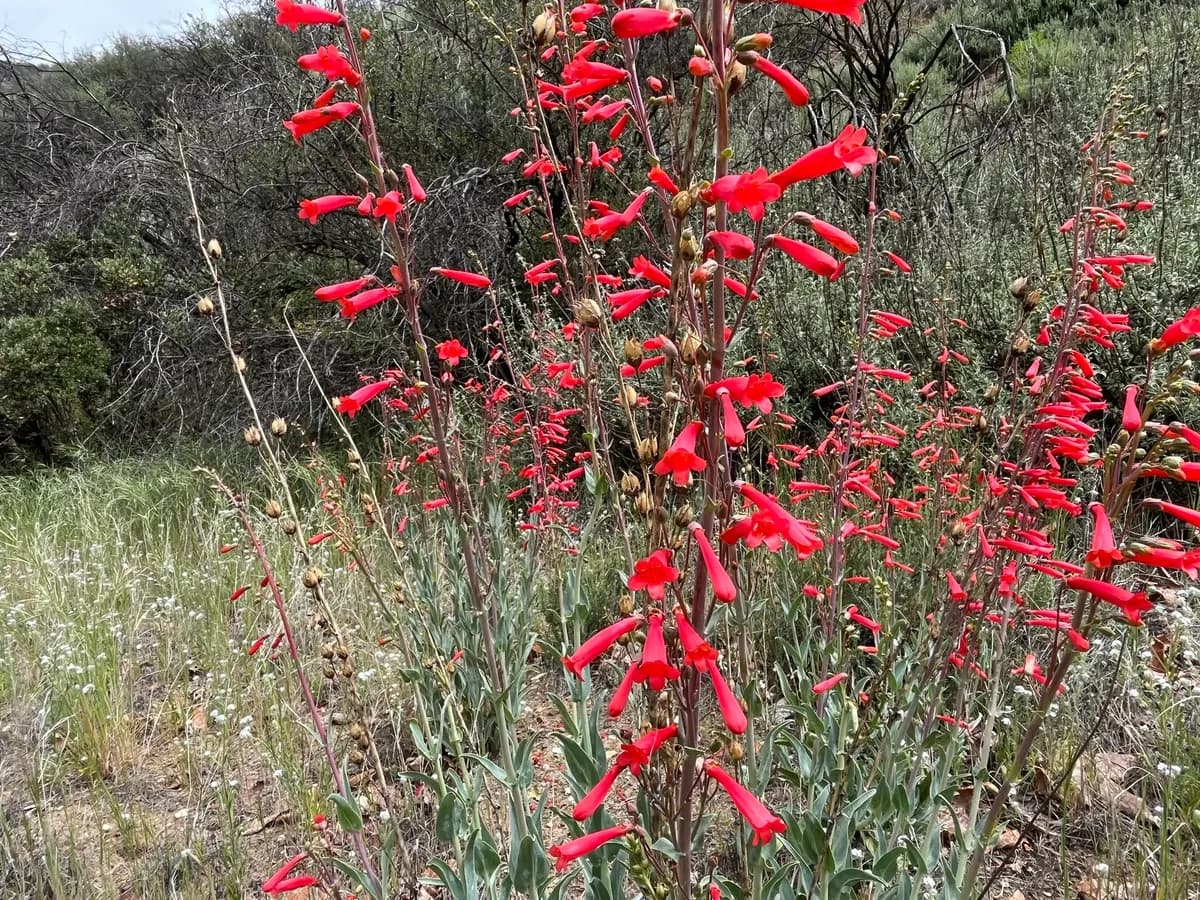
Scarlet Bugler (Penstemon centranthifolius) is not flagged as toxic to dogs or cats by Plants For A Future (PFAF) (opens in new tab) (last reviewed 2026-05-21). This verdict does not come from the ASPCA. If your pet shows symptoms after eating any plant, call the ASPCA at (888) 426-4435.
Light
full sun
Water
low
Size
24"–48" H × 12"–24" W
Bloom
Apr, May, Jun
Native to
CA
Pollinators
hummingbirds, bees
Before you buy
Your city may pay you to plant this
Cities and water utilities offer rebates for replacing lawn with native and water-wise plants. We track 459 programs across 44 states, each with a link to the provider and the date we last checked it.
Find rebates in your areaPicture natives in your own yard
Upload a photo of your yard and Patch Vision shows a rendering of it planted with natives for your region, like Scarlet Bugler.


Browse plants for this ecoregion
Scarlet bugler is a striking native perennial with tall stems of vivid red tubular flowers that bloom spring through early summer. It features narrow, blue-green leaves and an upright growth habit that adds vertical interest to gardens. This drought-tolerant plant thrives in full sun and well-drained soil.
Growing Scarlet Bugler
Grow Scarlet Bugler in full sun and low water. Mature plants reach 24 to 48 inches tall and spread 12 to 24 inches wide. Expect low maintenance to keep it looking intentional in a front yard.
How to care for Scarlet Bugler, by region
How to care for Scarlet Bugler where it is actually grown: year-round basics plus what to do each season, region by region, with the sources for each.
Care guidance last updated: August 2026
Central California Foothills and Coastal Mountains (includes San Francisco, CA)
Year-round
Scarlet Bugler is a California native with confirmed, though rare, wild populations in the drier East Bay hills, but it is not documented growing naturally along the immediate foggy coast, so give it full sun and sharp drainage in a San Francisco Bay Area garden.
- Confirmed native, though rare, in East Bay chaparral and oak woodland in Alameda and Contra Costa counties, per the CNPS East Bay chapter's rare plant program. It is not documented as naturally occurring right along the foggy immediate coast.
- Wants full sun and fast draining, lean soil such as sand, rock, or gritty amended clay. Slow draining beds are the most common reason this plant fails.
- Grows about one to three feet tall with tubular scarlet red flowers built for hummingbirds, and it also has documented value to native bees.
- Cold tolerant well past anything a San Francisco Bay Area winter produces, so frost is not something to plan around here.
- Individual plants are often relatively short lived, a few years rather than a decade, but the species reseeds and roots from cuttings easily, so a patch can renew itself.
Fall
Fall is cleanup time for Scarlet Bugler. Cut back spent flower stalks once bloom is done, keep the plant dry, and this is a fine season to add a new one.
- Once bloom finishes for the year, cut the flower stalks back. The Lady Bird Johnson Wildflower Center notes this keeps the plant tidier and lets new growth emerge from the roots in spring.
- This is a good time to collect a few dry seed capsules if you want more plants, since the species reseeds readily.
- Do not add fall irrigation. The plant should already be resting for the dry season.
- Fall is a reasonable time to add a new nursery plant, since cooler months ahead give roots time to settle in before next summer's dry stretch.
Fall cutback keeps a front-facing bed looking maintained rather than leggy or spent.
Winter
San Francisco Bay Area winters are mild and this plant is far more cold hardy than it needs to be here, so the winter task is really about drainage, not frost.
- This plant tolerates cold well beyond anything the San Francisco Bay Area produces, so no frost covering is needed here.
- Keep winter rain from pooling around the crown. In heavier clay, a raised planting spot or extra grit at the base helps roots avoid sitting wet through the rainy season.
- If you skipped the fall trim, late winter before new growth starts is the last good window to cut back old stems for a neater shape.
- No supplemental water is needed in a normal rain year here. Only water if there is an unusually long dry stretch with no rain.
A late-winter trim before spring growth keeps the plant tidy for a front yard bed.
Spring
Spring is bloom season for Scarlet Bugler in the Bay Area. New plantings need regular water to establish, but mature plants should stay on the dry side even in spring.
- Bloom typically runs from April into summer, so spring is when the first tubular red orange spikes open.
- If this is a new spring planting, water regularly for the first several weeks so roots establish, then cut back quickly since mature plants want it dry.
- This is peak hummingbird season for this plant, a good time to place it somewhere visible from a window.
- Skip fertilizer. This plant is built for lean, low nutrient soil, and rich soil encourages floppy growth and rot.
Summer
Summer is the highest risk season for Scarlet Bugler in a wetter or foggier San Francisco Bay Area yard. Calscape lists it as summer deciduous and low water, so extra moisture or humid fog drip is what actually kills this plant here.
- Stop supplemental water on established plants. Calscape rates this species as low water, at most about two waterings a month once established, and many gardeners in wetter microclimates give it none at all in summer.
- If your yard sits closer to the coast with regular summer fog, plant it on a slope, in a raised bed, or in the fastest draining spot available, and keep it out of a shared irrigation zone with thirstier plants.
- Some yellowing or dieback of foliage in high summer is normal dormancy behavior for this plant rather than a sign it is dying.
- Deadhead spent flower spikes to stretch the bloom season, or leave a few to mature into seed if you want the plant to reseed.
Sources: Native Plant Information Network (Lady Bird Johnson Wildflower Center) - Penstemon centranthifolius, CNPS East Bay Chapter Rare Plants - Penstemon centranthifolius, Calscape (California Native Plant Society) - Scarlet Bugler, Las Pilitas Nursery - Penstemon centranthifolius, Native Plant Information Network (Lady Bird Johnson Wildflower Center) - Q&A: trimming penstemon after bloom
Southern California/Northern Baja Coast (includes Los Angeles, CA)
Year-round
Scarlet Bugler is a short-lived, drought-loving California native that wants full sun, very sharp drainage, and almost no summer water once it is settled in.
- Plant it high on a slope or berm in gritty, fast-draining soil so water never sits at the crown
- Keep summer irrigation off established plants, since standing moisture is what rots this one
- Leave a few spent bloom spikes each year so it reseeds, because the parent plants are naturally short-lived
- Give tall spikes a discreet stake if your site gets strong wind
- Enjoy the scarlet tubular flowers as a hummingbird and bee nectar source
Fall
Fall after the first rains is the prime planting window, so this is the time to add Scarlet Bugler or scatter its saved seed.
- Plant new Scarlet Bugler now so roots establish over the cool wet winter
- Site every new plant high on a slope or berm with gritty soil for sharp drainage
- Scatter seed from the spikes you left standing to keep this short-lived plant replacing itself
- Skip fertilizer and rich amendments, which this lean-soil native does not need
Winter
Winter is the cool wet growing season, so let the rain do the watering and just make sure water drains away fast.
- Rely on winter rain and add no supplemental water in a normal wet winter
- Check that the crown sits high and dry, since soggy winter soil in heavy clay rots this plant
- On the coast frost is rare, so no frost protection is needed here
- Watch new fall plantings for standing water and improve drainage if puddles linger
Spring
Spring is peak bloom, so let the scarlet spikes do their thing and hold off on any real watering as the rains taper.
- Let the April through June bloom run and skip fertilizer, which this lean-soil native does not want
- Water only a first-year planting, and only if the spring turns dry early
- Watch for floppy spikes after a windy stretch and add a slim stake if needed
- Note where plants are thin so you can plan to let them reseed later
Summer
Summer is the dry, semi-dormant stress season, so the single most important thing is to keep the hose off an established plant.
- Give established plants no summer water at all, since summer moisture is the number-one killer here
- Water a brand-new first-summer planting sparingly, then plan to wean it off next year
- Cut the spent bloom spikes to tidy the plant after flowering, but leave a few to set seed
- Expect it to look sparse or leggy once bloom ends, which is normal for this native
Trimming the leggy spent spikes after bloom reads as intentional upkeep and keeps a tidy front-yard edge, which helps avoid a violation letter.
Sources: Calscape (California Native Plant Society): Penstemon centranthifolius, Scarlet Bugler, USDA PLANTS Database: Penstemon centranthifolius (PECE2), Calflora: Penstemon centranthifolius
In an HOA neighborhood
Scarlet Bugler is an HOA-friendly choice. Maintenance level: low. Tidiness: 3 out of 5.
Works well in: mid zone, foundation.
- Can look somewhat sparse or leggy after blooming
- May need staking in windy areas
- Winter appearance less tidy than summer bloom
Wildlife value
The bright scarlet tubular flowers are perfectly adapted for hummingbirds, making it an excellent attractor for these garden visitors. Bees will also visit the blooms, though they are primarily hummingbird-pollinated.
Common questions
- When does Scarlet Bugler bloom?
- Scarlet Bugler generally flowers from April through June, sending up tall spikes lined with narrow, tubular red blooms.
- What pollinators does Scarlet Bugler attract?
- The tubular red flowers of Scarlet Bugler are especially attractive to hummingbirds, and bees also visit regularly for nectar and pollen.
- How much water does Scarlet Bugler need?
- Scarlet Bugler is adapted to low water conditions and grows best in well-drained, dry soils rather than regularly irrigated beds.
- How much sun does Scarlet Bugler need to flower well?
- Full sun brings out the best bloom on Scarlet Bugler, though it can also perform reasonably well in part sun locations.
- Is Scarlet Bugler toxic to dogs?
- Scarlet Bugler is not flagged as toxic to dogs by Plants For A Future (PFAF). This verdict does not come from the ASPCA.
- Is Scarlet Bugler toxic to cats?
- Scarlet Bugler is not flagged as toxic to cats by Plants For A Future (PFAF). This verdict does not come from the ASPCA.
- Is Scarlet Bugler HOA-friendly?
- Scarlet Bugler is generally an HOA-friendly choice in the right placement, with low maintenance.
These answers were drafted with an AI model from this plant's data. Verify care details with a local expert.
Native range data from vouchered herbarium specimen records and regional native plant society lists. Pollinator and host plant associations compiled from GBIF, iNaturalist, and published ecological literature.
If something looks wrong
Common plant problems, and what to check first
These come up on almost any plant. Each guide lists the likely causes in the order they are worth ruling out, with one thing to check before you act on any of them, and links to the source it came from.
- It is dying right after planting
- Leaves turning yellow
- Wilting even though I watered it
- Brown crispy leaf tips
- Bugs on the plant
Ready to grow Scarlet Bugler? Add it to your garden in Pollinator Patch to track it and get season-by-season care guidance.