Shallow Sedge
Carex lurida
Last reviewed: September 2026
Carex lurida, or shallow sedge, is a clumping wetland grass that blooms from May through July and thrives in consistently wet, part-shade sites like marsh edges and pond margins.
Toxicity unknown
Shallow Sedge (Carex lurida) is not listed by the ASPCA Animal Poison Control Center (opens in new tab) or the other sources we check, so we have no verdict for it either way. Absence from those lists is not a clearance. If your pet shows symptoms after eating any plant, call the ASPCA at (888) 426-4435.
The USDA PLANTS Database (opens in new tab) does not flag Shallow Sedge as toxic to livestock.
Light
part shade
Water
high
Size
12"–36" H × 8"–24" W
Bloom
May, Jun, Jul
Native to
AL, AR, CT, FL and 27 more states
Before you buy
Your city may pay you to plant this
Cities and water utilities offer rebates for replacing lawn with native and water-wise plants. We track 459 programs across 44 states, each with a link to the provider and the date we last checked it.
Find rebates in your areaPicture natives in your own yard
Upload a photo of your yard and Patch Vision shows a rendering of it planted with natives for your region, like Shallow Sedge.


Browse plants for this ecoregion
Shallow sedge is a clumping native grass that thrives in consistently moist to wet soils and partial shade. It produces small greenish flowers in late spring through summer and forms neat, arching clumps of narrow green foliage. It goes dormant in winter, turning brown before new growth emerges in spring.
Growing Shallow Sedge
Grow Shallow Sedge in part shade and high water. Mature plants reach 12 to 36 inches tall and spread 8 to 24 inches wide. Expect low maintenance to keep it looking intentional in a front yard.
How to care for Shallow Sedge, by region
How to care for Shallow Sedge where it is actually grown: year-round basics plus what to do each season, region by region, with the sources for each.
Care guidance last updated: September 2026
Western Allegheny Plateau (includes Pittsburgh, PA)
Year-round
Lurid sedge is native to Pennsylvania and does well in the wet, part shade spots common around Pittsburgh yards, rain gardens, and pond edges. It forms low grass like clumps and tolerates standing water, making it a solid pick for soggy areas where turf struggles.
- Plant in part shade to full sun with consistently wet to moist soil, it tolerates clay, loam, or sandy soil as long as it stays damp.
- Good for rain gardens, ditches, and pond or stream edges since it handles occasional standing water.
- Space plants roughly 18 to 24 inches apart so the clumping habit can fill in.
- Stays green and growing through summer heat better than many cool season sedges.
- Deer tend to leave it alone.
- Not listed as toxic to dogs or cats on the ASPCA plant lists.
Fall
Fall fruiting spikelets on lurid sedge can be left standing for winter interest and bird food, and this is also a good time to divide or plant before the ground cools too much.
- Leave the seed heads in place through fall since birds feed on them.
- Divide or plant new clumps in early fall while soil is still workable, giving roots time to establish before winter.
- Reduce watering as temperatures cool but do not let soil dry out completely.
- Watch for any damaged or yellowing leaves and remove them if the bed faces the street.
A light fall tidy of damaged or yellowing leaves keeps a front-yard planting looking intentional rather than overgrown.
Winter
Lurid sedge is semi-evergreen through a Pittsburgh winter and mostly needs to be left alone until late winter or early spring cleanup.
- Foliage may stay green or straw colored through mild stretches and can look tattered by late winter, that is normal for this species.
- Hold off on cutting back until late winter or early spring so standing foliage keeps offering cover for wildlife.
- No watering needed while dormant unless the winter is unusually dry.
- Check after storms that mulch or fallen leaves have not smothered the crown.
Tattered winter foliage is normal for this species and does not need cutting back until late winter or spring cleanup.
Spring
Spring is when lurid sedge puts out fresh green growth, and it is the best time in the Pittsburgh area to divide crowded clumps or plant new ones.
- Comb out or cut back leftover winter foliage once hard frost risk passes in mid to late April, making room for new growth.
- Divide established clumps now if you want to spread the planting or share divisions.
- New plantings started in spring establish well while soil stays consistently moist from spring rain.
- Watch for new fruiting spikelets starting to form as the season warms.
Cutting back old foliage in spring keeps the planting looking tidy for an HOA-conscious front yard.
Summer
Unlike many cool season sedges, lurid sedge keeps growing and looking good through Pittsburgh summer heat, as long as it does not dry out.
- Keep soil consistently moist to wet, this species is rated an obligate wetland plant and will decline if it dries out for long stretches.
- Water during dry spells if it is not already in a naturally wet spot like a rain garden or pond edge.
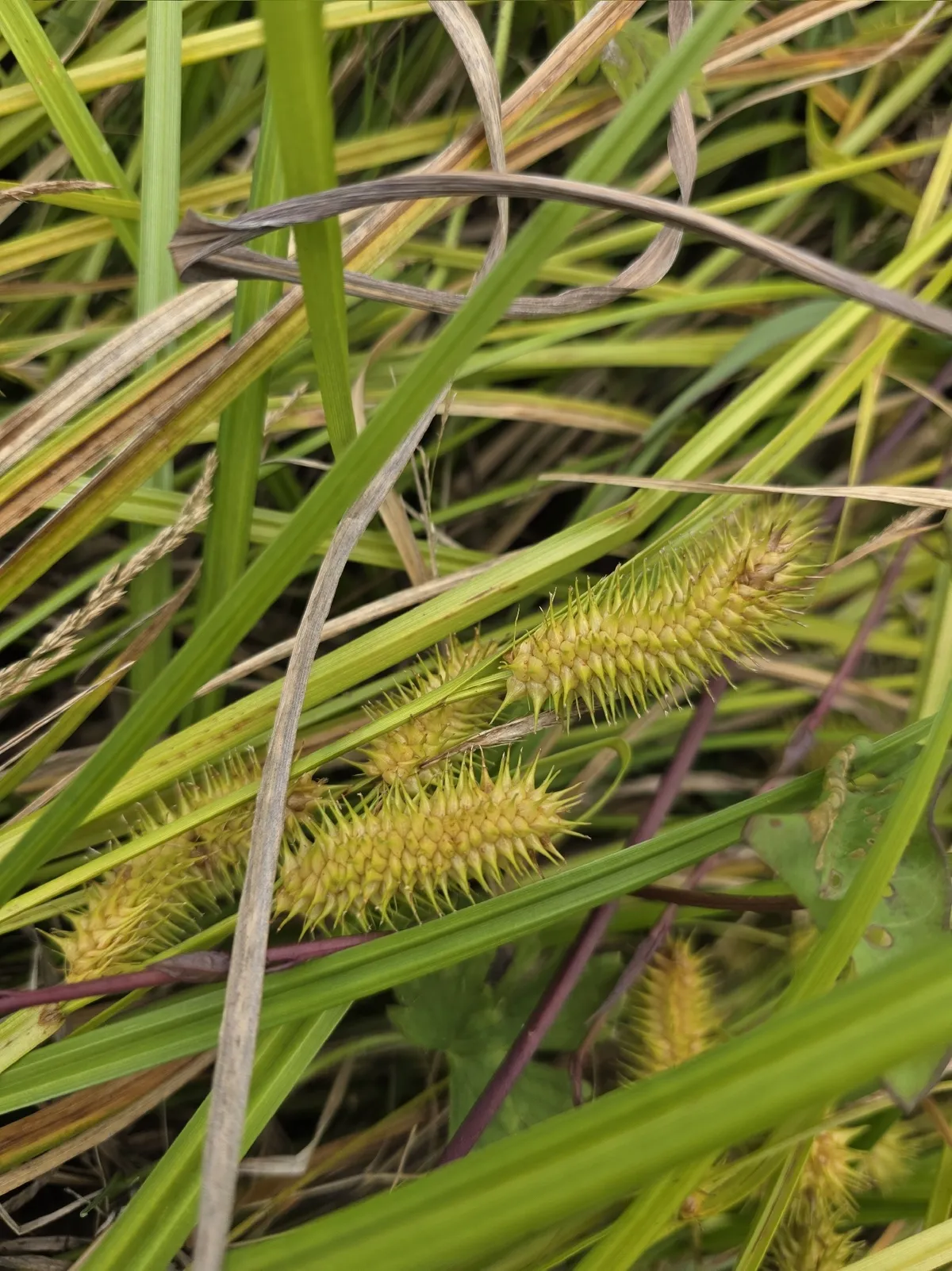
- Showy yellowish fruiting spikelets are visible now and add texture to the planting.
- No known common pests or diseases to watch for at this time of year.
Sources: Carex lurida (Shallow Sedge) - Native Plant Database, Carex lurida Wahlenb. Plant Profile, USDA PLANTS Database, Sallow Sedge, Carex lurida - NC State Extension Gardener Plant Toolbox, Toxic and Non-Toxic Plant List, Cats - ASPCA, Toxic and Non-Toxic Plant List, Dogs - ASPCA
In an HOA neighborhood
Shallow Sedge takes more care to keep looking intentional in a front yard. Maintenance level: low. Consider it for backyard or mid-zone beds rather than the street edge.
Works well in: backyard only.
- Looks weedy and unkempt to those unfamiliar with native plants
- Brown dormant appearance in winter may be seen as untidy
- Requires consistently wet conditions that may appear problematic
Wildlife value
This sedge provides important habitat and nesting material for native birds and small wildlife. While not a major pollinator plant, it supports various insects and offers seeds for birds in late summer.
Common questions
- When does shallow sedge bloom?
- Carex lurida produces its spiky green flower clusters from May through July, with seed heads persisting into summer.
- What growing conditions does shallow sedge need?
- Shallow sedge does best in part shade with consistently high moisture, making it well suited to rain gardens, pond edges, and low spots that stay wet for extended periods.
- How is shallow sedge used in a garden?
- As a clumping grass-like sedge, it works well massed along water features or in wet meadow plantings where its arching foliage and distinctive seed heads add texture.
- Is shallow sedge deciduous or evergreen?
- It is semi-evergreen, often holding some green foliage through mild winters before dieback in colder climates.
- Is Shallow Sedge toxic to livestock?
- The USDA PLANTS Database does not flag Shallow Sedge as toxic to livestock.
- Is Shallow Sedge HOA-friendly?
- Shallow Sedge takes more care to look intentional in a front yard. Consider it for backyard or mid-zone beds rather than the street edge.
These answers were drafted with an AI model from this plant's data. Verify care details with a local expert.
Native range data from vouchered herbarium specimen records and regional native plant society lists. Pollinator and host plant associations compiled from GBIF, iNaturalist, and published ecological literature.
If something looks wrong
Common plant problems, and what to check first
These come up on almost any plant. Each guide lists the likely causes in the order they are worth ruling out, with one thing to check before you act on any of them, and links to the source it came from.
- It is dying right after planting
- Leaves turning yellow
- Wilting even though I watered it
- Brown crispy leaf tips
- Bugs on the plant
Ready to grow Shallow Sedge? Add it to your garden in Pollinator Patch to track it and get season-by-season care guidance.