St. Andrew's-cross
Hypericum hypericoides
Last reviewed: September 2026
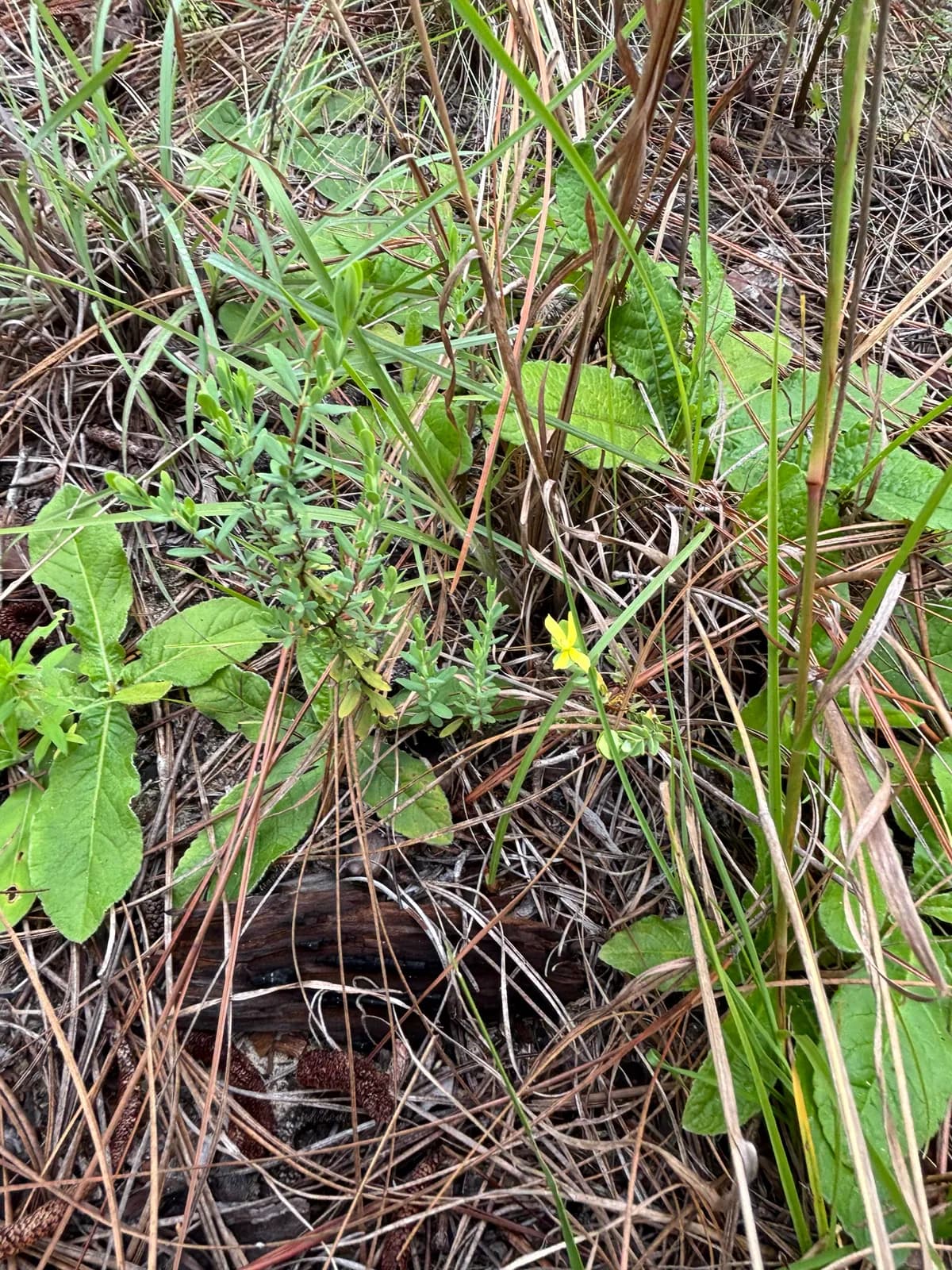
St. Andrew's-cross is a low shrub with small yellow flowers blooming June through November. It favors full sun to partial shade and dry, well-drained soils, thriving in open woodlands and sandy sites across the eastern and southeastern United States.
Toxicity unknown
St. Andrew's-cross (Hypericum hypericoides) is not listed by the ASPCA Animal Poison Control Center (opens in new tab) or the other sources we check, so we have no verdict for it either way. Absence from those lists is not a clearance. If your pet shows symptoms after eating any plant, call the ASPCA at (888) 426-4435.
Light
full sun
Water
low
Size
6"–24" H × 6"–18" W
Bloom
Jun, Jul, Aug, Sep, Oct, Nov
Native to
AL, AR, DE, FL and 21 more states
Pollinators
butterflies, bees
Before you buy
Your city may pay you to plant this
Cities and water utilities offer rebates for replacing lawn with native and water-wise plants. We track 452 programs across 44 states, each with a link to the provider and the date we last checked it.
Find rebates in your areaBrowse plants for this ecoregion
St. Andrew's-cross is a low-growing native shrub with small yellow flowers that bloom from summer through late fall. This compact plant forms neat mounds and requires minimal water once established, making it ideal for low-maintenance landscapes.
Growing St. Andrew's-cross
Grow St. Andrew's-cross in full sun and low water. Mature plants reach 6 to 24 inches tall and spread 6 to 18 inches wide. Expect moderate maintenance to keep it looking intentional in a front yard.
How to care for St. Andrew's-cross, by region
How to care for St. Andrew's-cross where it is actually grown: year-round basics plus what to do each season, region by region, with the sources for each.
Care guidance last updated: August 2026
Southern Coastal Plain (includes Jacksonville, FL)
Year-round
St. Andrew's cross is a native low shrub with an open, airy shape that fits well in a front yard bed near Jacksonville. It stays compact, needs little water once settled in, and blooms with small yellow cross-shaped flowers for much of the growing season.
- Grows about 1 to 3 feet tall and wide with a thin, open habit, not a dense hedge shape.
- Wants full sun to light afternoon shade. In our hot Jacksonville summers, a little afternoon shade is fine and won't hurt flowering.
- Low water needs once established. It tolerates both the sandy well-drained soils and the occasional wet spell common in the Southeastern Plains near the coast.
- Confirmed native to this part of Florida (native range includes FL) by Lady Bird Johnson Wildflower Center and the USDA PLANTS database.
- Foliage is semi-evergreen here. Expect it to hold most leaves through a typical mild Jacksonville winter, with some drop after a harder cold snap.
Fall
Blooming tapers off through fall as days shorten. It's also a good, low-stress time to divide or move an established plant before winter sets in.
- Flowers taper off through October, with small seed capsules forming behind the last blooms.
- Leave some seed capsules if you want the plant to fill in on its own, or trim them off for a tidier look.
- Fall is a good, low-stress window to divide or transplant an established clump before winter.
- A light trim of any leggy stems now keeps the plant compact heading into winter.
A fall trim of leggy growth keeps the bed looking tidy through the winter months.
Winter
Jacksonville's winters are mild, zone 9b with only occasional hard freezes, so St. Andrew's cross usually holds most of its leaves through the season with just light dieback after a cold snap.
- In a typical mild Jacksonville winter, the plant holds most of its leaves rather than going fully bare.
- An occasional hard freeze can brown or drop some leaves. Leave that growth in place over winter, since it helps protect the stems underneath.
- Save any harder pruning for late winter, right before new growth starts, rather than cutting back mid-winter.
- No fertilizer is needed over winter. This plant is adapted to the low-nutrient sandy soils of the Southeastern Plains and doesn't need feeding to get through the cold months.
Winter leaf color can look a bit ragged after a cold snap. Hold off on a full trim until new growth starts in late winter so the bed doesn't sit bare.
Spring
Spring is prune-and-shape season for St. Andrew's cross in Jacksonville. New growth pushes out once the last frost risk passes in mid-February, and this is also a good, low-stress window to divide an established clump.
- Late winter into early spring, just before new growth starts, is the best time to prune out dead wood and shape the plant.
- If the clump has gotten overgrown or you want to start a new planting, spring division works well right as new growth begins.
- New leaves and stems flush out through March and April as our humid growing season ramps up.
- If a late-winter freeze browned any tips, wait for new growth to show before trimming, then cut back to the live wood.
A light spring shaping keeps the plant's naturally open form looking neat along a front bed edge.
Summer
Summer is the main bloom season for St. Andrew's cross, with small yellow flowers opening through Jacksonville's hot, humid months. Established plants get by on rainfall alone.
- Flowering runs from around June into early fall, with four narrow yellow petals forming the plant's namesake cross shape.
- Established plants handle Jacksonville's summer heat and afternoon thunderstorms without extra watering.
- Good drainage matters more than watering here. In our humid summers, soggy soil is a bigger risk to this plant than going dry.
- No deadheading is needed to keep new flowers coming.
Sources: Lady Bird Johnson Wildflower Center: Hypericum hypericoides, USDA PLANTS Database: Hypericum hypericoides (HYHY) profile, UF/IFAS Extension Nassau County: St. Andrew's cross identification and growing conditions, Florida Wildflower Foundation: St. Andrew's cross habitat and soil notes (community tip)
Want these tasks as reminders timed to your yard? Pollinator Patch turns this guidance into a season-by-season care plan for the plants you actually grow.
In an HOA neighborhood
St. Andrew's-cross is an HOA-friendly choice in the right placement. Maintenance level: moderate. Tidiness: 4 out of 5.
Works well in: foundation, mid zone.
- Requires annual shaping to stay compact
Wildlife value
The long blooming period provides nectar for butterflies and bees from summer through late fall. Its extended flowering season makes it particularly valuable for supporting pollinators during hot Texas summers.
Common questions
- When does St. Andrew's-cross bloom?
- St. Andrew's-cross typically blooms from June through November, producing small four-petaled yellow flowers over a long summer to fall season.
- What pollinators visit St. Andrew's-cross?
- Bees and butterflies are the main visitors to the yellow flowers of St. Andrew's-cross during its bloom period.
- What growing conditions suit St. Andrew's-cross best?
- This shrub grows best in full sun with low water needs, and it handles dry, sandy, or rocky soils well once established.
- Does St. Andrew's-cross keep its leaves year round?
- It is semi-evergreen in many areas, holding onto some foliage through mild winters but dropping more leaves where winters are colder.
- How large does St. Andrew's-cross typically get?
- It usually stays a low, spreading shrub, often reaching one to three feet in height in open woodland or roadside settings.
- Is St. Andrew's-cross HOA-friendly?
- St. Andrew's-cross is generally an HOA-friendly choice in the right placement, with moderate maintenance.
These answers were drafted with an AI model from this plant's data. Verify care details with a local expert.
Native range data from vouchered herbarium specimen records and regional native plant society lists. Pollinator and host plant associations compiled from GBIF, iNaturalist, and published ecological literature.
If something looks wrong
Common plant problems, and what to check first
These come up on almost any plant. Each guide lists the likely causes in the order they are worth ruling out, with one thing to check before you act on any of them, and links to the source it came from.
- It is dying right after planting
- Leaves turning yellow
- Wilting even though I watered it
- Brown crispy leaf tips
- Bugs on the plant
Ready to grow St. Andrew's-cross? Add it to your garden in Pollinator Patch to track it and get season-by-season care guidance.
Planning a bed around it? Start a free plan with this plant
Not sure where to start? Take the 2-minute yard quiz