Sunflower
Helianthus annuus
Last reviewed: August 2026
Helianthus annuus is an upright annual forb that thrives in full sun and medium moisture, blooming from July through September and drawing bees, butterflies and beetles in warm, open landscapes.
Toxicity unknown
Sunflower (Helianthus annuus) is not listed by the ASPCA Animal Poison Control Center (opens in new tab) or the other sources we check, so we have no verdict for it either way. Absence from those lists is not a clearance. If your pet shows symptoms after eating any plant, call the ASPCA at (888) 426-4435.
The USDA PLANTS Database (opens in new tab) does not flag Sunflower as toxic to livestock.
Light
full sun
Water
medium
Size
24"–120" H × 12"–36" W
Bloom
Jul, Aug, Sep
Native to
AZ, CA, NV, WA
Pollinators
bees, butterflies, beetles
Before you buy
Your city may pay you to plant this
Cities and water utilities offer rebates for replacing lawn with native and water-wise plants. We track 452 programs across 44 states, each with a link to the provider and the date we last checked it.
Find rebates in your areaBrowse plants for this ecoregion
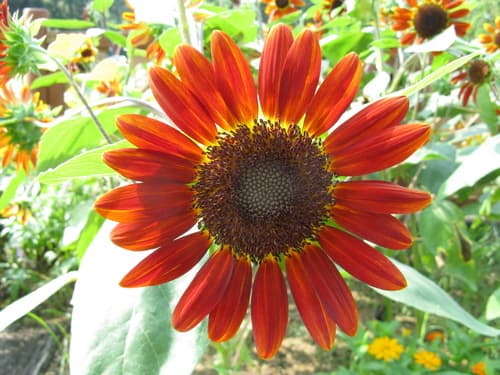
Sunflowers are tall, cheerful annuals with large yellow blooms that follow the sun throughout the day. These iconic plants can reach up to 10 feet tall and produce edible seeds that birds love. They bloom from summer into early fall and need to be replanted each year.
Growing Sunflower
Grow Sunflower in full sun and medium water. Mature plants reach 24 to 120 inches tall and spread 12 to 36 inches wide. Expect low maintenance to keep it looking intentional in a front yard.
How to care for Sunflower, by region
How to care for Sunflower where it is actually grown: year-round basics plus what to do each season, region by region, with the sources for each.
Care guidance last updated: August 2026
Texas Blackland Prairies (includes Dallas, TX)
Year-round
Common sunflower is a native Texas warm season annual that does best in full sun with well drained soil in the Dallas area, and it is listed as non-toxic to dogs and cats.
- Give it full sun, at least 6 to 8 hours a day, and well drained soil. It tolerates both heavy clay and sandy ground and does not need rich soil to thrive.
- Water it in at planting and while seedlings establish, then it can lean on medium water. Its deep taproot handles Dallas area dry spells once it is established.
- Stems are usually self supporting and do not need staking except in an exposed, windy spot.
- This plant can suppress nearby seedlings through natural root chemistry, an effect called allelopathy, so give it its own space rather than crowding it against other new plantings.
- The ASPCA lists common sunflower (Helianthus annuus) as non-toxic to dogs and cats, though eating a large amount of the seed hulls can still cause choking or an upset stomach.
A tall sunflower stand reads as an intentional wildflower drift rather than a weed patch when it has a mowed edge or low border in front, a simple way to keep it HOA-friendly.
Fall
Common sunflower keeps blooming into October in the Dallas area, then the first fall freeze finishes the plant since it is a true annual, which is the natural cue to cut it back.
- Common sunflower keeps blooming into October in North Texas, ahead of the average first fall freeze in this part of the Dallas area.
- Once a freeze blackens the leaves, the plant is done for the season. It is a true annual, not a perennial, so this is the natural time to cut the dead stalks down rather than waiting for it to regrow.
- Before cutting, let a few flower heads dry fully on the plant if you want to collect seed for next spring, or leave them a little longer for birds to feed on.
- Rake up dropped leaves and old stalks once the plant is finished, this reduces pest and disease carryover into next year per Texas A&M AgriLife guidance.
Cutting the stalks back once frost finishes the plant keeps the bed from looking abandoned late in the season, a simple way to stay HOA-friendly through fall cleanup.
Winter
Common sunflower is a warm season annual, so in Dallas area winters there is no living plant to protect, only bed cleanup and planning for next spring's planting.
- Common sunflower is a warm season annual, so in the Dallas area, USDA zone 8b, there is no living plant to protect through winter. Last season's growth should already be cut back and cleared.
- If you saved dried seed heads in fall, store the seed somewhere cool and dry, then plan to direct sow again once soil warms next spring, generally mid March or later here.
- Any seed that dropped and self sowed during fall will simply sit dormant in the soil through winter and germinate on its own once spring temperatures return, no winter care needed.
- Use the dormant season to confirm or adjust the bed's spot, full sun with well drained soil, ahead of next year's planting.
A cleared, tidy bed reads as tended through winter. Adding a low edging or a layer of mulch keeps the empty space looking intentional until spring planting.
Spring
In the Dallas area, direct sow common sunflower from mid March through April once the average last freeze has passed and soil has warmed.
- Dallas sits in USDA hardiness zone 8b, with an average last spring freeze in this part of North Texas. Direct sow seed from mid March through April once soil has warmed to at least 50 degrees F.
- Spring is one of the wetter stretches of the year in Dallas, with rainfall building toward a peak in May, so pick a well drained spot or raised bed so seedlings do not sit in soggy clay.
- Thin crowded seedlings soon after they come up so the plants you keep get full sun and airflow, this is the easiest time to move or remove ones that sprouted somewhere unwanted.
- Once plants reach 8 to 12 inches tall, light cultivation around the base helps control early weeds. Avoid deep tilling later once roots are established, it can set the plant back.
Summer
July is normally the driest month in Dallas, so the highest priority watering window is right when flower buds are forming, and this is also when to watch for common sunflower pests.
- July is typically the driest month of the year in Dallas, which makes this the highest priority watering window. Give a deep soak once flower buds reach about three quarters of an inch to one inch across, and again roughly three weeks later if the dry spell continues.
- Sunflowers draw on a deep taproot, so they handle Dallas area summer heat better than shallow rooted annuals, but steady moisture during bud set and flowering has the biggest effect on bloom size.
- Watch through summer for common sunflower pests such as aphids and stem weevils, covered in the Texas A&M AgriLife pest guide, and treat early if you spot damage.
- Deadhead spent flower heads if you want a longer bloom period and a neater looking bed, or leave a few heads on the plant to mature for birds and for reseeding.
Deadheading spent summer blooms keeps a tall sunflower bed looking tended rather than scraggly, an easy way to keep it HOA-friendly through the hottest stretch.
Sources: USDA PLANTS Database - Helianthus annuus, Lady Bird Johnson Wildflower Center - Helianthus annuus (Common sunflower), ASPCA - Toxic and Non-Toxic Plants: Sunflower, National Weather Service - Fort Worth/Dallas Climate Normals and Records, Texas DOT - USDA Plant Hardiness Zone Map by District, Texas A&M AgriLife Research and Extension Center - Sunflower Production Guide
Want these tasks as reminders timed to your yard? Pollinator Patch turns this guidance into a season-by-season care plan for the plants you actually grow.
In an HOA neighborhood
Sunflower takes more care to keep looking intentional in a front yard. Maintenance level: low. Consider it for backyard or mid-zone beds rather than the street edge.
Works well in: backyard only.
- Extremely tall growth appears too wild for front yards
- Can look messy as flowers fade and stalks brown
- May be perceived as agricultural rather than ornamental
Wildlife value
Host plant for painted lady butterfly, sunflower moth.
Sunflowers are excellent pollinator magnets, attracting bees, butterflies, and beetles to their large flower heads. The seeds provide important fall and winter food for birds like finches and chickadees.
Common questions
- When does Helianthus annuus bloom?
- It typically flowers from July through September, producing large yellow flower heads on tall, sturdy stems.
- What pollinators visit this plant?
- Bees, butterflies and beetles commonly visit the flower heads for their abundant pollen and nectar.
- How much light does Helianthus annuus need?
- This forb grows best in full sun, needing several hours of direct light each day to support strong stems and reliable flowering.
- How much water does it need?
- It does well with medium moisture, handling brief dry periods once established but growing most vigorously with steady watering during the growing season.
- Is Sunflower toxic to livestock?
- The USDA PLANTS Database does not flag Sunflower as toxic to livestock.
- Is Sunflower HOA-friendly?
- Sunflower takes more care to look intentional in a front yard. Consider it for backyard or mid-zone beds rather than the street edge.
These answers were drafted with an AI model from this plant's data. Verify care details with a local expert.
Native range data from vouchered herbarium specimen records and regional native plant society lists. Pollinator and host plant associations compiled from GBIF, iNaturalist, and published ecological literature.
If something looks wrong
Common plant problems, and what to check first
These come up on almost any plant. Each guide lists the likely causes in the order they are worth ruling out, with one thing to check before you act on any of them, and links to the source it came from.
- It is dying right after planting
- Leaves turning yellow
- Wilting even though I watered it
- Brown crispy leaf tips
- Bugs on the plant
Ready to grow Sunflower? Add it to your garden in Pollinator Patch to track it and get season-by-season care guidance.
Planning a bed around it? Start a free plan with this plant
Not sure where to start? Take the 2-minute yard quiz