Bald Cypress
Taxodium distichum
Last reviewed: September 2026
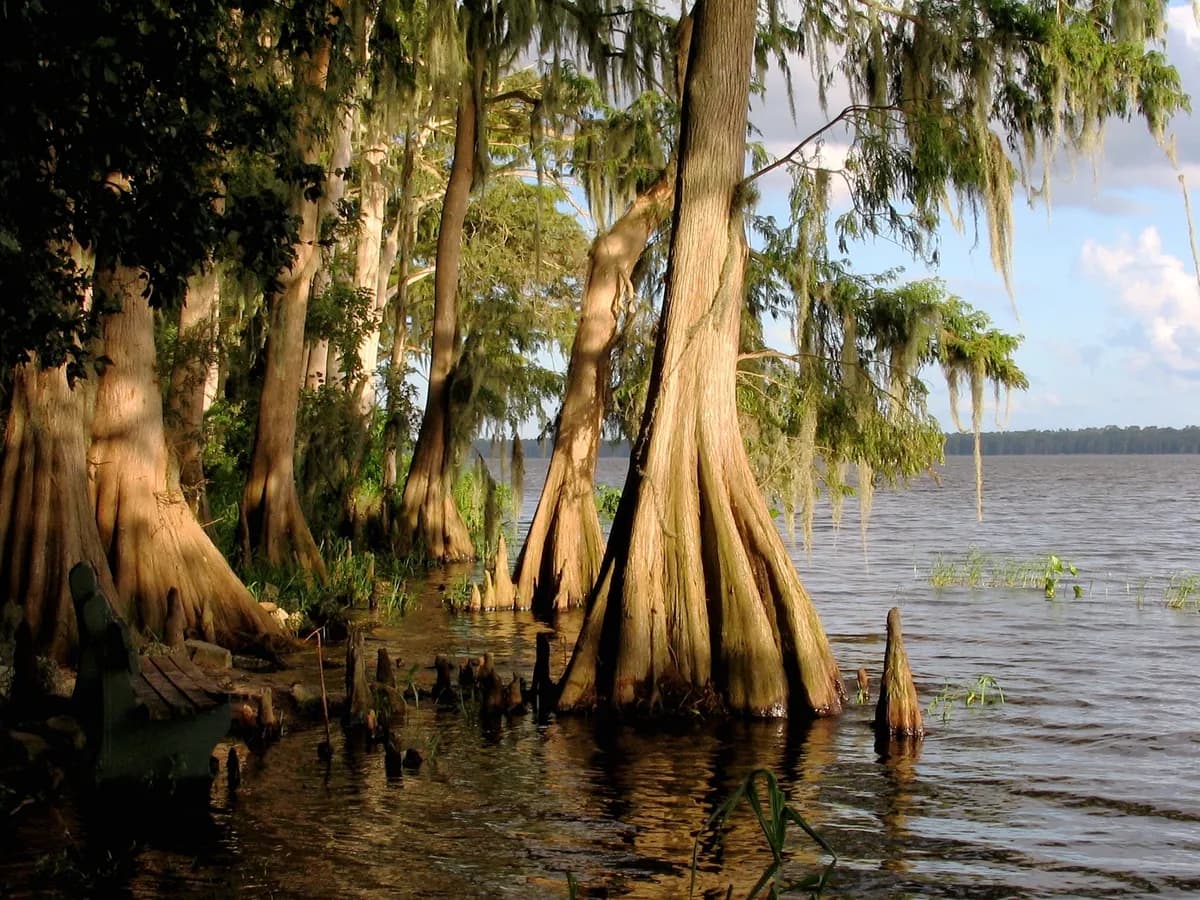
Bald cypress is a tall wetland conifer that sheds its feathery needles each fall and blooms from March through May. It thrives in swamps, floodplains and riverbanks across the southeastern and south-central United States.
Toxicity unknown
Bald Cypress (Taxodium distichum) is not listed by the ASPCA Animal Poison Control Center (opens in new tab) or the other sources we check, so we have no verdict for it either way. Absence from those lists is not a clearance. If your pet shows symptoms after eating any plant, call the ASPCA at (888) 426-4435.
The USDA PLANTS Database (opens in new tab) does not flag Bald Cypress as toxic to livestock.
Light
full sun
Water
medium
Size
600"–900" H × 240"–540" W
Bloom
Mar, Apr, May
Native to
AL, AR, DE, FL and 15 more states
Pollinators
moths
Before you buy
Your city may pay you to plant this
Cities and water utilities offer rebates for replacing lawn with native and water-wise plants. We track 452 programs across 44 states, each with a link to the provider and the date we last checked it.
Find rebates in your areaBrowse plants for this ecoregion
Bald cypress is a majestic native Texas tree that grows 50-75 feet tall with a distinctive conical shape and feathery, light green foliage. Despite its name, it thrives in both wet and dry conditions and develops attractive reddish-brown bark with age. The tree drops its needles in fall, creating a beautiful golden display before winter dormancy.
Growing Bald Cypress
Grow Bald Cypress in full sun and medium water. Mature plants reach 600 to 900 inches tall and spread 240 to 540 inches wide. Expect low maintenance to keep it looking intentional in a front yard.
How to care for Bald Cypress, by region
How to care for Bald Cypress where it is actually grown: year-round basics plus what to do each season, region by region, with the sources for each.
Care guidance last updated: August 2026
Cross Timbers (includes Fort Worth, TX)
Year-round
Bald cypress isn't confirmed native to the Fort Worth area, but this Texas tree from the state's eastern and central river bottoms grows well here as a planted shade tree if you give it steady water and watch for chlorosis in our alkaline clay.
- Bald cypress (Taxodium distichum) is native to East and Central Texas river bottoms and swamps, but the Lady Bird Johnson Wildflower Center's range description doesn't confirm it as naturally occurring in North Central Texas, so treat a tree in a Fort Worth yard as a planted landscape tree, not a restored native.
- It tolerates Fort Worth's dense clay soil, including compacted or poorly drained spots, though North Carolina State Extension notes it grows best in moist, slightly acidic soil, so our alkaline clay can cause the leaves to yellow between the veins (chlorosis) over time.
- Give it full sun and plenty of room. Clemson HGIC lists a mature size of 50 to 70 feet tall and 20 to 30 feet wide, so keep it well clear of the house, foundation, and sidewalks when you plant it.
- It's a deciduous conifer, meaning it drops every needle each fall and stands bare all winter. That's how the tree normally works, not a sign it's dying.
Fall
Fall is when a Fort Worth bald cypress turns cinnamon-orange and drops every needle, and a little raking keeps the yard tidy through the season.
- Needles turn tan to orange-red to reddish-brown before dropping, per Clemson HGIC's description of this deciduous conifer. That color change is normal, not disease.
- Fort Worth's growing season typically wraps up by late November, and that first freeze is usually what finishes the needle drop for the year.
- Raking the fine needle litter off the lawn and beds through October and November keeps the yard looking tended, which matters if your neighborhood watches curb appeal this time of year.
- Don't be alarmed when the crown goes bare within a couple weeks of that first hard freeze. Losing every needle every year is just how this deciduous conifer works.
Raking keeps the heavy fall needle drop from making the front yard look neglected.
Winter
Winter means a bare, dormant bald cypress in Fort Worth, and that's the best window for structural pruning before spring growth starts.
- Fort Worth typically sees freezing nights from late November into March, and the tree stands completely bare through most of that stretch since it drops all its needles every fall.
- Prune only dead, damaged, or crossing branches during winter dormancy, and hold off on major cuts once a hard freeze is forecast.
- Cut back on watering while the tree is dormant, but don't let a young tree's root zone go bone dry during a dry winter stretch. A deep soak once a month is plenty if there's been no rain.
- A newly planted tree under three years old benefits from a couple inches of mulch over the root zone to buffer a hard freeze, even though an established bald cypress handles typical North Texas winters fine.
A bare winter crown is normal for this tree and not a dead-tree look worth worrying a neighbor or HOA about.
Spring
Spring is when a Fort Worth bald cypress pushes new feathery growth after the last cold snap, making it the best time to plant and start a deep-watering routine.
- Fort Worth's growing season typically starts in early March, so plant or transplant a new bald cypress after the coldest nights pass to avoid frost damage on tender new growth.
- Water new transplants deeply about once a week through spring, since North Texas spring rain is unpredictable and young roots aren't established yet.
- Watch new needles for a pale yellow tint between the veins, a sign of chlorosis from our alkaline clay, and treat with an iron soil drench if it shows up.
- Hold off on heavy pruning this time of year and let the tree put its energy into the spring growth flush.
Summer
Fort Worth summers run hot and dry, so a young bald cypress needs steady deep watering and a watch for a couple of common summer pests.
- August highs average around 95 degrees F in Fort Worth, and that heat plus dry spells stresses a tree that isn't fully established yet, so give it a slow deep soak weekly if there's no rain.
- Once a bald cypress has been in the ground three years or more it handles Texas heat and short dry stretches better, though it still grows best with consistent moisture.
- Check for bagworms and spider mites during the hottest, driest weeks. NC State Extension lists both as the main summer pests for this tree, and handpicking bagworm bags or hosing off mites usually handles a light case.
- Full sun is fine all summer. This tree doesn't need afternoon shade to handle Texas heat.
Sources: Lady Bird Johnson Wildflower Center - Taxodium distichum (native range), NC State Extension Plant Toolbox - Taxodium distichum, Clemson HGIC - Bald-cypress factsheet, Weather Spark - Average Weather in Fort Worth, TX (community tip)
Texas Blackland Prairies (includes Dallas, TX)
Year-round
Bald cypress isn't confirmed native to the Dallas area itself, but this Texas tree from the state's eastern and central river bottoms grows well here as a planted shade tree if you give it steady water and watch for chlorosis in our alkaline clay.
- Bald cypress (Taxodium distichum) is native to East and Central Texas river bottoms and swamps, but the Lady Bird Johnson Wildflower Center's range description doesn't confirm it as naturally occurring in North Central Texas, so a tree in a Dallas yard is a planted landscape tree, not a restored native.
- It tolerates Dallas's dense Blackland Prairie clay, including compacted spots, though North Carolina State Extension notes it does best in moist, slightly acidic soil, so our alkaline clay can cause the leaves to yellow between the veins (chlorosis) over time.
- Give it full sun and room to grow. Clemson HGIC lists a mature size of 50 to 70 feet tall and 20 to 30 feet wide, so plant it well clear of the house, foundation, and walks.
- It's a deciduous conifer and drops every needle each fall, standing bare all winter. That's how the tree normally works, not a sign it's dying.
Fall
Fall is when a Dallas bald cypress turns cinnamon-orange and drops every needle, and a little raking keeps the yard tidy through the season.
- Needles turn tan to orange-red to reddish-brown before dropping, per Clemson HGIC's description of this deciduous conifer. That color change is normal, not disease.
- Dallas's growing season typically runs into early December, a bit longer than much of North Texas, so needle drop often wraps up later here than in nearby Fort Worth.
- Raking the fine needle litter off the lawn and beds through November keeps the yard looking tended, which matters if your neighborhood watches curb appeal this time of year.
- Don't be alarmed when the crown goes bare within a couple weeks of the first hard freeze. Losing every needle every year is just how this deciduous conifer works.
Raking keeps the heavy fall needle drop from making the front yard look neglected.
Winter
Winter means a bare, dormant bald cypress in Dallas, and that's the best window for structural pruning before spring growth starts.
- Dallas typically sees its last freezing nights by late February and its first of the season by early December, so the tree stands bare through most of that stretch since it drops all its needles every fall.
- Prune only dead, damaged, or crossing branches during winter dormancy, and hold off on major cuts once a hard freeze is forecast.
- Cut back on watering while the tree is dormant, but don't let a young tree's root zone go bone dry during a dry winter stretch. A deep soak once a month is plenty if there's been no rain.
- A newly planted tree under three years old benefits from a couple inches of mulch over the root zone to buffer a hard freeze, even though an established bald cypress handles typical North Texas winters fine.
A bare winter crown is normal for this tree and not a dead-tree look worth worrying a neighbor or HOA about.
Spring
Spring in Dallas starts mild and early, making this the window to plant a new bald cypress and start a deep-watering routine before summer heat arrives.
- Dallas's growing season typically starts by late February, earlier than much of North Texas, so plant after the last cold snap to protect tender new growth.
- Water new transplants deeply about once a week through spring, since North Texas spring rain is unpredictable and young roots aren't established yet.
- Watch new needles for a pale yellow tint between the veins, a sign of chlorosis from alkaline clay, and treat with an iron soil drench if it shows up.
- Hold off on heavy pruning this time of year and let the tree put its energy into the spring growth flush.
Summer
Dallas summers run hot and muggy, so a young bald cypress needs steady deep watering and a watch for a couple of common pests in the driest weeks.
- Dallas regularly sees highs near 99 degrees F in early August, and that heat plus dry spells stresses a tree that isn't fully established yet, so give it a slow deep soak weekly if there's no rain.
- Once a bald cypress has been in the ground three years or more it handles Texas heat and short dry stretches better, though it still grows best with consistent moisture.
- Check for bagworms and spider mites during the hottest, driest weeks. NC State Extension lists both as the main summer pests for this tree, and handpicking bagworm bags or hosing off mites usually handles a light case.
- Full sun is fine all summer. This tree doesn't need afternoon shade to handle Dallas heat.
Sources: Lady Bird Johnson Wildflower Center - Taxodium distichum (native range), NC State Extension Plant Toolbox - Taxodium distichum, Clemson HGIC - Bald-cypress factsheet, Weather Spark - Average Weather in Dallas, TX (community tip)
Want these tasks as reminders timed to your yard? Pollinator Patch turns this guidance into a season-by-season care plan for the plants you actually grow.
In an HOA neighborhood
Bald Cypress takes more care to keep looking intentional in a front yard. Maintenance level: low. Consider it for backyard or mid-zone beds rather than the street edge.
Works well in: backyard only.
- Tree size exceeds typical HOA-friendly range
- Best suited for backyard or with special approval
Wildlife value
This tree supports moths and other pollinators during its spring blooming period. Its seeds provide food for waterfowl and songbirds, while the dense canopy offers excellent nesting sites for various bird species.
Common questions
- When does bald cypress bloom?
- Bald cypress produces small, inconspicuous cone-like flowers from March through May, depending on local spring temperatures.
- What insects visit bald cypress?
- Bald cypress is wind pollinated, but its foliage and cones support some moth species that use the tree as a host or food source.
- How much sun and water does bald cypress need?
- Bald cypress grows best in full sun with medium moisture, though it tolerates part shade and can handle standing water or periodic flooding.
- Does bald cypress keep its needles year round?
- No. Bald cypress is a deciduous conifer, turning rust orange in autumn before dropping its needles for winter.
- Where does bald cypress grow well?
- It grows well in low, wet sites such as river floodplains, swamps and pond edges, and it also adapts to average garden soil with regular moisture.
- Is Bald Cypress toxic to livestock?
- The USDA PLANTS Database does not flag Bald Cypress as toxic to livestock.
- Is Bald Cypress HOA-friendly?
- Bald Cypress takes more care to look intentional in a front yard. Consider it for backyard or mid-zone beds rather than the street edge.
These answers were drafted with an AI model from this plant's data. Verify care details with a local expert.
Native range data from vouchered herbarium specimen records and regional native plant society lists. Pollinator and host plant associations compiled from GBIF, iNaturalist, and published ecological literature.
If something looks wrong
Common plant problems, and what to check first
These come up on almost any plant. Each guide lists the likely causes in the order they are worth ruling out, with one thing to check before you act on any of them, and links to the source it came from.
- It is dying right after planting
- Leaves turning yellow
- Wilting even though I watered it
- Brown crispy leaf tips
- Bugs on the plant
Ready to grow Bald Cypress? Add it to your garden in Pollinator Patch to track it and get season-by-season care guidance.
Planning a bed around it? Start a free plan with this plant
Not sure where to start? Take the 2-minute yard quiz