Banana yucca
Yucca baccata
Last reviewed: September 2026
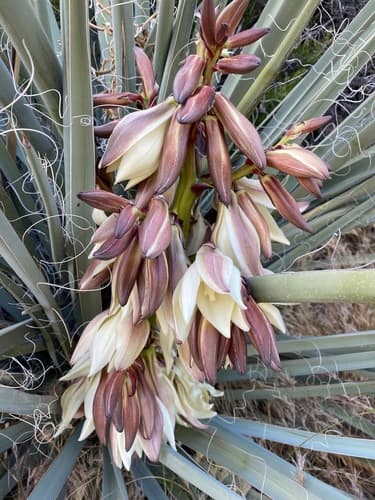
Yucca baccata is a low-water succulent with stiff, blade-like leaves and tall spikes of cream to pale purple flowers blooming from May through July. It thrives in hot, dry, rocky sites under full sun.
Toxicity unknown
Banana yucca (Yucca baccata) is not listed by the ASPCA Animal Poison Control Center (opens in new tab) or the other sources we check, so we have no verdict for it either way. Absence from those lists is not a clearance. If your pet shows symptoms after eating any plant, call the ASPCA at (888) 426-4435.
Light
full sun
Water
low
Size
24"–36" H × 36"–72" W
Bloom
May, Jun, Jul
Native to
AZ, CA, CO, NM and 3 more states
Pollinators
moths, bees
Before you buy
Your city may pay you to plant this
Cities and water utilities offer rebates for replacing lawn with native and water-wise plants. We track 459 programs across 44 states, each with a link to the provider and the date we last checked it.
Find rebates in your areaPicture natives in your own yard
Upload a photo of your yard and Patch Vision shows a rendering of it planted with natives for your region, like Banana yucca.


Browse plants for this ecoregion
A trunkless, clump-forming succulent with thick, stiff blue-green leaves edged in curling fibers and a tall central spike of large creamy-white bell-shaped flowers in late spring. Extremely drought tolerant once established.
Growing Banana yucca
Grow Banana yucca in full sun and low water. Mature plants reach 24 to 36 inches tall and spread 36 to 72 inches wide. Expect low maintenance to keep it looking intentional in a front yard.
How to care for Banana yucca, by region
How to care for Banana yucca where it is actually grown: year-round basics plus what to do each season, region by region, with the sources for each.
Care guidance last updated: July 2026
Cross Timbers (includes Fort Worth, TX)
Year-round
Banana yucca is a low, spiky succulent that thrives on neglect once it is in the ground. It wants full sun, very little water, and soil that drains, and it is one of the lowest-upkeep plants you can put in a front bed.
- Plant in full sun, at least 6 hours of direct light a day.
- Water deeply only to get it established the first summer, then let rainfall carry it in most years.
- In heavy black clay, set the crown a few inches high on a slight mound so water does not pool at the base; in the sandier soils west of the metro it drains on its own but will need more frequent watering through its first summer.
- Keep it away from walkways, low windows, and anywhere kids or pets brush past, the leaf tips are stiff and sharp enough to puncture skin.
- Do not fertilize, rich soil and extra feeding push soft, floppy growth that looks worse, not better.
A single clump reads as a deliberate, sculptural accent rather than an untended yard, which is exactly the low-maintenance look HOA-conscious homeowners want from a front-bed anchor.
Fall
Fall is quiet for banana yucca. The main job is cutting back the dried flower stalk and doing a final check on drainage before winter rains arrive.
- Once the flower stalk has fully dried and turned brown, usually by October, cut it back to the base with loppers.
- Wear thick gloves and long sleeves for any pruning, the leaf tips are stiff and sharp enough to break skin.
- In heavy black clay, this is a good time to confirm the mound or planting hole still drains well before the wetter fall and winter months.
- No fertilizing or heavy watering needed, growth naturally slows as days shorten.
- If you want to add another one, mid to late fall works too as long as it goes in at least 6 weeks before the first hard freeze, mid March remains the safer window for this succulent.
Cutting the spent stalk back keeps the plant looking tidy and deliberate through fall rather than leaving a dead, weedy-looking spike in the bed.
Winter
Banana yucca handles a North Texas winter without help. It stays evergreen through short hard freezes and only needs protection during a severe Arctic outbreak.
- Leave it alone through normal winter cold, this species tolerates temperatures well below what North Texas typically sees.
- Stop all watering unless the soil has been bone dry for several weeks with no rain.
- Ahead of a forecast Arctic outbreak with hard freeze warnings, a light frost cloth over the crown is optional insurance, most established plants do not need it.
- Keep pets and kids clear of the leaf tips, they stay just as sharp in winter as any other season.
- Do not cut back the evergreen leaves, only remove any individual leaf that has gone fully brown and dry.
Spring
Spring is the best time to plant banana yucca in North Texas and the season its tall flower stalk starts to rise from the center of the leaves.
- Plant new banana yucca in March or April, after the last frost, so roots settle in before summer heat arrives.
- Water a new planting once or twice a week for the first month, then taper off as roots take hold.
- Watch for a thick flower stalk pushing up from the center of the rosette starting in April, it can reach 3 to 5 feet before the buds open.
- Clear winter debris and leaf litter away from the base so air can move through the crown.
- In the heavier clay soils, confirm the planting hole drains within a few hours after a rain before you commit to that spot.
A fresh spring planting placed on a slight mound in a bed corner reads as an intentional xeriscape accent from day one, not a bare or unfinished patch.
Summer
Banana yucca is built for the hardest part of the North Texas year. Its large white flowers finish opening in early summer and the plant needs little to no supplemental water once established.
- Let the creamy white flowers finish blooming through June and into July, they open in the evening and close by mid morning.
- Skip supplemental watering on an established clump, even through 100F stretches, overwatering in summer is the more common way to lose this plant.
- If it was planted within the last year, give it a deep soak every 10 to 14 days during the hottest weeks only if the soil is bone dry an inch down.
- Leave the spent flower stalk standing until it browns fully, cutting it green wastes the plant's stored energy.
- Do not mulch heavy or wet material against the crown, it traps moisture against the base in the humid summer air.
Sources: Yucca baccata, Lady Bird Johnson Wildflower Center Native Plant Database, Toxic and Non-Toxic Plants: Yucca, ASPCA, North Central Texas planting calendar, Texas A&M AgriLife Extension, Yucca baccata, USDA PLANTS Database
Texas Blackland Prairies (includes Dallas, TX)
Year-round
Banana yucca is a low, spiky succulent that thrives on neglect once it is in the ground. It wants full sun, very little water, and soil that drains, and it is one of the lowest-upkeep plants you can put in a front bed.
- Plant in full sun, at least 6 hours of direct light a day.
- Water deeply only to get it established the first summer, then let rainfall carry it in most years.
- In heavy black clay, set the crown a few inches high on a slight mound so water does not pool at the base; in the sandier soils west of the metro it drains on its own but will need more frequent watering through its first summer.
- Keep it away from walkways, low windows, and anywhere kids or pets brush past, the leaf tips are stiff and sharp enough to puncture skin.
- Do not fertilize, rich soil and extra feeding push soft, floppy growth that looks worse, not better.
A single clump reads as a deliberate, sculptural accent rather than an untended yard, which is exactly the low-maintenance look HOA-conscious homeowners want from a front-bed anchor.
Fall
Fall is quiet for banana yucca. The main job is cutting back the dried flower stalk and doing a final check on drainage before winter rains arrive.
- Once the flower stalk has fully dried and turned brown, usually by October, cut it back to the base with loppers.
- Wear thick gloves and long sleeves for any pruning, the leaf tips are stiff and sharp enough to break skin.
- In heavy black clay, this is a good time to confirm the mound or planting hole still drains well before the wetter fall and winter months.
- No fertilizing or heavy watering needed, growth naturally slows as days shorten.
- If you want to add another one, mid to late fall works too as long as it goes in at least 6 weeks before the first hard freeze, mid March remains the safer window for this succulent.
Cutting the spent stalk back keeps the plant looking tidy and deliberate through fall rather than leaving a dead, weedy-looking spike in the bed.
Winter
Banana yucca handles a North Texas winter without help. It stays evergreen through short hard freezes and only needs protection during a severe Arctic outbreak.
- Leave it alone through normal winter cold, this species tolerates temperatures well below what North Texas typically sees.
- Stop all watering unless the soil has been bone dry for several weeks with no rain.
- Ahead of a forecast Arctic outbreak with hard freeze warnings, a light frost cloth over the crown is optional insurance, most established plants do not need it.
- Keep pets and kids clear of the leaf tips, they stay just as sharp in winter as any other season.
- Do not cut back the evergreen leaves, only remove any individual leaf that has gone fully brown and dry.
Spring
Spring is the best time to plant banana yucca in North Texas and the season its tall flower stalk starts to rise from the center of the leaves.
- Plant new banana yucca in March or April, after the last frost, so roots settle in before summer heat arrives.
- Water a new planting once or twice a week for the first month, then taper off as roots take hold.
- Watch for a thick flower stalk pushing up from the center of the rosette starting in April, it can reach 3 to 5 feet before the buds open.
- Clear winter debris and leaf litter away from the base so air can move through the crown.
- In the heavier clay soils, confirm the planting hole drains within a few hours after a rain before you commit to that spot.
A fresh spring planting placed on a slight mound in a bed corner reads as an intentional xeriscape accent from day one, not a bare or unfinished patch.
Summer
Banana yucca is built for the hardest part of the North Texas year. Its large white flowers finish opening in early summer and the plant needs little to no supplemental water once established.
- Let the creamy white flowers finish blooming through June and into July, they open in the evening and close by mid morning.
- Skip supplemental watering on an established clump, even through 100F stretches, overwatering in summer is the more common way to lose this plant.
- If it was planted within the last year, give it a deep soak every 10 to 14 days during the hottest weeks only if the soil is bone dry an inch down.
- Leave the spent flower stalk standing until it browns fully, cutting it green wastes the plant's stored energy.
- Do not mulch heavy or wet material against the crown, it traps moisture against the base in the humid summer air.
Sources: Yucca baccata, Lady Bird Johnson Wildflower Center Native Plant Database, Toxic and Non-Toxic Plants: Yucca, ASPCA, North Central Texas planting calendar, Texas A&M AgriLife Extension, Yucca baccata, USDA PLANTS Database
In an HOA neighborhood
Banana yucca is an HOA-friendly choice. Maintenance level: low. Tidiness: 4 out of 5.
Works well in: front yard, foundation, street edge.
- Leaf tips are sharp and rigid; site away from walkways and play areas
Wildlife value
Host plant for yucca moth.
Flower spikes are pollinated almost exclusively by yucca moths in a specialized mutualism, and the plant also supports foraging bees.
Common questions
- How much water does Yucca baccata need?
- Yucca baccata is drought tolerant and needs little water once established. In garden settings, occasional deep watering during the driest months is usually enough.
- How much sun does Yucca baccata require?
- This yucca performs best in full sun and does poorly in heavy shade. It can handle some bright, lightly filtered light but flowers and grows most vigorously with direct sun exposure.
- When does Yucca baccata bloom?
- Yucca baccata typically flowers from May through July, sending up a thick stalk of large, bell-shaped cream to pale purple blossoms above the leaf rosette.
- What pollinates Yucca baccata?
- Yucca baccata depends heavily on yucca moths for pollination, a classic plant-insect mutualism, and its flowers also attract various bees.
- Is Yucca baccata evergreen?
- Yes, it keeps its stiff, sword-shaped leaves year-round rather than dropping them seasonally.
- Is Banana yucca HOA-friendly?
- Banana yucca is generally an HOA-friendly choice in the right placement, with low maintenance.
These answers were drafted with an AI model from this plant's data. Verify care details with a local expert.
Native range data from the World Checklist of Vascular Plants (Kew). Pollinator and host plant associations compiled from GBIF, iNaturalist, and published ecological literature.
If something looks wrong
Common plant problems, and what to check first
These come up on almost any plant. Each guide lists the likely causes in the order they are worth ruling out, with one thing to check before you act on any of them, and links to the source it came from.
- It is dying right after planting
- Leaves turning yellow
- Wilting even though I watered it
- Brown crispy leaf tips
- Bugs on the plant
Ready to grow Banana yucca? Add it to your garden in Pollinator Patch to track it and get season-by-season care guidance.