Beach strawberry
Fragaria chiloensis
Last reviewed: September 2026
Fragaria chiloensis is a low-growing coastal groundcover that blooms white from March through June and thrives in full sun with minimal irrigation once established.
Beach strawberry (Fragaria chiloensis) is not on the ASPCA Animal Poison Control Center toxic plant list for dogs or cats (aspca.org (opens in new tab), last reviewed 2026-08-15). If your pet shows symptoms after eating any plant, call the ASPCA at (888) 426-4435.
Light
full sun
Water
low
Size
4"–8" H × 12"–24" W
Bloom
Mar, Apr, May, Jun
Native to
CA, OR, WA
Pollinators
mining bees, syrphid flies
Before you buy
Your city may pay you to plant this
Cities and water utilities offer rebates for replacing lawn with native and water-wise plants. We track 452 programs across 44 states, each with a link to the provider and the date we last checked it.
Find rebates in your areaBrowse plants for this ecoregion
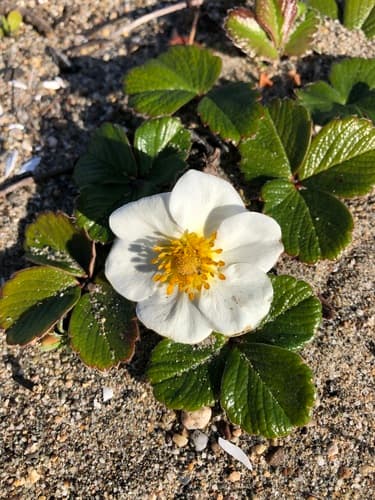
A tough evergreen groundcover with thick glossy trifoliate leaves, white flowers, and small red fruit. It spreads by runners into a dense low mat, handles salt spray and wind, and takes light foot traffic.
Growing Beach strawberry
Grow Beach strawberry in full sun and low water. Mature plants reach 4 to 8 inches tall and spread 12 to 24 inches wide.
How to care for Beach strawberry, by region
How to care for Beach strawberry where it is actually grown: year-round basics plus what to do each season, region by region, with the sources for each.
Care guidance last updated: August 2026
Puget Lowland (includes Seattle, WA)
Year-round
Beach strawberry is a low, evergreen groundcover that spreads by runners and settles in well around Seattle once it has a season to root.
- Give it full sun to light shade. It fills in fastest and flowers most with more sun.
- Use loose, well drained soil. Sandy or gritty ground suits it best and it does not like sitting wet.
- It spreads by rooting runners that touch the soil, so give it room to roam or plan on trimming the edges.
- Divide an older patch every three to four years to keep it vigorous, since younger plants grow fuller and fruit more.
- It is not on the ASPCA toxic plant list for dogs, cats, or horses.
Fall
Fall is planting season for beach strawberry around Seattle, since it goes into the ground right as the rain returns and settles in over the wet months ahead.
- Once the rain comes back, this is a good window to plant new starts outdoors in full sun and loose soil, spaced about ten inches apart.
- The leaves stay on through the cold months since this is an evergreen groundcover, so the bed keeps some green.
- Trim back any runners that crept past the bed edge over summer before they thicken into a solid mat.
- Watch for slugs moving in with the wet weather. They will chew on the leathery leaves.
A quick edge trim in fall keeps the patch tidy and HOA-friendly heading into winter.
Winter
Winter stays mild for beach strawberry around Seattle, and the plant holds onto its leaves and mostly rests while the rain does the watering.
- No extra water is needed most winters since Seattle's rain keeps the soil moist on its own.
- The evergreen leaves can look a little rough after a cold snap, but new growth replaces them once spring arrives.
- A new patch can still go in during winter as long as the ground is not frozen or waterlogged, since planting after the rains start is exactly what this species is used to.
- Hold off on fertilizer for now. Save it for when growth picks back up in spring.
Spring
Spring is when beach strawberry comes back into full growth in the Seattle area, pushing new leaves, white flowers, and fresh runners as the days lengthen.
- New leaves and small white five petal flowers show up as the weather warms, and plants with smaller flowers tend to set more fruit.
- Runners start reaching out across the bed. Let the tips touch soil and they root into new plants on their own.
- A light feeding now helps, since this is the stretch of active growth where the plant can use it most.
- Roots are still shallow on any new planting, so keep an eye on moisture as spring rain lightens up later in the season.
Summer
Summer is Seattle's dry stretch, and beach strawberry handles it well once established, though a plant that went in this year still needs some help.
- Water deeply every week or two if there is no rain, especially for anything planted within the last year.
- An established patch in a sunny or coastal facing spot gets through the dry months with little or no extra water.
- Summer is also a good time to dig up a rooted runner and pot it up if you want to start a new patch elsewhere, keeping it moist until the roots take hold.
- Watch for spider mites in hot, dry, dusty corners of the yard. A hose down of the leaves usually clears them out.
Sources: USDA NRCS Plant Guide: Beach Strawberry (Fragaria chiloensis ssp. chiloensis), ASPCA Toxic and Non-Toxic Plants: Wild Strawberry, Portland Nursery: Fragaria care guide, California Flora Nursery: Fragaria chiloensis 'Green Pastures'
Want these tasks as reminders timed to your yard? Pollinator Patch turns this guidance into a season-by-season care plan for the plants you actually grow.
Wildlife value
An effective lawn alternative that feeds small bees in spring and offers fruit and dense low cover for ground-foraging birds.
Common questions
- When does beach strawberry bloom?
- Fragaria chiloensis typically flowers from March through June, producing small white blossoms above its spreading foliage.
- How much water does beach strawberry need?
- This plant tolerates low water once established but also handles medium moisture, making it a flexible choice for coastal gardens along the Pacific coast in California, Oregon, and Washington.
- What pollinators visit beach strawberry flowers?
- Mining bees and syrphid flies are common visitors to the flowers of Fragaria chiloensis.
- How much sun does beach strawberry need?
- Fragaria chiloensis grows best in full sun but can also tolerate part sun to part shade, especially in warmer inland conditions.
- Is Beach strawberry toxic to dogs?
- Beach strawberry is not on the ASPCA Animal Poison Control Center toxic plant list for dogs (aspca.org).
- Is Beach strawberry toxic to cats?
- Beach strawberry is not on the ASPCA Animal Poison Control Center toxic plant list for cats (aspca.org).
These answers were drafted with an AI model from this plant's data. Verify care details with a local expert.
Native range data from vouchered herbarium specimen records and regional native plant society lists. Pollinator and host plant associations compiled from GBIF, iNaturalist, and published ecological literature.
If something looks wrong
Common plant problems, and what to check first
These come up on almost any plant. Each guide lists the likely causes in the order they are worth ruling out, with one thing to check before you act on any of them, and links to the source it came from.
- It is dying right after planting
- Leaves turning yellow
- Wilting even though I watered it
- Brown crispy leaf tips
- Bugs on the plant
Ready to grow Beach strawberry? Add it to your garden in Pollinator Patch to track it and get season-by-season care guidance.
Planning a bed around it? Start a free plan with this plant
Not sure where to start? Take the 2-minute yard quiz