Bigfoot Waterclover
Marsilea macropoda
Last reviewed: August 2026
Bigfoot Waterclover is a low growing, clover-leaved fern relative that colonizes seasonally wet clay flats and playas, handling full sun along with cycles of flooding and drying out.
Toxicity unknown
Bigfoot Waterclover (Marsilea macropoda) is not listed by the ASPCA Animal Poison Control Center (opens in new tab) or the other sources we check, so we have no verdict for it either way. Absence from those lists is not a clearance. If your pet shows symptoms after eating any plant, call the ASPCA at (888) 426-4435.
Light
full sun
Water
medium
Size
3"–12" H × 12"–24" W
Bloom
N/A
Native to
NM, TX
Before you buy
Your city may pay you to plant this
Cities and water utilities offer rebates for replacing lawn with native and water-wise plants. We track 452 programs across 44 states, each with a link to the provider and the date we last checked it.
Find rebates in your areaBrowse plants for this ecoregion
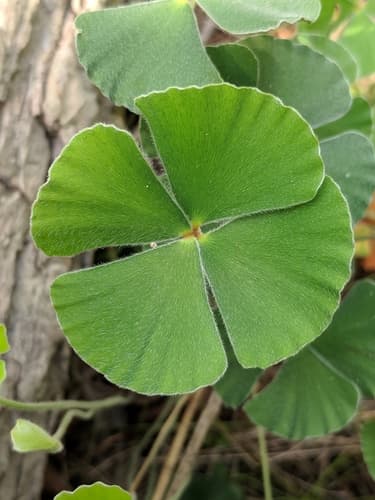
Bigfoot Waterclover is a unique native aquatic fern that forms low spreading mats of four-leaflet clover-like foliage. This moisture-loving groundcover thrives in wet soils and can tolerate seasonal flooding, making it ideal for rain gardens and bog areas.
Growing Bigfoot Waterclover
Grow Bigfoot Waterclover in full sun and medium water. Mature plants reach 3 to 12 inches tall and spread 12 to 24 inches wide. Expect low maintenance to keep it looking intentional in a front yard.
How to care for Bigfoot Waterclover, by region
How to care for Bigfoot Waterclover where it is actually grown: year-round basics plus what to do each season, region by region, with the sources for each.
Care guidance last updated: July 2026
Cross Timbers (includes Fort Worth, TX)
Year-round
Bigfoot waterclover is a low, spreading fern native to the Cross Timbers area of North Texas. It needs consistently wet or moist ground, not the occasional deep watering that works for most drought tolerant natives.
- Native to the Cross Timbers area of North Texas, it naturally grows in ditches, pond edges, and low spots that hold water.
- Choose a spot that stays damp most of the year, such as a pond edge, a rain garden low point, or an area near a downspout, rather than a typical dry front bed.
- In the sandier, faster draining soil found here, plan to water it more often than a typical native, it does not tolerate extended dry spells.
- Space new plants 12 to 18 inches apart. It spreads by underground rhizomes and fills in as a groundcover mat within a season or two.
- The water clover genus (Marsilea) is documented to cause thiamine deficiency in horses and livestock that graze on it in quantity, so keep it out of pastures or areas grazing animals can reach rather than assuming it is fine to browse.
Fall
Growth slows as temperatures drop toward the first frost around mid November. Fall is mainly a maintenance season rather than a planting one for this wetland species.
- Reduce watering frequency as days cool, but keep the soil consistently moist, do not let it dry out fully even as growth slows.
- Thin or trim rhizome mats that have spread past their bed edge before winter, this keeps the planting contained going into next year.
- Expect leaves to start dying back once the season's first light frost arrives near mid November, this is normal and the rhizomes survive underground.
- Hold off on planting new divisions in fall, spring establishment works much better for this species.
A trimmed, contained mat going into winter reads as tended. An untrimmed patch spreading into the lawn or a walkway reads as overgrown.
Winter
Bigfoot waterclover dies back to its underground rhizomes during winter cold snaps and needs little attention until it resprouts in spring.
- Expect the above ground leaves to die back during hard freezes, the rhizomes overwinter underground and resprout once the soil warms in spring.
- Keep the planting area from drying out completely even in winter, an occasional light watering during a dry stretch protects the dormant rhizomes.
- Do not dig or disturb the bed during a hard freeze or a severe Arctic outbreak, wait until temperatures moderate before working the soil.
- Skip fertilizing until new spring growth appears.
A bare, dormant patch over winter is expected for this species and matches how most perennial groundcovers look this time of year, no action is needed to keep it looking intentional.
Spring
Spring is the best time to plant or divide bigfoot waterclover, giving it time to root into wet soil before the summer heat arrives.
- Plant divisions or nursery starts in March or April, after the last frost around mid March, directly into consistently moist or wet soil.
- Water daily or every other day for the first several weeks after planting until the rhizomes are established, this is a wetland plant and will not tolerate drying out while rooting in.
- Watch for a flush of new four part leaves standing upright to about 6 to 10 inches, this is normal spring growth, not a problem.
- If it spread beyond its bed last year, thin the rhizome mat back to the desired footprint before new growth takes off.
Fresh spring growth reads as a tidy, deliberate groundcover as long as it stays inside its planting bed edge. Left unchecked toward a walkway or the yard's edge, it can start to look like it escaped.
Summer
Summer is the hardest season for bigfoot waterclover if its spot dries out. Consistent moisture matters more here than for almost any other native in the yard.
- Check the planting spot weekly during July and August, if the soil surface is dry an inch down, water deeply that day rather than waiting for a set weekly schedule.
- In sandier, faster draining soil, plan on watering two to three times a week through the hottest stretch, more than most natives need.
- Leaves may fold or brown at the edges during a prolonged dry spell, treat that as a signal to water sooner, not as normal summer dormancy.
- Skip fertilizing during summer heat, it will not speed recovery from drought stress and can push weak new growth.
A browned, wilted patch during a July dry spell can look neglected from the street. A deep watering usually restores the mat's tidy, uniform look within a few days.
Sources: Lady Bird Johnson Wildflower Center Native Plant Database: Marsilea macropoda, USDA PLANTS Database Profile: Marsilea macropoda, Merck Veterinary Manual: Bracken Fern and Other Fern Poisoning in Animals (nardoo/Marsilea thiaminase)
Texas Blackland Prairies (includes Dallas, TX)
Year-round
Bigfoot water-clover is a wet-loving bog fern relative with four-leaf clover shaped leaves. The one rule that matters most in the Dallas area is to never let its soil dry out. Treat it as a shallow-water or saturated-mud plant and it stays lush and easy.
- Keep the soil wet at all times. Grow it in a pond margin, a container with no drainage hole, a bog spot, or a saucer kept topped up. It will not survive as a normal border plant that dries between waterings.
- It spreads by creeping stems into a low mat, so give it a defined edge (a pot, a liner, or a rock border) if you do not want it wandering into wetter neighboring soil.
- It reproduces by spores, not flowers, so there is no deadheading and no seed heads to manage. Thin the mat by pulling or cutting runners whenever it gets too dense.
- Most common mistake is planting it in ordinary dry ground and expecting a groundcover. It is an aquatic plant, so match it to a consistently wet or submerged spot.
Fall
Fall is a good time for a tidy-up cutback before the leaves fade for winter. A clean, low mat going into the cool months reads as maintained rather than neglected out front.
- Cut back any untidy or overgrown sections now so the patch looks even and deliberate heading into winter.
- Keep the water going. Cooler weather slows evaporation but the soil still needs to stay wet, so do not stop topping up just because the heat broke.
- Pull stray runners that have crept past the edge of the pot or bog so the planting keeps a clean boundary.
A fall cutback keeps the front-yard patch looking intentional and maintained, which reads as cared-for and helps avoid a violation letter over a plant that looks messy or overgrown.
Winter
In the Dallas area the leaves may brown off for a short spell in the coldest part of winter, then green back up. Very little to do beyond protecting the water from hard freezes.
- Expect a short brown period in the coldest weeks. The plant is not dead, it will push new clover leaves again as it warms.
- Do not let a shallow container freeze solid in a North Texas cold snap. Move small pots to a sheltered spot or a deeper water body so the roots ride out the freeze.
- Leave the trimming for spring. A last tidy of dead leaves is better done as new growth starts than in the middle of a freeze.
A quick removal of the browned winter leaves once the worst cold passes keeps the dormant patch looking intentional out front and avoids the neglected look that can draw a violation letter.
Spring
Spring is when the mat wakes up and starts pushing fresh clover leaves. This is the best window to divide, clean up, and top off water before the Dallas heat arrives.
- As new growth appears, pull or trim off any brown or tattered winter leaves so the fresh spring foliage has room and light.
- This is the easiest time to divide the mat. Lift a section with its wet root mass and move it to another wet spot or container to start a new patch.
- Refill the pond margin, saucer, or container so the soil stays fully saturated as growth speeds up. Spring winds in North Texas dry shallow water fast.
Summer
Dallas summers are hot and can bake shallow water dry in a day. Water clover is heat tolerant but only if its feet stay wet, so summer is all about keeping water levels up.
- Check water level daily in a heat wave. A shallow saucer or pot rim can evaporate below the roots by afternoon in July and August.
- In full sun the plant drinks more, so it needs more water. If you cannot keep it wet enough in sun, a part-shade spot will need less topping up.
- It grows fast in summer. When the mat gets too thick or flops, cut it back hard. The lush growth returns quickly, so do not be shy with the trim.
Sources: Lady Bird Johnson Wildflower Center Marsilea macropoda, Native Plant Society of Texas Marsilea macropoda
Want these tasks as reminders timed to your yard? Pollinator Patch turns this guidance into a season-by-season care plan for the plants you actually grow.
In an HOA neighborhood
Bigfoot Waterclover is an HOA-friendly choice. Maintenance level: low. Tidiness: 2 out of 5.
Works well in: front yard, foundation, street edge, mid zone.
Wildlife value
As a fern, this plant does not produce flowers or attract pollinators but provides habitat for aquatic insects and amphibians in wet garden areas.
Common questions
- How much water does Bigfoot Waterclover need?
- It grows best with medium moisture but tolerates both standing water and dry spells, since it naturally occurs in playas and clay depressions that flood and then dry out.
- What light conditions suit Bigfoot Waterclover?
- Full sun is ideal, and it can also handle part sun or light part shade, especially where soil stays moist longer.
- Does Bigfoot Waterclover produce flowers?
- No. It is a fern relative that reproduces by spores rather than flowers, so it has no bloom period and no known pollinator relationships.
- Is Bigfoot Waterclover evergreen?
- It typically dies back when its habitat dries out or during cold periods, behaving as a deciduous plant rather than staying green year round.
- Is Bigfoot Waterclover HOA-friendly?
- Bigfoot Waterclover is generally an HOA-friendly choice in the right placement, with low maintenance.
These answers were drafted with an AI model from this plant's data. Verify care details with a local expert.
Native range data from the World Checklist of Vascular Plants (Kew). Pollinator and host plant associations compiled from GBIF, iNaturalist, and published ecological literature.
If something looks wrong
Common plant problems, and what to check first
These come up on almost any plant. Each guide lists the likely causes in the order they are worth ruling out, with one thing to check before you act on any of them, and links to the source it came from.
- It is dying right after planting
- Leaves turning yellow
- Wilting even though I watered it
- Brown crispy leaf tips
- Bugs on the plant
Ready to grow Bigfoot Waterclover? Add it to your garden in Pollinator Patch to track it and get season-by-season care guidance.
Planning a bed around it? Start a free plan with this plant
Not sure where to start? Take the 2-minute yard quiz