Bur Oak
Quercus macrocarpa
Last reviewed: October 2026
Bur Oak is a slow growing shade tree that does well in full sun with low to medium water once established. It flowers with small greenish catkins in May and June.
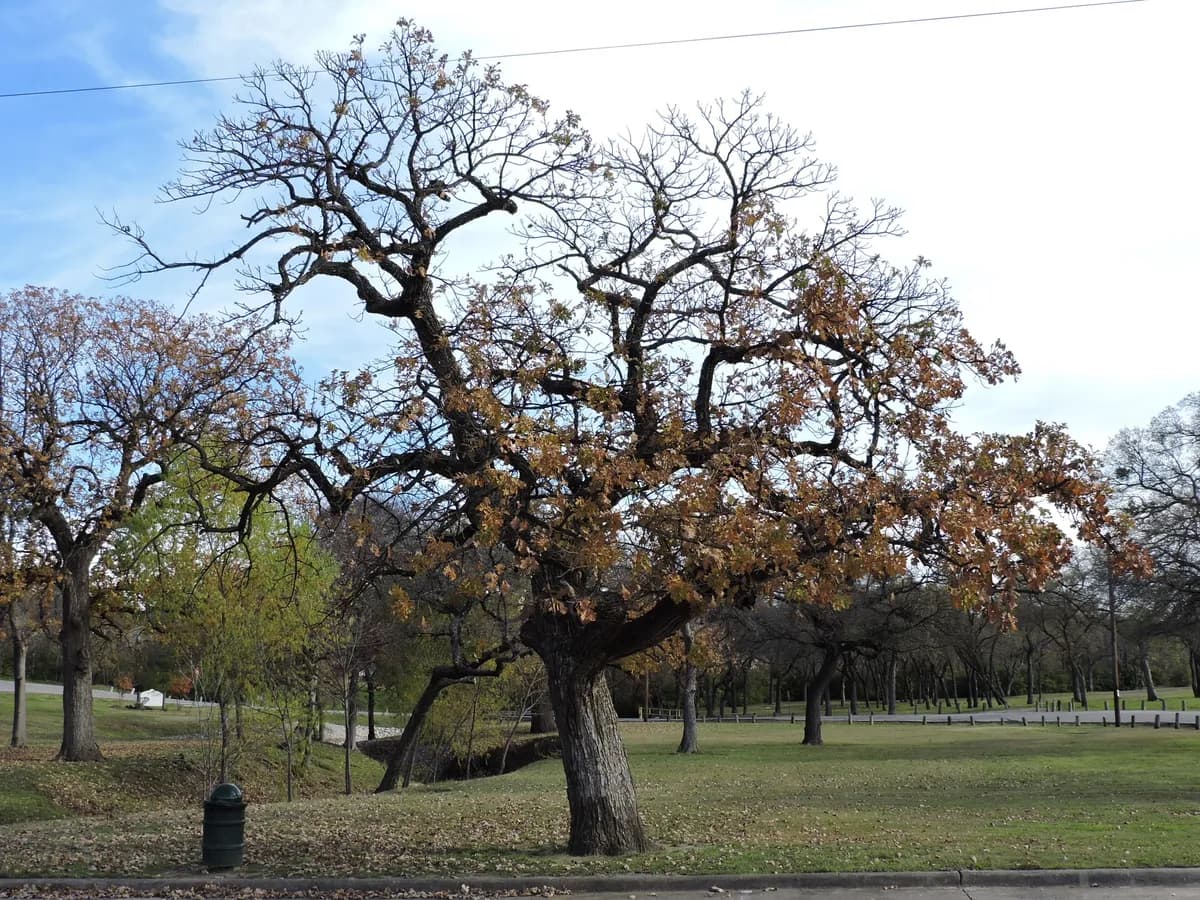
Bur Oak (Quercus macrocarpa) is not on the ASPCA Animal Poison Control Center toxic plant list for dogs or cats (aspca.org (opens in new tab), last reviewed 2026-05-21). If your pet shows symptoms after eating any plant, call the ASPCA at (888) 426-4435.
The USDA PLANTS Database (opens in new tab) does not flag Bur Oak as toxic to livestock.
Light
full sun
Water
medium
Size
720"–960" H × 360"–600" W
Bloom
Mar, Apr, May
Native to
AL, AR, CT, IA and 27 more states
Pollinators
bees, beetles, butterflies
Before you buy
Your city may pay you to plant this
Cities and water utilities offer rebates for replacing lawn with native and water-wise plants. We track 459 programs across 44 states, each with a link to the provider and the date we last checked it.
Find rebates in your areaPicture natives in your own yard
Upload a photo of your yard and Patch Vision shows a rendering of it planted with natives for your region, like Bur Oak.


Browse plants for this ecoregion
Bur oak is a massive, long-lived native tree that develops a broad, rounded crown and deeply ridged bark. This slow-growing oak is extremely drought tolerant once established and can live for centuries. It produces large acorns with distinctive fringed caps that are prized by wildlife.
Growing Bur Oak
Grow Bur Oak in full sun and medium water. Mature plants reach 720 to 960 inches tall and spread 360 to 600 inches wide. Expect low maintenance to keep it looking intentional in a front yard.
How to care for Bur Oak, by region
How to care for Bur Oak where it is actually grown: year-round basics plus what to do each season, region by region, with the sources for each.
Care guidance last updated: September 2026
Cross Timbers (includes Fort Worth, TX)
Year-round
Bur oak is a big, long lived native shade tree that does well in North Texas heat and clay once it gets established, but it grows slowly and needs a few patient years to get there.
- Give it full sun and room to spread. A mature bur oak can reach 60 to 80 feet tall and just as wide, so keep it well clear of the house, driveway, and power lines.
- It is one of the few oaks that tolerates alkaline soil, so it handles both the heavy black clay of the Blackland Prairies and the sandier loam of the Cross Timbers without amendment.
- It grows a long taproot early on and adds height slowly, often under a foot a year while young, so do not expect fast results the first several seasons.
- Once established, usually after its second or third growing season, it needs little to no supplemental water and shrugs off Texas drought and heat.
- It hosts caterpillars of the banded hairstreak and white marked tussock moth, part of what makes native oaks valuable for yard wildlife.
Fall
Fall is the best planting window for a young bur oak in North Texas, and from October into November the tree drops its large acorns and leaves.
- Plant new bur oak trees in October or November. Cooler air and still warm soil let roots establish before next summer's heat arrives.
- Rake and remove fallen acorns from walkways and the front lawn regularly. Left alone they can be a slipping hazard and sprout as volunteer seedlings.
- The leaves are large and slow to break down, so mow over a light layer or add them to a compost pile rather than leaving thick mats on turf.
- Hold off on structural pruning until the tree is fully dormant in winter.
- Acorns and fallen leaves contain tannins that can upset a pet's stomach if eaten in quantity, so clear them from areas a dog spends time in.
Regular raking of acorns and leaves off the front walk and lawn keeps a young oak's messier season from reading as an unkept yard.
Winter
Bur oak is dormant through a North Texas winter and needs almost no attention beyond an occasional structural prune while it is bare.
- Prune only to remove dead, damaged, or crossing branches, and do it while the tree is fully dormant, from December through February.
- Do not fertilize in winter. Wait until the tree is actively growing again in spring if it needs it.
- An established tree needs no winter watering. A tree still in its first year can get an occasional deep soak if the season stays unusually dry.
- Established bur oaks tolerate North Texas's short hard freezes and the occasional severe Arctic outbreak without any winter protection.
Spring
Spring is a good time to plant a young bur oak, and small yellow green flower clusters called catkins appear in April and May before any acorns start forming.
- Plant a container grown or balled and burlapped tree in March or early April so roots have time to settle before the July heat.
- Water a new transplant deeply twice a week through spring, letting the top couple inches of soil dry out between waterings.
- Skip fertilizer. Bur oak does not need it in typical North Texas soil and it can push weak, fast growth on a young tree.
- The yellow green catkins you see in April and May are normal flowering, not a pest or disease problem.
- Keep 2 to 3 inches of mulch over the root zone, pulled back a few inches from the trunk, and refresh it after spring rains wash it thin.
A neat mulch ring around a newly planted tree reads as a deliberate, cared for planting rather than an empty patch of yard.
Summer
July and August are the hardest months for a bur oak, especially one planted in the last year or two. An established tree coasts through the heat but a young one still needs help.
- In a tree's first two summers, water deeply once a week during stretches with no rain, and let the top few inches of soil dry between waterings.
- A tree established more than about 3 years usually needs no supplemental water even through a Texas summer, thanks to its deep taproot.
- Brown, crispy edges on leaves during 100F stretches are a heat stress sign on a young tree, not a disease, and usually ease once temperatures drop.
- Hold off on pruning in summer. Wait for the dormant season so the tree is not stressed further while it is already working hard in the heat.
- Keep the mulch ring in place through the hottest months to hold soil moisture and keep string trimmers and mowers away from the trunk.
A mulched ring and visibly healthy leaves through late summer read as a maintained tree, not a neglected one.
Sources: Lady Bird Johnson Wildflower Center: Quercus macrocarpa, Missouri Botanical Garden Plant Finder: Quercus macrocarpa, ASPCA: 5 Toxic Seasonal Plants You Don't Want Your Pet to Fall For
Southeastern Wisconsin Till Plains (includes Milwaukee, WI)
Year-round
Bur oak is native to Wisconsin, slow to grow at first, and can live for centuries once established, which makes it one of the toughest shade trees for a Milwaukee yard. It needs very little upkeep once past its first few years, but it needs the right spot from day one.
- Give it real room from day one. The mature canopy can spread as wide as the tree is tall, and the deep taproot does not tolerate root zone disturbance, so plant it at least 40 feet from the house, driveway, and sidewalks.
- Water new plantings deeply, about 1 inch a week, through the first two to three growing seasons. After that, bur oak leans on strong natural drought tolerance and rarely needs help.
- Save all pruning for the dormant winter months. Wounding an oak between April and July in Wisconsin raises the risk of oak wilt, a fungal disease spread by beetles drawn to fresh cuts.
- Dropped acorns are worth keeping an eye on around pets. The ASPCA classifies oak as toxic to horses, with tannins in the acorns as the toxic principle, and notes that eating a lot of acorns can upset the stomach or cause a blockage in an animal's gut.
- Skip routine fertilizer. Bur oak tolerates clay, alkaline, and average home soils without extra feeding once it's past its first few years.
Plant it well clear of the foundation, sidewalk, and property line since the eventual canopy and root spread are large. Getting placement right from the start avoids the kind of sidewalk root dispute that HOA-conscious neighbors notice.
Fall
Fall brings bur oak's big acorn and leaf drop plus one of the two best planting windows, so cleanup and watering new trees are the main tasks.
- Mow over fallen leaves and acorns instead of bagging them at the curb. Bur oak drops large, distinctive acorns with shaggy fringed caps, and a mulching mower turns both into a light layer of free soil food.
- Fall and early spring are usually good windows for planting a new bur oak. Get a tree in the ground while the soil is still warm so roots can start establishing before winter.
- Keep watering newly planted or young trees deeply every week or two through fall until the ground starts to freeze, since fall dryness is easy to miss once the weather cools.
- Pull mulch back into a flat 2 to 4 inch ring around the tree before winter, keeping it off the trunk instead of piling it up against the bark.
- The leaf and acorn drop can look messy for a few weeks. A weekend cleanup along the sidewalk and driveway edge keeps the yard tidy without needing to touch anything else on the tree.
A tidy fall cleanup along the sidewalk and driveway keeps bur oak's naturally heavy leaf and acorn drop from reading as neglected to HOA-conscious neighbors.
Winter
Winter is the lowest-risk time to prune a bur oak in Wisconsin, and it's worth a quick check for animal damage on younger trunks while the tree is dormant.
- This is the prune window. Cutting a bur oak anytime from November through March is the lowest-risk choice in Wisconsin, well clear of the April through July stretch when oak wilt spreads fastest.
- Remove dead, crossing, or damaged branches while the tree is bare and the structure is easy to see. Seal any large cut with pruning paint if you're working close to the edge of March, right before oak wilt risk climbs again.
- Check young trunks for rabbit or deer chewing on the bark, especially after heavy snow pushes browsing animals in closer. A simple hardware cloth or plastic guard around the base protects the bark through winter.
- A young bur oak's slow above-ground growth in these first several winters is normal. The tree is putting most of its early energy into a deep taproot before it speeds up top growth.
- Established trees need no winter watering and no trunk wrapping. This is one of the most cold-hardy oaks around and handles a Milwaukee winter without extra help.
Winter pruning of dead or damaged limbs keeps the canopy looking clean and cared for by the time spring arrives, an easy win while it's also the lowest-risk time to cut.
Spring
Spring in Milwaukee marks the start of Wisconsin's oak wilt risk window, so the main job is to finish any pruning before April and start regular watering again for younger trees.
- Stop all pruning and cutting by April 1. The Milwaukee area falls in Wisconsin's high-risk zone for oak wilt from April 1 through July 15, and fresh cuts draw the beetles that spread it.
- If a spring storm breaks a branch during this window, don't leave the wound bare. Cover the cut with pruning paint or wound sealer right away, since beetles can find an open wound within minutes.
- Once the ground has thawed for good, start deep watering again for any tree planted in the last one to three years, about 1 inch a week, more in a dry spring.
- Refresh mulch out to the drip line in a flat layer 2 to 4 inches deep, kept a couple inches back from the trunk, to hold spring moisture and keep string trimmers away from the bark.
- Check young trunks for winter chew marks from rabbits or deer once the snow clears, and add a trunk guard now if you see fresh damage.
Summer
Summer is the tail end of Wisconsin's oak wilt pruning ban and the main watering season for younger bur oaks, so the priority is leaving mature trees alone and keeping new ones hydrated.
- Hold off on any pruning or cutting through July 15. This is still inside Wisconsin's high-risk window for oak wilt, when the beetles that carry the fungus are most active.
- Watch the canopy for leaves that turn dull green or bronze and drop early in the season. That combination can signal oak wilt, and bur oak has only moderate tolerance for the disease compared to red oaks, so a quick call to a certified arborist is worth it.
- Established bur oaks rarely need supplemental water in a normal Milwaukee summer, but during a dry stretch of two weeks or more, give a slow, deep soak of about 1 inch of water.
- Trees planted in the last one to three years still need regular water. Aim for about 1 inch a week, more on sandy soil, checking with a finger or soil probe before watering.
- Keep mulch topped up at 2 to 4 inches deep out to the drip line to hold soil moisture through the hottest weeks, staying a couple inches clear of the trunk.
Sources: Lady Bird Johnson Wildflower Center, Quercus macrocarpa, Morton Arboretum, Bur oak (Quercus macrocarpa), Wisconsin DNR, Oak Wilt, ASPCA, Oak (Toxic and Non-Toxic Plants), UW-Madison Division of Extension, Drought and Watering of Ornamental Plants, Wisconsin DNR, Help Protect Oak Trees From Oak Wilt (news release)
Texas Blackland Prairies (includes Dallas, TX)
Year-round
Bur oak is a big, long lived native shade tree that does well in North Texas heat and clay once it gets established, but it grows slowly and needs a few patient years to get there.
- Give it full sun and room to spread. A mature bur oak can reach 60 to 80 feet tall and just as wide, so keep it well clear of the house, driveway, and power lines.
- It is one of the few oaks that tolerates alkaline soil, so it handles both the heavy black clay of the Blackland Prairies and the sandier loam of the Cross Timbers without amendment.
- It grows a long taproot early on and adds height slowly, often under a foot a year while young, so do not expect fast results the first several seasons.
- Once established, usually after its second or third growing season, it needs little to no supplemental water and shrugs off Texas drought and heat.
- It hosts caterpillars of the banded hairstreak and white marked tussock moth, part of what makes native oaks valuable for yard wildlife.
Fall
Fall is the best planting window for a young bur oak in North Texas, and from October into November the tree drops its large acorns and leaves.
- Plant new bur oak trees in October or November. Cooler air and still warm soil let roots establish before next summer's heat arrives.
- Rake and remove fallen acorns from walkways and the front lawn regularly. Left alone they can be a slipping hazard and sprout as volunteer seedlings.
- The leaves are large and slow to break down, so mow over a light layer or add them to a compost pile rather than leaving thick mats on turf.
- Hold off on structural pruning until the tree is fully dormant in winter.
- Acorns and fallen leaves contain tannins that can upset a pet's stomach if eaten in quantity, so clear them from areas a dog spends time in.
Regular raking of acorns and leaves off the front walk and lawn keeps a young oak's messier season from reading as an unkept yard.
Winter
Bur oak is dormant through a North Texas winter and needs almost no attention beyond an occasional structural prune while it is bare.
- Prune only to remove dead, damaged, or crossing branches, and do it while the tree is fully dormant, from December through February.
- Do not fertilize in winter. Wait until the tree is actively growing again in spring if it needs it.
- An established tree needs no winter watering. A tree still in its first year can get an occasional deep soak if the season stays unusually dry.
- Established bur oaks tolerate North Texas's short hard freezes and the occasional severe Arctic outbreak without any winter protection.
Spring
Spring is a good time to plant a young bur oak, and small yellow green flower clusters called catkins appear in April and May before any acorns start forming.
- Plant a container grown or balled and burlapped tree in March or early April so roots have time to settle before the July heat.
- Water a new transplant deeply twice a week through spring, letting the top couple inches of soil dry out between waterings.
- Skip fertilizer. Bur oak does not need it in typical North Texas soil and it can push weak, fast growth on a young tree.
- The yellow green catkins you see in April and May are normal flowering, not a pest or disease problem.
- Keep 2 to 3 inches of mulch over the root zone, pulled back a few inches from the trunk, and refresh it after spring rains wash it thin.
A neat mulch ring around a newly planted tree reads as a deliberate, cared for planting rather than an empty patch of yard.
Summer
July and August are the hardest months for a bur oak, especially one planted in the last year or two. An established tree coasts through the heat but a young one still needs help.
- In a tree's first two summers, water deeply once a week during stretches with no rain, and let the top few inches of soil dry between waterings.
- A tree established more than about 3 years usually needs no supplemental water even through a Texas summer, thanks to its deep taproot.
- Brown, crispy edges on leaves during 100F stretches are a heat stress sign on a young tree, not a disease, and usually ease once temperatures drop.
- Hold off on pruning in summer. Wait for the dormant season so the tree is not stressed further while it is already working hard in the heat.
- Keep the mulch ring in place through the hottest months to hold soil moisture and keep string trimmers and mowers away from the trunk.
A mulched ring and visibly healthy leaves through late summer read as a maintained tree, not a neglected one.
Sources: Lady Bird Johnson Wildflower Center: Quercus macrocarpa, Missouri Botanical Garden Plant Finder: Quercus macrocarpa, ASPCA: 5 Toxic Seasonal Plants You Don't Want Your Pet to Fall For
In an HOA neighborhood
Bur Oak is an HOA-friendly choice. Maintenance level: low. Tidiness: 4 out of 5.
Works well in: front yard, street edge, mid zone.
- Extremely large mature size requires ample space
- Acorn drop in fall may need cleanup
Wildlife value
Host plant for banded hairstreak, white-marked tussock moth.
Supports over 500 species of butterflies and moths as caterpillar host plant, plus provides acorns for squirrels, chipmunks, and birds. The flowers attract native bees and beetles in late spring.
Common questions
- How much water does Bur Oak need?
- Once established, Bur Oak tolerates low water and dry spells well, though it also grows steadily with medium soil moisture.
- What light conditions does Bur Oak prefer?
- Bur Oak grows best in full sun and will also tolerate part sun, particularly while young or on the edge of open woodland.
- When does Bur Oak bloom?
- Bur Oak produces small greenish yellow catkins in May and June, before its acorns develop later in the growing season.
- Do bees visit Bur Oak flowers?
- Bur Oak flowers are mainly wind pollinated, but bees and beetles will visit the catkins to collect pollen in spring.
- Does Bur Oak lose its leaves in winter?
- Yes, Bur Oak is deciduous and drops its leaves each fall, leafing out again in spring.
- Is Bur Oak toxic to dogs?
- Bur Oak is not on the ASPCA Animal Poison Control Center toxic plant list for dogs (aspca.org).
- Is Bur Oak toxic to cats?
- Bur Oak is not on the ASPCA Animal Poison Control Center toxic plant list for cats (aspca.org).
- Is Bur Oak toxic to livestock?
- The USDA PLANTS Database does not flag Bur Oak as toxic to livestock.
- Is Bur Oak HOA-friendly?
- Bur Oak is generally an HOA-friendly choice in the right placement, with low maintenance.
These answers were drafted with an AI model from this plant's data. Verify care details with a local expert.
Native range data from vouchered herbarium specimen records and regional native plant society lists. Pollinator and host plant associations compiled from GBIF, iNaturalist, and published ecological literature.
If something looks wrong
Common plant problems, and what to check first
These come up on almost any plant. Each guide lists the likely causes in the order they are worth ruling out, with one thing to check before you act on any of them, and links to the source it came from.
- It is dying right after planting
- Leaves turning yellow
- Wilting even though I watered it
- Brown crispy leaf tips
- Bugs on the plant
Ready to grow Bur Oak? Add it to your garden in Pollinator Patch to track it and get season-by-season care guidance.