California Sagebrush
Artemisia californica
Last reviewed: September 2026
California sagebrush is an aromatic, silver-green shrub suited to full sun and low water once established, with blooms appearing from April through August in coastal scrub and chaparral settings.
Toxicity unknown
California Sagebrush (Artemisia californica) is not listed by the ASPCA Animal Poison Control Center (opens in new tab) or the other sources we check, so we have no verdict for it either way. Absence from those lists is not a clearance. If your pet shows symptoms after eating any plant, call the ASPCA at (888) 426-4435.
Light
full sun
Water
low
Size
24"–96" H × 24"–72" W
Bloom
Apr, May, Jun, Jul, Aug
Native to
CA
Pollinators
bees, butterflies, moths
Before you buy
Your city may pay you to plant this
Cities and water utilities offer rebates for replacing lawn with native and water-wise plants. We track 459 programs across 44 states, each with a link to the provider and the date we last checked it.
Find rebates in your areaPicture natives in your own yard
Upload a photo of your yard and Patch Vision shows a rendering of it planted with natives for your region, like California Sagebrush.


Browse plants for this ecoregion
A native shrub with fine, silvery-gray foliage that adds texture and drought tolerance to the landscape. It produces small, inconspicuous flowers from spring through summer and thrives in full sun with minimal water once established.
Growing California Sagebrush
Grow California Sagebrush in full sun and low water. Mature plants reach 24 to 96 inches tall and spread 24 to 72 inches wide. Expect moderate maintenance to keep it looking intentional in a front yard.
How to care for California Sagebrush, by region
How to care for California Sagebrush where it is actually grown: year-round basics plus what to do each season, region by region, with the sources for each.
Care guidance last updated: September 2026
Southern California/Northern Baja Coast (includes Los Angeles, CA)
Year-round
California sagebrush is native to the coastal sage scrub that historically covered much of the Los Angeles basin, and it is one of the defining shrubs of that plant community. It is grown for its silvery, aromatic foliage and for the wildlife it supports, including native bees, dozens of moth species, and birds like the California gnatcatcher and quail, more than for a showy flower display.
- Give it full sun and fast to medium draining soil. It tolerates both sandy and clay ground.
- Once established, it needs very little water, at most once a month during the dry season, and many plants go without any supplemental water at all.
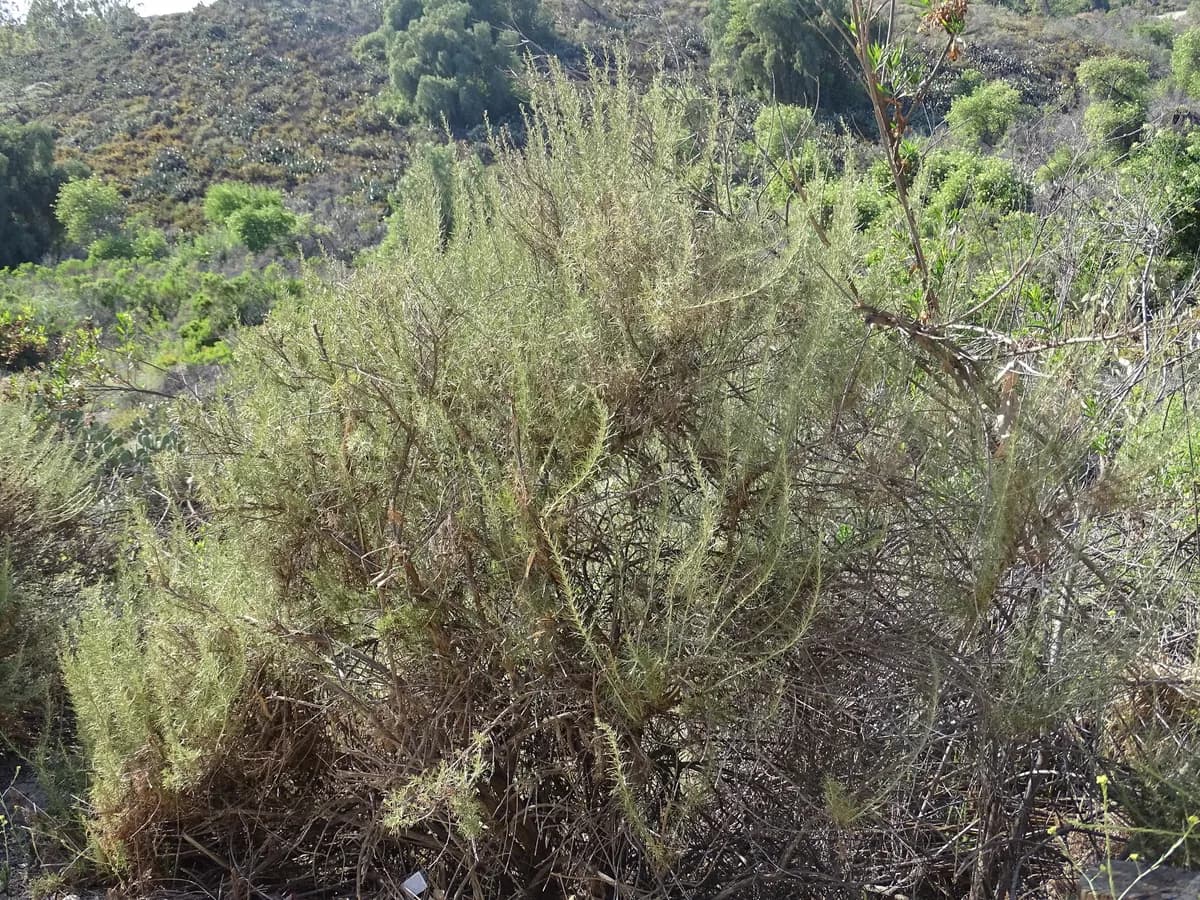
- Expect a mounding, rounded shrub that typically stays in the 3 to 5 foot range in a home garden, though it can grow larger in the wild.
- A light pruning once a year keeps it compact and prevents the sprawling, woody look it can develop if left alone.
Fall
Fall is the turning point for California sagebrush. The first rains cue it to flush new feathery growth and put out its cream to yellow flower clusters, which typically run through fall.
- Fall is the best season to plant new California sagebrush. Cooler temperatures and coming rains reduce transplant stress and the amount of supplemental watering needed.
- This is a good window for the yearly shaping prune, cutting back leggy growth once summer dieback is visible.
- Watch for a burst of new gray-green foliage once the first real rain falls.
- Established plants generally do not need supplemental water once fall rains begin in a normal year.
Winter
Winter is the wet season in the Los Angeles area's Mediterranean climate, and California sagebrush is in its most active growth period, using the rain to rebuild the foliage it dropped over summer.
- Established plants typically need no supplemental water during a normal rain year. Let the winter rains do the work.
- If winter turns dry, an occasional deep watering helps, but avoid frequent shallow watering.
- New fall plantings benefit from a layer of mulch to hold moisture between rains.
- The shrub should look its fullest and greenest this time of year, a real contrast to its sparser summer appearance.
Spring
Spring is California sagebrush's most active growth period, when it pushes out the long, feathery gray-green leaves it is known for while rain is still available.
- Fall and winter are generally the best seasons to plant California natives, but a spring nursery planting still works if you water deeply and regularly through the first season.
- Expect fast growth now. This is the plant's most vigorous stretch of the year.
- Small cream to yellow flower clusters may start appearing in spring, though the plant is grown mainly for foliage and scent rather than bloom.
- Hold off on heavy pruning now. Save shaping for after the fall bloom if the plant needs it.
Summer
Summer is the hardest test of this plant's drought adaptation, and also the season it is built for. As the dry season deepens, California sagebrush drops its long spring leaves and grows smaller, tougher ones instead, a drought response called drought-deciduous growth.
- Established plants can often go the entire summer without supplemental water. A deep soak once a month at most is enough if you want to water at all.
- Expect the plant to look sparse, grayish, or even a little dead as leaves drop and growth slows in the hottest, driest stretch. That is the plant conserving water, not dying.
- Avoid letting irrigation meant for thirstier plants nearby land on sagebrush roots. Overwatering in summer is a bigger risk to this plant than underwatering.
- New transplants still in their first year need more regular water through summer heat than mature, established plants do.
If the grayed-out, thinned summer look reads as neglected from the street, a light shaping prune that removes the driest stems keeps the bed looking intentional rather than weedy.
Sources: Calscape, Artemisia californica (California Sagebrush) species profile (native range, light, water, soil, size, wildlife value), USDA Forest Service Pacific Southwest Research Station, Native Plant Recommendations: Artemisia californica (coastal sage scrub range, drought-deciduous growth pattern), Theodore Payne Foundation, Planting Season (fall and winter as the ideal planting window for California natives)
In an HOA neighborhood
California Sagebrush is an HOA-friendly choice in the right placement. Maintenance level: moderate. Tidiness: 2 out of 5.
Works well in: mid zone, foundation, street edge.
- Can appear informal or wild without regular pruning
- May look scraggly during extended drought
- Silver foliage may appear too naturalistic for formal landscapes
Wildlife value
Host plant for California swallowtail.
This sagebrush provides essential habitat and food for native bees, butterflies, and moths. It's also a larval host plant for several butterfly species.
Common questions
- How much water does California sagebrush need?
- Once established, California sagebrush tolerates low water and prefers to dry out between waterings, which makes it a good fit for low-water gardens in Mediterranean type climates.
- What pollinators visit California sagebrush?
- Bees, butterflies, and moths visit California sagebrush, with the most activity occurring during its bloom period from April to August.
- Does California sagebrush lose its leaves in winter?
- No, California sagebrush is evergreen and keeps its narrow, aromatic gray-green leaves year round, though the plant may look sparser during the driest part of summer.
- What growing conditions suit California sagebrush best?
- California sagebrush does best in full sun with well-drained soil and minimal supplemental irrigation, similar to the coastal scrub and chaparral sites where it commonly grows.
- Is California Sagebrush HOA-friendly?
- California Sagebrush is generally an HOA-friendly choice in the right placement, with moderate maintenance.
These answers were drafted with an AI model from this plant's data. Verify care details with a local expert.
Native range data from vouchered herbarium specimen records and regional native plant society lists. Pollinator and host plant associations compiled from GBIF, iNaturalist, and published ecological literature.
If something looks wrong
Common plant problems, and what to check first
These come up on almost any plant. Each guide lists the likely causes in the order they are worth ruling out, with one thing to check before you act on any of them, and links to the source it came from.
- It is dying right after planting
- Leaves turning yellow
- Wilting even though I watered it
- Brown crispy leaf tips
- Bugs on the plant
Ready to grow California Sagebrush? Add it to your garden in Pollinator Patch to track it and get season-by-season care guidance.