Carolina Ponyfoot
Dichondra carolinensis
Last reviewed: August 2026
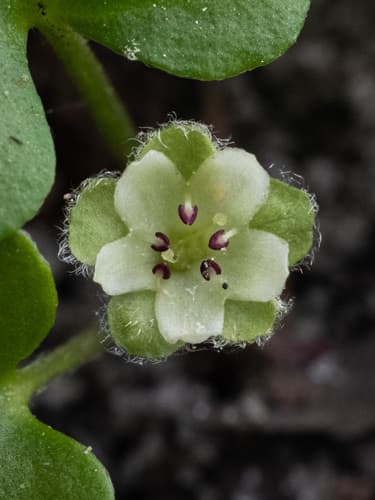
Carolina ponyfoot is a low, creeping groundcover valued for its small rounded leaves and tolerance of full sun to part shade. It blooms with tiny inconspicuous flowers from spring through fall and handles dry spells once established.
Toxicity unknown
Carolina Ponyfoot (Dichondra carolinensis) is not listed by the ASPCA Animal Poison Control Center (opens in new tab) or the other sources we check, so we have no verdict for it either way. Absence from those lists is not a clearance. If your pet shows symptoms after eating any plant, call the ASPCA at (888) 426-4435.
Light
full sun
Water
low
Size
1"–3" H × 6"–12" W
Bloom
Mar, Apr, May, Jun, Jul, Aug, Sep, Oct, Nov
Native to
AL, AR, FL, GA and 10 more states
Pollinators
butterflies, bees, nectar insects
Before you buy
Your city may pay you to plant this
Cities and water utilities offer rebates for replacing lawn with native and water-wise plants. We track 452 programs across 44 states, each with a link to the provider and the date we last checked it.
Find rebates in your areaBrowse plants for this ecoregion
Carolina Ponyfoot is a low-growing native groundcover with small, round leaves that forms a dense carpet. This drought-tolerant perennial produces tiny white or greenish flowers from spring through fall and goes dormant in winter.
Growing Carolina Ponyfoot
Grow Carolina Ponyfoot in full sun and low water. Mature plants reach 1 to 3 inches tall and spread 6 to 12 inches wide. Expect low maintenance to keep it looking intentional in a front yard.
How to care for Carolina Ponyfoot, by region
How to care for Carolina Ponyfoot where it is actually grown: year-round basics plus what to do each season, region by region, with the sources for each.
Care guidance last updated: September 2026
Mississippi Valley Loess Plains (includes Memphis, TN)
Year-round
Carolina ponysfoot is native to Tennessee and makes a low, easy-care groundcover for a Memphis yard. It hugs the ground with tiny round leaves and asks for very little once it gets going.
- Dichondra carolinensis (Carolina ponysfoot) is native to Tennessee, so it is a solid low groundcover choice for a Memphis yard.
- It stays low, under about 2 inches tall, and spreads by rooting at the nodes as it creeps along the ground.
- It handles a wide light range, from full sun to a good amount of shade.
- Once it is established, water it deeply and let the top inch of soil dry out before watering again.
- It tolerates mowing, so it works as a small lawn substitute or a filler between stepping stones.
Fall
Fall gives Memphis gardeners a second good window to plant Carolina ponysfoot, while bloom winds down as nights cool.
- Blooming slows through September and stops around the first fall frost, which averages late October in the Memphis area.
- Cooler fall weather with steady rain makes this a good second planting window, roots get to settle in before winter.
- Cut back mowing frequency as growth slows down.
- Clear fallen leaves off the patch so the low foliage still gets light.
A cleared, cut-back patch going into fall reads as an intentional bed rather than a neglected corner, which helps it avoid a violation letter.
Winter
Winter foliage can thin or brown after a hard freeze in Memphis, but the roots are frost tolerant and the patch fills back in come spring.
- Established patches are frost tolerant, though the leaves can brown back after a hard freeze.
- Skip fertilizer and cut back on watering during winter dormancy.
- Stay off the patch when the leaves are frozen or icy, they bruise easily in that state.
- Do not mow in winter since the plant is not actively growing.
Keeping winter-thinned leaf litter cleared off the patch keeps it reading as a tidy, intentional bed rather than a bare or weedy spot, which helps it avoid a violation letter.
Spring
Spring is when Carolina ponysfoot wakes up in Memphis, putting out new growth and its first small white flowers.
- New growth picks up once nights stay reliably above freezing, typically by early April around Memphis.
- Small white flowers start opening in spring and keep going into summer.
- Spring is a good time to plant new patches or divide and move an existing one.
- Check the edges of the patch, spring growth spreads fastest and can creep past where you want it.
Summer
Summer is Carolina ponysfoot's most active stretch in Memphis, with steady bloom and fast spreading in the heat.
- Bloom continues through the summer months in Memphis.
- It is drought tolerant once established, but a deep soak during long dry stretches in July and August keeps it looking full.
- If you are using it as a lawn substitute, mow it every couple of weeks to about an inch and a half.
- Trim runners that cross into a walkway or a neighbor's yard to keep the patch inside its own lines.
Regular mowing and a trimmed edge keep a dichondra patch reading as an intentional groundcover bed instead of an overgrown spot, which helps it avoid a violation letter.
Sources: Dichondra carolinensis (Carolina ponysfoot) species page, Lady Bird Johnson Wildflower Center, Dichondra carolinensis species profile at Stones River National Battlefield, TN, NPSpecies (National Park Service), Dichondra carolinensis (Carolina Ponyfoot) plant profile, Native Plant Society of Texas (community tip)
Want these tasks as reminders timed to your yard? Pollinator Patch turns this guidance into a season-by-season care plan for the plants you actually grow.
In an HOA neighborhood
Carolina Ponyfoot is an HOA-friendly choice. Maintenance level: low. Tidiness: 2 out of 5.
Works well in: front yard, foundation, street edge, mid zone.
Wildlife value
The extended blooming period provides nectar for butterflies, bees, and other small pollinators throughout most of the growing season. Its low profile makes it valuable habitat for beneficial ground-dwelling insects.
Common questions
- What kind of light does Carolina ponyfoot need?
- It grows best in full sun but adjusts well to part sun or part shade, making it flexible for lawns, borders, and areas under open tree canopy.
- How much water does Carolina ponyfoot require?
- Once established it tolerates low water and short dry periods, though it fills in more densely with occasional moderate watering during hot months.
- When does Carolina ponyfoot bloom?
- It produces small, easy to overlook flowers from March through November, with the heaviest bloom activity in the warmer summer months.
- Do pollinators use Carolina ponyfoot?
- Its tiny flowers attract bees, butterflies, and other small nectar-seeking insects, even though the blooms themselves are not showy.
- How is Carolina ponyfoot typically used in a landscape?
- It is often planted as a low-growing lawn substitute or filler between pavers because it stays close to the ground and spreads by creeping stems.
- Is Carolina Ponyfoot HOA-friendly?
- Carolina Ponyfoot is generally an HOA-friendly choice in the right placement, with low maintenance.
These answers were drafted with an AI model from this plant's data. Verify care details with a local expert.
Native range data from vouchered herbarium specimen records and regional native plant society lists. Pollinator and host plant associations compiled from GBIF, iNaturalist, and published ecological literature.
If something looks wrong
Common plant problems, and what to check first
These come up on almost any plant. Each guide lists the likely causes in the order they are worth ruling out, with one thing to check before you act on any of them, and links to the source it came from.
- It is dying right after planting
- Leaves turning yellow
- Wilting even though I watered it
- Brown crispy leaf tips
- Bugs on the plant
Ready to grow Carolina Ponyfoot? Add it to your garden in Pollinator Patch to track it and get season-by-season care guidance.
Planning a bed around it? Start a free plan with this plant
Not sure where to start? Take the 2-minute yard quiz