Cherry Laurel
Prunus caroliniana
Last reviewed: September 2026
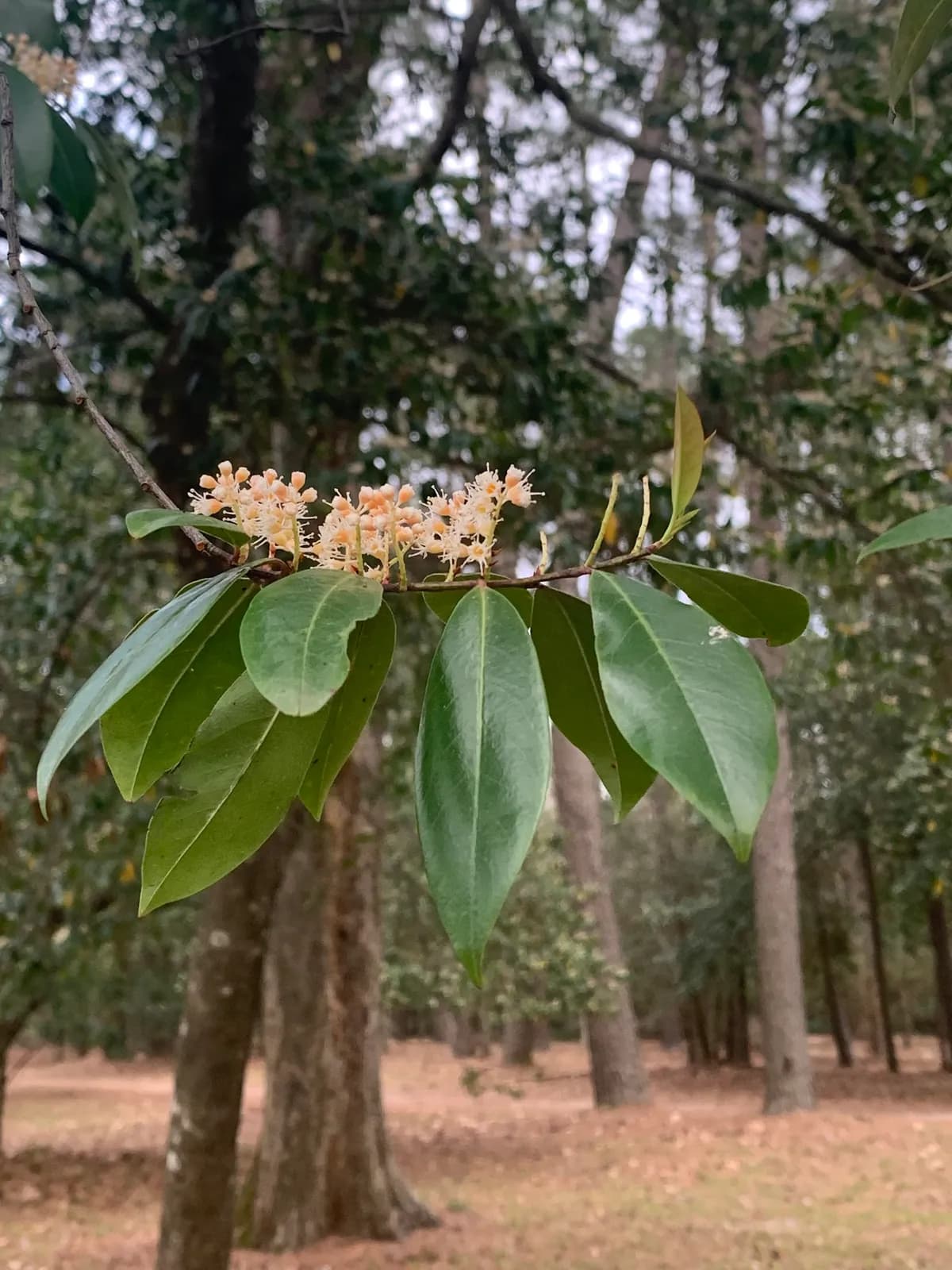
Cherry laurel is an evergreen tree that blooms with small white flowers from March through May, growing well in full sun across the southeastern United States and tolerating medium to drier soil once established.
Cherry Laurel is toxic to dogs and cats.
Listed as toxic by the ASPCA Animal Poison Control Center (opens in new tab) (last reviewed 2026-05-21). If your pet has been exposed, call the ASPCA Animal Poison Control Center at (888) 426-4435and your veterinarian's emergency line.
Pollinator Patch flags toxic plants so you can choose a pet-safe native alternative for your yard.
Light
full sun
Water
medium
Size
144"–180" H × 120"–180" W
Bloom
Mar, Apr, May
Native to
AL, AR, FL, GA and 5 more states
Pollinators
butterflies, bees
Before you buy
Your city may pay you to plant this
Cities and water utilities offer rebates for replacing lawn with native and water-wise plants. We track 452 programs across 44 states, each with a link to the provider and the date we last checked it.
Find rebates in your areaBrowse plants for this ecoregion
Cherry Laurel is a dense evergreen tree that forms a neat, rounded canopy reaching 12-15 feet tall and wide. It produces fragrant white flower clusters in spring followed by small black berries, maintaining its glossy green foliage year-round. This adaptable tree tolerates various soil conditions and provides reliable screening or shade.
Growing Cherry Laurel
Grow Cherry Laurel in full sun and medium water. Mature plants reach 144 to 180 inches tall and spread 120 to 180 inches wide. Expect moderate maintenance to keep it looking intentional in a front yard.
How to care for Cherry Laurel, by region
How to care for Cherry Laurel where it is actually grown: year-round basics plus what to do each season, region by region, with the sources for each.
Care guidance last updated: September 2026
Cross Timbers (includes Fort Worth, TX)
Year-round
Cherry laurel is a fast growing evergreen tree native to North Texas woodlands, popular as a screening tree or clipped hedge. Every part of the plant (leaves, twigs, seeds) contains compounds that are toxic if chewed or eaten, so keep dogs and cats from gnawing on fallen branches or fruit.
- Give it room to mature: it grows 20 to 35 feet tall and nearly as wide, so keep it well away from the foundation, walkways, and power lines.
- This species is native to the woodlands and thickets of North Texas, a locally adapted alternative to non-native evergreen screening trees.
- It is a larval host plant for eastern tiger swallowtail and red spotted purple butterflies, caterpillar chew marks on the leaves are a sign the plant is doing its job, not a pest problem.
- Leaves, twigs, and seeds contain cyanogenic compounds toxic to dogs and cats per the ASPCA. Rake up and dispose of fallen leaves, twigs, and fruit rather than leaving them where a pet can chew them.
- Water new plantings deeply once or twice a week through the first year, then taper to occasional deep watering once established.
A full, glossy evergreen canopy reads as an intentional, maintained landscape feature year round, especially when kept as a clipped hedge or screen.
Fall
Fall is actually the best time to plant this evergreen tree in North Texas, cooler air lets roots settle in before next summer's heat returns.
- Plant in September through early November so roots have months to establish before summer stress.
- Water twice a week through fall until the first hard freeze, typically mid November.
- No pruning needed for shape this time of year, it holds its leaves and form year round as an evergreen.
- Rake and dispose of fallen fruit and leaf litter rather than letting it sit, the leaves and seeds contain compounds toxic to dogs and cats.
As an evergreen it keeps a full green canopy through fall while many neighboring trees go bare, a steady, tidy look that reads as intentional.
Winter
Cherry laurel stays green through North Texas winters, but a young tree needs some protection during a severe Arctic outbreak.
- Established trees tolerate normal zone 8a to 8b winters (short freezes into the 20s F) without damage; wrap or cover young trees ahead of a forecast Arctic outbreak with hard, prolonged lows.
- Hold off on fertilizing in winter, wait until spring growth resumes in March.
- Avoid pruning in the weeks before an expected hard freeze, fresh cuts can push tender growth that gets damaged by cold.
- Its dense evergreen canopy keeps providing privacy screening through winter, unlike deciduous trees nearby that go bare.
A full green screen through winter, when neighboring yards look bare, reads as an intentional, maintained landscape feature.
Spring
Cherry laurel blooms with small white fragrant flower spikes from March through May, and spring is a good window to get a new tree in the ground before the summer heat arrives.
- Plant container or balled-and-burlapped trees after the last frost (mid March) so roots have the full growing season to establish.
- White flower spikes appear March through May and are fragrant, followed by small black fruit that ripens through summer.
- In heavy black clay soil, plant high on a slight mound or amend the hole for drainage; in the sandier soils west of the metro it will need water more often through the first summer.
- Water new spring plantings two times a week while roots establish, tapering as the tree leafs out fully.
Fallen white petals can dust a driveway or walkway for a week or two during bloom, a quick sweep keeps the area tidy.
Summer
Once established, cherry laurel handles North Texas summer heat well, but a newly planted tree needs consistent water through its first 100F-plus stretch to survive.
- Water first-year plantings deeply twice a week through July and August; trees in their second year and beyond can go to once every 10 to 14 days.
- Keep a 2 to 3 inch mulch ring out to the drip line to hold soil moisture and keep roots cooler through the hottest weeks.
- Leaf scorch or dropped leaves during extreme heat is a sign to add water, not fertilizer.
- Skip heavy pruning during peak summer heat, the combined stress of cuts and 100F afternoons can invite disease.
- Fallen black fruit can stain concrete, hose off nearby patios or driveways as needed.
Fruit drop on a driveway or sidewalk in midsummer can look neglected if it sits, hosing it off weekly keeps the area presentable.
Sources: Lady Bird Johnson Wildflower Center, Prunus caroliniana, ASPCA, Toxic and Non-Toxic Plants: Cherry
Edwards Plateau (includes San Antonio, TX)
Year-round
Cherry laurel is a fast growing evergreen shrub or small tree that a lot of San Antonio yards already have, and it is easy to keep healthy once you know its basics.
- Give it full sun to light shade and well drained soil, it grows fine in clay, sandy, or loamy ground as long as water does not sit around the roots.
- Water deeply about once a week while it is young. After a year or two it handles dry stretches on its own, and too much water causes more problems than too little.
- It grows fast and takes pruning well, which is why it shows up so often as a clipped hedge or foundation planting, you can shape it to almost any height.
- Every part of the plant contains compounds that release cyanide if eaten, wilting leaves and the seeds inside the fruit are the most concentrated, so keep pets and kids from chewing on fallen leaves or berries.
- Watch for scale insects and borers. Borers usually move in on a plant that is already stressed by drought or a bad pruning cut.
Fall
Fall is a good time to plant a new cherry laurel or give an existing one a light shape up, and the ripe fruit draws in birds.
- Fruit finishes ripening to shiny black in fall, and birds go after the berries once they darken.
- Cooler fall weather makes it a good window to plant a new shrub or small tree, the roots get to settle in before next summer's heat.
- A light shaping trim now keeps a hedge neat for the season. Skip a hard cutback since next spring's flower buds are already forming.
- Because it is evergreen, cherry laurel does not drop its leaves in fall, so it stays green and full while deciduous neighbors go bare.
A light fall shaping trim keeps the hedge looking tidy through the season.
Winter
Cherry laurel stays green through winter and mostly just needs to be left alone, with some care around a hard freeze.
- It keeps its leaves all winter, so it is one of the few plants that still looks full and green through a San Antonio winter.
- It tolerates cold into the upper teens, but a hard freeze can still burn leaves or damage young wood, especially on a plant that has not been in the ground very long.
- Skip fertilizing in winter and hold off on any hard pruning until late winter, right before new growth starts.
- Water only occasionally since the plant is not actively growing, cold wet soil is more likely to cause root trouble than dry soil is.
Spring
Spring is bloom time for cherry laurel, small white flowers cover the plant and start turning into fruit.
- Clusters of small white flowers open from February into April with a mild fragrance.
- This is the best window for a hard prune if the shrub has outgrown its spot, cut it back right after the blooms fade so you are not removing next year's flower buds.
- New growth comes in fast this time of year, so spring is when scale insects and mites are easiest to spot and treat early.
- Keep watering deeply through spring dry spells. A plant still filling in from last year needs steadier moisture than an older, established one does.
A post-bloom prune keeps the hedge looking tidy for the season.
Summer
Summer is when the fruit ripens and an established cherry laurel needs the least fuss, as long as it got through its first year or two of regular watering.
- Small green fruits from the spring flowers turn reddish purple and then shiny black by late summer into fall.
- An established plant handles heat and dry stretches well, water only when the top few inches of soil have dried out.
- Wilted or yellowing leaves in summer are usually a sign of too much water and clay soil that is not draining, not too little water.
- Skip heavy pruning during peak summer heat, fresh cuts add stress right when temperatures are highest.
Sources: Lady Bird Johnson Wildflower Center - Prunus caroliniana, NC State Extension Plant Toolbox - Prunus caroliniana, ASPCA Toxic and Non-Toxic Plants - Cherry (Prunus spp.)
Texas Blackland Prairies (includes Dallas, TX)
Year-round
Cherry laurel is a fast growing evergreen tree native to North Texas woodlands, popular as a screening tree or clipped hedge. Every part of the plant (leaves, twigs, seeds) contains compounds that are toxic if chewed or eaten, so keep dogs and cats from gnawing on fallen branches or fruit.
- Give it room to mature: it grows 20 to 35 feet tall and nearly as wide, so keep it well away from the foundation, walkways, and power lines.
- This species is native to the woodlands and thickets of North Texas, a locally adapted alternative to non-native evergreen screening trees.
- It is a larval host plant for eastern tiger swallowtail and red spotted purple butterflies, caterpillar chew marks on the leaves are a sign the plant is doing its job, not a pest problem.
- Leaves, twigs, and seeds contain cyanogenic compounds toxic to dogs and cats per the ASPCA. Rake up and dispose of fallen leaves, twigs, and fruit rather than leaving them where a pet can chew them.
- Water new plantings deeply once or twice a week through the first year, then taper to occasional deep watering once established.
A full, glossy evergreen canopy reads as an intentional, maintained landscape feature year round, especially when kept as a clipped hedge or screen.
Fall
Fall is actually the best time to plant this evergreen tree in North Texas, cooler air lets roots settle in before next summer's heat returns.
- Plant in September through early November so roots have months to establish before summer stress.
- Water twice a week through fall until the first hard freeze, typically mid November.
- No pruning needed for shape this time of year, it holds its leaves and form year round as an evergreen.
- Rake and dispose of fallen fruit and leaf litter rather than letting it sit, the leaves and seeds contain compounds toxic to dogs and cats.
As an evergreen it keeps a full green canopy through fall while many neighboring trees go bare, a steady, tidy look that reads as intentional.
Winter
Cherry laurel stays green through North Texas winters, but a young tree needs some protection during a severe Arctic outbreak.
- Established trees tolerate normal zone 8a to 8b winters (short freezes into the 20s F) without damage; wrap or cover young trees ahead of a forecast Arctic outbreak with hard, prolonged lows.
- Hold off on fertilizing in winter, wait until spring growth resumes in March.
- Avoid pruning in the weeks before an expected hard freeze, fresh cuts can push tender growth that gets damaged by cold.
- Its dense evergreen canopy keeps providing privacy screening through winter, unlike deciduous trees nearby that go bare.
A full green screen through winter, when neighboring yards look bare, reads as an intentional, maintained landscape feature.
Spring
Cherry laurel blooms with small white fragrant flower spikes from March through May, and spring is a good window to get a new tree in the ground before the summer heat arrives.
- Plant container or balled-and-burlapped trees after the last frost (mid March) so roots have the full growing season to establish.
- White flower spikes appear March through May and are fragrant, followed by small black fruit that ripens through summer.
- In heavy black clay soil, plant high on a slight mound or amend the hole for drainage; in the sandier soils west of the metro it will need water more often through the first summer.
- Water new spring plantings two times a week while roots establish, tapering as the tree leafs out fully.
Fallen white petals can dust a driveway or walkway for a week or two during bloom, a quick sweep keeps the area tidy.
Summer
Once established, cherry laurel handles North Texas summer heat well, but a newly planted tree needs consistent water through its first 100F-plus stretch to survive.
- Water first-year plantings deeply twice a week through July and August; trees in their second year and beyond can go to once every 10 to 14 days.
- Keep a 2 to 3 inch mulch ring out to the drip line to hold soil moisture and keep roots cooler through the hottest weeks.
- Leaf scorch or dropped leaves during extreme heat is a sign to add water, not fertilizer.
- Skip heavy pruning during peak summer heat, the combined stress of cuts and 100F afternoons can invite disease.
- Fallen black fruit can stain concrete, hose off nearby patios or driveways as needed.
Fruit drop on a driveway or sidewalk in midsummer can look neglected if it sits, hosing it off weekly keeps the area presentable.
Sources: Lady Bird Johnson Wildflower Center, Prunus caroliniana, ASPCA, Toxic and Non-Toxic Plants: Cherry
Want these tasks as reminders timed to your yard? Pollinator Patch turns this guidance into a season-by-season care plan for the plants you actually grow.
In an HOA neighborhood
Cherry Laurel is an HOA-friendly choice in the right placement. Maintenance level: moderate. Tidiness: 4 out of 5.
Works well in: front yard, mid zone.
- Trees often require HOA/ARC approval even when allowed.
- Verify setbacks from sidewalks, driveways, utilities, and structures.
- Confirm mature height/canopy limits and sightline rules for corners.
Wildlife value
Spring blooms attract bees and butterflies with nectar and pollen. The small berries provide food for birds in late summer and fall.
Common questions
- When does Cherry Laurel bloom?
- Cherry laurel typically flowers from March through May, producing small clusters of white blossoms along its branches.
- What pollinators visit Cherry Laurel flowers?
- Bees and butterflies are commonly seen visiting the fragrant white flowers during the spring bloom period.
- How much sun does Cherry Laurel need?
- It grows best in full sun but can adapt to part sun or part shade conditions, especially at the edges of woodlands.
- How much water does Cherry Laurel require?
- Once established, cherry laurel tolerates medium moisture levels and can handle drier soils, making it fairly low maintenance in the landscape.
- What type of plant is Cherry Laurel?
- Cherry laurel is a broadleaf evergreen tree, often used as a screening or ornamental planting because it keeps its foliage year round.
- Is Cherry Laurel toxic to dogs?
- Yes. Cherry Laurel is listed as toxic to dogs by the ASPCA Animal Poison Control Center (aspca.org). If your pet has been exposed, call the ASPCA Animal Poison Control Center at (888) 426-4435.
- Is Cherry Laurel toxic to cats?
- Yes. Cherry Laurel is listed as toxic to cats by the ASPCA Animal Poison Control Center (aspca.org). If your cat has been exposed, call the ASPCA Animal Poison Control Center at (888) 426-4435.
- Is Cherry Laurel HOA-friendly?
- Cherry Laurel is generally an HOA-friendly choice in the right placement, with moderate maintenance.
These answers were drafted with an AI model from this plant's data. Verify care details with a local expert.
Native range data from vouchered herbarium specimen records and regional native plant society lists. Pollinator and host plant associations compiled from GBIF, iNaturalist, and published ecological literature.
If something looks wrong
Common plant problems, and what to check first
These come up on almost any plant. Each guide lists the likely causes in the order they are worth ruling out, with one thing to check before you act on any of them, and links to the source it came from.
- It is dying right after planting
- Leaves turning yellow
- Wilting even though I watered it
- Brown crispy leaf tips
- Bugs on the plant
Pollinator Patch flags toxic plants like Cherry Laurel and shows pet-safe natives for your ecoregion instead.
Planning a bed around it? Start a free plan with this plant
Not sure where to start? Take the 2-minute yard quiz