Clammyweed
Polanisia dodecandra
Last reviewed: October 2026
Polanisia dodecandra, or clammyweed, is a sticky-leaved annual forb that blooms from June through August. It grows in open, sunny sites with sandy or gravelly soil and draws bees and beetles.
Toxicity unknown
Clammyweed (Polanisia dodecandra) is not listed by the ASPCA Animal Poison Control Center (opens in new tab) or the other sources we check, so we have no verdict for it either way. Absence from those lists is not a clearance. If your pet shows symptoms after eating any plant, call the ASPCA at (888) 426-4435.
Light
full sun
Water
low
Size
24"–36" H × 12"–24" W
Bloom
Jun, Jul, Aug
Native to
AL, AR, AZ, CA and 38 more states
Pollinators
bees, beetles, butterflies
Before you buy
Your city may pay you to plant this
Cities and water utilities offer rebates for replacing lawn with native and water-wise plants. We track 459 programs across 44 states, each with a link to the provider and the date we last checked it.
Find rebates in your areaPicture natives in your own yard
Upload a photo of your yard and Patch Vision shows a rendering of it planted with natives for your region, like Clammyweed.


Browse plants for this ecoregion
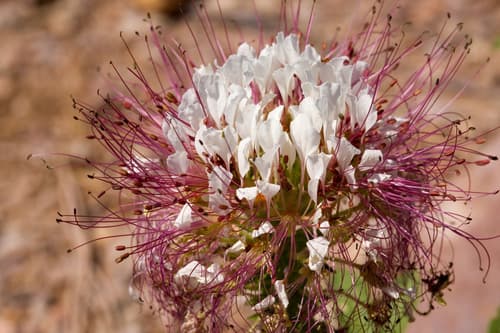
Polanisia dodecandra is a compact annual wildflower that produces delicate white to pale pink flowers from June through August. This hardy native thrives in full sun with minimal water requirements. The plant maintains a tidy, upright growth habit throughout the growing season.
Growing Clammyweed
Grow Clammyweed in full sun and low water. Mature plants reach 24 to 36 inches tall and spread 12 to 24 inches wide. Expect moderate maintenance to keep it looking intentional in a front yard.
How to care for Clammyweed, by region
How to care for Clammyweed where it is actually grown: year-round basics plus what to do each season, region by region, with the sources for each.
Care guidance last updated: September 2026
Western Gulf Coastal Plain (includes Houston, TX)
Year-round
Give clammyweed full sun and loose, fast-draining soil, and it takes care of itself most of the year.
- Plant it somewhere it gets full sun most of the day. It does not need rich garden soil, sandy or gravelly ground and even disturbed patches work fine.
- Once it is established it handles dry spells well, but a deep watering during long stretches with no rain keeps it blooming.
- It flowers over a long stretch, generally late spring into fall, and pulls in bees and butterflies looking for nectar.
- It drops seed on its own each year, so leaving a few seed heads in place is the easiest way to get it back next season without replanting.
- It grows two to three feet tall with a loose, branching habit rather than a tidy mound.
Plant it a foot or two back from the front walk or porch. The leaves give off a strong smell when brushed or crushed, so most homeowners keep it out of high-traffic spots near the door.
Fall
Fall in Houston still brings warm weather, this is when clammyweed finishes blooming and sets seed for next year.
- Flowering continues into fall, often through October in the Houston area, as the plant keeps going until the first real cold snap.
- Late September through October is also a good window to direct-sow more seed if you want a fuller stand next year.
- Established plants need little to no extra water this time of year unless the fall stays unusually dry.
- Seed pods that form on spent flowers are how the plant comes back next year on its own.
If a tidy front bed matters more than free reseeding, cut back the spent stalks in the most visible spots while leaving a few elsewhere to drop seed for next year.
Winter
Houston winters are mild but do get occasional freezes, and that first hard freeze is what ends clammyweed's season.
- As an annual, the plant dies back at the first hard freeze, which typically lands sometime between December and February in the Houston area.
- Once it is dead and brown, there is no need to keep watering it.
- Seed already dropped in the soil sits through winter and naturally breaks dormancy from the cold, then comes up on its own in spring.
- No pruning or protection is needed to get it back next year, the seed already in the ground handles that on its own.
Cutting back the dead stalks once they turn brown keeps the bed looking maintained through winter. Leaving a few standing is fine for the plant either way, it is only a curb-appeal choice.
Spring
Spring in the Houston area is when to get clammyweed seed in the ground, it needs warm soil to come up.
- Direct-sow seed a quarter inch deep once the soil has warmed and the chance of a hard freeze has passed, usually by mid to late March in the Houston area.
- Keep the seedbed lightly moist until you see seedlings, then ease off watering.
- Seed dropped the previous fall or winter will usually be sprouting on its own around this time. No action needed beyond keeping the area weeded so seedlings are not crowded out.
- Growth is slow at first. Do not expect flowers yet, that comes once the weather turns consistently warm.
Summer
Houston summer heat and humidity is clammyweed's peak season, it blooms hardest here and needs little help.
- This is the main bloom window, expect flowers from about June into September in the Houston area.
- It is built for heat and handles the humid subtropical summer well. Water deeply only during extended dry, rainless stretches rather than on a fixed schedule.
- Flowers tend to open in the evening and can look wilted by mid-afternoon on the hottest days, that is normal, not a sign of stress.
- It is an active nectar source for bees and butterflies through the hottest weeks of summer, when many other bloomers slow down.
Sources: USDA NRCS Plant Fact Sheet: Rio Grande Clammyweed, Lady Bird Johnson Wildflower Center: Polanisia dodecandra, Prairie Moon Nursery: Polanisia dodecandra (Clammy Weed)
In an HOA neighborhood
Clammyweed takes more care to keep looking intentional in a front yard. Maintenance level: moderate. Consider it for backyard or mid-zone beds rather than the street edge.
Works well in: backyard only.
- Annual nature creates gaps in landscaping each year
- Can appear weedy or informal to conventional gardeners
- May self-seed unpredictably
Wildlife value
This native forb provides valuable nectar for bees and serves as a host for various beetles during its extended summer blooming period. Its flowers are particularly attractive to native solitary bees and small pollinators.
Common questions
- When does clammyweed bloom?
- Clammyweed typically flowers from June through August, producing clusters of white to pale pink blossoms with long protruding stamens.
- What pollinators visit clammyweed?
- Bees and beetles are the main visitors to clammyweed flowers, drawn to the exposed pollen and nectar on the elongated stamens.
- What growing conditions suit clammyweed best?
- Clammyweed does well in full sun to light part sun and prefers low to medium water, thriving in sandy, gravelly, or disturbed open ground.
- What kind of plant is clammyweed?
- Clammyweed is an annual forb with a distinctive sticky, glandular texture on its stems and leaves, which gives the plant its common name.
- Is Clammyweed HOA-friendly?
- Clammyweed takes more care to look intentional in a front yard. Consider it for backyard or mid-zone beds rather than the street edge.
These answers were drafted with an AI model from this plant's data. Verify care details with a local expert.
Native range data from the World Checklist of Vascular Plants (Kew). Pollinator and host plant associations compiled from GBIF, iNaturalist, and published ecological literature.
If something looks wrong
Common plant problems, and what to check first
These come up on almost any plant. Each guide lists the likely causes in the order they are worth ruling out, with one thing to check before you act on any of them, and links to the source it came from.
- It is dying right after planting
- Leaves turning yellow
- Wilting even though I watered it
- Brown crispy leaf tips
- Bugs on the plant
Ready to grow Clammyweed? Add it to your garden in Pollinator Patch to track it and get season-by-season care guidance.