Coastal Tidytips
Layia platyglossa
Last reviewed: September 2026
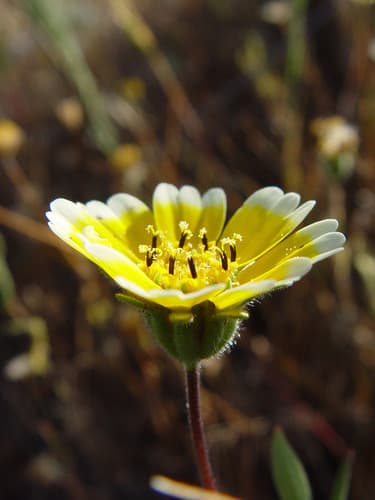
Layia platyglossa, known as Coastal Tidytips, is a low-water annual forb that blooms yellow and white daisy-like flowers from March through June in full sun, drawing bees and butterflies to open, sunny sites.
Coastal Tidytips (Layia platyglossa) is not flagged as toxic to dogs or cats by Plants For A Future (PFAF) (opens in new tab) (last reviewed 2026-05-21). This verdict does not come from the ASPCA. If your pet shows symptoms after eating any plant, call the ASPCA at (888) 426-4435.
Light
full sun
Water
low
Size
6"–24" H × 6"–12" W
Bloom
Mar, Apr, May, Jun
Native to
CA
Pollinators
bees, butterflies
Before you buy
Your city may pay you to plant this
Cities and water utilities offer rebates for replacing lawn with native and water-wise plants. We track 459 programs across 44 states, each with a link to the provider and the date we last checked it.
Find rebates in your areaPicture natives in your own yard
Upload a photo of your yard and Patch Vision shows a rendering of it planted with natives for your region, like Coastal Tidytips.


Browse plants for this ecoregion
Coastal tidytips is a cheerful annual wildflower with bright yellow daisy-like flowers edged in white. It grows in a compact form reaching 6-24 inches tall and blooms profusely from March through June. This plant thrives in full sun with minimal water once established.
Growing Coastal Tidytips
Grow Coastal Tidytips in full sun and low water. Mature plants reach 6 to 24 inches tall and spread 6 to 12 inches wide. Expect moderate maintenance to keep it looking intentional in a front yard.
How to care for Coastal Tidytips, by region
How to care for Coastal Tidytips where it is actually grown: year-round basics plus what to do each season, region by region, with the sources for each.
Care guidance last updated: July 2026
Central California Valley (includes Sacramento, CA)
Year-round
Tidy Tips is a low, easygoing annual wildflower for full sun in the Sacramento Valley. It sprouts with the winter rains, blooms bright yellow with white tips in spring, then sets seed and dies back for the dry summer, dropping seed to come back next year.
- Give it full sun and lean, well-drained soil; on Sacramento's heavy clay, scatter seed on a slightly raised bed or a gentle mound so water does not pool at the crown.
- Treat it as a self-sowing annual: you plant it once from seed in fall, let it flower and set seed in spring, and it reseeds itself for future years.
- Do not fertilize or amend richly; Tidy Tips flowers best in poor soil and floppy overfed plants bloom less.
- Plan it as part of a spring wildflower patch with poppies and goldfields rather than a year-round green groundcover, since it is gone by high summer.
Fall
Fall is the time to plant Tidy Tips in the Sacramento Valley. Sow the seed in October or November so the first winter rains sprout it and the seedlings grow through the cool wet months.
- Sow seed on the surface of firmed, weeded soil in October or November, just before or right after the first real rains, and press it in for good soil contact rather than burying it deep.
- Choose a full-sun spot with sharp drainage; on Sacramento clay, sow on a slight mound or raised bed so winter water drains away from the young roots.
- If the first rains are late, water the seedbed lightly to trigger germination, then let the rains take over once they arrive.
- Do not sow in spring or summer; fall sowing timed to the rains is what gives a strong spring bloom, and an existing patch will also drop its own seed now.
Sow the seed inside a clearly shaped, edged bed rather than broadcasting it across the whole yard, so the coming wildflower patch reads as a planned planting to an HOA and neighbors from the start.
Winter
Winter is the quiet growing season for Tidy Tips in Sacramento. The fall-sown seed germinates and the young plants sit as small green rosettes through the cool, foggy, rainy months, watered almost entirely by winter rain.
- Let the winter rains do the watering; in a normal wet Sacramento winter the seedlings need little or no supplemental water.
- Water only if there is a long dry, frosty stretch and the seedlings look stressed, and keep it light so the clay soil never stays soggy.
- Weed by hand around the small rosettes so faster winter weeds do not crowd out the young Tidy Tips.
- Expect slow, low green growth now and mild frost tolerance; the real show comes in spring, so do not fertilize or push the plants over winter.
Keep the winter bed weeded and its edges defined so the low green rosettes look like a tended cool-season planting to an HOA rather than a patch of winter weeds.
Spring
Spring is peak bloom for Tidy Tips in the Sacramento Valley. The plants that germinated over the wet winter open their daisy-like yellow-and-white flowers from March into June while the soil is still moist from winter rain.
- Let the winter rains carry the bloom; in a normal wet spring you should not need to water an established stand at all.
- If March and April turn unusually dry, a single deep soak can stretch the flowering, but taper off as the days warm so you are not watering into the summer dry season.
- Do not deadhead everything; leave plenty of spent flowers on the plant so seed forms for next year's patch.
- Skip fertilizer now; the plants are living on winter soil moisture and lean ground gives the fullest bloom.
For a front yard, keep a clean mowed or spaded edge around the wildflower patch and a defined bed line so the spring bloom reads as an intentional planting to neighbors and any HOA reviewer rather than a weedy volunteer.
Summer
By early summer Tidy Tips has finished flowering, dried to tan, and set seed. It is an annual, so the parent plants die completely and the patch becomes bare, dry ground until fall; this is normal, not a failure.
- Do not water the bare ground where Tidy Tips grew; summer irrigation is the number-one killer of a Sacramento native bed and only encourages summer weeds where you want the seed bank to rest.
- Let the dried stalks stand until the seed has clearly dropped, then pull or rake the spent plants once seed is on the ground.
- Mark the patch or note where it was so you do not dig, mulch heavily over, or replant the spot before the fall seedlings appear.
- If you interplant with summer-active valley natives like California fuchsia or deer grass, water only those plants deeply and infrequently, not the whole bed.
A spent summer wildflower patch can look brown and dead to an HOA, so once the seed has dropped, cut back the dry stalks and keep the bed edges crisp so the resting ground reads as a tended off-season bed and does not draw a violation letter.
Sources: Calscape, California Native Plant Society, Layia platyglossa Tidy Tips, USDA PLANTS Database, Layia platyglossa, UC Davis Arboretum and Public Garden, planting California native wildflower seed, Las Pilitas Nursery, Layia platyglossa horticultural notes, UC Master Gardeners, planting and caring for California native annual wildflowers
In an HOA neighborhood
Coastal Tidytips is an HOA-friendly choice in the right placement. Maintenance level: moderate. Tidiness: 3 out of 5.
Works well in: mid zone, foundation.
- Annual nature means seasonal dieback
- Can look untidy after bloom period
- May reseed and appear slightly random/informal
Wildlife value
Excellent pollinator plant that attracts native bees and butterflies during its spring bloom season. The abundant flowers provide a valuable nectar source.
Common questions
- What growing conditions does Coastal Tidytips prefer?
- Layia platyglossa grows best in full sun with low water once established, making it suited to open grassland and coastal sage settings in California.
- When does Coastal Tidytips bloom?
- Coastal Tidytips typically flowers from March through June, producing yellow ray flowers tipped in white.
- What pollinators visit Coastal Tidytips?
- Bees and butterflies commonly visit the flowers of Layia platyglossa for nectar and pollen.
- Is Coastal Tidytips easy to grow from seed?
- As an annual forb, Layia platyglossa is usually grown from seed sown in fall or early spring in a sunny, well-drained spot.
- Is Coastal Tidytips toxic to dogs?
- Coastal Tidytips is not flagged as toxic to dogs by Plants For A Future (PFAF). This verdict does not come from the ASPCA.
- Is Coastal Tidytips toxic to cats?
- Coastal Tidytips is not flagged as toxic to cats by Plants For A Future (PFAF). This verdict does not come from the ASPCA.
- Is Coastal Tidytips HOA-friendly?
- Coastal Tidytips is generally an HOA-friendly choice in the right placement, with moderate maintenance.
These answers were drafted with an AI model from this plant's data. Verify care details with a local expert.
Native range data from vouchered herbarium specimen records and regional native plant society lists. Pollinator and host plant associations compiled from GBIF, iNaturalist, and published ecological literature.
If something looks wrong
Common plant problems, and what to check first
These come up on almost any plant. Each guide lists the likely causes in the order they are worth ruling out, with one thing to check before you act on any of them, and links to the source it came from.
- It is dying right after planting
- Leaves turning yellow
- Wilting even though I watered it
- Brown crispy leaf tips
- Bugs on the plant
Ready to grow Coastal Tidytips? Add it to your garden in Pollinator Patch to track it and get season-by-season care guidance.