Common Blue Violet
Viola sororia
Last reviewed: September 2026
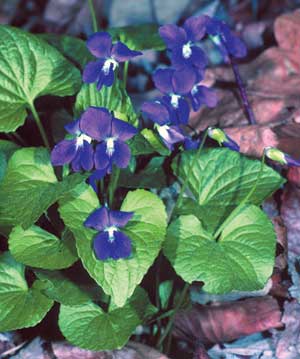
Viola sororia is a low-growing forb that blooms purple flowers from March through May. It thrives in part sun with medium moisture and attracts bees and butterflies to lawns, woodland edges, and garden beds.
Toxicity unknown
Common Blue Violet (Viola sororia) is not listed by the ASPCA Animal Poison Control Center (opens in new tab) or the other sources we check, so we have no verdict for it either way. Absence from those lists is not a clearance. If your pet shows symptoms after eating any plant, call the ASPCA at (888) 426-4435.
The USDA PLANTS Database (opens in new tab) does not flag Common Blue Violet as toxic to livestock.
Light
part sun
Water
medium
Size
4"–8" H × 6"–12" W
Bloom
Mar, Apr, May
Native to
AL, AR, CT, DE and 33 more states
Pollinators
butterflies, bees
Deer
Resistant (per Prairie Moon Nursery)
Before you buy
Your city may pay you to plant this
Cities and water utilities offer rebates for replacing lawn with native and water-wise plants. We track 452 programs across 44 states, each with a link to the provider and the date we last checked it.
Find rebates in your areaBrowse plants for this ecoregion
Common Blue Violet is a low-growing native wildflower that produces charming purple-blue flowers in spring. This compact perennial spreads by underground runners to form a neat groundcover in partially shaded areas.
Growing Common Blue Violet
Grow Common Blue Violet in part sun and medium water. Mature plants reach 4 to 8 inches tall and spread 6 to 12 inches wide. Expect low maintenance to keep it looking intentional in a front yard.
How to care for Common Blue Violet, by region
How to care for Common Blue Violet where it is actually grown: year-round basics plus what to do each season, region by region, with the sources for each.
Care guidance last updated: July 2026
Cross Timbers (includes Fort Worth, TX)
Year-round
Common blue violet is a low, spreading groundcover for shady to part sun spots in North Texas, native to both the Cross Timbers and the Blackland Prairies. It is not on the ASPCA toxic plant list, and its leaves are a host food source for fritillary butterfly caterpillars.
- Space plants 6 to 8 inches apart since it spreads by self seeding, not runners
- In heavy black clay, no soil amendment is usually needed, it tolerates wet clay well; in the sandier soils west of the metro, add compost to help it hold moisture between waterings
- Water to keep soil evenly moist the first growing season, then it only needs supplemental water in dry stretches
- Watch for slugs, aphids, and spider mites on new growth, especially in humid spring weather
- Mow or trim it back if it spreads past the bed edge, since it does not stay contained without some control
A tidy, low groundcover reads as an intentional shade planting rather than a weed patch, but let it spread unchecked into a lawn or walkway edge and it can look neglected, so keep the bed edge mowed or trimmed.
Fall
Fall is a good second window to plant or divide common blue violet in North Texas, with cooler weather and more reliable rain than summer.
- Divide crowded clumps in October or November and replant divisions 6 to 8 inches apart
- Rake fallen tree leaves off the crown lightly rather than leaving a thick mat, so the plant does not smother going into winter
- Water weekly if fall rain is light, tapering off as temperatures drop in November
- Self seeded volunteers from summer will be visible now, thin or relocate any that came up somewhere unwanted
Volunteer seedlings can pop up outside the original bed by fall, pull or relocate strays along walkways and the lawn edge so the planting still reads as a defined bed rather than spreading turf weed.
Winter
Common blue violet is evergreen to semi evergreen through a typical North Texas winter and needs little attention. It handles the region's short hard freezes fine, though foliage can die back in a severe Arctic outbreak.
- No watering needed in a normal winter unless there is an extended dry, mild stretch
- Leave foliage in place through winter, it usually stays green or only partly dies back and provides ground cover
- If leaves blacken after a hard freeze, trim the damaged foliage back in late February and new growth will fill in by spring
- No pruning or fertilizing needed this season
Spring
Spring is peak bloom and the best time to plant common blue violet in North Texas, while soil is still cool and rain is more regular.
- Plant or divide clumps any time from March through April, ahead of the summer heat
- Expect purple to white flowers from March into May
- Water twice a week if rain is light, since spring is also when new plantings need to root in before summer
- Deer tend to leave it alone, so no extra protection is needed even near a front bed
Full spring bloom is the showiest the plant gets, low purple flowers along a bed edge read as a deliberate, cared for planting.
Summer
Summer heat is hard on common blue violet. The showy flowers stop and the leaves can look ragged in the 100 degree afternoons of a North Texas July and August.
- Water once or twice a week during stretches with no rain, more often in the sandier soils west of the metro, less in heavy black clay that holds moisture longer
- Expect foliage to look tired or thin by August, this is normal heat stress, not disease, and it recovers in fall
- The plant keeps setting seed through summer even without visible flowers, small closed buds low on the plant do this quietly
- Watch for powdery mildew on leaves in humid, still weather and thin out crowded clumps for airflow if it appears
Sources: Lady Bird Johnson Wildflower Center: Viola sororia, ASPCA Toxic and Non-Toxic Plants, letter V, NC State Extension Gardener Plant Toolbox: Wild Violet, Missouri Botanical Garden Plant Finder: Viola sororia
Erie Drift Plain (includes Cleveland, OH)
Year-round
Common blue violet is a tough, low groundcover that thrives in the Cleveland area's part shade and heavy clay soil. It is native to Ohio and most of the eastern United States, so it needs very little once it settles in. It is also the larval host plant for the great spangled fritillary and other Speyeria butterflies, which is a big reason gardeners keep it. Its one quirk is that it spreads freely by seed and short underground stems, which many love as a lawn alternative and some find weedy. Put it where a spreading patch looks intentional and you will barely have to touch it.
- Give it a spot with morning sun and afternoon shade
- Water new plants through their first summer, then rely on rain
- Leave fallen leaves in place as a free living mulch
- Edge the bed cleanly so the patch stays where you want it
- Deadhead or mow spent flowers if you want to slow the spread
Site it as a defined groundcover patch or naturalized bed with a crisp mowed or spaded edge, so its natural spread reads as an intentional planting rather than violets creeping into a manicured front lawn.
Fall
In fall the violet keeps its low green leaves well into the cooling Cleveland weather and quietly finishes setting seed. There is very little to do now, which is part of why this is such an easy plant. If you want to keep it from wandering into new areas next spring, rake up and remove spent foliage and seed before the first hard frosts. If you are happy to let it naturalize, leave everything in place and let the seed fall where it likes. The lingering leaves also help protect the crowns as the cold sets in.
- Leave the green leaves in place for winter crown protection
- Rake up seed and litter only if you want to curb spread
- Skip any fall pruning, the plant does not need it
- Mark clump edges now so you know the patch line in spring
- Add a light leaf-mulch layer over new plantings
A quick fall tidy of spent foliage and stray seedlings keeps the front-yard patch looking cared for and stops the planting from drifting past its intended edge over winter.
Winter
Winter is a rest for this plant in the Cleveland area, where lake-effect cold and deep snow put it fully dormant. It dies back to the ground and waits out the single-digit and below-zero stretches with no help from you. The snow cover actually works in its favor, insulating the crowns until spring. There is essentially no winter care to do here. Just leave it alone and let it come back on its own once the ground thaws.
- Do nothing, the plant is fully hardy in this zone
- Let snow cover sit as natural insulation over the crowns
- Skip winter watering, dormant plants do not need it
- Leave old leaf litter in place until spring cleanup
- Wait for the ground to thaw before touching the bed
Spring
Spring is this plant's main show around Cleveland, with blue to purple flowers from about April into May as the ground warms after the lake-effect winter. Bees and butterflies visit the blooms, and the fresh leaves feed great spangled fritillary and other Speyeria caterpillars, since the violet is their larval host plant. Let it bloom and self-seed if you want more, or snip spent flowers before they drop seed if you want to hold it in place. This is also the easiest time to dig and move clumps to fill gaps. Give new divisions a good watering while spring rains are still frequent.
- Enjoy the April to May flowers as the season's first color
- Pull a few stray seedlings now while they are small and easy
- Divide and move clumps early to fill bare spots
- Water any transplants well while the soil is still cool
- Snip spent blooms if you want fewer seedlings later
Summer
By summer the flowers are done and the violet settles into a low green mat across the bed, which is exactly what you want in Cleveland's warm humid months. It handles the clay and part shade with almost no help, though a deep soak during a dry spell keeps the leaves looking fresh. This is when it quietly self-sows and creeps sideways, so summer is the time to decide whether you want more of it or want to hold it back. Running a mower or shears over the patch after seed heads form knocks back the spread without hurting the plants. If you like where it is going, just leave it be.
- Water deeply only during a long dry stretch
- Mow or shear the patch to limit summer self-seeding
- Pull seedlings out of lawn and bed edges as you spot them
- Skip fertilizer, it grows fine in plain clay soil
- Let it fill in shady spots where you welcome the spread
Keep the summer mat inside a clear border and pull escapees from the lawn, so the groundcover stays a defined patch rather than looking like it is taking over the yard.
Sources: USDA PLANTS Database, Viola sororia, Lady Bird Johnson Wildflower Center, Viola sororia, Xerces Society, fritillary butterflies and native violet host plants, Missouri Botanical Garden Plant Finder, Viola sororia
Texas Blackland Prairies (includes Dallas, TX)
Year-round
Common blue violet is a low, spreading groundcover for shady to part sun spots in North Texas, native to both the Cross Timbers and the Blackland Prairies. It is not on the ASPCA toxic plant list, and its leaves are a host food source for fritillary butterfly caterpillars.
- Space plants 6 to 8 inches apart since it spreads by self seeding, not runners
- In heavy black clay, no soil amendment is usually needed, it tolerates wet clay well; in the sandier soils west of the metro, add compost to help it hold moisture between waterings
- Water to keep soil evenly moist the first growing season, then it only needs supplemental water in dry stretches
- Watch for slugs, aphids, and spider mites on new growth, especially in humid spring weather
- Mow or trim it back if it spreads past the bed edge, since it does not stay contained without some control
A tidy, low groundcover reads as an intentional shade planting rather than a weed patch, but let it spread unchecked into a lawn or walkway edge and it can look neglected, so keep the bed edge mowed or trimmed.
Fall
Fall is a good second window to plant or divide common blue violet in North Texas, with cooler weather and more reliable rain than summer.
- Divide crowded clumps in October or November and replant divisions 6 to 8 inches apart
- Rake fallen tree leaves off the crown lightly rather than leaving a thick mat, so the plant does not smother going into winter
- Water weekly if fall rain is light, tapering off as temperatures drop in November
- Self seeded volunteers from summer will be visible now, thin or relocate any that came up somewhere unwanted
Volunteer seedlings can pop up outside the original bed by fall, pull or relocate strays along walkways and the lawn edge so the planting still reads as a defined bed rather than spreading turf weed.
Winter
Common blue violet is evergreen to semi evergreen through a typical North Texas winter and needs little attention. It handles the region's short hard freezes fine, though foliage can die back in a severe Arctic outbreak.
- No watering needed in a normal winter unless there is an extended dry, mild stretch
- Leave foliage in place through winter, it usually stays green or only partly dies back and provides ground cover
- If leaves blacken after a hard freeze, trim the damaged foliage back in late February and new growth will fill in by spring
- No pruning or fertilizing needed this season
Spring
Spring is peak bloom and the best time to plant common blue violet in North Texas, while soil is still cool and rain is more regular.
- Plant or divide clumps any time from March through April, ahead of the summer heat
- Expect purple to white flowers from March into May
- Water twice a week if rain is light, since spring is also when new plantings need to root in before summer
- Deer tend to leave it alone, so no extra protection is needed even near a front bed
Full spring bloom is the showiest the plant gets, low purple flowers along a bed edge read as a deliberate, cared for planting.
Summer
Summer heat is hard on common blue violet. The showy flowers stop and the leaves can look ragged in the 100 degree afternoons of a North Texas July and August.
- Water once or twice a week during stretches with no rain, more often in the sandier soils west of the metro, less in heavy black clay that holds moisture longer
- Expect foliage to look tired or thin by August, this is normal heat stress, not disease, and it recovers in fall
- The plant keeps setting seed through summer even without visible flowers, small closed buds low on the plant do this quietly
- Watch for powdery mildew on leaves in humid, still weather and thin out crowded clumps for airflow if it appears
Sources: Lady Bird Johnson Wildflower Center: Viola sororia, ASPCA Toxic and Non-Toxic Plants, letter V, NC State Extension Gardener Plant Toolbox: Wild Violet, Missouri Botanical Garden Plant Finder: Viola sororia
Want these tasks as reminders timed to your yard? Pollinator Patch turns this guidance into a season-by-season care plan for the plants you actually grow.
In an HOA neighborhood
Common Blue Violet is an HOA-friendly choice. Maintenance level: low. Tidiness: 2 out of 5.
Works well in: front yard, foundation, street edge, mid zone.
Wildlife value
The flowers attract butterflies and native bees in early spring when few other blooms are available. Several butterfly species use violets as host plants for their caterpillars.
Common questions
- When does Common Blue Violet bloom?
- Common Blue Violet typically flowers from March through May, with purple blooms appearing close to the ground on short stems.
- What kind of light does Common Blue Violet need?
- It grows best in part sun but tolerates a wide range of conditions, from full sun to shaded woodland understory.
- How much water does Common Blue Violet need?
- This plant prefers medium moisture but can handle both wetter and drier soils once established, making it adaptable in garden beds and naturalized areas.
- Do pollinators visit Common Blue Violet?
- Bees and butterflies regularly visit the flowers for nectar and pollen during the spring bloom period.
- Is Common Blue Violet evergreen?
- Its leaves are semi-evergreen, often persisting through mild winters before dying back in colder climates.
- Is Common Blue Violet toxic to livestock?
- The USDA PLANTS Database does not flag Common Blue Violet as toxic to livestock.
- Is Common Blue Violet HOA-friendly?
- Common Blue Violet is generally an HOA-friendly choice in the right placement, with low maintenance.
These answers were drafted with an AI model from this plant's data. Verify care details with a local expert.
Native range data from vouchered herbarium specimen records and regional native plant society lists. Pollinator and host plant associations compiled from GBIF, iNaturalist, and published ecological literature.
If something looks wrong
Common plant problems, and what to check first
These come up on almost any plant. Each guide lists the likely causes in the order they are worth ruling out, with one thing to check before you act on any of them, and links to the source it came from.
- It is dying right after planting
- Leaves turning yellow
- Wilting even though I watered it
- Brown crispy leaf tips
- Bugs on the plant
Ready to grow Common Blue Violet? Add it to your garden in Pollinator Patch to track it and get season-by-season care guidance.
Planning a bed around it? Start a free plan with this plant
Not sure where to start? Take the 2-minute yard quiz