Eastern Bluestar
Amsonia tabernaemontana
Last reviewed: September 2026
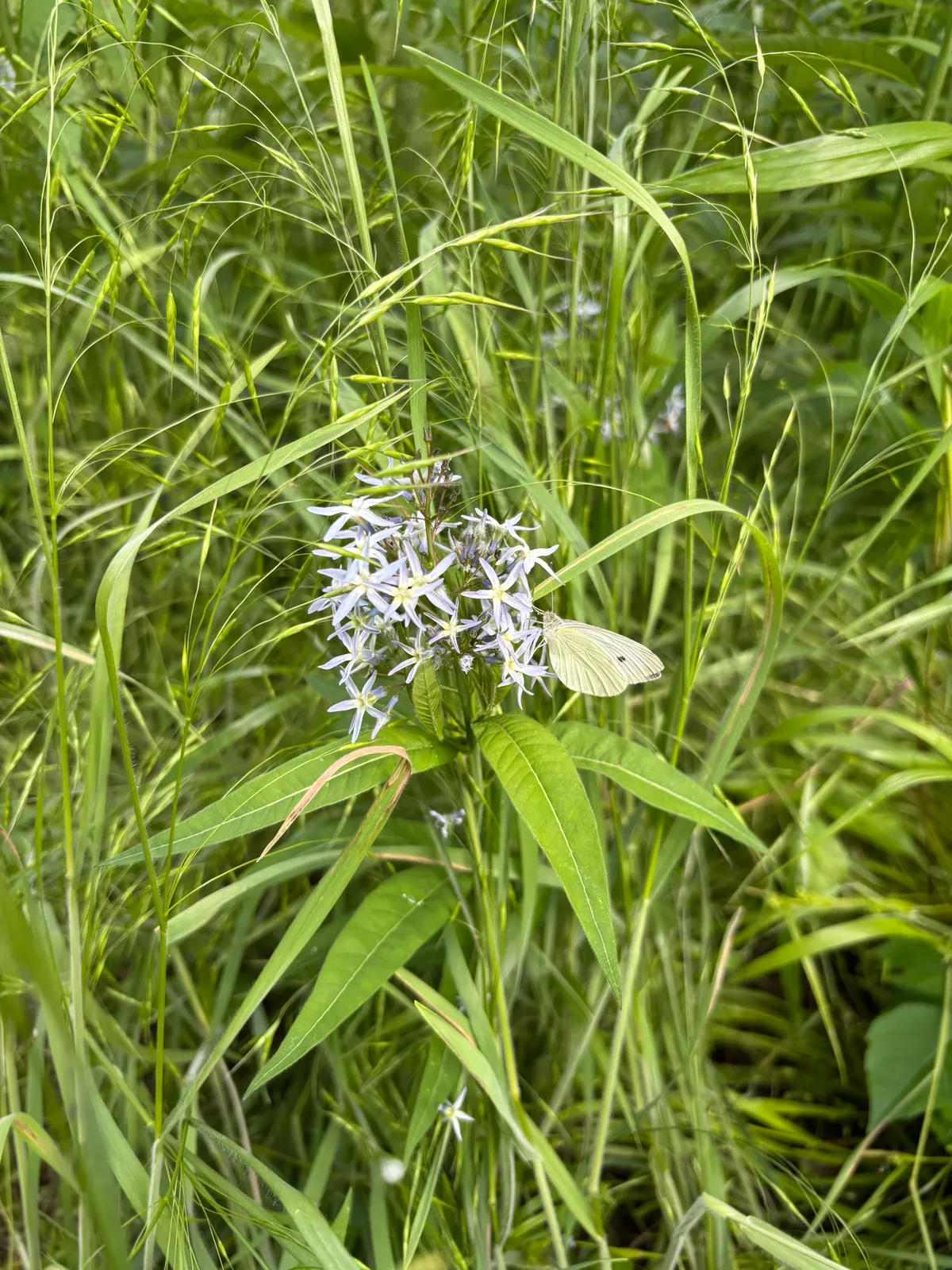
Amsonia tabernaemontana, commonly called Eastern Bluestar, opens clusters of pale blue star-shaped flowers from March through May and grows well in moist woodland edges, streambanks, and open meadows.
Toxicity unknown
Eastern Bluestar (Amsonia tabernaemontana) is not listed by the ASPCA Animal Poison Control Center (opens in new tab) or the other sources we check, so we have no verdict for it either way. Absence from those lists is not a clearance. If your pet shows symptoms after eating any plant, call the ASPCA at (888) 426-4435.
Light
full sun
Water
high
Size
9"–12" H × 12"–36" W
Bloom
Mar, Apr, May
Native to
AL, AR, DE, FL and 16 more states
Pollinators
butterflies, bees, hummingbirds
Deer
Resistant (per Prairie Moon Nursery)
Before you buy
Your city may pay you to plant this
Cities and water utilities offer rebates for replacing lawn with native and water-wise plants. We track 452 programs across 44 states, each with a link to the provider and the date we last checked it.
Find rebates in your areaBrowse plants for this ecoregion
Eastern Bluestar produces clusters of pale blue, star-shaped flowers in spring, followed by attractive narrow leaves that turn golden yellow in fall. This compact perennial forms neat clumps and maintains a tidy appearance throughout the growing season.
Growing Eastern Bluestar
Grow Eastern Bluestar in full sun and high water. Mature plants reach 9 to 12 inches tall and spread 12 to 36 inches wide. Expect low maintenance to keep it looking intentional in a front yard.
How to care for Eastern Bluestar, by region
How to care for Eastern Bluestar where it is actually grown: year-round basics plus what to do each season, region by region, with the sources for each.
Care guidance last updated: August 2026
Cross Timbers (includes Fort Worth, TX)
Year-round
Eastern bluestar is a clump-forming perennial that grows about 2 to 3 feet tall and about as wide, with pale blue star-shaped flowers in early spring and gold foliage in fall. It is a Texas native, and once it settles in it asks for very little from you.
- Give it a spot with at least 6 hours of sun. In deep shade or very rich soil the stems get tall and floppy and lean over.
- Plan on a 2 to 3 foot circle of space per plant, not the tiny footprint some plant tags suggest, so leave about 30 inches between it and its neighbors.
- In heavy black clay, set the crown an inch high on a slight mound or work in a few inches of expanded shale so water moves away from the roots. In the sandier soils west of the metro it drains fine on its own, but you will need to water more often through the first summer.
- Average moisture is plenty. It takes normal garden watering, tolerates a damp low spot, and handles dry spells once the roots are established, so it works well at the edge of a rain garden.
- The stems and leaves release a milky white sap when they are cut or torn, and that sap is described by Missouri Botanical Garden and the Native Plant Society of Texas as toxic, which is why deer and rabbits leave the plant alone. Wear garden gloves when you prune and wash your hands afterward.
Fall
Fall is the payoff season. The narrow willow-like leaves turn a strong golden yellow, and autumn rains make this a good time to plant a new one.
- Let the gold color run its course through October and November. Do not cut the clump down while the leaves are still coloring.
- October is a good planting month here, with warm soil and autumn rain. Water a fall planting once a week until the mid November frost, then stop.
- If you do not want volunteer seedlings, snip off the ripe seed pods before they split open, which NC State Extension notes as the way to keep it from self seeding.
- Pull the mulch back to 2 inches and refresh any thin spots so the crown is covered but not buried.
- Divide a clump that has been in the ground 4 or more years and has thinned out in the center. Do it in October, with a sharp spade and gloves on.
The gold fall foliage is one of the easiest ways to show that a native bed was planned. Keep the bed edge crisply cut and the mulch even, and a bank of golden bluestar reads as a deliberate seasonal display rather than something nobody got around to trimming.
Winter
The top growth dies back to the ground for winter and the roots ride out our cold without help. The only real job is one clean cutback in late February, before new shoots push up.
- After the leaves drop, the stems are bare and brown. Cut the whole clump down to 3 to 4 inches in late February, before the mid March last frost, so the new growth comes up into open space.
- Wear gloves for the cutback. Cut stems weep a milky white sap.
- Leave a 2 to 3 inch mulch layer over the crown through winter. No other frost protection is needed, since this plant is rated hardy well north of us in zone 3 and our winters are zone 8a to 8b.
- Do not water in winter unless the soil has been bone dry for a month or more. Heavy clay stays wet longer than you think and soggy winter roots are a bigger risk here than cold.
- Mark the spot with a small stake or label. The plant vanishes completely, and it is easy to dig into it by mistake in February.
Bare brown stems standing all winter are what draws a note from a neighbor or a board. Cutting the clump to an even 3 to 4 inch line in late February leaves a low, uniform, deliberate looking bed instead of a patch of dead sticks, which keeps the planting reading as HOA-friendly through the off season.
Spring
Spring is both the planting window and the flower show. The pale blue clusters open somewhere between March and May in North Texas, right after the mid March last frost.
- Plant from late March through April, once the mid March frost date has passed and the soil has warmed a little.
- Water a new plant deeply about twice a week for the first 6 weeks, then back off to once a week. Push a finger 2 inches into the soil first, and skip the watering if it is still damp.
- In heavy black clay, dig the hole no deeper than the pot and plant slightly high so the crown sits above the surrounding grade. In sandier ground plant level, and check moisture every few days instead of weekly.
- Leave the flowers alone while they bloom. Bees, butterflies and hummingbirds work them for nectar and pollen, per the Native Plant Society of Texas.
- Spread 2 to 3 inches of shredded hardwood mulch around the clump, keeping it an inch back from the stems.
Summer
Right after the flowers fade, shear the whole clump back by about a third. That one cut is the difference between a neat dome of foliage all summer and a plant that splays open in the middle by July.
- In late May or early June, once the last flowers have browned, cut every stem back by one third to one half with hand shears. Missouri Botanical Garden recommends exactly this cut to keep the plant from going open and floppy.
- Wear gloves for that cut, because the stems bleed a milky white sap when they are severed.
- Skip the shear only if you want the seed pods, which are the long thin follicles that ripen 4 to 5 months after bloom.
- July and August are when new plants die here. In a first summer, water a young clump deeply once a week in heavy clay and twice a week in sandy soil, early in the morning, and check the top 2 inches of soil before each watering.
- An established clump needs almost nothing in the heat. Water it only during a stretch of 3 or more weeks with no rain.
The post bloom shear is what makes this plant read as intentional rather than overgrown. A clump cut back by a third holds a rounded, deliberate shape through the hottest months, which is the look most HOA-conscious homeowners are after in a front bed.
Sources: Missouri Botanical Garden Plant Finder, Amsonia tabernaemontana, Native Plant Society of Texas, Eastern Bluestar, NC State Extension Plant Toolbox, Amsonia tabernaemontana, Lady Bird Johnson Wildflower Center, Amsonia tabernaemontana, Clemson Cooperative Extension Home and Garden Information Center, Bluestar
Interior Plateau (includes Cincinnati, OH)
Year-round
Eastern bluestar is a tough, low-fuss perennial once it settles into your Cincinnati garden. It wants full sun to light shade, average to medium water, and just one trim a year to stay full and rounded.
- Plant it in full sun for the most upright, compact form and the best gold fall color. Shade or overly rich soil can make it flop.
- It handles Cincinnati's clay-heavy soil fine as long as the bed drains. Add compost if water tends to pool.
- Water it regularly through its first growing season while roots establish, then ease off. Established plants shrug off dry spells.
- Right after the spring flowers fade, trim the stems back by about a third to half. This keeps the clump rounded and full for the rest of the season, per Missouri Botanical Garden.
- Give it a couple of seasons to hit its stride. Mt. Cuba Center's regional trial found bluestars take a few years to reach their full size and bloom.
- Wear gloves for that post-bloom trim. Missouri Botanical Garden notes the cut stems release a milky sap.
A full, rounded clump that holds its shape after one clean post-bloom trim reads as an intentional planting along a front walk or foundation bed, not an overgrown patch.
Fall
Fall is when bluestar's foliage puts on a second show, with willow-like leaves turning gold to orange before the plant goes dormant for winter.
- Foliage shifts from deep green to yellow, gold, or orange in fall. Mt. Cuba Center's trial found the strongest color on plants grown in full sun.
- No fall cutback is needed. The plant is winding down on its own, and cutting now just ends the fall color show early.
- Ripening seed pods split open in fall and offer a small food source for local wildlife, according to NC State Extension.
- This is a good, low-stress time to plant new bluestar divisions if you are adding to the bed. Cooler fall temperatures mean less watering stress while roots settle in before frost.
- Leave the dried stems standing through fall rather than cutting the bed back now. They matter again over winter.
Gold to orange fall foliage against the fading bed gives the front yard a deliberate, seasonal look instead of a bare gap.
Winter
Bluestar dies back to the ground for winter in Cincinnati, so the main decision is how much of the dried stems to leave standing until spring.
- As a deciduous perennial, the whole plant dies back to ground level over winter and shows no green top growth until spring, per NC State Extension.
- Do the main cutback and bed cleanup in late winter or very early spring, not in fall, per Mt. Cuba Center's regional trial.
- Leave 12 to 18 inches of stem standing over winter instead of cutting to the ground. Mt. Cuba Center notes the hollow stems shelter native bees through the cold months.
- If a fully tidy winter bed matters more to you than the bee habitat, it is fine to cut the stems all the way back once they have gone fully brown and stopped catching wind. Just finish before new growth starts in spring.
- The dormant crown handles Cincinnati's zone 6b winters without mulching or covering once established.
A neatly cut back or evenly trimmed stub bed reads as intentional winter maintenance rather than a forgotten, overgrown patch, even while a portion of stems stay up for pollinator habitat.
Spring
Spring is bluestar's big moment in Cincinnati gardens, with clusters of pale blue, star-shaped flowers opening as the soil warms toward the region's mid-April last frost.
- New reddish-purple shoots push up from the ground in early to mid-April as the soil warms.
- Clusters of light blue, star-shaped flowers open in mid to late spring and can carry into early summer.
- A late-season frost after the shoots emerge is normal for the Cincinnati area, and established plants take it in stride.
- Full sun through spring builds the strongest upright habit for the whole growing season. Part shade tends to produce a looser plant that needs support later.
- Once the flowers fade, trim the stems back by a third to half for a neater, rounder shape, per NC State Extension.
- The early bloom is one of the first nectar sources for native bees and hummingbirds before most summer perennials open, according to Mt. Cuba Center's regional trial.
A tidy, upright clump in full bloom reads as a planned bed rather than an unmanaged patch, especially once you make the post-bloom trim.
Summer
Once established, bluestar coasts through Cincinnati's hot, humid summers on its own foliage and seed pods, with little watering or fussing needed.
- Established plants tolerate typical Ohio Valley summer dry spells without extra watering. Water only during an extended drought or in the plant's first year.
- Narrow, willow-like foliage stays a clean deep green through summer and holds up well in Cincinnati's humidity.
- Slender seed pods form where the spring flowers were. Leave them if you want next year's self-sown seedlings, or trim them off if you would rather the clump stay contained, per NC State Extension.
- Rust can show up occasionally in humid summers, per Missouri Botanical Garden. Good spacing for airflow and a full-sun spot help keep foliage clean.
- No summer pruning is needed if you already made the post-bloom trim in late spring. The plant holds its rounded shape on its own through summer.
Clean, upright summer foliage with no flopping keeps the bed looking maintained without any extra summer trimming.
Sources: Missouri Botanical Garden Plant Finder, Amsonia tabernaemontana, Mt. Cuba Center, Amsonia Trial for the Mid-Atlantic Region, NC State Extension Plant Toolbox, Amsonia tabernaemontana
Northern Piedmont (includes Lancaster, PA)
Year-round
Eastern Bluestar is a clump-forming perennial wildflower grown as an ornamental in Lancaster's Piedmont climate. It matures to about 2 to 3 feet tall and equally wide, taller than some catalogs list, prefers full sun to light afternoon shade and average to moist, well-drained soil, and easily handles Lancaster's zone 6b/7a winters with no special protection.
- Give it full sun to light afternoon shade. Too much shade makes the stems open up and flop over.
- Plant in average to moist, well-drained soil. Once established it tolerates Lancaster's humid summers and short dry spells without extra care.
- Expect a mature clump around 2 to 3 feet tall and wide, bigger than some catalog listings suggest.
- It is winter hardy well beyond Lancaster's zone 6b to 7a lows and needs no mulch or wrapping to get through the cold.
- Deer generally leave it alone. The milky sap in the stems and leaves is bitter and irritating, which discourages browsing.
Fall
Fall is when Eastern Bluestar earns its keep in a Lancaster front yard, its narrow leaves turning a clear gold before frost.
- Foliage turns yellow to gold in fall, one of the best reasons to grow it beyond the short spring bloom window.
- Leaving the seed pods and foliage standing into fall adds structure and habitat value. No fall cutback is required.
- Fall, after the first hard frost knocks the foliage back, is a workable window to divide a crowded, multi-year clump if needed. The dense root system makes this harder on an older plant than a young one.
- Skip fertilizer in fall. This plant grows fine in average soil, and extra feeding just encourages the floppy growth you would otherwise be cutting back.
The gold fall foliage reads as an intentional, cared-for planting rather than something going to seed, which helps in an HOA-conscious front yard.
Winter
Winter in Lancaster's zone 6b to 7a climate means this plant goes fully dormant and needs nothing from you until spring growth starts.
- The plant dies back to the ground after hard frost and needs no winter mulch or protection in zone 6b to 7a. It is reliably hardy through much colder zones than Lancaster sees.
- Left uncut, the tan winter stems and dry seed pods add some structure to an otherwise bare winter bed.
- If a tidy winter silhouette matters more than that structure, cut the dead stems to the ground anytime between late fall and late winter.
- There is no need to water or feed a dormant plant over winter. Wait for new growth in spring before doing anything to it.
Cutting the dead stems down in late winter leaves a clean, low profile before spring growth starts, an easy way to keep a front-yard bed tidy through the off season.
Spring
Spring is bloom season for Eastern Bluestar in Lancaster and also the best low-stress window to plant or divide it, before the crown gets too dense to move.
- Clusters of small, powder blue, star shaped flowers open from mid to late spring, typically peaking in May as the soil warms.
- Once Lancaster's soil is workable after the last frost, spring is a good window to plant new starts or divide a clump. The crown gets dense and hard to move once the plant is fully established.
- New spring growth is soft and can flop after heavy rain, especially in part shade. A light twiggy stake set early keeps stems upright without looking staked.
- If any stems were left standing over winter, cut them back to the ground once new growth is a few inches tall.
Summer
Once the spring bloom fades, summer in Lancaster's humid Piedmont climate is about upkeep rather than more flowers.
- Cut stems back by about a third to half right after bloom fades in early summer. This keeps the clump compact and prevents the open, floppy look that shade and rich soil encourage.
- Skip that cutback if you want the narrow, bean-like seed pods for texture later in the season. Cutting back removes them.
- Established plants handle Lancaster's humid, occasionally dry summers on normal rainfall. Water only during multi-week dry stretches.
- No serious pests or diseases are typical for this plant, though rust can show up occasionally in a wet summer.
Cutting the stems back after bloom keeps the plant from sprawling into a walkway or lawn edge, a simple way to keep a front bed looking tended through summer.
Sources: Missouri Botanical Garden Plant Finder: Amsonia tabernaemontana, NC State Extension Plant Toolbox: Amsonia tabernaemontana, Iowa State University Extension: Bonkers for Bluestars
Piedmont (includes Atlanta, GA)
Year-round
Eastern bluestar grows well across the Atlanta area once it settles in. Give it a full sun to part shade spot with average, well drained soil, and a little afternoon shade if the site allows, since Piedmont summers get hot and humid and the plant holds up better with some relief from the hottest part of the day. Water new plants regularly through their first spring and summer so the deep taproot has time to form, then cut back to weekly watering only during dry stretches once established. Amsonia is native to Georgia woodlands and open fields, so it is comfortable in Atlanta's clay soils as long as the bed drains and does not stay soggy. A two to three inch layer of mulch around the base holds moisture and keeps weeds down without burying the crown. The most common mistake is planting it in deep shade, which makes the stems stretch, flop over, and need staking. It has no serious pest or disease problems in the Southeast, so most of the first-year work is just getting it established.
- Plant in full sun to light afternoon shade in well drained soil
- Water 2 to 3 times a week the first growing season, then only during dry spells
- Mulch 2 to 3 inches deep, keeping it off the crown
- Avoid deep shade, it causes floppy, leggy growth
- No regular fertilizer needed in average garden soil
Fall
Fall is when eastern bluestar earns its other common name, since the willow shaped leaves turn a clear yellow to gold before dropping. Cooler weather and typically better rainfall make October and early November a good window for planting or moving bluestar in the Atlanta area, well ahead of the average first frost around mid November. There is no need to cut the plant back now. Many gardeners leave the stems standing through fall and into winter, since the hollow stems shelter native, cavity nesting bees. If a neater look matters more than habitat value, it is fine to cut the plant to the ground once the foliage has fully browned.
- Enjoy yellow to gold fall foliage color
- Good window to plant or transplant well before the mid November average frost
- No cutback required in fall
- Leaving stems up over winter shelters native bees
- Cut to the ground now instead if a tidy look matters more
Leaving the browned stems standing through fall is a habitat choice, not a requirement. Cut to the ground now for a tidier front yard look if that matters more.
Winter
Winters in the Atlanta area are mild enough that eastern bluestar needs no protection. If stems were left standing in fall, cut them back to about 12 to 18 inches sometime in late winter before new growth starts, which still leaves shelter for cavity nesting bees while cleaning up the look of the bed. If the plant was already cut to the ground in fall, there is nothing more to do until new shoots appear in March. The plant is fully hardy through the Atlanta area's typical winter lows and does not need mulch for cold protection, though a light mulch layer still helps hold moisture.
- No winter protection needed in the Atlanta area's typical winter lows
- Cut remaining stems to 12 to 18 inches in late winter if not already done in fall
- New growth starts as soil warms in March
- Mulch helps with moisture, not cold protection, here
- Skip this step if stems were already cut to the ground in fall
Cutting stems to 12 to 18 inches in late winter, instead of all the way to the ground, keeps a tidier silhouette than bare stubble while still leaving some shelter for bees.
Spring
Spring is when eastern bluestar puts on its main show in the Atlanta area. New growth emerges as the soil warms in March, and clusters of pale blue star shaped flowers open in April and last into May. This is the best time to plant new bluestar or divide an overgrown clump, since the soil is warming and there is usually enough rainfall to help roots establish before summer heat arrives. If a late cold snap follows an early warm spell, new shoots can look a little ragged, but the plant recovers on its own. Hold off on any heavy pruning now, since this season's growth is what carries the flowers.
- Plant or divide new bluestar in March or April
- Expect blue flower clusters from April into May
- Skip pruning now, it removes the coming flowers
- Water new divisions well until they show new growth
- Late frost damage to new shoots is cosmetic and self corrects
Summer
By June the flowers fade and eastern bluestar settles into a mounded green shrub for the rest of the summer. Cutting the stems back by about a third to a half right after flowering keeps the plant compact and rounded instead of tall and open, which matters more in Atlanta's humidity where growth can get floppy. Water during dry stretches, especially the first two summers, but established plants handle Piedmont heat and short droughts well once the taproot is developed. There are no serious pest or disease problems to watch for. This is also a fine time for a light shaping cut if the plant looks uneven after a storm.
- Cut back by a third to half right after flowering for a compact shape
- Water during dry spells, especially young plants
- No fungicide or insecticide needed, pest and disease pressure is low
- Established plants tolerate Atlanta summer heat and short droughts
- Reshape lightly after storms if stems flop
Shearing the plant back by about a third right after flowering keeps it tidy and rounded for a neat front yard look through late summer.
Sources: Missouri Botanical Garden Plant Finder, Amsonia tabernaemontana, Clemson HGIC, Bluestar, Penn State Extension, Native Amsonia for the Home Garden
Ridge and Valley (includes Harrisburg, PA)
Year-round
Eastern bluestar does well in the Harrisburg area once it gets past its first year. Plant in full sun to part shade in average, well drained soil. It is native to much of Pennsylvania's woodlands and stream banks, so it is comfortable in local conditions. Give new plants regular water through their first spring and summer while the deep taproot forms, then let established plants coast through dry spells on their own, since that taproot makes them fairly drought tolerant once settled in. A couple inches of mulch around the base helps new plantings hold moisture through the Ridge and Valley region's warm summers. The most common mistake is too much shade, which causes weak, floppy stems that need staking, so give it as much sun as the site allows. It has no serious insect or disease problems in this region, so once it is established, care is mostly just seasonal cutback.
- Full sun to part shade, average well drained soil
- Water regularly the first year, then only during dry spells
- Mulch about 2 inches deep around new plantings
- More sun means sturdier stems and less flopping
- No regular fertilizer or spray program needed
Fall
Fall brings eastern bluestar's best foliage display in the Harrisburg area, as the willow shaped leaves turn yellow to gold before dropping. September and early October, while the soil is still warm and before the average first frost in late October, is a good window to plant or transplant. No cutback is needed in fall. Many gardeners leave the hollow stems standing through winter, since they shelter native, cavity nesting bees. If a neater front yard look matters more than winter habitat, cutting the plant down once the foliage browns is fine too.
- Yellow to gold fall foliage color
- Good planting window in September and early October, before the late October frost
- No cutback needed in fall
- Standing stems shelter native bees over winter
- Cut to the ground instead if a tidy look matters more
Leaving stems standing through winter is optional habitat value, not a requirement. Cut to the ground once foliage browns for a tidier look if that fits the front yard better.
Winter
Eastern bluestar is fully hardy through Harrisburg area winters and needs no winter protection. If stems were left standing in fall, cut them back to 12 to 18 inches sometime in late winter before new growth starts in April, which keeps some shelter for cavity nesting bees while tidying up the bed ahead of spring. If the plant was already cut to the ground in fall, there is nothing more to do until new shoots appear. A light mulch layer helps hold soil moisture but is not needed for cold hardiness here.
- No winter protection needed in the Harrisburg area
- Cut remaining stems to 12 to 18 inches in late winter if not already done in fall
- New shoots appear as soil warms in April
- Mulch helps with moisture, not cold hardiness, here
- Skip this step if stems were already cut to the ground in fall
Cutting to 12 to 18 inches instead of flush to the ground in late winter keeps a neater in-between look for front yard beds while a little bee habitat remains.
Spring
Spring is prime bloom and planting season for eastern bluestar in the Harrisburg area. New shoots emerge as the soil warms in April, with clusters of pale blue star shaped flowers opening from mid April into early June and lasting a few weeks. The average last frost in the Ridge and Valley region falls in mid April, so plant new bluestar or divide an established clump once that frost date has passed and the soil can be worked. Skip any pruning now, since this year's stems are what carry the flowers. A late cold snap right after planting can singe new growth, but the plant typically pushes through it without lasting harm.
- Plant or divide after the mid April average last frost
- Blue flowers open mid April through early June
- No pruning now, it removes the coming bloom
- Water new divisions well until established
- Minor frost nip on new growth is cosmetic
Summer
Once flowering wraps up in June, eastern bluestar becomes a dense green mound for the rest of the summer in the Harrisburg area. Trimming the stems back by about a third right after the flowers fade keeps the plant compact and rounded rather than tall and loose. Water during dry stretches, particularly for plants in their first two summers, though mature plants handle central Pennsylvania summer heat and short dry periods well thanks to their deep root system. Pest and disease pressure stays low here, so summer maintenance is mostly about shape and water.
- Trim back by about a third right after flowering for a compact shape
- Water during dry spells, especially young plants
- Established plants tolerate summer heat and short droughts well
- Low pest and disease pressure, no spray program needed
- Reshape lightly if storms knock stems over
Trimming back by about a third after flowering keeps a tidy, rounded shape for the rest of the season, which reads as more intentional in a front yard bed.
Sources: Penn State Extension, Native Amsonia for the Home Garden, Missouri Botanical Garden Plant Finder, Amsonia tabernaemontana
Southeastern Plains (includes Tallahassee, FL)
Year-round
Eastern bluestar is a tough, low-fuss perennial for a Tallahassee yard. It wants a spot with plenty of sun, settles into sandy or clay soil without complaint, and rewards you with a neat rounded clump of blue spring flowers and gold fall foliage.
- Botanists don't fully agree on this one for the Florida panhandle, so we are not calling this spot native ground, though it sits within the plant's broader native range and grows very well in a Tallahassee garden.
- It grows into a tidy, rounded clump about 2 to 3 feet tall and wide, with narrow willowy leaves and clusters of pale blue, star-shaped flowers.
- Give it full sun to light afternoon shade. A little afternoon shade helps it hold up through Tallahassee's hot, humid summers.
- It's not picky about soil and handles both sandy ground and heavier clay. Once it's established it tolerates dry spells well.
- Deer and rabbits mostly leave it alone because the sap tastes bitter, and it has no serious pest or disease problems.
- This plant doesn't have its own ASPCA listing, so there's no official pet-toxicity rating either way. It's in the same plant family as milkweed and oozes a milky sap that can irritate skin, so wear gloves when you cut it back and keep pets from chewing on cut stems.
A rounded, self-supporting shape and one seasonal cutback keep this plant looking neat along a front bed or foundation planting, which reads as tidy and HOA-friendly.
Fall
Fall brings eastern bluestar's second big moment in a Tallahassee garden: the narrow leaves turn a warm golden yellow before the plant goes dormant for winter.
- The foliage turns a clear golden yellow in fall, one of the best reasons to grow this plant.
- Fall is another good window for dividing a crowded clump, alongside spring.
- You can cut the stems back now for a neat look, or leave them standing into winter for texture. Either works fine in this climate.
A fall cutback right after the leaves drop keeps the bed looking tended through winter, which fits a tidy, HOA-friendly look.
Winter
Winters around Tallahassee are mild, so eastern bluestar mostly just rests, with little to no protection needed.
- The plant dies back to the ground in a typical winter, though in mild years some foliage may hang on longer than it would farther north.
- If you left the stems standing in fall, cut them back to the ground in late winter before new growth starts.
- No mulching or winter protection is needed in this zone. This plant is hardy well into much colder zones than Tallahassee ever sees.
Spring
Spring is when eastern bluestar puts on its show around Tallahassee, blooming from March into May with clusters of soft blue, star-shaped flowers.
- Flowers open March through May, giving you several weeks of pale blue blooms atop the clump.
- This is the best time to divide an overgrown clump if you want to spread it to a new spot in the bed.
- New stems come up fast once nights warm up, so clear away any winter-damaged growth now.
Summer
Once the blue flowers fade in early summer, Tallahassee's heat and humidity take over, and this is the season for tidying the plant up.
- Deadhead or cut the stems back by about a third to a half after flowering. This keeps the clump from flopping open in the heat and humidity.
- Water during long dry stretches in the first year or two while roots are establishing. After that it handles a normal Tallahassee summer without extra watering.
- A little afternoon shade goes a long way in high summer heat, so don't worry if a hot, full-sun spot makes the leaves look a bit tired by August.
Sources: Atlas of Florida Plants - Amsonia tabernaemontana, Lady Bird Johnson Wildflower Center - Amsonia tabernaemontana, National Park Service - Apocynaceae family note, Clemson Cooperative Extension HGIC - Bluestar, UW-Madison Division of Extension - Willowleaf Bluestar
Southern Coastal Plain (includes Jacksonville, FL)
Year-round
Eastern bluestar is native to north Florida, where it grows in moist hammocks and along creek edges, and a clump can live for decades once it settles in. It is slow to start, so expect two seasons before it looks like much. The one thing that decides success in Gainesville sand is moisture, because our soil drains faster than this plant would like.
- Pick a spot that stays evenly moist, a low corner, a downspout run, or a bed you already water, not the driest sandy strip by the driveway.
- Mature size is about 2 to 3 feet tall and 2 to 3 feet wide, so give each clump a 3 foot circle of its own.
- Full sun keeps the stems upright, but in north Florida a little afternoon shade is a fair trade even if it means the clump needs a trim to stay tidy.
- Mix 2 to 3 inches of compost into the planting area and keep 2 to 3 inches of pine straw on top all year to slow the sand down.
- Deer usually pass it by because cut stems bleed a milky sap. Wear gloves when you cut it and keep the clippings away from kids and pets.
Plant it in a repeated group of three to five along a bed with a crisp edge. One lone clump can read as a volunteer weed from the street, while a repeated group reads as an intentional planting and keeps the yard well clear of a violation letter.
Fall
October and November are the best months of the year to plant bluestar around Gainesville, and they are also when the leaves begin to turn. Expect a soft butter yellow here rather than the blazing gold it puts on in Georgia and the Carolinas, because our warm fall nights mute the color.
- Set out new plants in October or November so the roots get the whole cool season to settle before next summer tests them.
- Leave the foliage standing. The yellow color is the entire fall payoff, and cutting in October throws it away for nothing.
- Water fall plantings twice a week for the first six weeks, then drop to once a week through winter.
- Divide crowded clumps now if you must, but it resents being moved and can sulk for a full season afterward.
- After a tropical storm, rake soggy leaf litter off the crowns instead of leaving it matted in place.
Skip the northern habit of cutting everything to the ground in October. Leaving bluestar up for its yellow color looks deliberate as long as the bed edge is recut and the mulch is fresh, and a crisp edge is what tells a board the yard is tended rather than forgotten.
Winter
Cold is not the worry with this plant. It handles far colder winters than north Florida can produce, so a low 20s snap does nothing to the crown. After the first frost in late November or December the stems brown out, and in a mild winter with no freeze at all the clump may simply sit there half green.
- Once the stems brown, cut them to about 2 inches above the ground. Anywhere from December to mid February is fine, the crown is not harmed either way.
- If no hard freeze arrives and the clump stays partly green, leave it be and let it push fresh growth in February.
- Ease off the water. Cool weather plus soggy soil is the one combination that will rot the crown over winter.
- No winter fertilizer, and do not mound mulch over the crown. Keep the existing pine straw at 2 to 3 inches and level.
- Drop a marker at each clump. It disappears completely in winter and gets spaded through when February planting starts.
Browned stems left standing through December and January can read as neglect from the street. If you cut, take the whole group down to one even 2 inch stubble line at once rather than trimming a few stalks, so the bed still looks tended in the off season.
Spring
Bluestar breaks dormancy here in February and opens its pale blue star flowers in April. April and May are north Florida's reliably dry stretch, so spring is the season this plant actually needs the hose.
- Cut any leftover brown stems to the ground in mid February, before the new shoots push and make the job fiddly.
- Water deeply once a week through April and May, roughly an inch each time, since sand gives it back nothing between rains.
- Refresh pine straw to 2 to 3 inches in March so the soil holds that water instead of losing it by noon.
- Go light on feeding. One small handful of balanced slow release in March is plenty, and rich soil just produces floppy stems.
- Late February is the second best planting window here if you missed the fall one.
Summer
The moment the flowers fade in late April or May, cut the whole clump back by about a third. That single cut is what keeps bluestar from splaying open and leaning into the walkway for the rest of the year. After that, summer is mostly about keeping water off the crown.
- Shear stems back by one third to one half right after bloom, roughly late April through mid May, with clean sharp shears.
- The same cut takes off the developing seed pods, which stops the clump from seeding itself across the bed.
- Once the June through September afternoon storms settle in, stop watering unless a full week goes dry.
- Pull mulch back about 2 inches from the base of the stems. Soggy mulch packed against the crown is the classic Florida killer, not heat.
- Do not set out new plants in June, July, or August. Roots cannot keep up with low 90s heat and daily rain at the same time.
The post bloom cutback is the difference between a tidy 2 foot mound and a splayed clump falling over the sidewalk all summer. A trimmed, rounded mound holding a clean line along the walk is what keeps the planting reading as HOA-friendly through the messiest months.
Sources: Lady Bird Johnson Wildflower Center, Amsonia tabernaemontana (Eastern bluestar), Florida Native Plant Society, Eastern Bluestar (Amsonia tabernaemontana), Missouri Botanical Garden Plant Finder, Amsonia tabernaemontana, NC State Extension Plant Toolbox, Amsonia tabernaemontana (hardiness and low maintenance care), Brooklyn Botanic Garden, Eastern Bluestar: spring flowers and fall color
Southwestern Appalachians (includes Chattanooga, TN)
Year-round
Eastern bluestar is a sturdy native perennial for the Chattanooga area. It settles into the ridge-and-valley region's clay ground, handles both the local limestone terrain and heavier soil, and rewards you with blue spring flowers and gold fall color.
- It's native to Tennessee and much of the eastern U.S., and the limestone and sandstone ground it naturally grows on is a good match for the ridge-and-valley terrain around Chattanooga.
- It forms a tidy, rounded clump about 2 to 3 feet tall and wide, with narrow leaves and clusters of pale blue, star-shaped spring flowers.
- Give it full sun to part shade. It flowers best with more sun but tolerates the dappled light under a high tree canopy.
- It handles clay soil well, and tolerates both drier, rockier ground and damper spots near a downspout or low corner of the yard.
- Deer and rabbits mostly leave it alone because the sap tastes bitter, and it has no serious pest or disease problems.
- This plant doesn't have its own ASPCA listing, so there's no official pet-toxicity rating either way. It's in the same plant family as milkweed and oozes a milky sap that can irritate skin, so wear gloves when you cut it back and keep pets from chewing on cut stems.
A rounded, self-supporting shape and one seasonal cutback keep this plant looking neat along a front bed or foundation planting, which reads as tidy and HOA-friendly.
Fall
Fall is a highlight for this plant in the Chattanooga area, since the ridge-and-valley region's cool nights bring out its best foliage color.
- The narrow leaves turn a clear golden yellow in fall, one of the best reasons to grow this plant, and the color often shows up strong here thanks to cooler fall nights.
- Fall is another good window for dividing a crowded clump, alongside spring.
- You can cut the stems back now for a neat look, or leave them standing for winter texture. Either is fine before real cold sets in.
A fall cutback after the leaves drop keeps the bed looking tended through winter, which fits a tidy, HOA-friendly look.
Winter
Winters in the Chattanooga area bring real cold, and eastern bluestar handles it fine since it's hardy well beyond zone 7.
- The plant dies back to the ground for winter here, since zone 7a/7b gets hard freezes.
- If you left stems standing in fall, cut them back to the ground in late winter before new growth starts.
- No winter mulching is needed for an established plant, though a light mulch helps protect anything you divided in fall.
Spring
Spring is bloom season for eastern bluestar around Chattanooga, with clusters of soft blue flowers opening as the ridge-and-valley woods green up.
- Flowers open in April and May and last several weeks.
- This is a good time to divide a crowded clump if you want to start a new patch elsewhere in the bed.
- New growth comes in fast once the last frost passes, so clear away any winter-damaged stems now.
Summer
After the spring bloom fades, Chattanooga's warm, humid summer is the season to shape the plant up and keep an eye on rainfall.
- Deadhead or cut the stems back by about a third to a half once flowering ends. This keeps the clump from flopping open in summer storms and heat.
- Water during dry stretches for the first year or two while it's establishing. After that it handles a normal Tennessee summer without extra watering.
- It tolerates a full-sun spot well here, since Chattanooga's summers run cooler than the Deep South.
Sources: USDA PLANTS Database - Amsonia tabernaemontana, Lady Bird Johnson Wildflower Center - Amsonia tabernaemontana, Tennessee-Kentucky Plant Atlas - Amsonia tabernaemontana, National Park Service - Apocynaceae family note, Clemson Cooperative Extension HGIC - Bluestar, UW-Madison Division of Extension - Willowleaf Bluestar
Texas Blackland Prairies (includes Dallas, TX)
Year-round
Eastern bluestar is a clump-forming perennial that grows about 2 to 3 feet tall and about as wide, with pale blue star-shaped flowers in early spring and gold foliage in fall. It is a Texas native, and once it settles in it asks for very little from you.
- Give it a spot with at least 6 hours of sun. In deep shade or very rich soil the stems get tall and floppy and lean over.
- Plan on a 2 to 3 foot circle of space per plant, not the tiny footprint some plant tags suggest, so leave about 30 inches between it and its neighbors.
- In heavy black clay, set the crown an inch high on a slight mound or work in a few inches of expanded shale so water moves away from the roots. In the sandier soils west of the metro it drains fine on its own, but you will need to water more often through the first summer.
- Average moisture is plenty. It takes normal garden watering, tolerates a damp low spot, and handles dry spells once the roots are established, so it works well at the edge of a rain garden.
- The stems and leaves release a milky white sap when they are cut or torn, and that sap is described by Missouri Botanical Garden and the Native Plant Society of Texas as toxic, which is why deer and rabbits leave the plant alone. Wear garden gloves when you prune and wash your hands afterward.
Fall
Fall is the payoff season. The narrow willow-like leaves turn a strong golden yellow, and autumn rains make this a good time to plant a new one.
- Let the gold color run its course through October and November. Do not cut the clump down while the leaves are still coloring.
- October is a good planting month here, with warm soil and autumn rain. Water a fall planting once a week until the mid November frost, then stop.
- If you do not want volunteer seedlings, snip off the ripe seed pods before they split open, which NC State Extension notes as the way to keep it from self seeding.
- Pull the mulch back to 2 inches and refresh any thin spots so the crown is covered but not buried.
- Divide a clump that has been in the ground 4 or more years and has thinned out in the center. Do it in October, with a sharp spade and gloves on.
The gold fall foliage is one of the easiest ways to show that a native bed was planned. Keep the bed edge crisply cut and the mulch even, and a bank of golden bluestar reads as a deliberate seasonal display rather than something nobody got around to trimming.
Winter
The top growth dies back to the ground for winter and the roots ride out our cold without help. The only real job is one clean cutback in late February, before new shoots push up.
- After the leaves drop, the stems are bare and brown. Cut the whole clump down to 3 to 4 inches in late February, before the mid March last frost, so the new growth comes up into open space.
- Wear gloves for the cutback. Cut stems weep a milky white sap.
- Leave a 2 to 3 inch mulch layer over the crown through winter. No other frost protection is needed, since this plant is rated hardy well north of us in zone 3 and our winters are zone 8a to 8b.
- Do not water in winter unless the soil has been bone dry for a month or more. Heavy clay stays wet longer than you think and soggy winter roots are a bigger risk here than cold.
- Mark the spot with a small stake or label. The plant vanishes completely, and it is easy to dig into it by mistake in February.
Bare brown stems standing all winter are what draws a note from a neighbor or a board. Cutting the clump to an even 3 to 4 inch line in late February leaves a low, uniform, deliberate looking bed instead of a patch of dead sticks, which keeps the planting reading as HOA-friendly through the off season.
Spring
Spring is both the planting window and the flower show. The pale blue clusters open somewhere between March and May in North Texas, right after the mid March last frost.
- Plant from late March through April, once the mid March frost date has passed and the soil has warmed a little.
- Water a new plant deeply about twice a week for the first 6 weeks, then back off to once a week. Push a finger 2 inches into the soil first, and skip the watering if it is still damp.
- In heavy black clay, dig the hole no deeper than the pot and plant slightly high so the crown sits above the surrounding grade. In sandier ground plant level, and check moisture every few days instead of weekly.
- Leave the flowers alone while they bloom. Bees, butterflies and hummingbirds work them for nectar and pollen, per the Native Plant Society of Texas.
- Spread 2 to 3 inches of shredded hardwood mulch around the clump, keeping it an inch back from the stems.
Summer
Right after the flowers fade, shear the whole clump back by about a third. That one cut is the difference between a neat dome of foliage all summer and a plant that splays open in the middle by July.
- In late May or early June, once the last flowers have browned, cut every stem back by one third to one half with hand shears. Missouri Botanical Garden recommends exactly this cut to keep the plant from going open and floppy.
- Wear gloves for that cut, because the stems bleed a milky white sap when they are severed.
- Skip the shear only if you want the seed pods, which are the long thin follicles that ripen 4 to 5 months after bloom.
- July and August are when new plants die here. In a first summer, water a young clump deeply once a week in heavy clay and twice a week in sandy soil, early in the morning, and check the top 2 inches of soil before each watering.
- An established clump needs almost nothing in the heat. Water it only during a stretch of 3 or more weeks with no rain.
The post bloom shear is what makes this plant read as intentional rather than overgrown. A clump cut back by a third holds a rounded, deliberate shape through the hottest months, which is the look most HOA-conscious homeowners are after in a front bed.
Sources: Missouri Botanical Garden Plant Finder, Amsonia tabernaemontana, Native Plant Society of Texas, Eastern Bluestar, NC State Extension Plant Toolbox, Amsonia tabernaemontana, Lady Bird Johnson Wildflower Center, Amsonia tabernaemontana, Clemson Cooperative Extension Home and Garden Information Center, Bluestar
Want these tasks as reminders timed to your yard? Pollinator Patch turns this guidance into a season-by-season care plan for the plants you actually grow.
In an HOA neighborhood
Eastern Bluestar is an HOA-friendly choice. Maintenance level: low. Tidiness: 4 out of 5.
Works well in: front yard, foundation, street edge, mid zone.
Wildlife value
The spring flowers attract butterflies, bees, and occasionally hummingbirds. The plant serves as a host for sphinx moth caterpillars.
Common questions
- When does Eastern Bluestar bloom?
- Eastern Bluestar typically flowers from March through May, producing clusters of pale blue, star-shaped blooms on upright stems.
- How much water does Eastern Bluestar need?
- This plant prefers consistently moist soil and does best with regular watering, though established plants can handle short dry spells once rooted.
- What light conditions does Eastern Bluestar prefer?
- It flowers most heavily in full sun but also grows well in part sun or part shade, especially where summers are hot and soil stays evenly moist.
- What pollinators visit Eastern Bluestar flowers?
- Butterflies, bees, and hummingbirds regularly visit the flowers for nectar during the spring bloom period.
- Is Eastern Bluestar HOA-friendly?
- Eastern Bluestar is generally an HOA-friendly choice in the right placement, with low maintenance.
These answers were drafted with an AI model from this plant's data. Verify care details with a local expert.
Native range data from the World Checklist of Vascular Plants (Kew). Pollinator and host plant associations compiled from GBIF, iNaturalist, and published ecological literature.
If something looks wrong
Common plant problems, and what to check first
These come up on almost any plant. Each guide lists the likely causes in the order they are worth ruling out, with one thing to check before you act on any of them, and links to the source it came from.
- It is dying right after planting
- Leaves turning yellow
- Wilting even though I watered it
- Brown crispy leaf tips
- Bugs on the plant
Ready to grow Eastern Bluestar? Add it to your garden in Pollinator Patch to track it and get season-by-season care guidance.
Planning a bed around it? Start a free plan with this plant
Not sure where to start? Take the 2-minute yard quiz