Eastern Cottonwood
Populus deltoides
Last reviewed: October 2026
Eastern cottonwood is a fast growing shade tree that thrives in full sun along riverbanks and floodplains, blooming in March and April with wind pollinated catkins.
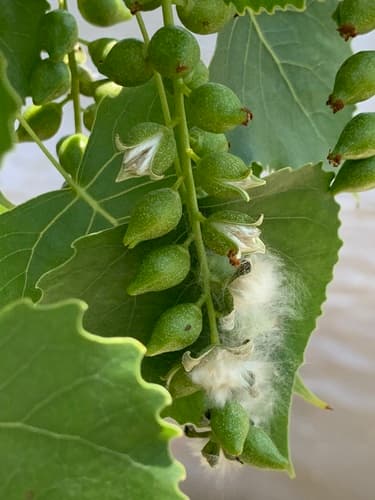
Toxicity unknown
Eastern Cottonwood (Populus deltoides) is not listed by the ASPCA Animal Poison Control Center (opens in new tab) or the other sources we check, so we have no verdict for it either way. Absence from those lists is not a clearance. If your pet shows symptoms after eating any plant, call the ASPCA at (888) 426-4435.
The USDA PLANTS Database (opens in new tab) does not flag Eastern Cottonwood as toxic to livestock.
Light
full sun
Water
high
Size
144"–432" H × 420"–720" W
Bloom
Mar, Apr
Native to
AL, AR, AZ, CO and 40 more states
Pollinators
bees, beetles, flies, butterflies
Before you buy
Your city may pay you to plant this
Cities and water utilities offer rebates for replacing lawn with native and water-wise plants. We track 459 programs across 44 states, each with a link to the provider and the date we last checked it.
Find rebates in your areaPicture natives in your own yard
Upload a photo of your yard and Patch Vision shows a rendering of it planted with natives for your region, like Eastern Cottonwood.


Browse plants for this ecoregion
Eastern cottonwood is a large, fast-growing native tree that can reach 40-100 feet tall with a broad, spreading canopy. It thrives in full sun with abundant water and produces early spring flowers that support pollinators. This deciduous tree is best suited for large properties where its substantial size can be accommodated.
Growing Eastern Cottonwood
Grow Eastern Cottonwood in full sun and high water. Mature plants reach 144 to 432 inches tall and spread 420 to 720 inches wide. Expect high maintenance to keep it looking intentional in a front yard.
How to care for Eastern Cottonwood, by region
How to care for Eastern Cottonwood where it is actually grown: year-round basics plus what to do each season, region by region, with the sources for each.
Care guidance last updated: September 2026
Southeastern Wisconsin Till Plains (includes Milwaukee, WI)
Year-round
Eastern cottonwood is a big, fast growing, thirsty tree that needs room away from the house, and its brittle wood means it benefits from a periodic look-over.
- Give it full sun and soil that stays on the moist side. It tolerates both wet spots and short dry stretches once it is established.
- This tree grows fast, often several feet a year, and can become one of the largest trees in a yard, in the range of 75 to 100 feet tall or more with a wide canopy. Plant it well away from the house, driveway, septic system, and sewer lines.
- The wood is naturally weak and brittle for its size. Have a certified arborist look over the canopy every few years and after any major storm.
- In the Milwaukee area, eastern cottonwood is a native tree, most common in the southern part of Wisconsin, and it is a caterpillar host plant for the viceroy, red-spotted purple, and mourning cloak butterflies, so it is doing real work for local wildlife.
- Only female trees drop the cottony fluff the tree is named for. If a new tree is ever being chosen, a male, 'cottonless' variety skips that mess, though that choice does not apply to a tree already in the ground.
Fall
Fall, after the leaves drop, is one of the two good windows in Wisconsin for structural pruning on this tree.
- Leaves turn yellow and drop through fall like most shade trees in the area.
- Once the leaves are down, it is a good time to have an arborist remove dead, crossed, or storm damaged branches while the tree heads into dormancy.
- A newly planted tree benefits from one deep watering before the ground freezes for winter.
- No fertilizer is typically needed for an established cottonwood in ordinary yard soil.
Getting fallen leaves raked up in fall keeps the yard looking cared for going into winter.
Winter
Winter in Milwaukee is the best time for any real pruning cuts, and it is worth protecting a young trunk and checking for storm damage.
- Deep winter, while the tree is fully dormant, is the best window in Wisconsin for structural pruning. Disease organisms are least active in cold, dry weather, so cuts heal cleaner.
- This tree's wood is more brittle than most shade trees, so after any ice storm, look the canopy over for hanging or cracked branches and have them removed before they fall on their own.
- On a young tree, wrap the trunk with light colored tree wrap or hardware cloth from the ground up to the first branches. This guards against winter sunscald and against rabbits or deer chewing the bark while the ground is snow covered.
- No watering or fertilizing is needed once the tree is dormant.
Spring
Spring in the Milwaukee area is when to finish any structural pruning and watch for the flowers that come before the leaves fill in.
- If pruning was not finished over winter, get it done before growth kicks in. Once the tree leafs out fully, wait until the tree is dormant again for anything beyond small touch-ups.
- Small greenish flower clusters appear before the leaves come out, typically in early spring in this area. This is normal and needs no action.
- Walk the canopy for any branches that cracked or hung up over winter storms, and have those removed promptly, since this tree's wood breaks more easily than most.
- Give a newly planted or young tree a deep watering if spring turns dry. An established tree usually does not need the extra water.
Summer
Summer is cottonwood fluff season in Milwaukee, plus a time to watch for a few leaf issues in the humid weather.
- Female trees release their cottony seed fluff around late May into early June. It shows up in gutters, pool filters, and along fence lines for a couple of weeks.
- Keep an eye out for leaf spot, rust, powdery mildew, aphids, or scale, especially during Milwaukee's more humid summer stretches. Most of these are cosmetic on an established shade tree and do not need treatment.
- Water a young tree during dry spells. An established tree in moist soil usually gets by on rainfall alone.
- Skip major pruning cuts right now. Warm, humid weather makes it easier for disease to get into fresh wounds, so save real cuts for the dormant season.
Raking up the cotton fluff every few days while it is dropping keeps the yard and sidewalk looking tidy for the neighborhood.
Sources: Lady Bird Johnson Wildflower Center: Populus deltoides, UW-Green Bay Herbarium: Trees of Wisconsin, Eastern Cottonwood, The Morton Arboretum: Eastern Cottonwood, Butterflies and Moths of North America: Viceroy host plants, Wisconsin Horticulture Extension: Pruning Timing and Disease Risk, University of Minnesota: Eastern Cottonwood
In an HOA neighborhood
Eastern Cottonwood takes more care to keep looking intentional in a front yard. Maintenance level: high. Consider it for backyard or mid-zone beds rather than the street edge.
Works well in: backyard only.
- Extremely large size inappropriate for most residential lots
- Messy cottonwood fluff and leaf drop
- Fast growth can appear uncontrolled
Wildlife value
Host plant for viceroy butterfly, tent caterpillar moth.
The early spring blooms provide crucial nectar for bees, beetles, and flies when few other plants are flowering. The large canopy offers excellent nesting sites and shelter for birds.
Common questions
- How much water does Eastern cottonwood need?
- Eastern cottonwood grows best with consistent moisture and does well in floodplains, riverbanks, and low areas that stay damp. It tolerates occasional dry spells once established but grows fastest with reliable water.
- When does Eastern cottonwood bloom?
- Eastern cottonwood produces catkins in March and April before its leaves fully expand.
- What insects visit Eastern cottonwood?
- Bees, beetles, and flies are drawn to Eastern cottonwood, though the tree relies mainly on wind for pollen dispersal rather than insect pollination.
- How much sun does Eastern cottonwood require?
- This tree grows best in full sun and struggles in shaded conditions, since it is adapted to open floodplain and riverside habitats.
- How fast does Eastern cottonwood grow?
- Eastern cottonwood is known for rapid growth, often adding several feet of height per year under good moisture and light conditions, making it one of the faster growing trees in its range.
- Is Eastern Cottonwood toxic to livestock?
- The USDA PLANTS Database does not flag Eastern Cottonwood as toxic to livestock.
- Is Eastern Cottonwood HOA-friendly?
- Eastern Cottonwood takes more care to look intentional in a front yard. Consider it for backyard or mid-zone beds rather than the street edge.
These answers were drafted with an AI model from this plant's data. Verify care details with a local expert.
Native range data from vouchered herbarium specimen records and regional native plant society lists. Pollinator and host plant associations compiled from GBIF, iNaturalist, and published ecological literature.
If something looks wrong
Common plant problems, and what to check first
These come up on almost any plant. Each guide lists the likely causes in the order they are worth ruling out, with one thing to check before you act on any of them, and links to the source it came from.
- It is dying right after planting
- Leaves turning yellow
- Wilting even though I watered it
- Brown crispy leaf tips
- Bugs on the plant
Ready to grow Eastern Cottonwood? Add it to your garden in Pollinator Patch to track it and get season-by-season care guidance.