Evergreen Sumac
Rhus virens
Last reviewed: September 2026
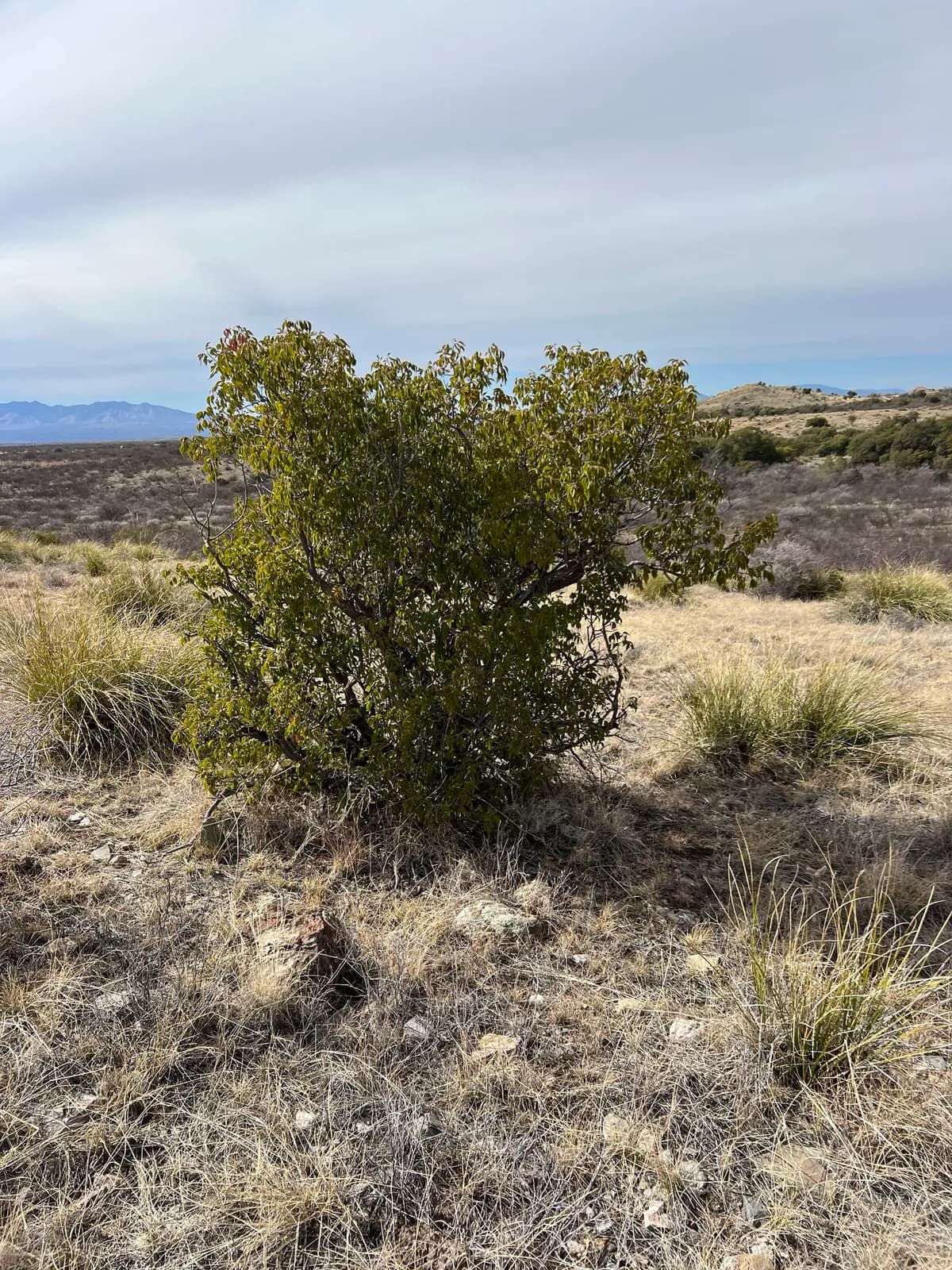
Evergreen Sumac is a drought tolerant shrub that holds its glossy leaves year round and thrives in full sun on rocky, well drained slopes. It blooms from summer into late fall, drawing bees and butterflies.
Toxicity unknown
Evergreen Sumac (Rhus virens) is not listed by the ASPCA Animal Poison Control Center (opens in new tab) or the other sources we check, so we have no verdict for it either way. Absence from those lists is not a clearance. If your pet shows symptoms after eating any plant, call the ASPCA at (888) 426-4435.
Light
full sun
Water
low
Size
96"–120" H × 72"–96" W
Bloom
Jun, Jul, Aug, Sep, Oct, Nov
Native to
AZ, NM, TX
Pollinators
butterflies, bees
Before you buy
Your city may pay you to plant this
Cities and water utilities offer rebates for replacing lawn with native and water-wise plants. We track 452 programs across 44 states, each with a link to the provider and the date we last checked it.
Find rebates in your areaBrowse plants for this ecoregion
Evergreen Sumac is a dense, drought-tolerant shrub that maintains its green foliage year-round. It produces small clusters of flowers from summer through fall and develops attractive red berries. This hardy native adapts well to poor soils and requires minimal water once established.
Growing Evergreen Sumac
Grow Evergreen Sumac in full sun and low water. Mature plants reach 96 to 120 inches tall and spread 72 to 96 inches wide. Expect low maintenance to keep it looking intentional in a front yard.
How to care for Evergreen Sumac, by region
How to care for Evergreen Sumac where it is actually grown: year-round basics plus what to do each season, region by region, with the sources for each.
Care guidance last updated: August 2026
Texas Blackland Prairies (includes Dallas, TX)
Year-round
Evergreen sumac is a tough, low-water shrub that needs very little regular care once it settles into a Dallas-area garden.
- Give it full sun to light shade and let the soil dry out between waterings. It is highly drought tolerant once established, generally after the first year in the ground.
- Skip rich garden soil. This shrub prefers lean, well drained ground, and handles rocky, caliche, or clay loam soils common around Dallas.
- Do not overwater in hot weather. Wet soil during summer heat can cause leggy growth or fungal problems, so water deeply but infrequently rather than on a daily schedule.
- Prune lightly to shape it or to keep it in bounds as a hedge or screen. It tolerates cutting back and regrows quickly, generally with moderate to fast growth.
- Leaves drop and regrow within about a week each year even though the plant is called evergreen, so a brief bare period is normal and not a sign of a problem.
Kept pruned as a rounded hedge or screen, evergreen sumac stays tidy and reads as HOA-friendly for foundation plantings or property line screens.
Fall
Fall brings evergreen sumac's red berry clusters and, after the first frost, a maroon tinge to the foliage before the yearly leaf drop.
- Dallas's average first fall frost lands in early to mid November, and cold weather afterward often turns the foliage maroon before it drops and regrows within about a week.
- Only female plants set the red, fuzzy berry clusters, which mature around mid September and are a food source for birds and small mammals into the cooler months.
- Fall is a reasonable time for light shaping pruning, once the worst of summer heat has passed and before the shrub settles into winter dormancy.
- Fall planting is also a reasonable option in the Dallas area, since soil is still warm from summer but the harshest heat stress is over.
The red fall berry clusters and neat, rounded shape read as an HOA-friendly seasonal accent along a fence line or foundation bed.
Winter
Dallas winters usually stay mild enough, in USDA hardiness zone 8a to 8b, for evergreen sumac to keep most of its leaves until a quick, normal drop and regrowth cycle.
- Dallas falls in roughly USDA Plant Hardiness Zone 8a to 8b, with average annual lows in the 10 to 20 degree Fahrenheit range, which this shrub tolerates well once established.
- Despite the common name, it is not a true evergreen. Expect the leaves to drop for about a week sometime in winter before a fresh flush comes in, which is a normal cycle.
- Hold off on major pruning until late winter as dormancy is ending, closer to the spring flush, rather than right after an early cold snap.
- Avoid fertilizing in winter. Established plants in the Dallas area rarely need supplemental feeding through the cold months.
Spring
Spring is when evergreen sumac pushes new pink tinged growth, and it is a good window to plant or lightly shape before summer heat sets in.
- Dallas's average last spring frost falls in the February to March range depending on the year, so wait until that window has passed before doing any hard pruning or major shaping.
- New leaf growth often shows a pink tinge in spring before turning green, which is a normal seasonal color change for this plant, not a sign of stress.
- Spring is a reasonable time to plant new evergreen sumac from containers, while soil is still cool and rainfall is more regular than in summer.
- Hold off on fertilizer. This shrub is adapted to lean native soils and rarely needs feeding, even during its spring growth flush.
Summer
Dallas summers run long, hot, and dry, and evergreen sumac wants infrequent deep watering rather than daily sprinkling once it is established.
- Water deeply but only when the soil is dry several inches down. Overwatering during Dallas's hot, humid summer stretch can cause leggy branches or fungal problems.
- This shrub is highly drought tolerant once established, so mature plants often need little to no supplemental water during a typical Dallas summer.
- In a plant's first summer after planting, water more consistently to help roots establish, since young plants have not built up the same drought tolerance yet.
- Flowering can continue into summer and draws bees, butterflies, and birds, so avoid spraying pesticides on the shrub while it is in bloom.
Sources: Lady Bird Johnson Wildflower Center, Rhus virens, Native Plant Society of Texas, Rhus virens (community tip), Frost Dates for Dallas, Texas (community tip), USDA Plant Hardiness Zone Map, Dallas Morning News, Revised USDA plant hardiness map puts all of Dallas in Zone 8a (community tip)
Want these tasks as reminders timed to your yard? Pollinator Patch turns this guidance into a season-by-season care plan for the plants you actually grow.
In an HOA neighborhood
Evergreen Sumac takes more care to keep looking intentional in a front yard. Maintenance level: low. Consider it for backyard or mid-zone beds rather than the street edge.
Works well in: backyard only.
- Height exceeds typical HOA-friendly range
Wildlife value
The extended bloom period from June through November provides nectar for bees and butterflies when few other plants are flowering. Birds feed on the red berries that develop after flowering.
Common questions
- What light and soil conditions does Evergreen Sumac prefer?
- Evergreen Sumac does best in full sun but tolerates part sun and part shade, especially in hot, dry climates. It grows well in rocky, well drained soils and does not need rich garden soil.
- How much water does Evergreen Sumac need?
- Once established, this shrub needs little supplemental water and handles periods of drought well. Occasional deeper watering during extended dry spells can help it look fuller.
- When does Evergreen Sumac bloom?
- Flowering typically runs from June through November, with small clusters of blooms appearing over an extended summer and fall season rather than all at once.
- Does Evergreen Sumac stay green all year?
- Yes, it keeps its leathery, dark green leaves through the winter, which is why it is commonly called Evergreen Sumac rather than being grouped with the deciduous sumacs.
- What pollinators visit Evergreen Sumac?
- Bees and butterflies regularly visit the small flower clusters for nectar, making it a useful late season food source in dry shrubland gardens.
- Is Evergreen Sumac HOA-friendly?
- Evergreen Sumac takes more care to look intentional in a front yard. Consider it for backyard or mid-zone beds rather than the street edge.
These answers were drafted with an AI model from this plant's data. Verify care details with a local expert.
Native range data from vouchered herbarium specimen records and regional native plant society lists. Pollinator and host plant associations compiled from GBIF, iNaturalist, and published ecological literature.
If something looks wrong
Common plant problems, and what to check first
These come up on almost any plant. Each guide lists the likely causes in the order they are worth ruling out, with one thing to check before you act on any of them, and links to the source it came from.
- It is dying right after planting
- Leaves turning yellow
- Wilting even though I watered it
- Brown crispy leaf tips
- Bugs on the plant
Ready to grow Evergreen Sumac? Add it to your garden in Pollinator Patch to track it and get season-by-season care guidance.
Planning a bed around it? Start a free plan with this plant
Not sure where to start? Take the 2-minute yard quiz