Hooker's Evening Primrose
Oenothera elata
Last reviewed: September 2026
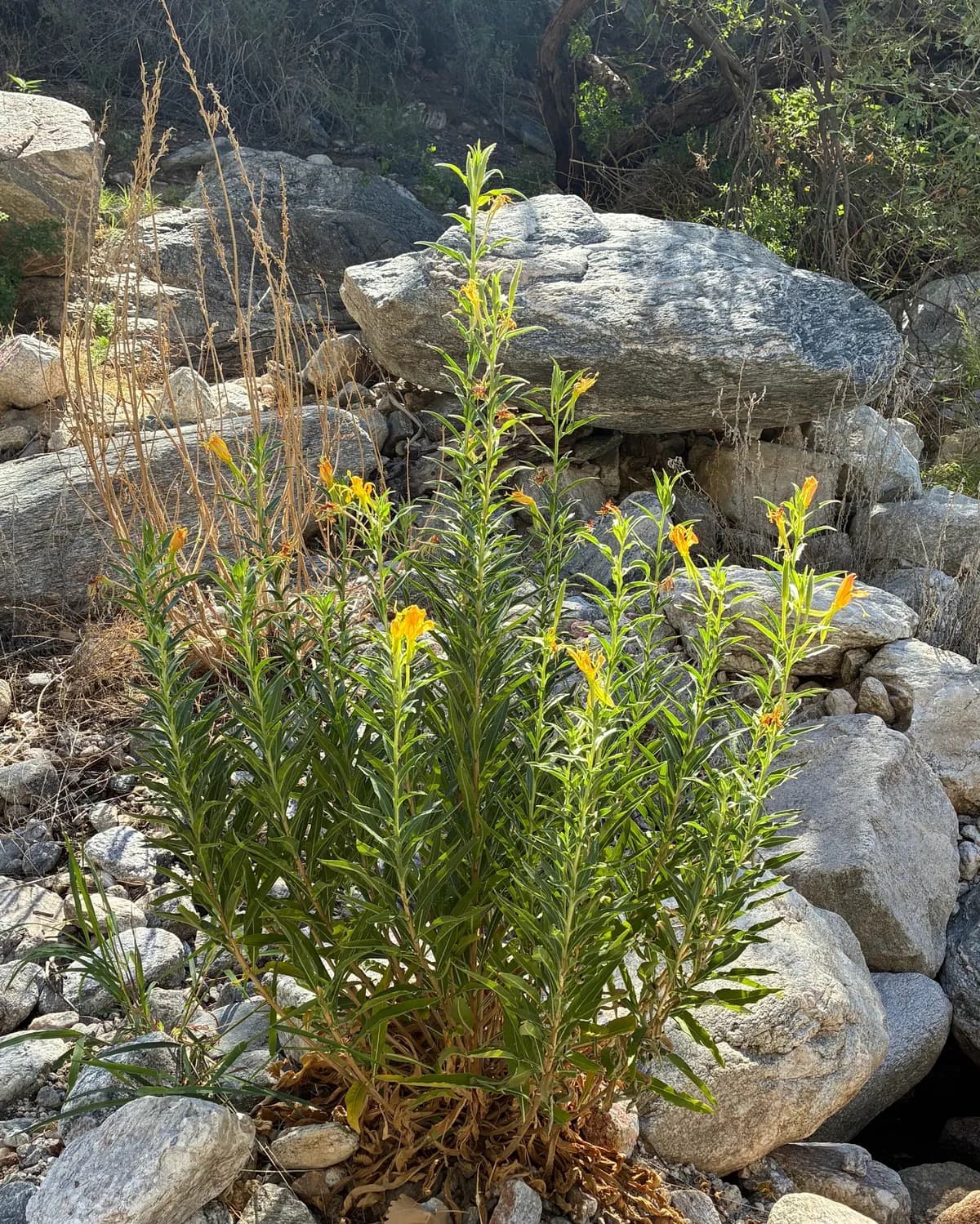
Hooker's Evening Primrose is a tall forb that flowers yellow from June through September in full sun with low water needs, often found on dry slopes and open grasslands in the western United States.
Toxicity unknown
Hooker's Evening Primrose (Oenothera elata) is not listed by the ASPCA Animal Poison Control Center (opens in new tab) or the other sources we check, so we have no verdict for it either way. Absence from those lists is not a clearance. If your pet shows symptoms after eating any plant, call the ASPCA at (888) 426-4435.
The USDA PLANTS Database (opens in new tab) does not flag Hooker's Evening Primrose as toxic to livestock.
Light
full sun
Water
low
Size
12"–60" H × 12"–24" W
Bloom
Jun, Jul, Aug, Sep
Native to
AZ, CA, CO, ID and 9 more states
Pollinators
bees, moths
Before you buy
Your city may pay you to plant this
Cities and water utilities offer rebates for replacing lawn with native and water-wise plants. We track 459 programs across 44 states, each with a link to the provider and the date we last checked it.
Find rebates in your areaPicture natives in your own yard
Upload a photo of your yard and Patch Vision shows a rendering of it planted with natives for your region, like Hooker's Evening Primrose.


Browse plants for this ecoregion
Hooker's evening primrose is a tall native wildflower that produces bright yellow cup-shaped blooms from June through September. This drought-tolerant perennial can reach up to 5 feet tall and thrives in full sun with minimal water once established.
Growing Hooker's Evening Primrose
Grow Hooker's Evening Primrose in full sun and low water. Mature plants reach 12 to 60 inches tall and spread 12 to 24 inches wide. Expect low maintenance to keep it looking intentional in a front yard.
How to care for Hooker's Evening Primrose, by region
How to care for Hooker's Evening Primrose where it is actually grown: year-round basics plus what to do each season, region by region, with the sources for each.
Care guidance last updated: August 2026
Southern California/Northern Baja Coast (includes Los Angeles, CA)
Year-round
Hooker's evening primrose is native to California, including the Los Angeles area, so it already fits this climate and does not need special coddling.
- It is native to much of coastal and inland California, from around San Francisco down through San Diego, so an LA yard is well within its natural range.
- It wants full sun to part shade and tolerates just about any well-draining soil.
- It grows tall arching flower stalks, usually 3 to 5 feet, rising up from a low rosette of leaves at the base.
- The yellow flowers open in the evening and draw in sphinx moths, other night-flying moths, and hummingbirds.
- It naturally grows in moist spots but is surprisingly drought tolerant once established in a garden bed, matching the low-water approach this plant is set up for here.
- It reseeds itself readily, so expect volunteer seedlings to show up nearby and plan to thin or pull the ones you do not want.
Fall
Bloom winds down in fall and the plant sets seed, which local goldfinches come to feed on.
- Leave some seed pods to dry on the plant so goldfinches can feed and so it can reseed itself for next year.
- Cut back flower stalks that have finished blooming and gone brown to clean up the plant before winter rain returns.
- Watering can taper off as LA's cooler, sometimes rainy fall weather sets in.
- Expect new seedlings to sprout at the base once fall rain arrives.
Cutting back the spent, browned flower stalks now keeps a front-yard bed looking tidy and HOA-friendly heading into winter.
Winter
Winter is the time for the hard cutback that keeps this plant from getting rangy and woody.
- Prune it back hard, close to the base rosette, sometime in winter. It recovers quickly and comes back fuller in spring.
- LA's winter rain is usually enough on its own, so extra watering typically is not needed this season.
- Pull unwanted volunteer seedlings now while they are small and easy to spot.
- The plant sits low as a bare rosette through winter, so it will look sparse until spring growth resumes.
A winter cutback keeps the plant low and neat through the dormant months, which reads as HOA-conscious for a front-yard bed.
Spring
Spring is when this plant wakes up in LA, pushing new growth from its base rosette before the flower stalks start to rise.
- Water it a couple times a week if spring stays dry, especially on a young plant, to help it size up before the flower stalks shoot up.
- Watch for tall flower stalks starting to rise out of the low base rosette as days get longer.
- Thin out crowded volunteer seedlings now if last year's plant self-sowed heavily nearby.
- It does fine in average soil, so skip the fertilizer.
Summer
This is peak bloom season here, with the yellow flowers opening each evening through LA's long dry stretch.
- Give it a deep water every week or two during the driest weeks, more often if it looks wilted by midday, since LA summers bring little to no rain.
- Flower stalks reach their full 3 to 5 foot height now and can flop in wind or open space, so a stake or nearby support helps if that happens.
- Sphinx moths and hummingbirds tend to visit in the evening when the flowers open, so this is the best time of day to watch for them.
- Deadheading spent stalks keeps the look tidier, though leaving some seed pods on also feeds goldfinches later in the year.
Sources: Calscape: Hooker's Evening Primrose (Oenothera elata), USDA PLANTS Database: Oenothera elata Kunth
In an HOA neighborhood
Hooker's Evening Primrose takes more care to keep looking intentional in a front yard. Maintenance level: low. Consider it for backyard or mid-zone beds rather than the street edge.
Works well in: backyard only.
- Very tall growth (up to 5 feet) appears too wild for most front yards
- Evening primrose can spread aggressively and look weedy
- May be perceived as unmaintained wildflower rather than intentional landscaping
Wildlife value
The fragrant evening blooms attract night-flying moths and other nocturnal pollinators, while bees visit during daytime hours when flowers remain open.
Common questions
- When does Hooker's Evening Primrose bloom?
- It flowers from June through September, with the heaviest bloom activity in the middle of summer.
- What pollinators visit Hooker's Evening Primrose?
- Bees and moths are the main visitors, with moths often active in the evening when the flowers open.
- How much sun does this plant need?
- It grows best in full sun and does not perform well in shaded conditions.
- How much watering does it require once established?
- It needs relatively little supplemental water and tolerates dry, well drained soils better than consistently moist ones.
- Is Hooker's Evening Primrose toxic to livestock?
- The USDA PLANTS Database does not flag Hooker's Evening Primrose as toxic to livestock.
- Is Hooker's Evening Primrose HOA-friendly?
- Hooker's Evening Primrose takes more care to look intentional in a front yard. Consider it for backyard or mid-zone beds rather than the street edge.
These answers were drafted with an AI model from this plant's data. Verify care details with a local expert.
Native range data from vouchered herbarium specimen records and regional native plant society lists. Pollinator and host plant associations compiled from GBIF, iNaturalist, and published ecological literature.
If something looks wrong
Common plant problems, and what to check first
These come up on almost any plant. Each guide lists the likely causes in the order they are worth ruling out, with one thing to check before you act on any of them, and links to the source it came from.
- It is dying right after planting
- Leaves turning yellow
- Wilting even though I watered it
- Brown crispy leaf tips
- Bugs on the plant
Ready to grow Hooker's Evening Primrose? Add it to your garden in Pollinator Patch to track it and get season-by-season care guidance.