Coralberry
Symphoricarpos orbiculatus
Last reviewed: October 2026
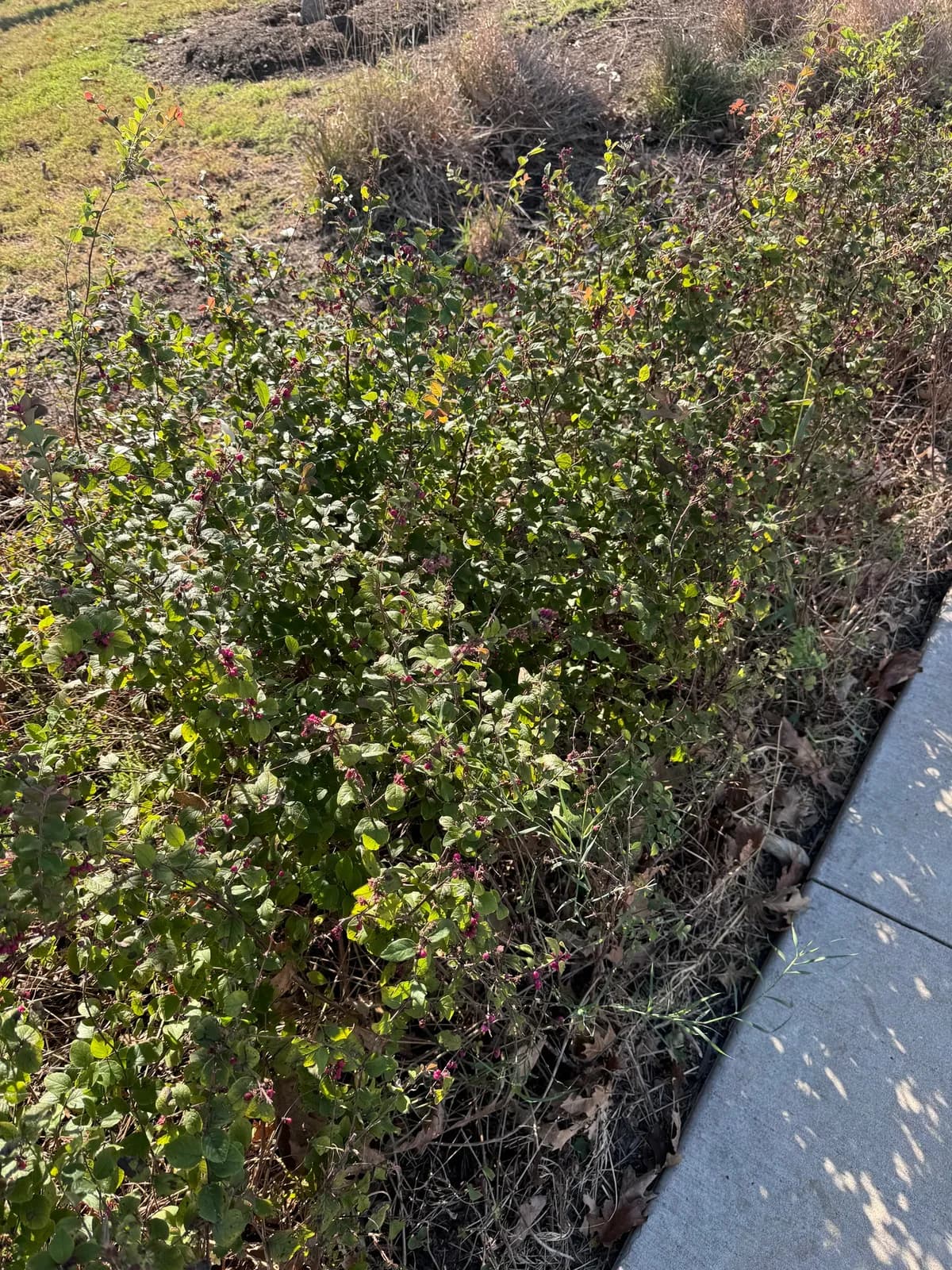
Symphoricarpos orbiculatus, or coralberry, is a deciduous, thicket-forming shrub that flowers in June and July and does well in part sun with medium water along woodland edges, fencerows, and prairie margins.
Toxicity unknown
Coralberry (Symphoricarpos orbiculatus) is not listed by the ASPCA Animal Poison Control Center (opens in new tab) or the other sources we check, so we have no verdict for it either way. Absence from those lists is not a clearance. If your pet shows symptoms after eating any plant, call the ASPCA at (888) 426-4435.
The USDA PLANTS Database (opens in new tab) does not flag Coralberry as toxic to livestock.
Light
part sun
Water
medium
Size
48"–72" H × 12"–24" W
Bloom
Jun, Jul
Native to
AL, AR, FL, GA and 23 more states
Pollinators
bees, butterflies, moths
Before you buy
Your city may pay you to plant this
Cities and water utilities offer rebates for replacing lawn with native and water-wise plants. We track 459 programs across 44 states, each with a link to the provider and the date we last checked it.
Find rebates in your areaPicture natives in your own yard
Upload a photo of your yard and Patch Vision shows a rendering of it planted with natives for your region, like Coralberry.


Browse plants for this ecoregion
Indian-currant is a medium-sized native shrub that produces small pink flowers in summer followed by clusters of bright red berries that persist into winter. This hardy shrub spreads by suckers to form colonies and tolerates a wide range of growing conditions. The colorful berries provide winter interest and food for birds.
Growing Coralberry
Grow Coralberry in part sun and medium water. Mature plants reach 48 to 72 inches tall and spread 12 to 24 inches wide. Expect high maintenance to keep it looking intentional in a front yard.
How to care for Coralberry, by region
How to care for Coralberry where it is actually grown: year-round basics plus what to do each season, region by region, with the sources for each.
Care guidance last updated: October 2026
Cross Timbers (includes Fort Worth, TX)
Year-round
Coralberry (Indian currant) is a tough North Texas native shrub grown for its coral pink berries and wildlife value, but it spreads by rooting wherever its arching stems touch the ground, so it needs a defined bed rather than a spot against the house.
- Give it 3 to 6 feet of width to spread, and plant it inside a bed with a mowed or edged border rather than tight against a foundation, since it colonizes by rooting at the nodes where branches touch soil.
- In the heavy black clay soils, plant it a little high on a slight mound or work compost into the hole for drainage; in the sandier soils west of the metro, it adapts to regular garden soil but will need more frequent watering through its first summer.
- Water deeply once or twice a week for the first growing season to help roots establish, then cut back to occasional deep watering; established plants handle North Texas dry spells well.
- Plant in part sun to light afternoon shade; some shade during the hottest part of the day keeps the foliage from looking stressed in July and August.
- The small greenish white flowers feed bees, and the leaves are a caterpillar host for the snowberry clearwing moth; the coral pink berries that follow feed songbirds, but do not eat them yourself, people have gotten mildly sick from the berries in the past.
Because it spreads by rooting where its stems touch the ground, plant it inside a defined, edged bed so it reads as an intentional native planting rather than an unmanaged thicket creeping toward the sidewalk.
Fall
Fall is prime berry season for coralberry, when the coral pink clusters color up and the shrub is at its most ornamental, and it is also a good time to plant since North Texas woody plants root best in cooler autumn soil.
- Plant or transplant coralberry from September through November; cooler air and still-warm soil let roots establish before next summer's heat.
- Expect the coral pink berry clusters to reach full color in October and November, lasting into winter unless birds strip them first.
- Cut back any stems that rooted outside the bed line one more time in fall, before the mid November first frost, so the colony stays inside its border going into winter.
- Skip fertilizer in fall; feeding this late pushes soft new growth that an early Arctic freeze can damage.
- Rake fallen leaves out of the bed to cut down on fungal leaf spot carrying over into next spring.
Full fall berry color is the shrub's best curb-appeal moment; keeping the bed edge trimmed at the same time makes the display read as planned rather than overgrown.
Winter
Coralberry is deciduous and goes bare in winter, but the berry clusters often persist into the season and the plant needs little care beyond an occasional hard-freeze check.
- Expect the shrub to drop its leaves after the first hard freezes in November and December, leaving bare arching stems; some berries may still cling on into December or January.
- Hold off on pruning until late February; cutting now removes stems that may still be feeding birds with berries.
- During a severe Arctic outbreak, a layer of mulch over the root zone protects the crown, even though the top growth is already dormant and cold-hardy for the region.
- Do not water on a fixed schedule in winter; only water if there has been no rain for several weeks and the ground is not frozen.
- If the bare winter form bothers you near the front of the bed, plant it behind a small evergreen so the bed still reads intentional when it is leafless.
A bare, twiggy deciduous shrub up front in winter can read as neglected; placing it behind a low evergreen or a defined edge keeps the bed looking maintained through its leafless months.
Spring
Spring is the best time to plant coralberry so it has a full growing season to root in before the North Texas summer, and it starts filling in fast on last year's stems.
- Plant new container-grown coralberry in March or April, after the mid March last frost, so roots have several months to establish before July heat.
- Water a new planting two to three times a week through April and May if rain is light, enough to keep the top few inches of soil moist, not soggy.
- Trim back any winter-damaged or leggy stems to a healthy bud in late February or early March, before new growth starts, to keep the shrub compact.
- Watch for the small, funnel-shaped greenish white flowers by late spring; they are easy to miss but draw bees and start the berry crop.
- If it is spreading beyond its bed by rooting new stems where branches touch soil, dig and remove the unwanted rooted sections now while the soil is workable.
Spring pruning to a compact shape and pulling any stems rooting outside the bed line keeps a young planting looking tended rather than wild before it fills in.
Summer
July and August are the hardest months on a young coralberry; established plants handle the heat fine, but new plantings need consistent water to make it through their first Texas summer.
- Water new, first-year plants twice a week during 100F stretches with no rain; established coralberry (in the ground a year or more) can go down to once every week or two.
- Add 2 to 3 inches of mulch out to the drip line, kept a few inches back from the stems, to hold moisture and keep clay soil from cracking in the heat.
- Expect the coral pink berries to begin forming in July and August as flowering wraps up; leave them on the plant, they are the fall and winter show.
- Skip fertilizer in summer heat; it stresses the plant and pushes tender new growth that wilts fast in afternoon sun.
- If leaves look scorched or the shrub wilts by midafternoon even with regular water, it likely needs more shade; note that for next season rather than moving it mid-summer.
A neat mulch ring around the bed reads as an intentional, tended planting and helps hide any summer leaf drop at the base.
Sources: Lady Bird Johnson Wildflower Center: Symphoricarpos orbiculatus, Cornell Dept. of Animal Science, Poisonous Plants Informational Database: Symphoricarpos, Butterflies and Moths of North America: Snowberry Clearwing (Hemaris diffinis), NC State Extension Gardener Plant Toolbox: Symphoricarpos orbiculatus
Ridge and Valley (includes Harrisburg, PA)
Year-round
Coralberry is a tough, low-fuss shrub that handles sun or shade and clay soil. In Harrisburg it mostly needs a spot with room to spread and an occasional trim.
- Plant in part shade to sun in well-drained soil. It also tolerates clay and short wet spells.
- Once settled it handles both dry and moist conditions, so skip routine watering after the first year.
- It spreads by rooting where branches touch soil, so give it room or plan to trim the edges.
- Cut it back hard every 5 to 10 years if it gets leggy.
Trimming the edges once a year helps a spreading clump read as intentional.
Fall
Fall brings the purplish-red berries, and it is a good window to plant and to tidy the spread.
- Leave the berries in place, since they color the shrub into winter.
- Fall is a good window to plant new shrubs so roots settle before freezing weather.
- Water new plants if the fall turns dry.
Winter
Coralberry is hardy through Harrisburg winters and needs almost nothing from you.
- It is hardy in zones 2 to 7, so no winter protection is needed in Harrisburg.
- Skip fertilizer and watering while it is dormant.
- Wait until late winter or early spring to prune so you do not remove next year's flowers.
Spring
Spring is a good window to prune and to plant new coralberry in Harrisburg.
- Prune in spring to encourage more flowers and to keep the width in check.
- Trim back suckers that wander past where you want the clump to end.
- Water new plants during dry spells until they settle in.
Summer
Established coralberry needs little care through Harrisburg's hot, humid summers.
- Established plants tolerate dry soil, so water only new plantings during long dry stretches.
- Watch for powdery mildew, aphids and scale in humid weather.
- Good airflow and thinning crowded stems help reduce mildew.
Sources: Lady Bird Johnson Wildflower Center: Symphoricarpos orbiculatus, Morton Arboretum: Coralberry
Texas Blackland Prairies (includes Dallas, TX)
Year-round
Coralberry (Indian currant) is a tough North Texas native shrub grown for its coral pink berries and wildlife value, but it spreads by rooting wherever its arching stems touch the ground, so it needs a defined bed rather than a spot against the house.
- Give it 3 to 6 feet of width to spread, and plant it inside a bed with a mowed or edged border rather than tight against a foundation, since it colonizes by rooting at the nodes where branches touch soil.
- In the heavy black clay soils, plant it a little high on a slight mound or work compost into the hole for drainage; in the sandier soils west of the metro, it adapts to regular garden soil but will need more frequent watering through its first summer.
- Water deeply once or twice a week for the first growing season to help roots establish, then cut back to occasional deep watering; established plants handle North Texas dry spells well.
- Plant in part sun to light afternoon shade; some shade during the hottest part of the day keeps the foliage from looking stressed in July and August.
- The small greenish white flowers feed bees, and the leaves are a caterpillar host for the snowberry clearwing moth; the coral pink berries that follow feed songbirds, but do not eat them yourself, people have gotten mildly sick from the berries in the past.
Because it spreads by rooting where its stems touch the ground, plant it inside a defined, edged bed so it reads as an intentional native planting rather than an unmanaged thicket creeping toward the sidewalk.
Fall
Fall is prime berry season for coralberry, when the coral pink clusters color up and the shrub is at its most ornamental, and it is also a good time to plant since North Texas woody plants root best in cooler autumn soil.
- Plant or transplant coralberry from September through November; cooler air and still-warm soil let roots establish before next summer's heat.
- Expect the coral pink berry clusters to reach full color in October and November, lasting into winter unless birds strip them first.
- Cut back any stems that rooted outside the bed line one more time in fall, before the mid November first frost, so the colony stays inside its border going into winter.
- Skip fertilizer in fall; feeding this late pushes soft new growth that an early Arctic freeze can damage.
- Rake fallen leaves out of the bed to cut down on fungal leaf spot carrying over into next spring.
Full fall berry color is the shrub's best curb-appeal moment; keeping the bed edge trimmed at the same time makes the display read as planned rather than overgrown.
Winter
Coralberry is deciduous and goes bare in winter, but the berry clusters often persist into the season and the plant needs little care beyond an occasional hard-freeze check.
- Expect the shrub to drop its leaves after the first hard freezes in November and December, leaving bare arching stems; some berries may still cling on into December or January.
- Hold off on pruning until late February; cutting now removes stems that may still be feeding birds with berries.
- During a severe Arctic outbreak, a layer of mulch over the root zone protects the crown, even though the top growth is already dormant and cold-hardy for the region.
- Do not water on a fixed schedule in winter; only water if there has been no rain for several weeks and the ground is not frozen.
- If the bare winter form bothers you near the front of the bed, plant it behind a small evergreen so the bed still reads intentional when it is leafless.
A bare, twiggy deciduous shrub up front in winter can read as neglected; placing it behind a low evergreen or a defined edge keeps the bed looking maintained through its leafless months.
Spring
Spring is the best time to plant coralberry so it has a full growing season to root in before the North Texas summer, and it starts filling in fast on last year's stems.
- Plant new container-grown coralberry in March or April, after the mid March last frost, so roots have several months to establish before July heat.
- Water a new planting two to three times a week through April and May if rain is light, enough to keep the top few inches of soil moist, not soggy.
- Trim back any winter-damaged or leggy stems to a healthy bud in late February or early March, before new growth starts, to keep the shrub compact.
- Watch for the small, funnel-shaped greenish white flowers by late spring; they are easy to miss but draw bees and start the berry crop.
- If it is spreading beyond its bed by rooting new stems where branches touch soil, dig and remove the unwanted rooted sections now while the soil is workable.
Spring pruning to a compact shape and pulling any stems rooting outside the bed line keeps a young planting looking tended rather than wild before it fills in.
Summer
July and August are the hardest months on a young coralberry; established plants handle the heat fine, but new plantings need consistent water to make it through their first Texas summer.
- Water new, first-year plants twice a week during 100F stretches with no rain; established coralberry (in the ground a year or more) can go down to once every week or two.
- Add 2 to 3 inches of mulch out to the drip line, kept a few inches back from the stems, to hold moisture and keep clay soil from cracking in the heat.
- Expect the coral pink berries to begin forming in July and August as flowering wraps up; leave them on the plant, they are the fall and winter show.
- Skip fertilizer in summer heat; it stresses the plant and pushes tender new growth that wilts fast in afternoon sun.
- If leaves look scorched or the shrub wilts by midafternoon even with regular water, it likely needs more shade; note that for next season rather than moving it mid-summer.
A neat mulch ring around the bed reads as an intentional, tended planting and helps hide any summer leaf drop at the base.
Sources: Lady Bird Johnson Wildflower Center: Symphoricarpos orbiculatus, Cornell Dept. of Animal Science, Poisonous Plants Informational Database: Symphoricarpos, Butterflies and Moths of North America: Snowberry Clearwing (Hemaris diffinis), NC State Extension Gardener Plant Toolbox: Symphoricarpos orbiculatus
In an HOA neighborhood
Coralberry takes more care to keep looking intentional in a front yard. Maintenance level: high. Consider it for backyard or mid-zone beds rather than the street edge.
Works well in: backyard only.
- Spreads aggressively by suckers
- Can look untidy due to suckering growth habit
- May appear weedy to traditional landscaping preferences
Wildlife value
Host plant for spring azure butterfly.
The flowers attract bees, butterflies, and moths during summer blooming period. The red berries are an important food source for songbirds and game birds throughout fall and winter.
Common questions
- When does coralberry bloom?
- Symphoricarpos orbiculatus flowers in June and July, producing small clusters of pink to greenish white bell-shaped blooms along its arching stems.
- What pollinators visit coralberry flowers?
- Bees, butterflies, and moths visit the small nectar-rich flowers of Symphoricarpos orbiculatus during its June and July bloom period.
- What light and water does coralberry need?
- Coralberry grows best in part sun with medium moisture, though it tolerates a range from full sun to part shade and adjusts to drier soil once established.
- How is coralberry used in landscaping?
- Because it spreads by suckering into dense thickets, coralberry is often planted for erosion control on slopes, informal hedgerows, and naturalized borders rather than as a specimen shrub.
- Is Coralberry toxic to livestock?
- The USDA PLANTS Database does not flag Coralberry as toxic to livestock.
- Is Coralberry HOA-friendly?
- Coralberry takes more care to look intentional in a front yard. Consider it for backyard or mid-zone beds rather than the street edge.
These answers were drafted with an AI model from this plant's data. Verify care details with a local expert.
Native range data from vouchered herbarium specimen records and regional native plant society lists. Pollinator and host plant associations compiled from GBIF, iNaturalist, and published ecological literature.
If something looks wrong
Common plant problems, and what to check first
These come up on almost any plant. Each guide lists the likely causes in the order they are worth ruling out, with one thing to check before you act on any of them, and links to the source it came from.
- It is dying right after planting
- Leaves turning yellow
- Wilting even though I watered it
- Brown crispy leaf tips
- Bugs on the plant
Ready to grow Coralberry? Add it to your garden in Pollinator Patch to track it and get season-by-season care guidance.