Tall Oregon-Grape
Mahonia aquifolium
Last reviewed: October 2026
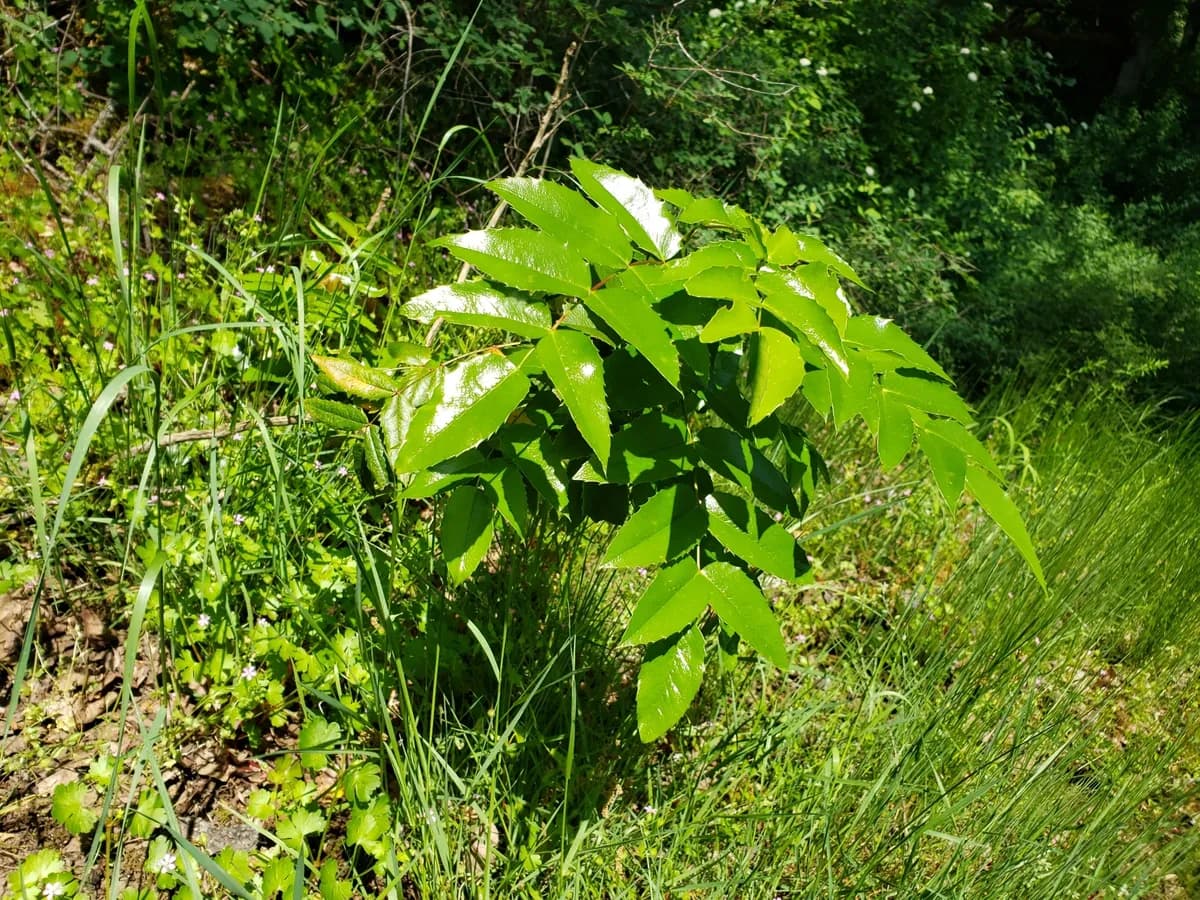
Oregon grape (Mahonia aquifolium) is an evergreen shrub with spiny, holly-like leaves and clusters of bright yellow flowers that open from March through May, followed by blue-purple berries.
Tall Oregon-Grape (Mahonia aquifolium) is not on the ASPCA Animal Poison Control Center toxic plant list for dogs or cats (aspca.org (opens in new tab), last reviewed 2026-08-15). If your pet shows symptoms after eating any plant, call the ASPCA at (888) 426-4435.
The USDA PLANTS Database (opens in new tab) does not flag Tall Oregon-Grape as toxic to livestock.
Light
full sun
Water
medium
Size
36"–180" H × 36"–120" W
Bloom
Mar, Apr, May
Native to
CA, ID, MT, OR and 2 more states
Pollinators
bees, hummingbirds, beetles
Before you buy
Your city may pay you to plant this
Cities and water utilities offer rebates for replacing lawn with native and water-wise plants. We track 459 programs across 44 states, each with a link to the provider and the date we last checked it.
Find rebates in your areaPicture natives in your own yard
Upload a photo of your yard and Patch Vision shows a rendering of it planted with natives for your region, like Tall Oregon-Grape.


Browse plants for this ecoregion
Mountain-grape is a sturdy evergreen shrub with glossy, holly-like leaves that turn bronze-red in winter. It produces clusters of bright yellow flowers in spring followed by blue-purple berries, and can form colonies through underground runners.
Growing Tall Oregon-Grape
Grow Tall Oregon-Grape in full sun and medium water. Mature plants reach 36 to 180 inches tall and spread 36 to 120 inches wide. Expect low maintenance to keep it looking intentional in a front yard.
How to care for Tall Oregon-Grape, by region
How to care for Tall Oregon-Grape where it is actually grown: year-round basics plus what to do each season, region by region, with the sources for each.
Care guidance last updated: September 2026
Piedmont (includes Atlanta, GA)
Year-round
Baseline year-round care for Oregon grape (Mahonia aquifolium) in the Atlanta area: light shade, well-drained acidic soil, and pruning timed after bloom.
- Give it light shade, or morning sun with afternoon shade. Full sun through Atlanta's hot summers tends to bleach or scorch the leaves.
- Plant it in well-drained soil on the acidic side, and add a couple inches of mulch to hold moisture and keep roots cool.
- It is drought tolerant once established, but water it regularly through the first year or two while the roots settle in.
- Prune right after it finishes blooming, not in fall or winter. Next year's flowers and berries grow on this year's new wood, so a late pruning cuts off next spring's display.
- Watch for aphids, scale, and whiteflies on the leaves. It is not on the ASPCA's toxic plant list for dogs, cats, or horses.
Fall
Fall tasks for Oregon grape ahead of Atlanta's mid-November average freeze: planting window, berries, and bed cleanup.
- Atlanta's average first freeze lands around mid November, so this is a good stretch to get a new mahonia in the ground while the soil is still warm and the air has cooled off.
- Berries ripen into blue black clusters, and birds and other wildlife tend to strip them quickly, so do not expect much of a fall display if you were hoping to harvest them yourself.
- Skip fertilizer from here through winter so any new growth has time to harden off before the first freeze.
- Clear fallen leaves and any dropped berries from underneath the shrub before winter sets in.
A quick rake-out under the shrub before winter is a low-effort way to keep the front bed looking tended.
Winter
Winter care for Oregon grape through Atlanta's mild but occasionally freezing winters: wind protection and pruning restraint.
- Atlanta winters are usually mild with only occasional nights at or below freezing, but cold, drying wind causes more leaf scorch on this shrub than the cold itself.
- A spot with some shelter from winter wind, even just a fence or other shrubs to the north or west, cuts down on that leaf burn.
- The evergreen leaves often turn a purplish bronze in winter. That color change is normal and not a sign of stress.
- Hold off on pruning now. Wait until after it flowers in spring so you do not cut off buds that are already set.
The bronze winter foliage gives the front bed some color and structure through the coldest months instead of a bare-looking gap.
Spring
Spring bloom and pollinator value for Oregon grape in Atlanta, plus late-frost and pruning timing.
- Bright yellow flower clusters open from March through May here, an early nectar source the Xerces Society flags as having special value to native bees.
- Atlanta's last frost typically lands in mid to late March, so a late cold snap can brown open flowers or tender new leaves. The shrub itself usually pushes through fine.
- Once flowering finishes, this is the right window to shape or size the plant, since next year's blooms form on this year's new growth.
- New spring growth can draw aphids. A strong spray of water knocks most of them off without needing anything else.
Summer
Managing Oregon grape through Atlanta's hot, humid summer: afternoon shade, deep watering, and heat-scorch watch.
- Atlanta summers bring heat and long stretches of humidity, and this shrub does best with afternoon shade during the hottest part of the day.
- During dry spells, especially in July and August, give it a deep soak every week or two rather than frequent light sprinkles. This matters most in the plant's first two summers.
- Irregular yellow or brown patches on the leaves are usually sun and heat scorch, not disease. Refresh mulch to a full 2 to 3 inches if it has thinned out.
- Scale and whiteflies tend to show up more in hot weather, so check the undersides of leaves if growth starts looking off.
Sources: NC State Extension: Tall Mahonia (Berberis aquifolium), ASPCA Toxic and Non-Toxic Plants: Mahonia, National Weather Service Peachtree City: Frost/Freeze Data, Lady Bird Johnson Wildflower Center: Mahonia aquifolium, Old Farmer's Almanac: Frost Dates for Atlanta, GA (community tip)
Southern California/Northern Baja Coast (includes Los Angeles, CA)
Year-round
Oregon grape is a Pacific Northwest woodland shrub at heart, so in the Los Angeles area it needs a deliberately shaded, watered spot rather than the sunny, dry conditions that define local chaparral gardens.
- Give it part shade to full shade, a north or east facing wall, a courtyard, or a spot under taller trees works well, direct afternoon sun and heat reflected off pavement will scorch the leaves here.
- Water it more like a woodland plant than a chaparral native, keep the soil evenly moist through regular hand watering or drip irrigation, this is not a plant it and forget it shrub in this climate.
- This species is documented growing wild in the higher, cooler mountains of Southern California, including the Transverse and Peninsular Ranges, not in the low, dry Los Angeles basin, so it needs the shade and moisture those elevations get on their own.
- Amend heavy or alkaline Los Angeles clay with compost before planting, this shrub prefers moist, well drained, slightly acidic soil.
- The ASPCA lists this plant as non-toxic to dogs, cats, and horses, so an accidental nibble is not a poisoning concern, though the spiny, holly-like leaves can still scratch a curious pet's mouth.
Fall
Fall is when the Los Angeles area's rain typically returns and the watering pressure eases, and it is also one of the better windows for planting or dividing Oregon grape here.
- The wet season in the Los Angeles area usually starts sometime in November, once it does you can start easing back on the hose and let rainfall take over some of the watering.
- Cooler fall nights turn the leaf edges bronze, purple, or reddish, this is a normal seasonal color change for this species, not frost damage or disease.
- Dark blue black berries ripen around this time and birds strip them quickly, pick a few early if you want any for jelly.
- Fall's mild, still warm soil paired with incoming rain makes it a good time to plant a new Mahonia aquifolium or move an established one, roots get a full cool season to settle in before next summer's dry heat.
- If the shrub has gotten leggy or bare at the base over the growing season, cut one or two of the oldest stems down near the ground now, this renewal pruning keeps it fuller over time.
A renewal prune of the oldest bare stems keeps the shrub's silhouette dense and green facing the street instead of leggy and woody looking at the base.
Winter
Los Angeles rarely sees a hard freeze, so winter care here is mostly about managing the rainy season and enjoying an evergreen shrub that is close to its best-looking time of year.
- Los Angeles rarely sees a hard frost, so freeze protection is not needed here in most years, though an inland cold snap can still nip new growth.
- This is typically the rainy season for the Los Angeles area, in a wet stretch check that the planting spot drains well, mahonia sitting in soggy soil for weeks is more likely to develop root or crown rot than to suffer from cold.
- Winter is when the leaves show their deepest bronze, purple, or wine red color, and it is also close to when the yellow flower buds start forming for the late winter into spring bloom.
- Hold off on heavy pruning right now, since flowers form on the previous year's growth, a hard cutback in winter removes the coming bloom, save structural pruning for right after flowering ends.
- If a Santa Ana wind event brings dry, gusty conditions this time of year, watering deeply beforehand helps the shallower roots ride it out.
As an evergreen, this shrub carries winter curb appeal on its own, so the main task is keeping it full and green rather than pruning it, since winter cutbacks remove the coming spring bloom.
Spring
Spring, roughly March into May in the Los Angeles area, is when Oregon grape flowers and pushes new growth, and it is also when the shift away from winter rain means you need to start paying closer attention to watering.
- Expect small clusters of yellow flowers from around March into May, they carry a light fragrance and are one of the earliest nectar sources of the year for native bees.
- New leaves emerge with a bronze or reddish tint before turning green, that is a normal part of spring growth, not a sign of stress.
- Check soil moisture weekly as days warm, this is when many Los Angeles gardens shift off winter rain and onto irrigation, do not let this shrub dry out the way you might a true chaparral native.
- Watch new growth for aphids, a strong spray of water from the hose knocks most colonies off before they spread.
- Once flowering finishes, this is a fine time to lightly shape the shrub, cutting spent flowering stems back to a strong bud below encourages fuller growth for next year.
Summer
Summer in the Los Angeles basin means months without meaningful rain and hot, dry air, which is the toughest stretch of the year for a shade and moisture loving shrub like this one.
- Los Angeles gets close to zero rainfall from roughly June through September, so this plant depends entirely on your irrigation now, water deeply enough to reach the root zone once or twice a week rather than a quick daily sprinkle.
- Keep two to three inches of mulch over the root zone to hold moisture and keep roots cooler through the hottest stretch.
- If leaves look scorched, bleached, or crispy at the edges, the spot is getting more sun or reflected heat than this shrub can handle, that is a signal to add shade or move it rather than just adding more water.
- In some coastal Southern California gardens, mahonia can also get defoliated by looper caterpillars over summer, the plant typically leafs back out but can look bare for months while it recovers.
- Skip fertilizer during the hottest weeks, pushing new growth into summer heat stresses the plant more than it helps.
Sources: Lady Bird Johnson Wildflower Center, Mahonia aquifolium plant profile, Calscape, Berberis aquifolium (Oregon Grape), Missouri Botanical Garden Plant Finder, Berberis aquifolium, ASPCA Toxic and Non-Toxic Plants, Mountain Grape, Portland Nursery, Berberis: Oregon Grape care notes, Oregon State University Landscape Plants, Mahonia aquifolium
In an HOA neighborhood
Tall Oregon-Grape is an HOA-friendly choice. Maintenance level: low. Tidiness: 4 out of 5.
Works well in: front yard, foundation, street edge, mid zone.
- Can spread aggressively if not managed
- Spiny leaves may be concern near walkways
Wildlife value
Host plant for Spring Azure, Western Pine Elfin.
The spring flowers attract bees, beetles, and occasionally hummingbirds. The berries provide food for birds and small mammals throughout summer and fall.
Common questions
- When does Mahonia aquifolium bloom?
- Mahonia aquifolium typically flowers from March through May, producing dense clusters of small yellow blossoms before setting berries later in summer.
- What pollinators are attracted to Mahonia aquifolium?
- The yellow flowers draw in bees, hummingbirds, and beetles, which visit for nectar and pollen during the spring bloom period.
- Is Mahonia aquifolium evergreen or deciduous?
- It is evergreen, keeping its glossy, spiny-toothed leaflets year round, though the foliage often takes on reddish or purplish tones in cold weather.
- How much sun and water does Mahonia aquifolium need?
- It grows best in full sun but tolerates part sun, part shade, or even shade, and it prefers medium moisture while handling occasional dry spells once established.
- Is Tall Oregon-Grape toxic to dogs?
- Tall Oregon-Grape is not on the ASPCA Animal Poison Control Center toxic plant list for dogs (aspca.org).
- Is Tall Oregon-Grape toxic to cats?
- Tall Oregon-Grape is not on the ASPCA Animal Poison Control Center toxic plant list for cats (aspca.org).
- Is Tall Oregon-Grape toxic to livestock?
- The USDA PLANTS Database does not flag Tall Oregon-Grape as toxic to livestock.
- Is Tall Oregon-Grape HOA-friendly?
- Tall Oregon-Grape is generally an HOA-friendly choice in the right placement, with low maintenance.
These answers were drafted with an AI model from this plant's data. Verify care details with a local expert.
Native range data from vouchered herbarium specimen records and regional native plant society lists. Pollinator and host plant associations compiled from GBIF, iNaturalist, and published ecological literature.
If something looks wrong
Common plant problems, and what to check first
These come up on almost any plant. Each guide lists the likely causes in the order they are worth ruling out, with one thing to check before you act on any of them, and links to the source it came from.
- It is dying right after planting
- Leaves turning yellow
- Wilting even though I watered it
- Brown crispy leaf tips
- Bugs on the plant
Ready to grow Tall Oregon-Grape? Add it to your garden in Pollinator Patch to track it and get season-by-season care guidance.