Narrowleaf Blue-eyed Grass
Sisyrinchium angustifolium
Last reviewed: September 2026
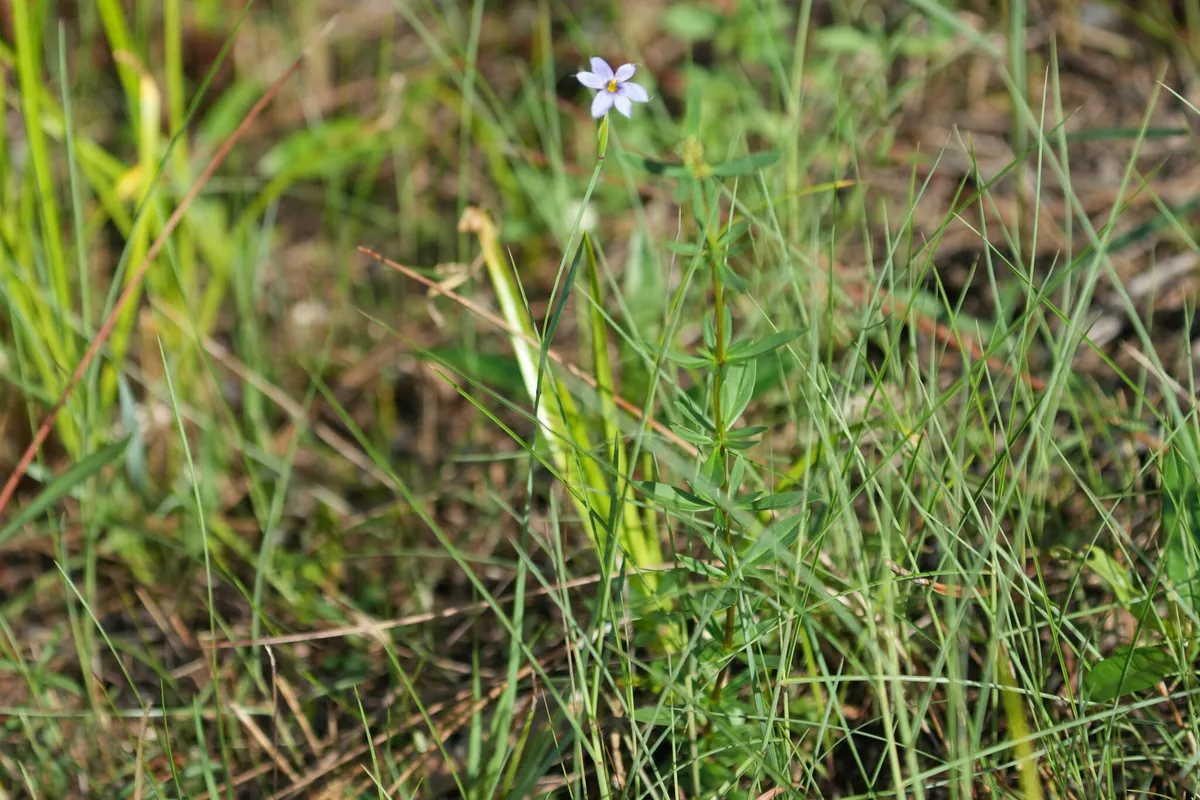
Narrowleaf blue-eyed grass produces small blue-violet flowers with yellow centers from March through August. It grows in moist meadows, open woodlands, and along streambanks, favoring full sun and medium moisture.
Toxicity unknown
Narrowleaf Blue-eyed Grass (Sisyrinchium angustifolium) is not listed by the ASPCA Animal Poison Control Center (opens in new tab) or the other sources we check, so we have no verdict for it either way. Absence from those lists is not a clearance. If your pet shows symptoms after eating any plant, call the ASPCA at (888) 426-4435.
The USDA PLANTS Database (opens in new tab) does not flag Narrowleaf Blue-eyed Grass as toxic to livestock.
Light
full sun
Water
medium
Size
12"–18" H × 6"–12" W
Bloom
Mar, Apr, May, Jun, Jul, Aug
Native to
AL, AR, CO, CT and 32 more states
Pollinators
butterflies, bees
Before you buy
Your city may pay you to plant this
Cities and water utilities offer rebates for replacing lawn with native and water-wise plants. We track 452 programs across 44 states, each with a link to the provider and the date we last checked it.
Find rebates in your areaBrowse plants for this ecoregion
Narrowleaf Blue-eyed Grass produces delicate blue flowers with yellow centers from spring through summer. This compact perennial forms neat clumps of narrow, grass-like foliage that stays relatively tidy in the landscape. Despite its name, it's actually in the iris family rather than being a true grass.
Growing Narrowleaf Blue-eyed Grass
Grow Narrowleaf Blue-eyed Grass in full sun and medium water. Mature plants reach 12 to 18 inches tall and spread 6 to 12 inches wide. Expect low maintenance to keep it looking intentional in a front yard.
How to care for Narrowleaf Blue-eyed Grass, by region
How to care for Narrowleaf Blue-eyed Grass where it is actually grown: year-round basics plus what to do each season, region by region, with the sources for each.
Care guidance last updated: August 2026
Atlantic Coastal Pine Barrens (includes Riverhead, NY)
Year-round
On the North Fork of Long Island near Riverhead, narrowleaf blue-eyed grass grows within its confirmed native New York range, forming a low grassy clump with small blue violet, yellow centered flowers in late spring, and it prefers the area's sandy loam soils to stay evenly moist.
- Give it full sun to part shade and soil that holds moisture, the sandy loam common around Riverhead and the North Fork works well if it does not dry out for long stretches.
- The clump stays under two feet tall and does not spread aggressively, so it holds its shape at a bed edge or walkway.
- Divide the clump every two to three years in spring or fall to keep it vigorous.
- It is not on the ASPCA toxic plant list, though it is still good practice to discourage pets from chewing any garden plant.
Fall
Fall on eastern Long Island stays mild into October before the first frost, typically arriving late October to early November, giving a second good window to divide and clean up.
- Divide crowded clumps in early to mid fall while soil is still workable and before the first hard frost.
- Foliage is semi evergreen, cut back any dead or ragged leaves for a tidier look heading into winter.
- Water new fall divisions well until the ground cools and growth slows.
- Add a light mulch layer after the first frost to protect the crown through a Long Island winter.
A fall cutback of tired foliage keeps the bed looking maintained through the off season rather than leaving brown, ragged clumps visible from the street.
Winter
Winters near Riverhead are milder than inland New York thanks to the surrounding water, but the plant still goes dormant and needs little attention until spring.
- The clump dies back or goes semi dormant in a Long Island winter, this is normal and not a sign the plant has died.
- No pruning or fertilizing is needed over winter, let dormant foliage sit until early spring cleanup.
- A layer of mulch helps protect the shallow rhizomes through freeze and thaw cycles, which are common in this maritime climate.
- Check in late winter for any frost heaving and gently firm soil back around exposed roots.
Trimmed, mulched clumps read as an intentional winter planting rather than neglect, especially in a front bed near the street.
Spring
Spring is bloom season on eastern Long Island, with the last frost typically clearing by late April, making it the main planting and division window near Riverhead.
- Flowers open from May into June in this area, with each bloom lasting about a day before a new one opens.
- Wait until after the average last frost, usually mid to late April near Riverhead, before setting out new divisions or starts.
- Keep new plantings consistently watered, this species does not tolerate drying out.
- Divide any overcrowded clumps now if that was not done the previous fall.
Summer
Summer on the North Fork is warm but moderated by the surrounding water, and by July bloom has finished, so the focus shifts to tidying and steady watering.
- Shear off spent flower stalks once blooming ends to keep the clump neat and reduce self seeding into nearby beds.
- Water during dry summer stretches, this plant is intolerant of drought even in a maritime climate that gets regular rain.
- Foliage stays grassy and low through summer, making it a tidy choice next to walkways or foundation beds.
- Avoid heavy feeding in summer, the species does fine without much fertilizer.
A midsummer shear after bloom keeps this from turning into a seed scattered patch along a front path, staying a clean grassy edge instead.
Sources: New York Flora Atlas species page, Sisyrinchium angustifolium (Status: Native, State Rank S5, documented across New York counties including Suffolk County, where Riverhead is located), ASPCA Toxic and Non-Toxic Plant List, Dogs (checked for Sisyrinchium angustifolium and blue-eyed grass, species does not appear on the list), NC State Extension Gardener Plant Toolbox, Sisyrinchium angustifolium (bloom time, division schedule, water needs)
Blue Ridge (includes Asheville, NC)
Year-round
Despite the name this is a small iris relative, not a grass, and in the Blue Ridge the whole job is steady moisture and enough light.
- It belongs to the iris family, so treat it as a small clumping perennial and never mow it or trim it like turf.
- It is native to North Carolina and grows in all three parts of the state, mountains included, so it belongs in a yard around Asheville or down in Wilkes County.
- Give it full sun to a little afternoon shade. In deeper shade it stretches, flops, and stops flowering.
- Our acidic mountain loam suits it. It does poorly in limy ground, so skip lime and skip heavy mulch piled over the crown, which rots it.
- The one thing that kills it here is drying out, so put it where the soil stays evenly damp but water still drains away after a storm.
- The flowers feed bumblebees, sweat bees, and other small native bees and flies, and birds eat the seed later on.
Fall
Fall is the second good window for planting and dividing, and there is almost no cleanup to do before frost.
- Plant or divide in September or the first week of October. That gives roots a solid six weeks before our late October frost.
- Water anything newly planted about once a week if October runs dry, then stop once the ground starts freezing at night.
- Leave the seed heads on any clump you did not shear in June. Birds work them over through the fall.
- Skip a hard cutback now. The leaves hold through much of winter, and cutting to the ground leaves a bare patch until spring.
- Rake heavy leaf drop off the crowns. Wet oak and maple leaves mat down and smother a low clump like this one.
- This is the cheapest time to widen the planting, since every division you make is a free plant for next year.
Keeping the crowns raked clear and the bed edge crisp in fall is what makes a native planting read as tended instead of neglected, which is where most front yard complaints start.
Winter
Winter is hands off here, with one small tidy-up in late February before new growth starts.
- This plant is hardy far colder than we get, so nights in the teens and a few mountain snows are not a concern in Asheville or in Wilkes County.
- The leaves stay partly green through winter and look ragged by February. That is normal, not a plant that is dying.
- Trim the tattered outer leaves in late February, before new growth pushes up, and leave the green center of the clump alone.
- Do not mulch over the crown for winter protection. A wet blanket of mulch is far more likely to rot it than the cold is to kill it.
- After a hard freeze and thaw, walk the bed and press any clump that heaved up back down into the soil with your boot.
- Note any spot that stayed soggy all winter and move the plant in March. Steady moisture is good, standing water is not.
A low fan of leaves left in place, with the ragged edges trimmed in late February, reads as a deliberate winter planting during the months when bare ground gets noticed.
Spring
Spring is for dividing and planting, and both go best in March before the flower stems come up.
- Divide crowded clumps in March. Lift the whole clump, pull it apart into fist-sized pieces, and replant them right away at the same depth.
- Do this every two to three years. Clumps left longer thin out in the middle and flower less.
- Plant new ones from late March through April. Our last frost is around mid April, so keep an old bucket handy to cover fresh divisions on a cold night.
- At mountain elevations bloom usually runs late April into June, later than the same plant flowers down in the Piedmont.
- Do not enrich the soil. Rich ground pushes leafy growth instead of flowers, so plain mountain loam is what you want.
- Spring rain here normally handles the watering, but check new divisions by hand if a dry stretch shows up in April.
Summer
When the last flowers fade in June, shear the clump back, then mostly leave it alone through the humid mountain summer.
- Shear the whole clump back by about half once flowering finishes, usually mid to late June at this elevation.
- That one cut does two jobs. It cuts down on volunteer seedlings and it swaps tired flower stems for fresh green leaves.
- If you want more plants instead, leave a few stems and collect the round seed capsules once they turn dark and wrinkled.
- Blue Ridge summer rain usually covers it. Water only in a dry stretch of two weeks or more, and soak the ground rather than the foliage.
- Keep mulch pulled back an inch or two from the center of the clump. A buried crown rots fast in our humidity.
- There is nothing here worth spraying for, so a chewed leaf in July can be left alone.
A clump sheared even and low right after bloom reads as intentional planting rather than something that got ahead of you, which is what keeps a front bed from looking overgrown.
Sources: Lady Bird Johnson Wildflower Center: Sisyrinchium angustifolium, Flora of the Southeastern United States (North Carolina Botanical Garden, UNC): Sisyrinchium angustifolium, Florida Wildflower Foundation: Blue-eyed grass, NC Extension Gardener Plant Toolbox: Sisyrinchium angustifolium, Missouri Botanical Garden Plant Finder: Sisyrinchium angustifolium
Cross Timbers (includes Fort Worth, TX)
Year-round
Narrowleaf blue-eyed grass is a small native perennial in the iris family, not an actual grass, that forms neat grass-like tufts topped with tiny blue-violet flowers. It is native to the Cross Timbers area and needs very little upkeep once it is settled in.
- Plant in full sun to part shade in a spot with good drainage; it is native to the sandier loam soils west of the metro, so ordinary garden soil here suits it without amending.
- Keep the soil lightly moist rather than letting it dry out for long stretches; it thins out and can go dormant in prolonged drought.
- Space clumps 8 to 12 inches apart. Each clump only reaches about 12 to 18 inches tall and a few inches wide, so it works well as a small-scale edging or filler plant.
- Keep mulch off the crown itself; a thick layer packed against the base can trap moisture and cause rot.
- Divide crowded clumps every 2 to 3 years in early spring to keep them blooming well.
Fall
Fall brings cooler, wetter weather that lets narrowleaf blue-eyed grass recover from summer stress, and it is a good time to divide or move clumps.
- Cut back any remaining dried flower stalks and tidy the foliage once temperatures cool in September or October.
- Divide overgrown clumps in fall as an alternative to spring division if a clump has gotten crowded or stopped flowering well.
- Ease off supplemental watering once fall rains pick up; the clump only needs extra water during dry spells now.
- Watch for self-sown seedlings around the base of established clumps; thin or transplant them in fall if you want to control spread.
A cleaned-up, cut-back clump reads as deliberately maintained going into winter rather than left to go to seed.
Winter
Winter is a rest period for narrowleaf blue-eyed grass. The clump holds its narrow foliage through mild winters here and needs little attention beyond protection during hard freezes.
- Leave the foliage in place through winter; it stays green through typical North Texas mild spells and short freezes.
- Cover new or first-year plantings with frost cloth ahead of any severe Arctic outbreak, since young clumps are more vulnerable to hard freeze damage than established ones.
- Hold off on watering unless the ground has gone more than a couple of weeks without rain, since the plant is dormant or semi-dormant and water needs drop sharply.
- Do not cut the clump back hard in winter; wait until after the spring bloom flush to shear it.
Spring
Spring is bloom season for narrowleaf blue-eyed grass and the best time to plant it in North Texas, while the mild temperatures let new roots establish before summer heat arrives.
- Plant new starts from March through May, as soon as the last frost has passed in mid March, so roots have time to establish before summer.
- Water two to three times a week for the first several weeks after planting to help new clumps take hold in the sandier local soil.
- Expect small blue-violet, yellow-centered flowers to open from March into summer; each bloom only lasts a day, but the clump keeps producing new ones.
- After the main flush of blooms fades, shear the clump back by about half to tidy the foliage and limit self-seeding if you do not want volunteer seedlings spreading.
The tidy, low tuft of grass-like foliage and small flowers reads as an intentional edging plant, not an overgrown patch, especially once sheared back after the first bloom flush.
Summer
Summer heat is the hard season for this plant here. Once triple-digit afternoons and dry stretches set in, it needs steady water or it will thin out and stop blooming.
- Water once or twice a week during July and August whenever there has been no rain, since the soil should stay lightly moist rather than bone dry.
- Expect blooming to slow or stop in the hottest weeks; the clump may look thin or partly dormant until temperatures ease, which is normal and not a sign of disease.
- Do not fertilize during the hottest stretch; pushing new growth in 100F afternoons stresses the plant more than it helps.
- Check new plantings from this spring daily during the first heat wave; first-year clumps that dry out completely in July or August often do not come back.
Sources: Lady Bird Johnson Wildflower Center, Sisyrinchium angustifolium, Missouri Botanical Garden Plant Finder, Sisyrinchium angustifolium
Eastern Corn Belt Plains (includes Columbus, OH)
Year-round
Around Columbus this plant goes through a real winter dormancy, which is different from how it behaves further south.
- Plant in full sun to light shade. More sun gives more flowers.
- Use well drained soil with regular moisture through spring and summer.
- Expect the plant to die back to the ground each winter and regrow from the crown in spring.
- Divide every two to three years to keep the clump vigorous since it is naturally short lived.
Fall
Fall comes early to the Columbus area, so this is the time to get the plant ready for a real winter.
- Cut back foliage after it browns from the season's first hard frost, which typically lands in October.
- This is a good window to divide the clump before the ground freezes.
Cutting back browned foliage in fall keeps the bed looking clean before winter.
Winter
Winters here bring hard freezes and real dormancy, so the plant needs a bit more winter protection than it would further south.
- Add a light layer of mulch after the ground freezes to protect the crown from repeated freezing and thawing.
- Pull the mulch back in early spring once new growth starts so the crown doesn't stay too wet.
- The plant will look fully dormant with no green foliage showing. That's normal for this zone.
Spring
Spring starts later here than in Georgia or Texas, with the ground usually not workable until April.
- New growth appears in April once the soil warms, with flowers following through late spring.
- Divide the clump once new growth is a few inches tall, usually April or May.
- Remove old winter mulch once new growth appears so the crown doesn't stay too wet.
Summer
Ohio summers are milder than the Deep South or Texas, but this plant still wants consistent moisture.
- Water during dry spells. It will decline if the soil dries out completely.
- Shear spent flower stalks after bloom to keep the clump tidy and limit self seeding.
Sources: NC State Extension Gardener Plant Toolbox: Sisyrinchium angustifolium, Wisconsin Horticulture Extension: Blue-eyed Grass (Sisyrinchium), Lady Bird Johnson Wildflower Center: Sisyrinchium angustifolium
Edwards Plateau (includes San Antonio, TX)
Year-round
Narrowleaf blue-eyed grass is a small clumping perennial in the iris family that does well around San Antonio if you give it good drainage. The thin rocky soil over limestone that's typical of the Hill Country actually helps here since this plant hates sitting in soggy ground.
- Plant in full sun to light afternoon shade. More sun means more flowers.
- Use well drained soil. Work in gravel or coarse sand if your bed holds water after rain.
- Water regularly through the growing season. It fades fast if the soil dries out completely.
- Skip heavy mulch and rich compost. Both can cause the crown to rot or the clump to flop over.
- This is a short lived perennial. Plan to divide the clump every two to three years to keep it full.
Fall
Fall is a low stress window here once the worst of the summer heat breaks.
- This is a good time to divide the clump or move it if it struggled in summer.
- Cut back any tired or browning foliage to clean up the plant before winter.
- Keep watering through dry fall stretches since Central Texas fall rain is inconsistent.
A fall cutback keeps the clump tidy and low, which reads as well kept from the curb.
Winter
Winters around San Antonio are mild, so this plant often stays semi evergreen instead of fully dying back.
- Watch for the occasional hard freeze snap that Central Texas gets even in a mild winter, and expect some leaf burn after one.
- Hold off on heavy watering in winter. The plant is resting and soggy cold soil can rot the crown.
- Leave the base of the clump in place through winter rather than cutting it hard back.
Trimming off any freeze damaged leaves keeps the bed looking tidy through winter.
Spring
Spring is the main growing and blooming season here, and San Antonio tends to warm up earlier than places further north.
- Expect the small blue purple flowers to open from late winter into early summer.
- Divide the clump in early spring once new growth starts, before the summer heat sets in.
- Water well during dry spring spells since Hill Country rain can be unpredictable.
Summer
San Antonio summers are long, hot, and often dry, which is the hardest stretch of the year for this plant.
- Keep the soil evenly moist. This plant declines quickly once it dries out in high heat.
- Give it a little afternoon shade if your spot gets full baking sun all day.
- Shear off spent flower stalks after the main bloom to tidy the clump and cut down on self seeding.
Sources: NC State Extension Gardener Plant Toolbox: Sisyrinchium angustifolium, Lady Bird Johnson Wildflower Center: Sisyrinchium angustifolium, Wisconsin Horticulture Extension: Blue-eyed Grass (Sisyrinchium), Native Plant Society of Texas: Sisyrinchium angustifolium
High Plains (includes Lubbock, TX)
Year-round
Narrowleaf blue-eyed grass is a small iris-family plant, about 12 to 18 inches, that looks like a tidy little grass clump with tiny blue, yellow-centered flowers. It is native to Texas and the High Plains, so it belongs here, but it comes from moist meadows and prairies, which means it likes steadier water than most tough Lubbock natives. In our hot, dry, windy, high-sun climate the whole game is not letting it go bone-dry, especially in summer. Give it full sun with a little afternoon shade in the worst heat, and keep the soil evenly moist, never soggy in winter. Plant it in fall so the roots settle before summer, and expect it to look a bit tired in midsummer, which is normal.
- Native to Texas and the High Plains (USDA symbol SIAN3)
- Full sun, but a little afternoon shade helps in peak heat
- Medium water: keep evenly moist, do not let it dry out
- Blooms March through August with small blue flowers
- Best planted in fall so roots settle before summer
- Non-toxic to dogs, cats, and horses
Fall
Fall is the best time to plant narrowleaf blue-eyed grass in Lubbock, ideally in September or October, so the roots settle in before the next summer heat. Our first frost usually comes in early November, and this plant handles cold well, so cold is not the worry here. As the weather cools and the plant perks up from its summer slump, keep watering steadily but ease off as growth slows. This is also a good time to lift and split older, crowded clumps to keep them healthy. Make sure the spot drains well, because soggy soil heading into winter is the number-one killer here.
- Best planting window is September to October
- Plant into well-draining soil, avoid soggy spots
- Divide crowded older clumps now to refresh them
- Keep watering as the plant recovers from summer
- Ease off water as growth slows toward frost
When you divide or replant, edge the clump cleanly and space plants evenly along the front border so the bed reads as tidy and intentional.
Winter
Lubbock winters bring hard freezes, wind, and the odd snow or ice, and narrowleaf blue-eyed grass takes that cold in stride, so you do not need to protect it from freezing. The real danger in winter is soggy, poorly drained soil sitting around the roots, which can rot the plant, so make sure water drains away and cut back on watering. The clump may die back or look sparse, which is fine, since it will return in spring. Do not cut it hard now, just remove any fully dead, mushy foliage. Leave the tidy base in place and let it rest until the weather warms.
- Cold-hardy: no freeze protection needed
- Avoid soggy soil, the main winter killer here
- Cut back watering while the plant rests
- Remove only fully dead or mushy foliage
- Expect dieback, it returns in spring
A light late-winter tidy of dead, matted foliage keeps the spot looking cared-for and intentional before spring growth starts, which helps avoid a violation letter.
Spring
Spring is when this plant is at its best, pushing up fresh blades and starting its bloom around March. In Lubbock the last frost lands in early-to-mid April, so early spring is the second-best time to plant if you missed fall. Keep the soil evenly moist as the weather warms and the wind picks up, because dry spring wind can pull moisture out of new plants fast. Watch for the little blue flowers, which run from March into summer. A gentle feeding is not needed in our lean soils, so mostly just keep it watered and let it flower.
- Bloom starts around March and builds through spring
- Second-best planting window is April, after the last frost
- Water steadily as warm, dry wind arrives
- Shelter new transplants from drying spring wind
- No feeding needed in lean High Plains soil
Summer
Summer is the hard season here, with highs of 90 to 100, strong sun, low humidity, and drying wind. Because this plant naturally likes moist meadows, it needs more water now than most High Plains natives, so do not let it dry out between waterings. A little afternoon shade, from a taller plant or the east side of something, really helps it push through the worst heat. It is normal for the clump to look tired or go partly dormant in the heat of midsummer, so do not panic if it fades a bit. Keep the roots cool and moist and it will bounce back as the weather eases.
- Water more often than nearby dry-loving natives
- Never let the soil go bone-dry in the heat
- Give afternoon shade during the hottest weeks
- Semi-dormant, tired-looking foliage in midsummer is normal
- A light mulch helps hold moisture and keep roots cool
If the clump looks tired and browns off in midsummer, snip away the worst blades for a clean, cared-for look that reads as intentional rather than a neglected plant.
Sources: USDA PLANTS: Sisyrinchium angustifolium (SIAN3), native to Texas, Lady Bird Johnson Wildflower Center: narrowleaf blue-eyed grass, sun to part shade, moist soils, ASPCA: blue-eyed grass non-toxic to dogs and cats
Huron/Erie Lake Plains (includes Toledo, OH)
Year-round
Blue eyed grass is a compact, clump forming perennial in the iris family, not a true grass, and it does well around Toledo with full sun to part shade and soil that stays evenly moist but drains well.
- Plant in full sun to part shade in soil that stays consistently moist but drains well. This species is drought intolerant and thins out fast if it dries for long stretches.
- Skip rich, heavily amended soil and thick mulch piled against the crown. Both push soft, floppy growth or crown rot in this small perennial.
- Divide the clump every two to three years in early spring or fall to keep it vigorous. It is naturally short lived and declines on its own without periodic division.
- Expect it to self seed readily in evenly moist beds. Cut spent flower stalks after bloom if you want to keep the planting contained rather than spreading.
- No serious pest or disease problems are reported for this species, and it tolerates light shade well.
Fall
Fall in Toledo is a second good window to divide crowded clumps and to do the last tidy up before the plant goes dormant ahead of the area's average first frost near October 21.
- Once foliage starts to yellow and flop, cut it back to a few inches to tidy the bed before winter dormancy sets in.
- Early fall, well before Toledo's average first frost near October 21, is a workable second window to divide and replant an overgrown clump if spring did not allow it.
- Collect darkened, wrinkled seed capsules now if you want to start new plants from seed, or remove them first if you would rather avoid volunteer seedlings next spring.
- Reduce watering as temperatures drop, but do not let the bed dry out completely before the ground freezes.
A fall cutback of the yellowing foliage leaves a neat, low patch instead of a collapsed clump, which reads as intentional through the off season rather than neglected.
Winter
Blue eyed grass goes fully dormant through a Toledo winter and needs no active care beyond making sure the bed does not sit in standing water.
- The plant is fall to winter dormant in this climate and is not visible above ground once cold sets in, so there is nothing to water or prune.
- Toledo's winter cold is within this species' tolerance, and a mulched crown generally comes through the season fine without extra protection.
- Avoid piling heavy mulch directly over the crown for winter protection. This plant is more at risk from a soggy crown than from cold, so a light layer of natural leaf litter is enough.
- If the bed tends to hold standing water, check the drainage now. Wet, frozen soil over winter is a more common cause of losing a clump than cold temperatures alone.
Because the plant fully disappears above ground in winter, there is no ragged dead growth left in view. The bare patch reads as a normal seasonal gap rather than a neglected bed.
Spring
Spring is when Toledo gardeners see blue eyed grass leaf out and bloom, usually from mid May into June as the soil warms after the area's average last frost near April 23.
- New grass like foliage emerges as soil warms in April, generally after Toledo's typical last frost date near April 23.
- Violet blue, yellow eyed flowers open on flattened stems from about mid May into June. Each bloom lasts only a day, but new ones keep opening in succession.
- Early spring, before flowering starts, is the best time to lift and divide an overcrowded clump so the divisions have a full season to reestablish.
- Keep new spring growth consistently moist. A dry spring stretch is the most common cause of a thin, patchy stand later in the season.
Summer
Through Toledo's summer, blue eyed grass finishes blooming and does best with steady moisture and a light trim to keep it tidy and under control.
- Flowering tapers off by mid to late summer, and each clump sets small seed capsules that darken and wrinkle as they mature.
- Keep watering during hot, dry stretches. The plant is drought intolerant, and Toledo's humid summer air can mask soil that has actually dried out at the crown.
- Good drainage still matters in summer heat. Avoid piling mulch against the base, since a soggy crown combined with heat encourages rot.
- Cut spent flower stalks to the base once bloom finishes if you want to limit how much it self seeds into nearby moist beds.
Shearing the spent flower stalks once bloom fades keeps the bed looking tended rather than left to go to seed, which reads as intentional in a front yard bed.
Sources: Lady Bird Johnson Wildflower Center: Sisyrinchium angustifolium, NC State Extension Gardener Plant Toolbox: Sisyrinchium angustifolium
Interior Plateau (includes Cincinnati, OH)
Year-round
Narrowleaf blue-eyed grass is a low, clumping iris relative with grassy foliage and small blue violet, yellow centered flowers each spring. Around Cincinnati it grows within its documented native range across the eastern and central United States, and it settles into typical clay loam garden soil as long as that soil stays evenly moist.
- Give it full sun to light afternoon shade and soil that stays evenly moist, not the driest spot in the yard.
- The clump stays under two feet tall and does not run or spread aggressively, so it holds its shape at a bed edge or walkway.
- Divide the clump every two to three years in spring or fall to keep it vigorous, since old clumps can thin out in the center.
- It is not on the ASPCA toxic plant list, though it is still good practice to discourage pets from chewing any garden plant.
Fall
Fall in Cincinnati brings cooling temperatures and a first frost typically in mid to late October, giving a second good window to divide clumps and clean up foliage before winter.
- Divide crowded clumps in early fall while soil is still workable and before hard frost, so new divisions have time to root in.
- Foliage is semi evergreen and may hold some green into fall, cut back any dead or tattered leaves for a neater look.
- Water new fall divisions well until the ground cools and growth slows for the season.
- Add a light layer of mulch around the base after the first frost to protect the crown through an Ohio winter.
Cutting back tired foliage in fall keeps the bed looking maintained through the off season instead of leaving brown, ragged clumps visible from the street.
Winter
Winters in Cincinnati bring hard freezes, and this plant goes dormant or semi dormant, needing little from the gardener until spring growth resumes.
- The clump dies back or goes semi dormant in a cold Ohio winter, this is normal and not a sign the plant has died.
- No pruning or fertilizing is needed over winter, let dormant foliage sit until early spring cleanup.
- A layer of mulch helps protect the shallow rhizomes through freeze and thaw cycles.
- Check in late winter for any frost heaving and gently firm soil back around exposed roots.
Trimmed, mulched clumps read as an intentional winter planting rather than neglect, which matters at a border bed near the front of the house.
Spring
Spring is the main bloom season in Greater Cincinnati and the best time to plant new starts or divide existing clumps, once the average last frost around mid April has passed.
- Flowers open from April through June, with each bloom lasting about a day and new ones opening in succession.
- Plant new divisions or nursery starts once the soil can be worked after the average last frost, typically mid April in the Cincinnati area.
- Water new plantings regularly, this species does not tolerate drying out, even during an occasional spring dry spell.
- Divide any overcrowded clumps now if that was not done the previous fall, replanting divisions in moist, prepared soil.
Summer
By July, bloom has mostly finished in the Cincinnati area, and hot, humid summer is a time to focus on keeping the clump watered rather than heavy pruning.
- Once bloom finishes, cut back the flowering stalks to keep the clump from setting excess seed.
- Keep watering during dry summer stretches, this plant is intolerant of drought and can go dormant or die back if it dries out.
- Foliage may look a little ragged in peak summer heat and humidity, that is normal and not a sign of disease.
- Avoid heavy fertilizing in summer, this species does best without much feeding.
A summer cutback after bloom keeps this from turning into a scraggly, seed scattered patch by a front walkway, so it reads as a neat, grass like edging plant instead.
Sources: Lady Bird Johnson Wildflower Center species profile, native distribution given as Newfoundland to Manitoba and Wyoming, south to Florida and Texas, a corridor that includes the Cincinnati area, ASPCA Toxic and Non-Toxic Plant List, Dogs (checked for Sisyrinchium angustifolium and blue-eyed grass, species does not appear on the list), NC State Extension Gardener Plant Toolbox, Sisyrinchium angustifolium (cutting back after bloom to limit self seeding, drought intolerance)
Northeastern Coastal Zone (includes New York, NY)
Year-round
Give it well-drained, average soil and steady water while it settles in, then back off, and never bank mulch against the crown.
- Plant in full sun to part shade in average to poor, well-drained soil. Rich, fertilized beds make it grow leafy and floppy instead of flowering.
- Water regularly the first season so roots establish, then it needs only occasional deep watering beyond normal rain once settled in.
- Keep mulch a few inches back from the base of the clump. Piled mulch against the crown traps moisture and causes rot.
- This is a short-lived perennial that self-seeds. Divide crowded clumps every two to three years in spring to keep it vigorous.
- It's native to the eastern half of North America, from Newfoundland down to Florida, so it fits naturally into a New York City wildlife-friendly yard.
- The most common mistake is treating it like a typical border perennial and feeding it. Lean soil gives more flowers, not fewer.
Its narrow, upright, grass-like clumps read as tidy edging along a walkway or bed border rather than a wild patch, an easy fit for a front yard that needs to look intentional.
Fall
Fall gives you a second planting window and a chance to tidy the bed before winter.
- September into October is a good second window for planting or dividing as temperatures cool.
- Rake fallen leaves off the crown so it doesn't sit wet and matted over winter.
- Cut back any tattered summer foliage to clean growth.
- Keep mulch a few inches off the crown when you tuck the bed in for winter.
Winter
Foliage thins out in a cold New York winter and the plant needs little from you until spring.
- Expect the clump to brown back in hard freezes. That's normal, not a sign of trouble.
- Leave the dormant foliage in place rather than cutting it hard back now.
- Keep mulch and fallen leaves off the crown. Wet, matted cover through freeze-thaw cycles is what causes rot.
- Wait for new green growth in spring before doing any cleanup.
Spring
Spring is the best planting and dividing window before New York's summer humidity sets in.
- Plant new starts or divide overcrowded clumps once the soil can be worked, typically April in the city.
- Water well through any dry spring stretches while roots are still establishing.
- Flowers open blue with a yellow center starting in late April into May.
- Hold off on mulching right against new crowns until they've rooted in for a few weeks.
Summer
Bloom winds down by early summer here, then it's just steady upkeep through the humid months.
- Expect the main flower show to taper off by June or July as heat and humidity build.
- Shear spent flower stalks after bloom to tidy the clump and stop it from self-seeding into nearby beds.
- Don't let it dry out completely during hot stretches, especially in its first summer.
- Good drainage matters even more in humid summer weather. Soggy soil plus heat is what invites crown rot.
Sources: Lady Bird Johnson Wildflower Center - Sisyrinchium angustifolium, NC State Extension Gardener Plant Toolbox - Sisyrinchium angustifolium
Northern Allegheny Plateau (includes Binghamton, NY)
Year-round
In Binghamton's colder zone, give it well-drained soil and a full season to establish, and rely on snow cover rather than mulch for winter protection.
- Plant in full sun to part shade in average, well-drained soil. This region's clay-heavy plateau soils benefit from a little grit or compost worked in for drainage.
- Water regularly the first season to establish roots, then it needs only occasional watering beyond rainfall once settled in.
- Keep mulch a few inches back from the crown year round. Piled mulch traps moisture and causes rot, and that risk is worse where snow keeps the ground wet into spring.
- It's a short-lived perennial that self-seeds. Divide crowded clumps every two to three years in spring.
- It's native to the eastern half of North America, including upstate New York, so it belongs naturally in a Binghamton-area yard.
- The most common mistake here is planting it in a low, slow-draining spot. Where snowmelt sits, the crown rots before it ever gets to bloom.
Its low, grass-like clumps stay neat along a walkway or bed edge, reading as deliberate structure rather than an untended patch.
Fall
Fall is shorter here, so get planting or dividing done by mid-September to leave time for roots to settle before frost.
- Divide or plant by mid-September so roots have time to establish before the ground freezes.
- Clear fallen leaves off the crown once they start dropping heavily.
- Trim back tattered foliage to clean growth.
- Leave a bare ring around the crown rather than mulching over it before winter.
Winter
Binghamton winters are cold with reliable snow cover, which actually protects this plant better than added mulch would.
- A steady snowpack acts as natural insulation, so you don't need to add extra winter mulch.
- Leave dormant foliage standing through winter rather than cutting it back now.
- If snow cover is thin or comes and goes, keep the crown itself free of matted wet leaves.
- Hold off on any cleanup until new growth appears in spring.
Spring
Spring arrives later here, so wait for the ground to thaw and dry before planting or dividing.
- Plant or divide once soil is workable, usually late April to May in the Binghamton area.
- Watch for standing water from snowmelt. Don't plant into a spot that's still soggy.
- Bloom typically starts in May, a few weeks behind warmer parts of the state.
- Water new plantings through any dry spells once the soil has dried out enough to work.
Summer
Summers are cooler here, so the plant is under less heat stress and bloom can run longer.
- Flowering can continue into July in this cooler climate compared to warmer regions.
- Shear spent flower stalks after bloom to tidy the clump and limit self-seeding.
- Water during dry stretches, particularly in a young planting's first summer.
- Full sun is fine here since summers rarely get as hot and humid as farther south.
Sources: Lady Bird Johnson Wildflower Center - Sisyrinchium angustifolium, NC State Extension Gardener Plant Toolbox - Sisyrinchium angustifolium
Northern Piedmont (includes Lancaster, PA)
Year-round
Lancaster's Piedmont clay-loam holds moisture well, so focus on drainage and keep mulch off the crown.
- Plant in full sun to part shade. Piedmont clay-loam is fine for this plant as long as it drains, so work in some compost or grit on heavier ground.
- Water regularly through the first season, then only during dry stretches once it's established.
- Keep mulch a few inches back from the crown. Buried crowns in heavy clay are especially prone to rot.
- This short-lived perennial self-seeds readily. Divide crowded clumps every two to three years in spring.
- It's native to the eastern half of North America, including southeastern Pennsylvania, so it's a natural fit for a Lancaster-area yard.
- The most common mistake is planting it in rich, amended garden soil expecting bigger blooms. It flowers best in leaner ground.
Its tidy, grass-like clumps work well as edging along a front walk or bed border, a neat look that fits a tidy-yard expectation.
Fall
Fall is a good second planting window and time to clean up before frost.
- Plant or divide in September to give roots time to settle before winter.
- Rake leaves off the crown so it isn't sitting under a wet mat all winter.
- Cut back ragged summer foliage.
- Leave the crown bare of mulch as you tuck in the rest of the bed.
Winter
Winters are moderate here, and the clump mostly just needs to be left alone.
- Expect foliage to brown back in cold snaps. That's normal winter dormancy, not dieback.
- Leave the dormant clump standing rather than cutting it hard back now.
- Keep the crown clear of matted wet leaves through freeze-thaw cycles.
- Wait for spring green-up before any cleanup.
Spring
Plant or divide in spring once the Piedmont clay has dried out enough to work.
- Wait until soil crumbles rather than clumps before planting or dividing, usually April here.
- Water new plantings through spring dry spells while roots establish.
- Expect flowering to begin in late April into May.
- Avoid working wet clay soil, since it compacts and hurts drainage right where this plant needs it most.
Summer
Bloom fades by early summer, then it's routine care through Lancaster's humid growing season.
- Expect the main bloom to wind down by June or July as summer humidity builds.
- Shear spent flower stalks after bloom to tidy the plant and reduce self-seeding.
- Keep an eye on soil moisture during hot, dry stretches, especially for young plants.
- Good drainage is essential in summer humidity. Heavy, wet clay plus heat is a recipe for crown rot.
Sources: Lady Bird Johnson Wildflower Center - Sisyrinchium angustifolium, NC State Extension Gardener Plant Toolbox - Sisyrinchium angustifolium
Piedmont (includes Atlanta, GA)
Year-round
In the Atlanta area this plant grows well, but the Piedmont's heavy red clay is the main thing to watch since this species hates wet feet.
- Give it full sun to part shade. It flowers best with more sun.
- Work compost or coarse material into clay soil so water drains instead of pooling around the crown.
- Keep the soil evenly moist through the growing season, not soggy.
- This is a short lived perennial that benefits from being divided every two to three years.
Fall
Fall brings cooler, more even weather to the Piedmont, which makes it a good time to clean up and divide.
- Divide crowded clumps now, or move any that struggled with wet soil over summer.
- Cut back tired foliage to clean up the plant for winter.
A fall cleanup keeps the clump low and neat looking from the street.
Winter
Winters in the Atlanta area are mild with occasional cold snaps, so this plant may hold some green foliage through winter.
- Expect some dieback after a hard freeze. Trim off damaged leaves once they turn brown.
- Avoid heavy wet mulch piled against the crown. It can cause rot in Georgia's damp winter soil.
Trimming freeze damaged leaves keeps the bed looking tidy for winter curb appeal.
Spring
Spring is peak bloom season for this plant in the Atlanta area.
- Look for small blue purple star shaped flowers from about April into June.
- Divide the clump in early spring once you see new growth.
- Watch for slow draining spots after heavy spring rain. This plant does not like standing water.
Summer
Georgia's hot humid summers can be tough on this plant if the clay soil stays wet.
- Shear off spent flower stalks after bloom to keep the clump neat and slow down self seeding.
- Check that the planting spot drains well after Atlanta's frequent summer thunderstorms.
- Keep watering during dry stretches between storms since the plant still wants consistent moisture.
Sources: NC State Extension Gardener Plant Toolbox: Sisyrinchium angustifolium, Wisconsin Horticulture Extension: Blue-eyed Grass (Sisyrinchium), Lady Bird Johnson Wildflower Center: Sisyrinchium angustifolium
Ridge and Valley (includes Harrisburg, PA)
Year-round
Harrisburg's valley soils and moderate winters suit this plant well as long as the crown stays dry and unmulched.
- Plant in full sun to part shade in average, well-drained soil. Amend heavier valley clay with compost or grit if drainage is slow.
- Water regularly the first season to establish, then only during dry spells once settled in.
- Keep mulch a few inches back from the crown to avoid trapping moisture and causing rot.
- It's a short-lived, self-seeding perennial. Divide crowded clumps every two to three years in spring.
- It's native to the eastern half of North America, including central Pennsylvania, so it fits naturally into a Harrisburg-area yard.
- The most common mistake is over-fertilizing. Rich soil produces floppy leaves and fewer flowers.
Its neat, grass-like clumps make a tidy low border along a walk or bed edge, a look that reads as intentional rather than overgrown.
Fall
Fall gives a second planting window and a chance to clean up before winter.
- Plant or divide in September so roots settle before the ground cools.
- Rake leaves off the crown as they start to fall heavily.
- Cut back tattered summer foliage.
- Leave the crown bare of mulch as you tuck in the bed.
Winter
Winters are moderately cold here, and the plant mostly needs to be left alone until spring.
- Expect foliage to brown back in cold snaps. That's normal dormancy.
- Leave the dormant clump standing rather than cutting it back now.
- Keep the crown clear of matted wet leaves through freeze-thaw cycles.
- Wait for spring green-up before doing any cleanup.
Spring
Plant or divide in spring once valley soils dry out enough to work.
- Wait for soil to crumble rather than clump before planting or dividing, typically April.
- Water through any dry spring stretches while roots establish.
- Flowers open blue with yellow centers by late April into May.
- Hold mulch back from new crowns until they've rooted in.
Summer
Bloom tapers off by early summer, then it's routine upkeep through Harrisburg's humid months.
- Expect the main flower show to wind down by June or July.
- Shear spent flower stalks after bloom to tidy the clump and reduce self-seeding.
- Water during hot, dry stretches, especially in the plant's first summer.
- Good drainage matters most now, since humid heat plus wet soil is what causes crown rot.
Sources: Lady Bird Johnson Wildflower Center - Sisyrinchium angustifolium, NC State Extension Gardener Plant Toolbox - Sisyrinchium angustifolium
Southeastern Plains (includes Tallahassee, FL)
Year-round
In Tallahassee's warm, humid climate this plant stays greener longer and blooms earlier, but drainage matters even more.
- Plant in full sun to part shade. Part shade helps it handle Tallahassee's intense summer heat and humidity.
- Water regularly while establishing, then rely mostly on the region's rainfall, watering deeply only during dry spells.
- Keep mulch a few inches back from the crown. In Florida's warm, wet climate, mulch against the crown accelerates rot.
- It's a short-lived perennial that self-seeds. Divide crowded clumps every two to three years.
- It's native to the eastern half of North America, with its range extending south into Florida, so it belongs in a Tallahassee-area yard.
- The most common mistake here is planting it in a low spot that stays soggy after Florida's heavy summer rains. It needs to dry between waterings.
Its compact, grass-like clumps give a tidy, deliberate look along a bed edge or walkway, standing out from taller wild grasses often seen in this region.
Fall
Fall brings relief from summer heat and is a good window for a second round of planting or dividing.
- Plant or divide as temperatures ease in October or November.
- Continue watching drainage through any late-season tropical rain.
- Trim back ragged summer growth to refresh the clump.
- Keep mulch off the crown as you refresh the bed for the cooler months.
Winter
Winters are mild in Tallahassee, so the plant may stay semi-evergreen and needs little intervention.
- Expect the clump to stay mostly green through a typical Tallahassee winter, with only occasional dieback after a hard freeze.
- Skip winter mulch. It isn't needed in this mild climate and only raises the risk of a wet crown.
- Water sparingly in winter, since this is usually the region's drier season.
- If an unusual hard freeze browns the foliage, leave it in place until you see new growth.
Spring
Bloom starts earlier here than up north, often by late winter into early spring.
- Expect flowers to open as early as February or March in the Tallahassee area.
- Spring is a good time to plant or divide before summer heat and rain arrive.
- Water new plantings well, since spring can bring dry spells before the summer rains start.
- Keep an eye on drainage as spring rain picks up.
Summer
Tallahassee's hot, humid, rainy summer is the season this plant needs the most drainage and airflow.
- Shear spent flower stalks after the spring bloom fades to tidy the clump before summer heat sets in.
- Make sure the planting site drains well. Florida's heavy summer downpours can leave soil saturated for days otherwise.
- Part shade during the hottest afternoon hours helps reduce heat stress in peak summer.
- This plant has no serious pest or disease problems reported, but watch for soft, mushy crowns as an early sign of too much standing water.
Sources: Lady Bird Johnson Wildflower Center - Sisyrinchium angustifolium, NC State Extension Gardener Plant Toolbox - Sisyrinchium angustifolium
Southern Coastal Plain (includes Orlando, FL)
Year-round
In the Orlando area, narrowleaf blue-eyed grass grows within its confirmed native Florida range, forming a low grassy clump with small blue violet, yellow centered flowers, in soil that stays consistently moist to occasionally wet.
- Give it full sun to light shade and sandy or loamy soil that holds some moisture, typical central Florida soil works if it does not dry out completely.
- It is not salt tolerant, so keep it out of beds that get salt spray or heavily brackish irrigation water.
- Small bees, including bumblebees and sweat bees, along with other native flies, visit the flowers for pollen.
- It tends to be short lived and benefits from division every two to three years to stay vigorous in Florida's warm climate.
- It is not on the ASPCA toxic plant list, though it is still good practice to discourage pets from chewing any garden plant.
Fall
Fall in Orlando is the transition out of the wet season into Florida's milder dry season, and a good second window for dividing and planting.
- As rains taper off in October and November, water new plantings or divisions more attentively since natural rainfall drops.
- This is a good time to divide crowded clumps, since the plant has months to establish before summer heat returns.
- Trim back any tattered summer foliage for a neater appearance heading into the cooler months.
- Frost is rare in Orlando but not impossible in a cold snap, watch forecasts if an unusual cold front moves through.
A fall foliage tidy up keeps the bed looking intentional as neighboring seasonal plantings change over.
Winter
Winter is mild in Orlando, and this plant often stays green through the season, with only an occasional light frost to watch for.
- Foliage generally stays green through a typical Orlando winter, this species is hardy into Florida's zone 9b to 10a range.
- If an unusual frost or freeze is forecast, a light cover can protect the crown, though damage is usually minor and the plant recovers.
- Winter is the recommended planting window for new starts, since UF guidance points to planting in fall or winter so roots establish before summer heat.
- Little to no fertilizing is needed over winter, let the plant rest before spring's active growth.
Because foliage often stays green through an Orlando winter, this bed does not need the hard seasonal cutback that colder climates require, so it keeps consistent curb appeal.
Spring
Spring is the main bloom season in Orlando and the best time to plant new starts or divide existing clumps, once any late winter chill has passed.
- Flowers open from late winter into early summer in central Florida, with each bloom lasting about a day, opening near midday and closing by evening.
- Plant new divisions in late winter or early spring so roots establish before Florida's summer heat arrives.
- Keep soil consistently moist during the drier spring months before the wet season begins in June.
- Watch for any rare light frost in January or February damaging foliage, this is uncommon in Orlando but can happen in a colder snap.
Summer
Summer in Orlando brings the rainy season along with steady heat and humidity, which this plant tolerates well as long as drainage is decent.
- Central Florida's daily summer thunderstorms usually supply enough water, so supplemental watering is rarely needed during the wet season.
- Cut back spent flower stalks once the main spring bloom tapers off to tidy the clump and limit self seeding.
- Avoid planting new divisions in the height of summer, the plant does not transplant well in full summer heat.
- Watch for standing water after heavy storms, brief flooding is tolerated but soggy soil for weeks can cause rot.
Shearing the spent flower stalks once bloom slows keeps the clump from looking scraggly along a front bed edge through the humid summer stretch.
Sources: Florida Wildflower Foundation, Flower Friday: Sisyrinchium angustifolium (native throughout Florida, visited by bumblebees, sweat bees, and other native bees and flies), ASPCA Toxic and Non-Toxic Plant List, Dogs (checked for Sisyrinchium angustifolium and blue-eyed grass, species does not appear on the list), UF/IFAS EDIS AG401, Blue-eyed Grass (soil, salt intolerance, transplant timing)
Southwestern Appalachians (includes Chattanooga, TN)
Year-round
This little iris-family plant looks grassy but is not a true grass. It forms neat clumps with narrow leaves and small blue-violet flowers, and it handles Chattanooga's ridge-and-valley clay as long as the crown does not sit in standing water.
- This species is native to Tennessee, so it fits naturally into ridge-and-valley plantings without needing extra soil amendments to make it feel at home.
- Give it full sun to part shade in well-drained soil. It tolerates clay but the crown rots if water sits or mulch piles up against it.
- Keep the soil on the moist side through the growing season. This plant declines fast if it dries out for long stretches.
- Divide the clump every 2 to 3 years to keep it full and blooming well.
- Deer browse this plant, so do not count on it in a yard deer visit often.
- Skip rich compost and heavy fertilizer. Fertile soil makes the leaves floppy and cuts down on flowering.
It stays low and clumping, well under a foot and a half tall, with tiny blue star flowers each spring. That tidy, contained look reads as HOA-friendly in a front bed or border in zone 7.
Fall
Fall is quiet for this plant. Foliage may thin, and it is a good second window to plant or divide.
- Foliage thinning out in fall is normal, not a problem.
- Fall works as a second window for dividing or planting, once summer heat breaks.
- Check drainage before winter. In ridge-and-valley clay, standing water is a bigger risk than cold.
Winter
Chattanooga's zone 7a/7b winters are mild enough that this plant often stays semi-evergreen.
- Foliage often stays semi-evergreen or only partly dies back in zone 7 winters.
- No winter protection is needed. This plant is hardy well into colder zones than Chattanooga's.
- Leave the clump alone over winter and wait for spring to divide or cut back again.
Spring
Spring is bloom season in Chattanooga and the best window to plant or divide.
- Flowers open from March into June in zone 7a/7b. Each individual bloom only lasts a few hours before closing.
- Spring is the best time to divide an overcrowded clump or set out new plants.
- Ridge-and-valley clay can dry out between spring rains. Water when the top inch of soil dries.
The spring flush of small blue flowers against low, grassy-looking foliage is the plant's main curb appeal moment.
Summer
After the bloom finishes, cut back the clump and stay on top of watering through Chattanooga's dry stretches.
- Cut the plant back once flowering ends in early summer. This tidies the clump and keeps it from self-seeding everywhere.
- Water during extended dry periods. This plant does not handle drought well.
- Keep mulch pulled back from the crown. Piled-up mulch traps moisture there and causes rot.
Cutting back after bloom keeps the clump looking neat instead of going to seed in a visible front bed.
Sources: Lady Bird Johnson Wildflower Center: Sisyrinchium angustifolium, Tennessee Smart Yards (UT Extension): Sisyrinchium angustifolium, NC State Extension Gardener Plant Toolbox: Sisyrinchium angustifolium
Texas Blackland Prairies (includes Dallas, TX)
Year-round
Narrowleaf blue-eyed grass is a small iris-family plant that looks like a tidy little grass clump, about 12 to 18 inches tall, topped with tiny blue flowers that have bright yellow centers. It is genuinely native to Texas and to the Blackland Prairie ecoregion around Dallas, so it belongs in a Dallas front yard and feeds native bees and butterflies over a long bloom season. It likes full sun and medium water, and it handles the heavy alkaline black clay here better than most delicate-looking plants. It stays compact and neat, which makes it a great front-edge or foundation plant, and it gently self-seeds so you may get a few volunteer clumps nearby over time. It is listed non-toxic, so it is a calm choice around pets and kids.
- Native to the Blackland Prairie, so it is well suited to Dallas-area black clay and full sun.
- Give it full sun for the most flowers. Some afternoon shade is fine but bloom will thin out.
- Water medium: soak deeply, then let the top inch of soil dry before watering again.
- Stays 12 to 18 inches and stays tidy, so it works along a walkway edge or the front of a bed.
- Listed non-toxic to dogs and cats per the ASPCA, a low-worry pick for pet-friendly yards.
Fall
Fall, roughly October into November, is the best time to plant blue-eyed grass in the Dallas area. The heat breaks, fall rain returns, and the soil is still warm, so new clumps get months to root before winter. Established plants perk back up as temperatures cool. This is also the time to gently tidy the clumps, trimming off any brown or ragged foliage from the summer so the plant reads as neat and cared for heading into the cooler months. If clumps have gotten crowded after a few years, fall is the season to lift and divide them.
- Plant new clumps now for the best root growth before winter, spacing them about 6 to 12 inches apart.
- Water new plantings well at first, then ease off as fall rain and cooler air take over.
- Trim off brown or tired summer foliage to keep the clumps looking tidy.
- Divide crowded clumps every few years in fall to keep them vigorous and give you free plants.
- Hold off on fertilizer. Prairie natives establish fine in lean Blackland clay.
A quick fall trim of the brown summer foliage keeps the front-edge clumps looking intentional and cared for as the growing season winds down, which reads well to HOA-conscious neighbors and helps avoid a tidiness complaint.
Winter
Winter in Dallas is short and mild with only light freezes, so blue-eyed grass has an easy time. The clumps often stay semi-evergreen and may just look a little quiet and low. You do not need to do much: no watering to speak of beyond the occasional dry warm spell, and no fertilizer. A light cleanup of any dead or flattened leaves keeps the front-of-bed clumps looking neat through the dormant stretch, so the yard still looks kept even when little is blooming. The plant will bounce back and start flowering again as spring warms up.
- Expect the clumps to hold semi-evergreen and stay low. Light freezes here will not kill established plants.
- Water rarely, only during an unusually dry, warm winter stretch.
- Do a light cleanup of dead or matted leaves so the clumps look tidy through winter.
- Skip fertilizer entirely. There is nothing to feed while the plant rests.
- No cover or protection is needed for the mild Dallas winter and its light freezes.
A light winter cleanup of dead leaves keeps these front-edge clumps reading as intentional and maintained during the quiet season, which helps an HOA-conscious yard avoid looking neglected and heads off a tidiness letter.
Spring
Spring is showtime for blue-eyed grass around Dallas. This is when the little blue flowers really open up, and the plant does most of its feeding of native bees and butterflies from about March into the warm months. Spring rain here is usually generous, so you often will not need to water much, but keep an eye on the black clay because it swells and holds water when wet. This is also a fine second planting window if you missed fall, since the soil is warming and moisture is on your side. If you want more clumps, let a few flowers go to seed now.
- Expect peak bloom starting around March as days warm, feeding early native bees.
- Let spring rain do the watering. Only add water during a dry stretch when the top inch is dry.
- Do not let it sit in soggy black clay after heavy rain. Good drainage matters more than extra water.
- A light feeding is not needed. Native prairie plants like this prefer lean soil, so skip fertilizer.
- Leave a few spent blooms to set seed if you want gentle self-seeding into nearby spots.
Summer
Summer is the hard season here. Dallas gets long stretches of heat and little rain, and the black gumbo clay dries and cracks open, which can pull moisture away from roots. Blue-eyed grass usually slows down and finishes its bloom by late summer, and the foliage may look a little tired, which is normal. Your main job is steady deep watering during dry spells so the clumps do not fully dry out, without keeping the crown soggy. A thin layer of mulch helps hold soil moisture and keeps those clay cracks from opening right at the roots.
- Water deeply about once a week in a dry, hot stretch, letting the top inch dry between waterings.
- Water early in the morning so less is lost to heat and the crown is not wet overnight.
- Add a thin layer of mulch to slow evaporation and soften the clay cracking around the plant.
- Expect flowering to wind down and foliage to look tired by late summer. That is normal, not a problem.
- Skip fertilizer and heavy pruning now. Let a stressed plant coast through the heat.
Sources: Lady Bird Johnson Wildflower Center, Sisyrinchium angustifolium, USDA PLANTS Database, Sisyrinchium angustifolium, ASPCA, non-toxic plants (blue-eyed grass listed non-toxic)
Western Allegheny Plateau (includes Pittsburgh, PA)
Year-round
This little iris-family plant looks grassy but is not a true grass. It forms neat clumps with small blue-violet flowers and handles Pittsburgh's clay soils as long as the crown does not sit wet.
- This species is native to Pennsylvania, so it fits naturally into Western Allegheny Plateau plantings without needing extra soil amendments to make it feel at home.
- Give it full sun to part shade in well-drained soil. It tolerates clay but the crown rots if water sits or mulch piles up against it.
- Keep the soil consistently moist through the growing season. It declines quickly if it dries out for long stretches.
- Divide the clump every 2 to 3 years to keep it healthy and blooming.
- Deer browse this plant, so do not count on it in a yard deer visit often.
- Skip rich compost and heavy fertilizer. Fertile soil causes floppy growth and fewer flowers.
It stays low and clumping, well under a foot and a half tall, with tiny blue star flowers in spring and early summer. That tidy, contained look reads as HOA-friendly in a front bed or border in zone 6.
Fall
Fall is quiet. Foliage may thin, and it is a second good window to plant or divide before the ground freezes.
- Foliage thinning out in fall is normal, not a problem.
- Fall works as a second window to divide or plant, before Pittsburgh's ground starts to freeze.
- Check drainage before winter. Pittsburgh clay holds water, and wet feet in cold weather is a bigger risk than the cold itself.
Winter
Pittsburgh's zone 6a/6b winters are colder than this plant needs to worry about, since it is hardy well into zone 4.
- This plant is hardy into zone 4, so Pittsburgh's cold winters are not a concern. No winter protection is needed.
- Foliage dies back more fully here than in the warmer parts of its range.
- Leave the clump undisturbed over winter and wait until spring to divide or cut back again.
Spring
Spring into early summer is bloom season in Pittsburgh, and the best window to plant or divide once the ground has worked.
- Flowers open roughly April through July in zone 6a/6b. Each bloom only lasts a few hours before closing.
- Plant or divide in spring after the last hard frost, once the soil is workable.
- Watch soil moisture. Pittsburgh clay can go from soggy after snowmelt to dry later in spring.
The spring and early-summer flush of small blue flowers against low, grassy-looking foliage is the plant's main curb appeal moment.
Summer
Cut back after flowering and keep watering through dry summer stretches.
- Cut the plant back once flowering ends to tidy the clump and stop heavy self-seeding.
- Water during dry summer periods. This plant does not handle drought well.
- Keep mulch pulled back from the crown, especially in humid continental summer weather.
Cutting back after bloom keeps the clump looking neat instead of going to seed in a visible front bed.
Sources: Lady Bird Johnson Wildflower Center: Sisyrinchium angustifolium, Penn State Extension: Pennsylvania Native Plants for the Perennial Garden, NC State Extension Gardener Plant Toolbox: Sisyrinchium angustifolium
Want these tasks as reminders timed to your yard? Pollinator Patch turns this guidance into a season-by-season care plan for the plants you actually grow.
In an HOA neighborhood
Narrowleaf Blue-eyed Grass is an HOA-friendly choice. Maintenance level: low. Tidiness: 4 out of 5.
Works well in: front yard, foundation, street edge, mid zone.
Wildlife value
The small blue flowers attract native bees and butterflies throughout its long blooming season. Its compact size makes it valuable for providing nectar sources in smaller garden spaces.
Common questions
- When does narrowleaf blue-eyed grass bloom?
- It typically flowers from March through August, with individual blooms opening for a single day before new ones appear on the same stalk.
- What kind of light does this plant need?
- Narrowleaf blue-eyed grass grows best in full sun but tolerates part sun and part shade, especially in warmer climates where some afternoon shade can help.
- How much water does it require?
- It prefers medium to consistently moist soil and grows naturally in meadows, low woodlands, and along streambanks.
- What pollinators visit this plant?
- Bees and butterflies are the main visitors, drawn to its small blue-violet flowers during the blooming season.
- What habitat suits narrowleaf blue-eyed grass?
- It does well in open grasslands, moist meadows, and light woodland edges where soil stays evenly moist but not waterlogged.
- Is Narrowleaf Blue-eyed Grass toxic to livestock?
- The USDA PLANTS Database does not flag Narrowleaf Blue-eyed Grass as toxic to livestock.
- Is Narrowleaf Blue-eyed Grass HOA-friendly?
- Narrowleaf Blue-eyed Grass is generally an HOA-friendly choice in the right placement, with low maintenance.
These answers were drafted with an AI model from this plant's data. Verify care details with a local expert.
Native range data from vouchered herbarium specimen records and regional native plant society lists. Pollinator and host plant associations compiled from GBIF, iNaturalist, and published ecological literature.
If something looks wrong
Common plant problems, and what to check first
These come up on almost any plant. Each guide lists the likely causes in the order they are worth ruling out, with one thing to check before you act on any of them, and links to the source it came from.
- It is dying right after planting
- Leaves turning yellow
- Wilting even though I watered it
- Brown crispy leaf tips
- Bugs on the plant
Ready to grow Narrowleaf Blue-eyed Grass? Add it to your garden in Pollinator Patch to track it and get season-by-season care guidance.
Planning a bed around it? Start a free plan with this plant
Not sure where to start? Take the 2-minute yard quiz