Pink fairy duster
Calliandra eriophylla
Last reviewed: October 2026
Calliandra eriophylla, or pink fairy duster, is a low-water shrub with fluffy pink blooms from February through May and again in September and October. It grows well in full sun in arid, well-drained soils typical of the Southwest.
Toxicity unknown
Pink fairy duster (Calliandra eriophylla) is not listed by the ASPCA Animal Poison Control Center (opens in new tab) or the other sources we check, so we have no verdict for it either way. Absence from those lists is not a clearance. If your pet shows symptoms after eating any plant, call the ASPCA at (888) 426-4435.
Light
full sun
Water
low
Size
12"–36" H × 36"–72" W
Bloom
Feb, Mar, Apr, May, Sep, Oct
Native to
AZ, CA, NM, NV and 1 more states
Pollinators
bees, butterflies, hummingbirds
Before you buy
Your city may pay you to plant this
Cities and water utilities offer rebates for replacing lawn with native and water-wise plants. We track 459 programs across 44 states, each with a link to the provider and the date we last checked it.
Find rebates in your areaPicture natives in your own yard
Upload a photo of your yard and Patch Vision shows a rendering of it planted with natives for your region, like Pink fairy duster.


Browse plants for this ecoregion
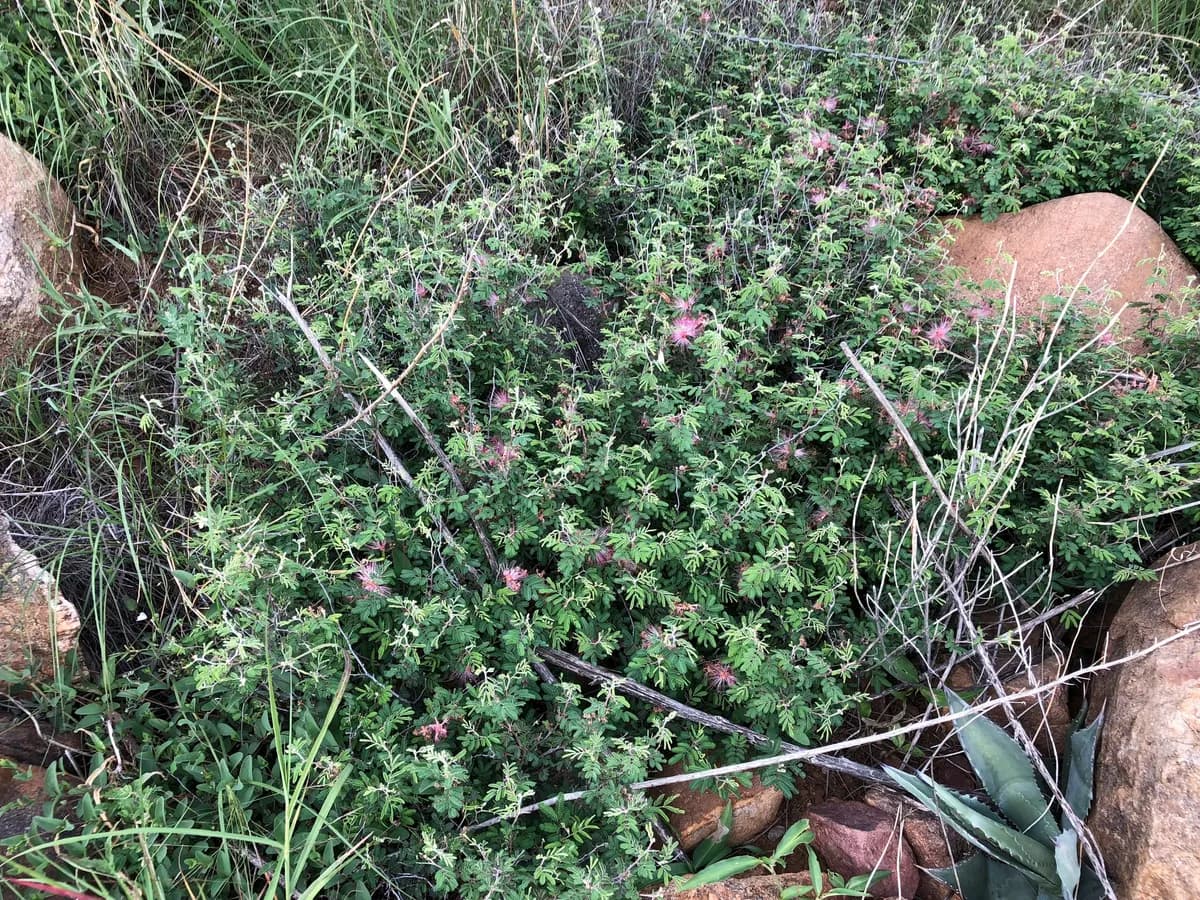
Low, sprawling, mounding shrub with fine ferny foliage and puffball-like pink flower clusters resembling small feather dusters. Spreads wider than tall, forming a soft, informal drift.
Growing Pink fairy duster
Grow Pink fairy duster in full sun and low water. Mature plants reach 12 to 36 inches tall and spread 36 to 72 inches wide. Expect low maintenance to keep it looking intentional in a front yard.
How to care for Pink fairy duster, by region
How to care for Pink fairy duster where it is actually grown: year-round basics plus what to do each season, region by region, with the sources for each.
Care guidance last updated: July 2026
Cross Timbers (includes Fort Worth, TX)
Year-round
Pink fairy duster is a low, mounding shrub from the desert Southwest, grown here for its powder puff pink blooms and its toughness in full sun. It is native to Texas generally, but not to the North Texas area itself, so treat it as a well adapted transplant rather than a local native and pay attention to drainage.
- Plant in full sun, in a spot with excellent drainage that never stays soggy after rain.
- In heavy black clay, plant high on a slight mound (6 to 8 inches) or amend with expanded shale for drainage; in the sandier soils west of the metro it drains better on its own but still benefits from a slight mound and closer watering the first summer.
- Water deeply but infrequently once established, roughly every 2 to 3 weeks in summer and less in cooler months; overwatering in clay soil is the most common way this plant fails.
- Expect a naturally rounded, mounding habit about 2 to 3 feet tall and 3 to 5 feet wide with little to no regular shearing needed.
- The flowers serve as a larval host plant for the marine blue butterfly, so expect small caterpillars on the foliage at times; this is a sign the plant is doing its job, not a pest problem.
Its tidy, rounded, unshorn shape and repeat pink bloom read as an intentional flowering accent shrub rather than a wild or overgrown planting.
Fall
Fall brings a second round of pink blooms as the heat breaks, and it is also a good backup planting window if you missed spring.
- A second bloom flush typically appears in September and October as afternoons cool below 100 degrees.
- October through mid-November is a reasonable second planting window; roots can keep growing through North Texas's mild winter.
- Water newly planted fall specimens weekly until the first hard freeze (mid-November on average), then taper off.
- No deadheading needed; spent flower pods are not showy but leaving them on does not hurt the plant's appearance.
The second bloom flush in early fall reads as active, cared-for landscaping right when many other beds are winding down.
Winter
Fairy duster is semi-deciduous and can thin out or drop most of its leaves during a hard freeze; that is normal winter behavior here, not a sign the plant is dying.
- Expect leaf thinning or drop during North Texas's short hard freezes, and heavier dieback in a severe Arctic outbreak; established plants regrow from the same wood in spring.
- Hold off on major pruning until March, once you can see which branch tips survived winter.
- Skip supplemental water during winter dormancy except during an extended stretch with no rain.
- If a hard freeze browns the whole plant, wait before digging it up; established fairy duster often resprouts from the base by late spring.
A browned, leafless shrub after a hard freeze can look neglected to a neighbor; a light mulch ring or small plant tag signals it is an intentional planting riding out winter, not an abandoned bed.
Spring
Spring is the main bloom season for pink fairy duster and the best time to plant it, giving roots the full growing season to settle in before the hard summer heat arrives.
- Plant new fairy dusters between mid-March (after the last frost) and April so roots have months to establish before July heat.
- Expect a heavy flush of pink powder puff blooms from February through May.
- Water new plantings twice a week for the first 4 to 6 weeks, then taper to every 10 to 14 days as roots establish.
- Skip fertilizer; this plant is adapted to lean, low-nutrient soil and extra feeding produces weak, leggy growth instead of blooms.
- If any branch tips browned over winter, prune out the dead wood in March once new leaf growth shows where it is still alive.
The spring bloom flush reads as an intentional flowering accent in a front bed, not an untended shrub.
Summer
Once established, fairy duster is genuinely drought tough through the hardest part of North Texas summer, but a first-year plant still needs real water to survive 100 degree afternoons.
- Established plants (a full year or more in the ground) need little to no supplemental water and can handle 100 degree stretches on rainfall alone.
- First-summer plants still need deep watering every 7 to 10 days during the hottest weeks; skipping this is the most common reason new plantings die in July and August.
- Hold off on pruning during peak summer heat; wait for cooler weather so fresh cuts do not add stress on top of the heat.
- Expect blooming to slow or pause during the hottest weeks, then pick back up as temperatures ease into September.
Sources: Lady Bird Johnson Wildflower Center - Calliandra eriophylla
Texas Blackland Prairies (includes Dallas, TX)
Year-round
Pink fairy duster is a low, mounding shrub from the desert Southwest, grown here for its powder puff pink blooms and its toughness in full sun. It is native to Texas generally, but not to the North Texas area itself, so treat it as a well adapted transplant rather than a local native and pay attention to drainage.
- Plant in full sun, in a spot with excellent drainage that never stays soggy after rain.
- In heavy black clay, plant high on a slight mound (6 to 8 inches) or amend with expanded shale for drainage; in the sandier soils west of the metro it drains better on its own but still benefits from a slight mound and closer watering the first summer.
- Water deeply but infrequently once established, roughly every 2 to 3 weeks in summer and less in cooler months; overwatering in clay soil is the most common way this plant fails.
- Expect a naturally rounded, mounding habit about 2 to 3 feet tall and 3 to 5 feet wide with little to no regular shearing needed.
- The flowers serve as a larval host plant for the marine blue butterfly, so expect small caterpillars on the foliage at times; this is a sign the plant is doing its job, not a pest problem.
Its tidy, rounded, unshorn shape and repeat pink bloom read as an intentional flowering accent shrub rather than a wild or overgrown planting.
Fall
Fall brings a second round of pink blooms as the heat breaks, and it is also a good backup planting window if you missed spring.
- A second bloom flush typically appears in September and October as afternoons cool below 100 degrees.
- October through mid-November is a reasonable second planting window; roots can keep growing through North Texas's mild winter.
- Water newly planted fall specimens weekly until the first hard freeze (mid-November on average), then taper off.
- No deadheading needed; spent flower pods are not showy but leaving them on does not hurt the plant's appearance.
The second bloom flush in early fall reads as active, cared-for landscaping right when many other beds are winding down.
Winter
Fairy duster is semi-deciduous and can thin out or drop most of its leaves during a hard freeze; that is normal winter behavior here, not a sign the plant is dying.
- Expect leaf thinning or drop during North Texas's short hard freezes, and heavier dieback in a severe Arctic outbreak; established plants regrow from the same wood in spring.
- Hold off on major pruning until March, once you can see which branch tips survived winter.
- Skip supplemental water during winter dormancy except during an extended stretch with no rain.
- If a hard freeze browns the whole plant, wait before digging it up; established fairy duster often resprouts from the base by late spring.
A browned, leafless shrub after a hard freeze can look neglected to a neighbor; a light mulch ring or small plant tag signals it is an intentional planting riding out winter, not an abandoned bed.
Spring
Spring is the main bloom season for pink fairy duster and the best time to plant it, giving roots the full growing season to settle in before the hard summer heat arrives.
- Plant new fairy dusters between mid-March (after the last frost) and April so roots have months to establish before July heat.
- Expect a heavy flush of pink powder puff blooms from February through May.
- Water new plantings twice a week for the first 4 to 6 weeks, then taper to every 10 to 14 days as roots establish.
- Skip fertilizer; this plant is adapted to lean, low-nutrient soil and extra feeding produces weak, leggy growth instead of blooms.
- If any branch tips browned over winter, prune out the dead wood in March once new leaf growth shows where it is still alive.
The spring bloom flush reads as an intentional flowering accent in a front bed, not an untended shrub.
Summer
Once established, fairy duster is genuinely drought tough through the hardest part of North Texas summer, but a first-year plant still needs real water to survive 100 degree afternoons.
- Established plants (a full year or more in the ground) need little to no supplemental water and can handle 100 degree stretches on rainfall alone.
- First-summer plants still need deep watering every 7 to 10 days during the hottest weeks; skipping this is the most common reason new plantings die in July and August.
- Hold off on pruning during peak summer heat; wait for cooler weather so fresh cuts do not add stress on top of the heat.
- Expect blooming to slow or pause during the hottest weeks, then pick back up as temperatures ease into September.
Sources: Lady Bird Johnson Wildflower Center - Calliandra eriophylla
In an HOA neighborhood
Pink fairy duster is an HOA-friendly choice. Maintenance level: low. Tidiness: 4 out of 5.
Works well in: front yard, foundation, street edge, mid zone.
Wildlife value
Host plant for marine blue.
Nectar-rich puffball blooms attract bees, butterflies, and hummingbirds, and the foliage serves as a larval host for certain butterflies.
Common questions
- When does pink fairy duster bloom?
- Calliandra eriophylla typically flowers in two periods, from February through May and again in September and October, with the spring bloom usually being the heaviest.
- What pollinators does pink fairy duster attract?
- The pink, thread-like flowers draw bees, butterflies, and hummingbirds, making it a useful plant for pollinator gardens in desert climates.
- How much water does pink fairy duster need?
- This shrub is drought tolerant and prefers low water once established, though it can handle occasional supplemental watering during extended dry spells.
- Does pink fairy duster lose its leaves?
- It is semi-evergreen and may drop some leaves during periods of extreme drought or cold, regrowing them as conditions improve.
- How much sun does pink fairy duster need?
- It performs best in full sun and also tolerates part sun, especially in hot, low-elevation desert settings.
- Is Pink fairy duster HOA-friendly?
- Pink fairy duster is generally an HOA-friendly choice in the right placement, with low maintenance.
These answers were drafted with an AI model from this plant's data. Verify care details with a local expert.
Native range data from the World Checklist of Vascular Plants (Kew). Pollinator and host plant associations compiled from GBIF, iNaturalist, and published ecological literature.
If something looks wrong
Common plant problems, and what to check first
These come up on almost any plant. Each guide lists the likely causes in the order they are worth ruling out, with one thing to check before you act on any of them, and links to the source it came from.
- It is dying right after planting
- Leaves turning yellow
- Wilting even though I watered it
- Brown crispy leaf tips
- Bugs on the plant
Ready to grow Pink fairy duster? Add it to your garden in Pollinator Patch to track it and get season-by-season care guidance.