Roughstem rosinweed
Silphium radula
Last reviewed: October 2026
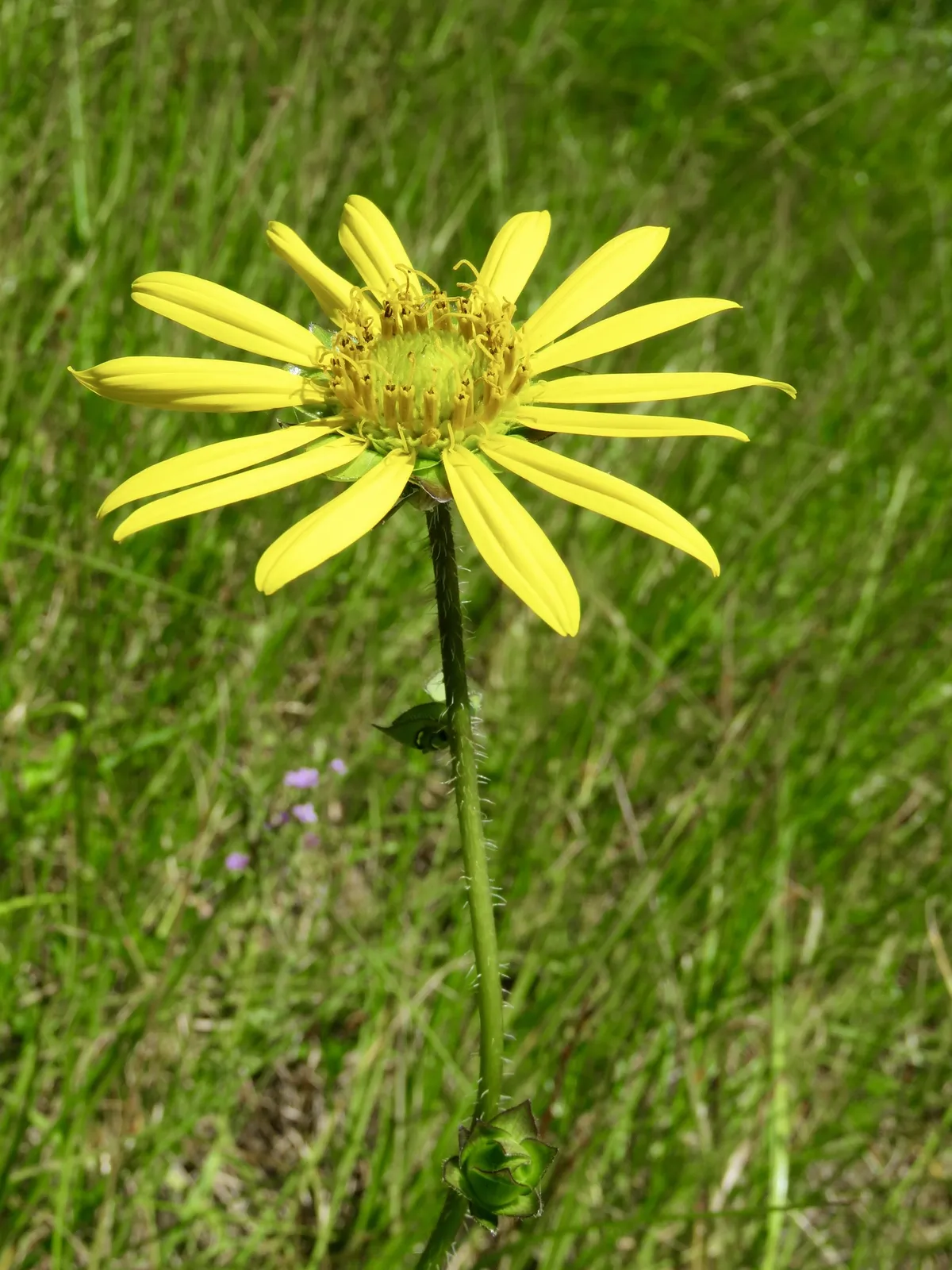
Silphium radula, roughstem rosinweed, is a sun-loving prairie forb that produces yellow flowers from June through September and grows well in dry glades, rocky open woods, and prairie remnants of the south-central United States.
Toxicity unknown
Roughstem rosinweed (Silphium radula) is not listed by the ASPCA Animal Poison Control Center (opens in new tab) or the other sources we check, so we have no verdict for it either way. Absence from those lists is not a clearance. If your pet shows symptoms after eating any plant, call the ASPCA at (888) 426-4435.
Light
full sun
Water
medium
Size
36"–72" H × 24"–36" W
Bloom
Jun, Jul, Aug, Sep
Native to
AR, KS, LA, MO and 3 more states
Pollinators
bees, butterflies, beetles
Before you buy
Your city may pay you to plant this
Cities and water utilities offer rebates for replacing lawn with native and water-wise plants. We track 459 programs across 44 states, each with a link to the provider and the date we last checked it.
Find rebates in your areaPicture natives in your own yard
Upload a photo of your yard and Patch Vision shows a rendering of it planted with natives for your region, like Roughstem rosinweed.


Browse plants for this ecoregion
A tall, upright perennial forb with rough, sandpaper-textured leaves and bright yellow, sunflower-like flower heads held on branching stems in summer. Develops a deep root system that supports strong drought tolerance once established.
Growing Roughstem rosinweed
Grow Roughstem rosinweed in full sun and medium water. Mature plants reach 36 to 72 inches tall and spread 24 to 36 inches wide. Expect moderate maintenance to keep it looking intentional in a front yard.
How to care for Roughstem rosinweed, by region
How to care for Roughstem rosinweed where it is actually grown: year-round basics plus what to do each season, region by region, with the sources for each.
Care guidance last updated: September 2026
Mississippi Valley Loess Plains (includes Memphis, TN)
Year-round
Roughstem rosinweed is a tall, sturdy summer bloomer that needs full sun and well-drained soil, and otherwise asks very little of the gardener.
- Plant in full sun for the sturdiest stems and best bloom
- Give it well-drained soil, it prefers lean, dry to average conditions over rich, wet ground
- Water only during establishment or extended drought once mature
- Stake or site away from open wind if stems lean, plants can reach five to six feet tall
- Leave winter structure standing until late winter rather than cutting back in fall
Its height works best toward the back of a bed rather than right along the front walk, where a lower planting reads more HOA-conscious.
Fall
Bloom finishes and the plant begins to die back as the Memphis area approaches its average first frost in late October.
- Let seed heads mature if you want birds to use them, otherwise cut back after bloom finishes
- Reduce watering as growth slows
- Leave sturdy stems standing through fall rather than cutting to the ground right away
- Good time to mark the clump's location before it fully dies back for winter
Winter
Top growth dies back after frost, and the plant overwinters as a dormant root crown through Memphis's mild zone 7b to 8a winters.
- Leave dead stems standing through winter for structure and seed for birds
- Cut back to the ground in late winter before new growth starts
- No watering needed during dormancy
- Well-drained soil matters most in winter, standing water can rot the crown
Spring
New growth emerges from the base as the Memphis area warms past its average last frost in early April, ahead of summer flowering.
- Cut away last year's dead stems if not already removed, to make room for new growth
- Divide or transplant now if the clump needs to move
- Water new divisions until they establish
- No fertilizer needed, it does best in lean soil
Summer
This is bloom season, with bright yellow flowers through Memphis's hot, humid summer months on tall, sturdy stems.
- Water only during extended dry stretches, it handles summer heat well once established
- Stake tall stems in exposed, windy spots if they begin to lean
- Deadhead if you want to limit self-seeding, otherwise leave flowers for pollinators
- Good air movement around the base helps in Memphis's humid summers
Sources: Lady Bird Johnson Wildflower Center - Silphium radula, Shelby County frost date data (via harvestmath.com Tennessee growing zones)
In an HOA neighborhood
Roughstem rosinweed is an HOA-friendly choice in the right placement. Maintenance level: moderate. Tidiness: 2 out of 5.
Works well in: mid zone.
- Tall coarse growth habit may read as weedy to HOA reviewers if not maintained in a defined bed
Wildlife value
Host plant for Silvery checkerspot butterfly.
Flowers attract bees, butterflies, and beetles; the plant serves as a larval host for the silvery checkerspot butterfly, and seed heads feed birds in fall and winter.
Common questions
- When does roughstem rosinweed bloom?
- Roughstem rosinweed typically flowers from June through September, producing yellow, sunflower-like blooms on tall, rough-textured stems.
- What kind of light and water does this plant need?
- It grows best in full sun with medium moisture, but established plants tolerate part sun and drier, well-drained soils once rooted.
- What pollinators visit roughstem rosinweed?
- Bees, butterflies, and beetles regularly visit the flowers for nectar and pollen through the summer bloom period.
- What habitat suits roughstem rosinweed best?
- It does well in open prairies, glades, and dry to medium upland sites with good drainage and full sun exposure.
- Does roughstem rosinweed die back in winter?
- Yes, it is a herbaceous perennial forb that dies back to the ground each year and regrows from its rootstock in spring.
- Is Roughstem rosinweed HOA-friendly?
- Roughstem rosinweed is generally an HOA-friendly choice in the right placement, with moderate maintenance.
These answers were drafted with an AI model from this plant's data. Verify care details with a local expert.
Native range data from the World Checklist of Vascular Plants (Kew). Pollinator and host plant associations compiled from GBIF, iNaturalist, and published ecological literature.
If something looks wrong
Common plant problems, and what to check first
These come up on almost any plant. Each guide lists the likely causes in the order they are worth ruling out, with one thing to check before you act on any of them, and links to the source it came from.
- It is dying right after planting
- Leaves turning yellow
- Wilting even though I watered it
- Brown crispy leaf tips
- Bugs on the plant
Ready to grow Roughstem rosinweed? Add it to your garden in Pollinator Patch to track it and get season-by-season care guidance.