Rusty Blackhaw Viburnum
Viburnum rufidulum
Last reviewed: September 2026
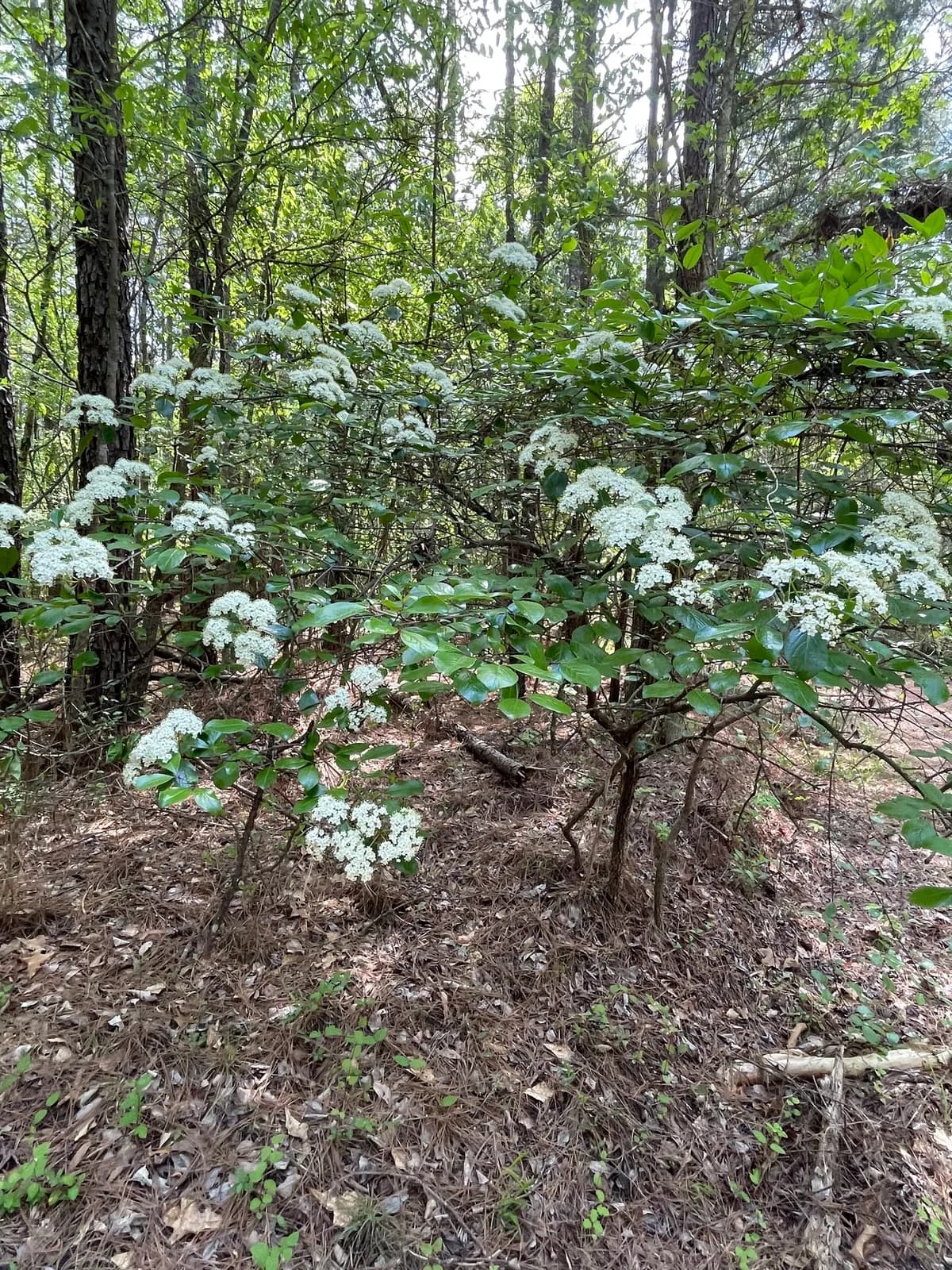
Rusty blackhaw viburnum is a small deciduous tree that bears white flower clusters from March to May and tolerates dry soil once established in full sun to part shade.
Toxicity unknown
Rusty Blackhaw Viburnum (Viburnum rufidulum) is not listed by the ASPCA Animal Poison Control Center (opens in new tab) or the other sources we check, so we have no verdict for it either way. Absence from those lists is not a clearance. If your pet shows symptoms after eating any plant, call the ASPCA at (888) 426-4435.
Light
full sun
Water
low
Size
180"–240" H × 120"–180" W
Bloom
Mar, Apr, May
Native to
AL, AR, FL, GA and 14 more states
Pollinators
butterflies, bees
Before you buy
Your city may pay you to plant this
Cities and water utilities offer rebates for replacing lawn with native and water-wise plants. We track 452 programs across 44 states, each with a link to the provider and the date we last checked it.
Find rebates in your areaBrowse plants for this ecoregion
Rusty Blackhaw Viburnum is a small native Texas tree that produces clusters of white flowers in spring followed by blue-black berries. It offers beautiful fall color with leaves turning red to purple, and its compact size makes it suitable for residential landscapes.
Growing Rusty Blackhaw Viburnum
Grow Rusty Blackhaw Viburnum in full sun and low water. Mature plants reach 180 to 240 inches tall and spread 120 to 180 inches wide. Expect moderate maintenance to keep it looking intentional in a front yard.
How to care for Rusty Blackhaw Viburnum, by region
How to care for Rusty Blackhaw Viburnum where it is actually grown: year-round basics plus what to do each season, region by region, with the sources for each.
Care guidance last updated: July 2026
Northeastern Coastal Zone (includes New York, NY)
Year-round
Rusty blackhaw is a hardy small tree that does fine in the New York City area once established. Water it well the first year, mulch it, and prune only right after it blooms so you keep next spring's flowers.
- Establishment: water deeply once a week through the first full growing season so the roots go down; after that it tolerates dry spells with little help.
- Mulch: keep a 3 inch layer of wood mulch over the root zone, pulled back from the trunk, to hold moisture and suppress weeds.
- Pruning timing: prune to shape only right after the white spring flowers fade, because it sets next year's buds soon after; remove dead or broken wood any time.
- Common mistake: plant it in well drained soil in sun to part shade and avoid soggy low spots, which it does not like.
Fall
Fall is the standout season in the New York City area, with blue berries and strong red-purple leaf color. Let it stand and enjoy it; very little work is needed.
- Enjoy the fall color and blue drupes; birds often clear the berries, so no cleanup is needed for the plant's health.
- Give a slow, deep watering before the first hard freeze so the tree enters winter well hydrated, especially after a dry fall.
- Do not prune now, since fall cuts remove the buds set for next spring.
Raking fallen leaves and dropped berries off the walk and lawn keeps the front yard looking cared for and avoids a violation letter over litter.
Winter
This plant is hardy well below New York City winter lows, so cold is not a worry. It rests now, so leave it alone except for cleaning up clearly dead wood.
- Remove any dead, damaged, or crossing branches now while the bare structure is easy to read; save shaping cuts for after spring bloom.
- No watering is needed during dormancy unless there is an unusual long warm, dry stretch.
- Keep the mulch layer in place over winter to insulate the roots through cold snaps.
Clearing out dead branches in winter gives the bare tree a tidy, intentional silhouette at the curb and heads off any complaint about a neglected look.
Spring
Spring brings the white flower clusters in the New York City area. This is your one window to prune for shape without sacrificing bloom, so do it as the flowers fade.
- Prune to shape right after the spring flowers finish, before the plant sets next year's buds.
- For a first-year plant, water deeply once a week as the ground warms and new growth starts.
- Top up mulch to a 3 inch layer heading into the growing season to hold spring moisture.
Pruning right after bloom reads as intentional shaping and keeps the front-yard tree looking tidy, which helps avoid a violation letter over an overgrown shape.
Summer
New York City summers are warmer and can turn dry. An established rusty blackhaw handles it, but a young plant still needs a deep drink during dry stretches.
- Established plants are drought tolerant, so water only during long dry spells with a deep soak every week or two.
- First-year plants need a deep weekly watering through summer so the young roots keep growing down.
- Hold off on pruning now beyond snipping out any dead or broken wood.
Sources: North Carolina Extension Gardener Plant Toolbox Viburnum rufidulum, Missouri Botanical Garden Viburnum rufidulum, ASPCA non-toxic plant list Black Haw Viburnum, University of Florida IFAS Viburnum rufidulum fact sheet
Texas Blackland Prairies (includes Dallas, TX)
Year-round
Rusty blackhaw is a tough small tree that, once its roots go deep, mostly takes care of itself around Dallas. Water it well the first year, mulch it, and prune only right after it blooms so you do not cut off next spring's flowers.
- Establishment: water deeply once a week through the first full growing season so the roots reach down; after that it handles Dallas heat and dry spells on its own.
- Mulch: keep a 3 inch layer of wood mulch over the root zone, pulled back a couple inches from the trunk, to hold moisture and keep weeds down.
- Pruning timing: prune to shape only right after the white spring flowers fade, since it sets next year's flower buds soon after; you can snip out dead or broken branches any time.
- Common mistake: do not overwater an established plant or plant it in a low spot that stays soggy, since it prefers well drained soil.
Fall
Fall is the showy season around Dallas, with blue berries and strong red-to-purple leaf color. Let it stand and enjoy it; almost no work is needed.
- Enjoy the fall color and blue drupes; birds often eat the berries, so no cleanup is needed for the plant's health.
- A slow, deep watering before the first hard freeze helps the tree go into winter well hydrated, especially after a dry fall.
- Do not prune now, since cutting in fall removes the buds set for next spring's flowers.
Raking fallen leaves and any dropped berries off the walk and lawn keeps the front yard looking cared for and avoids a violation letter over litter.
Winter
Winters in the Dallas area are mild for this plant, which is fully hardy here. It rests now, so leave it alone except for cleaning up clearly dead wood.
- This is a good time to remove any dead, damaged, or crossing branches, since the bare structure is easy to see; save shaping cuts for after spring bloom.
- Water only if there is a long warm, dry stretch with no rain; the plant is dormant and needs very little.
- Keep the mulch layer in place to protect the roots through cold snaps.
Cleaning out dead branches in winter gives the bare tree a tidy, intentional silhouette at the curb and heads off any complaint about a neglected look.
Spring
Spring is bloom time in the Dallas area, so this is your one window to prune for shape without losing flowers. Do it as soon as the white flower clusters fade.
- Watch for the flat white flower clusters in early spring, then prune to shape right after they finish, before the plant sets next year's buds.
- For a young tree still in its first year, keep watering deeply once a week as spring warms up and growth takes off.
- Refresh mulch to a 3 inch layer going into the warm season to hold spring moisture.
Pruning right after bloom reads as intentional shaping and keeps the front-yard tree tidy, which helps avoid a violation letter over a scraggly or overgrown look.
Summer
Dallas summers get hot and dry. An established rusty blackhaw shrugs this off, but a first-year plant still needs a deep drink during long dry stretches.
- Established plants are drought tolerant, so only water during prolonged dry spells; a deep soak every week or two is plenty.
- First-year plants need a deep weekly watering through the summer heat so the young roots keep growing down.
- Skip pruning now beyond removing any dead or broken wood; heavy summer pruning wastes the plant's energy and cuts off developing buds.
Sources: Lady Bird Johnson Wildflower Center Viburnum rufidulum, North Carolina Extension Gardener Plant Toolbox Viburnum rufidulum, ASPCA non-toxic plant list Black Haw Viburnum, Dallas County Master Gardeners Viburnum rufidulum, Missouri Botanical Garden Viburnum rufidulum
Want these tasks as reminders timed to your yard? Pollinator Patch turns this guidance into a season-by-season care plan for the plants you actually grow.
In an HOA neighborhood
Rusty Blackhaw Viburnum is an HOA-friendly choice in the right placement. Maintenance level: moderate. Tidiness: 4 out of 5.
Works well in: front yard, mid zone.
- Trees often require HOA/ARC approval even when allowed.
- Verify setbacks from sidewalks, driveways, utilities, and structures.
- Confirm mature height/canopy limits and sightline rules for corners.
Wildlife value
The spring flowers attract bees and butterflies, while the berries provide food for birds. This native viburnum supports local ecosystems while adding seasonal interest to the landscape.
Common questions
- When does Viburnum rufidulum bloom?
- Rusty blackhaw viburnum typically flowers from March through May, producing flat clusters of small white blooms before summer heat sets in.
- How much water does rusty blackhaw viburnum need?
- This tree prefers low to medium moisture and handles dry spells well once its root system is established, making it a good choice for sites that dry out between rains.
- What light conditions does it grow best in?
- It performs best in full sun but also does well in part sun or light part shade, especially at woodland edges where it gets several hours of direct light.
- Do pollinators visit rusty blackhaw viburnum?
- Bees and butterflies regularly visit the spring flower clusters for nectar and pollen.
- How large does this tree get and what is its shape?
- Rusty blackhaw viburnum grows as a small single or multi trunked tree, often reaching modest heights suitable for smaller yards or naturalized borders.
- Is Rusty Blackhaw Viburnum HOA-friendly?
- Rusty Blackhaw Viburnum is generally an HOA-friendly choice in the right placement, with moderate maintenance.
These answers were drafted with an AI model from this plant's data. Verify care details with a local expert.
Native range data from vouchered herbarium specimen records and regional native plant society lists. Pollinator and host plant associations compiled from GBIF, iNaturalist, and published ecological literature.
If something looks wrong
Common plant problems, and what to check first
These come up on almost any plant. Each guide lists the likely causes in the order they are worth ruling out, with one thing to check before you act on any of them, and links to the source it came from.
- It is dying right after planting
- Leaves turning yellow
- Wilting even though I watered it
- Brown crispy leaf tips
- Bugs on the plant
Ready to grow Rusty Blackhaw Viburnum? Add it to your garden in Pollinator Patch to track it and get season-by-season care guidance.
Planning a bed around it? Start a free plan with this plant
Not sure where to start? Take the 2-minute yard quiz