Shumard Oak
Quercus shumardii
Last reviewed: September 2026
Shumard oak is a large deciduous shade tree that blooms in March through May and grows well in full sun with moderate water. It tolerates both moist bottomland soils and drier upland sites across much of the eastern and central United States.
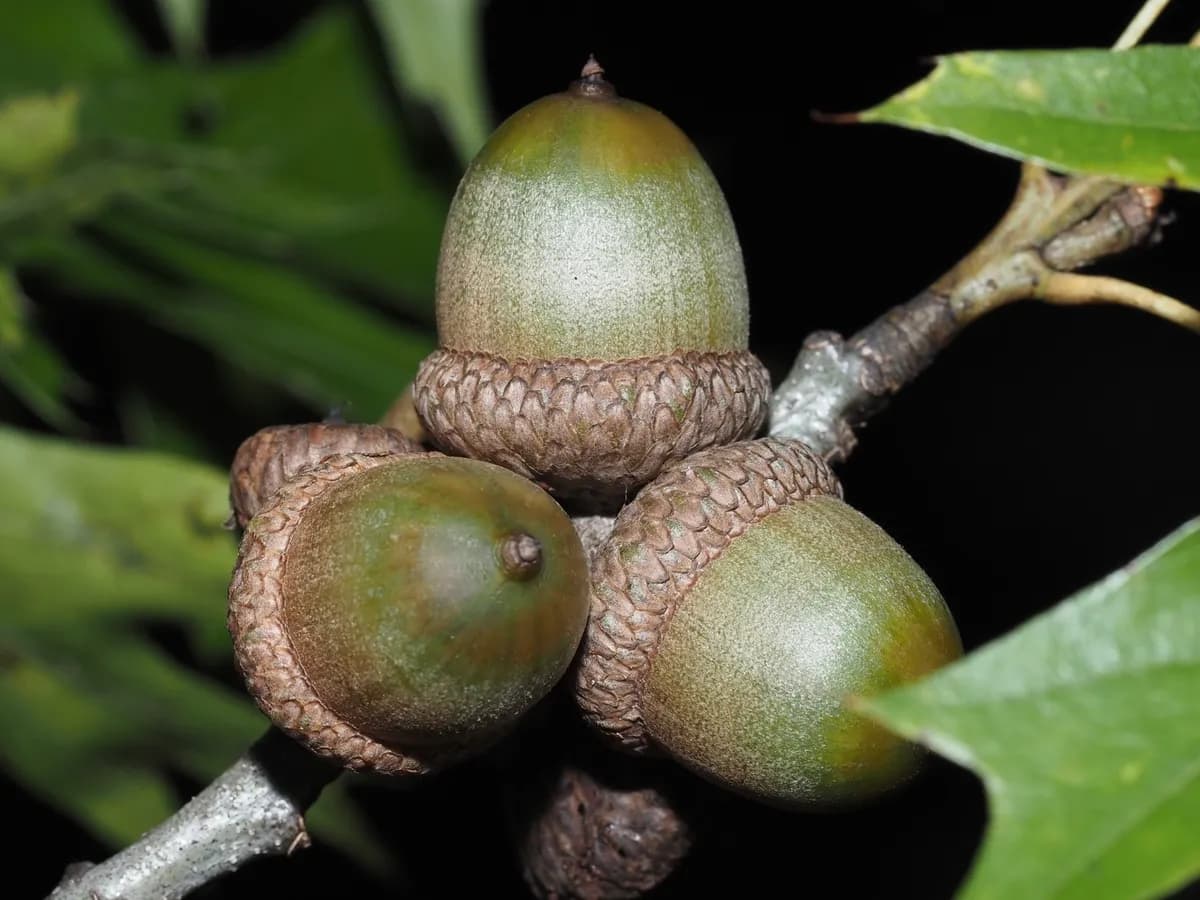
Shumard Oak (Quercus shumardii) is not on the ASPCA Animal Poison Control Center toxic plant list for dogs or cats (aspca.org (opens in new tab), last reviewed 2026-05-21). If your pet shows symptoms after eating any plant, call the ASPCA at (888) 426-4435.
The USDA PLANTS Database (opens in new tab) does not flag Shumard Oak as toxic to livestock.
Light
full sun
Water
medium
Size
360"–1440" H × 600"–720" W
Bloom
Mar, Apr, May
Native to
AL, AR, FL, GA and 20 more states
Pollinators
butterflies
Before you buy
Your city may pay you to plant this
Cities and water utilities offer rebates for replacing lawn with native and water-wise plants. We track 452 programs across 44 states, each with a link to the provider and the date we last checked it.
Find rebates in your areaBrowse plants for this ecoregion
Shumard Oak is a large, stately native Texas tree that provides excellent shade and beautiful fall color. This deciduous oak grows 30-120 feet tall with a broad, rounded canopy that makes it perfect for larger landscapes. It's drought tolerant once established and supports diverse wildlife throughout the seasons.
Growing Shumard Oak
Grow Shumard Oak in full sun and medium water. Mature plants reach 360 to 1440 inches tall and spread 600 to 720 inches wide. Expect low maintenance to keep it looking intentional in a front yard.
How to care for Shumard Oak, by region
How to care for Shumard Oak where it is actually grown: year-round basics plus what to do each season, region by region, with the sources for each.
Care guidance last updated: July 2026
Cross Timbers (includes Fort Worth, TX)
Year-round
Shumard Oak is a large, fast growing native shade tree that becomes a signature front yard feature within a decade, so give it room to grow into its full mature size.
- Give it 25 to 30 feet of clearance from the house, driveway, and any power lines when choosing a planting spot, since mature spread commonly reaches 50 to 60 feet.
- Water deeply once a week for the first two growing seasons to establish a deep taproot, then it needs only occasional supplemental water once established.
- Plant in full sun for the straightest form and best fall color, and expect it to tolerate both the heavier clay soils and the sandier soils found across North Texas.
- It is a larval host plant for several hairstreak and other oak feeding butterfly and moth caterpillars, so some leaf chewing in summer is a sign the tree is doing its job, not a problem to treat.
- Acorns and new spring leaves contain tannins that ASPCA lists as toxic to dogs, cats, and horses if eaten in quantity, so rake up dropped acorns in yards used by pets or grazing animals.
Fall
Fall is the best time to plant a Shumard Oak in North Texas, and it is also when this tree drops acorns and turns red to orange, one of the more reliable fall colors for the area.
- If planting a new tree, do it September through November so roots can establish over the mild winter before next summer's heat arrives.
- Rake and remove fallen acorns from lawn areas used by dogs, cats, or grazing animals; ASPCA lists oak acorns and leaves as toxic to dogs, cats, and horses when eaten in quantity.
- Expect red to orange fall color typically peaking in November, which varies year to year with rainfall and temperature.
- Skip fertilizer in fall and let the tree go dormant naturally.
- A light layer of fallen leaves left under the tree can double as mulch if a tidier bed is not a priority.
Acorns and leaves left sitting on a sidewalk or driveway read as unmanaged rather than intentional; a weekly fall rake up keeps the curb view tidy while the tree does its own thing.
Winter
Shumard Oak is deciduous and stands bare through winter, with branch structure and bark as the main visual interest. This is also dormant season pruning time.
- Prune out dead, crossing, or low hanging branches while the tree is dormant and leafless, typically December through February.
- Newly planted trees in their first one to two winters can benefit from a trunk wrap or light protection if a hard freeze below 20F is forecast; established trees need none.
- Skip fertilizer during dormancy.
- Keep mulch at 2 to 3 inches through winter to buffer root temperature swings during Arctic cold snaps.
- Bare branches all winter are normal for this species and not a sign of decline.
A bare deciduous tree in winter is the expected look for this species, not something that needs explaining to a neighbor.
Spring
Spring is when a Shumard Oak flowers, easy to miss small catkins, and pushes fresh growth. If it was just bought and planted now, the first summer ahead will be the hardest stretch for it.
- Water new transplants deeply twice a week through spring, then taper as roots establish, and skip fertilizer the first year.
- Keep a 2 to 3 inch layer of mulch out to the drip line, pulled a few inches back from the trunk, to hold spring soil moisture.
- In the heavy black clay soils of the Blackland Prairies, plant high on a slight mound or amend for drainage; in the sandier soils of the Cross Timbers to the west it will need water more often through the first summer.
- Small yellow green catkin flowers appear March through May and are easy to miss; that is normal and not a sign of a problem.
- Stake only if the planting site is windy, and remove any stakes after one growing season so the trunk builds its own strength.
A newly planted young oak with a stake or two reads as a deliberate landscape investment for the first season, and is a common enough sight that it will not raise questions.
Summer
July and August are the make or break months for a young Shumard Oak in North Texas. Established trees handle the heat fine, but anything planted in the last year or two needs consistent water to survive.
- Deep water once a week during 100F plus stretches, soaking the root zone rather than a quick sprinkle, for any tree planted within the last 2 years.
- Keep mulch topped up to 2 to 3 inches to slow soil moisture loss, but keep it off the trunk itself.
- Hold off on pruning during summer heat and wait for dormant season instead, since summer pruning adds stress during drought.
- Watch for scorched, browning leaf edges, a sign of heat and moisture stress, and respond by increasing watering frequency, not by fertilizing.
- Established trees that have been in the ground 3 or more years generally need no supplemental water even through a dry August.
Sources: Lady Bird Johnson Wildflower Center, Quercus shumardii, ASPCA, Oak (Quercus species) toxicity, NC State Extension Plant Toolbox, Quercus shumardii
Texas Blackland Prairies (includes Dallas, TX)
Year-round
Shumard Oak is a large, fast growing native shade tree that becomes a signature front yard feature within a decade, so give it room to grow into its full mature size.
- Give it 25 to 30 feet of clearance from the house, driveway, and any power lines when choosing a planting spot, since mature spread commonly reaches 50 to 60 feet.
- Water deeply once a week for the first two growing seasons to establish a deep taproot, then it needs only occasional supplemental water once established.
- Plant in full sun for the straightest form and best fall color, and expect it to tolerate both the heavier clay soils and the sandier soils found across North Texas.
- It is a larval host plant for several hairstreak and other oak feeding butterfly and moth caterpillars, so some leaf chewing in summer is a sign the tree is doing its job, not a problem to treat.
- Acorns and new spring leaves contain tannins that ASPCA lists as toxic to dogs, cats, and horses if eaten in quantity, so rake up dropped acorns in yards used by pets or grazing animals.
Fall
Fall is the best time to plant a Shumard Oak in North Texas, and it is also when this tree drops acorns and turns red to orange, one of the more reliable fall colors for the area.
- If planting a new tree, do it September through November so roots can establish over the mild winter before next summer's heat arrives.
- Rake and remove fallen acorns from lawn areas used by dogs, cats, or grazing animals; ASPCA lists oak acorns and leaves as toxic to dogs, cats, and horses when eaten in quantity.
- Expect red to orange fall color typically peaking in November, which varies year to year with rainfall and temperature.
- Skip fertilizer in fall and let the tree go dormant naturally.
- A light layer of fallen leaves left under the tree can double as mulch if a tidier bed is not a priority.
Acorns and leaves left sitting on a sidewalk or driveway read as unmanaged rather than intentional; a weekly fall rake up keeps the curb view tidy while the tree does its own thing.
Winter
Shumard Oak is deciduous and stands bare through winter, with branch structure and bark as the main visual interest. This is also dormant season pruning time.
- Prune out dead, crossing, or low hanging branches while the tree is dormant and leafless, typically December through February.
- Newly planted trees in their first one to two winters can benefit from a trunk wrap or light protection if a hard freeze below 20F is forecast; established trees need none.
- Skip fertilizer during dormancy.
- Keep mulch at 2 to 3 inches through winter to buffer root temperature swings during Arctic cold snaps.
- Bare branches all winter are normal for this species and not a sign of decline.
A bare deciduous tree in winter is the expected look for this species, not something that needs explaining to a neighbor.
Spring
Spring is when a Shumard Oak flowers, easy to miss small catkins, and pushes fresh growth. If it was just bought and planted now, the first summer ahead will be the hardest stretch for it.
- Water new transplants deeply twice a week through spring, then taper as roots establish, and skip fertilizer the first year.
- Keep a 2 to 3 inch layer of mulch out to the drip line, pulled a few inches back from the trunk, to hold spring soil moisture.
- In the heavy black clay soils of the Blackland Prairies, plant high on a slight mound or amend for drainage; in the sandier soils of the Cross Timbers to the west it will need water more often through the first summer.
- Small yellow green catkin flowers appear March through May and are easy to miss; that is normal and not a sign of a problem.
- Stake only if the planting site is windy, and remove any stakes after one growing season so the trunk builds its own strength.
A newly planted young oak with a stake or two reads as a deliberate landscape investment for the first season, and is a common enough sight that it will not raise questions.
Summer
July and August are the make or break months for a young Shumard Oak in North Texas. Established trees handle the heat fine, but anything planted in the last year or two needs consistent water to survive.
- Deep water once a week during 100F plus stretches, soaking the root zone rather than a quick sprinkle, for any tree planted within the last 2 years.
- Keep mulch topped up to 2 to 3 inches to slow soil moisture loss, but keep it off the trunk itself.
- Hold off on pruning during summer heat and wait for dormant season instead, since summer pruning adds stress during drought.
- Watch for scorched, browning leaf edges, a sign of heat and moisture stress, and respond by increasing watering frequency, not by fertilizing.
- Established trees that have been in the ground 3 or more years generally need no supplemental water even through a dry August.
Sources: Lady Bird Johnson Wildflower Center, Quercus shumardii, ASPCA, Oak (Quercus species) toxicity, NC State Extension Plant Toolbox, Quercus shumardii
Want these tasks as reminders timed to your yard? Pollinator Patch turns this guidance into a season-by-season care plan for the plants you actually grow.
In an HOA neighborhood
Shumard Oak takes more care to keep looking intentional in a front yard. Maintenance level: low. Consider it for backyard or mid-zone beds rather than the street edge.
Works well in: backyard only.
- Tree size exceeds typical HOA-friendly range
- Best suited for backyard or with special approval
Wildlife value
This oak supports over 500 species of butterflies and moths as caterpillars feed on the leaves. The acorns provide important food for squirrels, deer, and many bird species.
Common questions
- When does Shumard oak bloom?
- Shumard oak produces small, inconspicuous flowers in March, April, and May before its leaves fully expand. The flowers are wind pollinated rather than showy.
- Do butterflies use Shumard oak?
- Shumard oak serves as a host plant for the caterpillars of several butterfly and moth species, which feed on its leaves before the adults emerge.
- How much sun and water does Shumard oak need?
- This tree grows best in full sun to part sun with medium moisture, though established trees handle both wetter bottomland soils and drier upland conditions once mature.
- How large does Shumard oak get?
- Shumard oak is a large canopy tree, often reaching 60 to 80 feet or more at maturity, making it suitable for parks, streets, and open residential lots with room to grow.
- What kind of soil does Shumard oak prefer?
- Shumard oak adapts to a range of soils, including clay and loam, and is often found growing along river bottoms as well as upland woods and open fields.
- Is Shumard Oak toxic to dogs?
- Shumard Oak is not on the ASPCA Animal Poison Control Center toxic plant list for dogs (aspca.org).
- Is Shumard Oak toxic to cats?
- Shumard Oak is not on the ASPCA Animal Poison Control Center toxic plant list for cats (aspca.org).
- Is Shumard Oak toxic to livestock?
- The USDA PLANTS Database does not flag Shumard Oak as toxic to livestock.
- Is Shumard Oak HOA-friendly?
- Shumard Oak takes more care to look intentional in a front yard. Consider it for backyard or mid-zone beds rather than the street edge.
These answers were drafted with an AI model from this plant's data. Verify care details with a local expert.
Native range data from vouchered herbarium specimen records and regional native plant society lists. Pollinator and host plant associations compiled from GBIF, iNaturalist, and published ecological literature.
If something looks wrong
Common plant problems, and what to check first
These come up on almost any plant. Each guide lists the likely causes in the order they are worth ruling out, with one thing to check before you act on any of them, and links to the source it came from.
- It is dying right after planting
- Leaves turning yellow
- Wilting even though I watered it
- Brown crispy leaf tips
- Bugs on the plant
Ready to grow Shumard Oak? Add it to your garden in Pollinator Patch to track it and get season-by-season care guidance.
Planning a bed around it? Start a free plan with this plant
Not sure where to start? Take the 2-minute yard quiz