Spreading Rush
Juncus patens
Last reviewed: October 2026
Juncus patens is an evergreen rush with stiff blue-green stems that blooms from April through June. It suits low-water gardens, rain gardens, and coastal or valley landscapes with well-drained to seasonally moist soil.
Spreading Rush (Juncus patens) is not flagged as toxic to dogs or cats by Plants For A Future (PFAF) (opens in new tab) (last reviewed 2026-05-21). This verdict does not come from the ASPCA. If your pet shows symptoms after eating any plant, call the ASPCA at (888) 426-4435.
Light
full sun
Water
low
Size
12"–36" H × 12"–24" W
Bloom
Apr, May, Jun
Native to
CA, OR, WA
Pollinators
bees, beetles
Before you buy
Your city may pay you to plant this
Cities and water utilities offer rebates for replacing lawn with native and water-wise plants. We track 459 programs across 44 states, each with a link to the provider and the date we last checked it.
Find rebates in your areaPicture natives in your own yard
Upload a photo of your yard and Patch Vision shows a rendering of it planted with natives for your region, like Spreading Rush.


Browse plants for this ecoregion
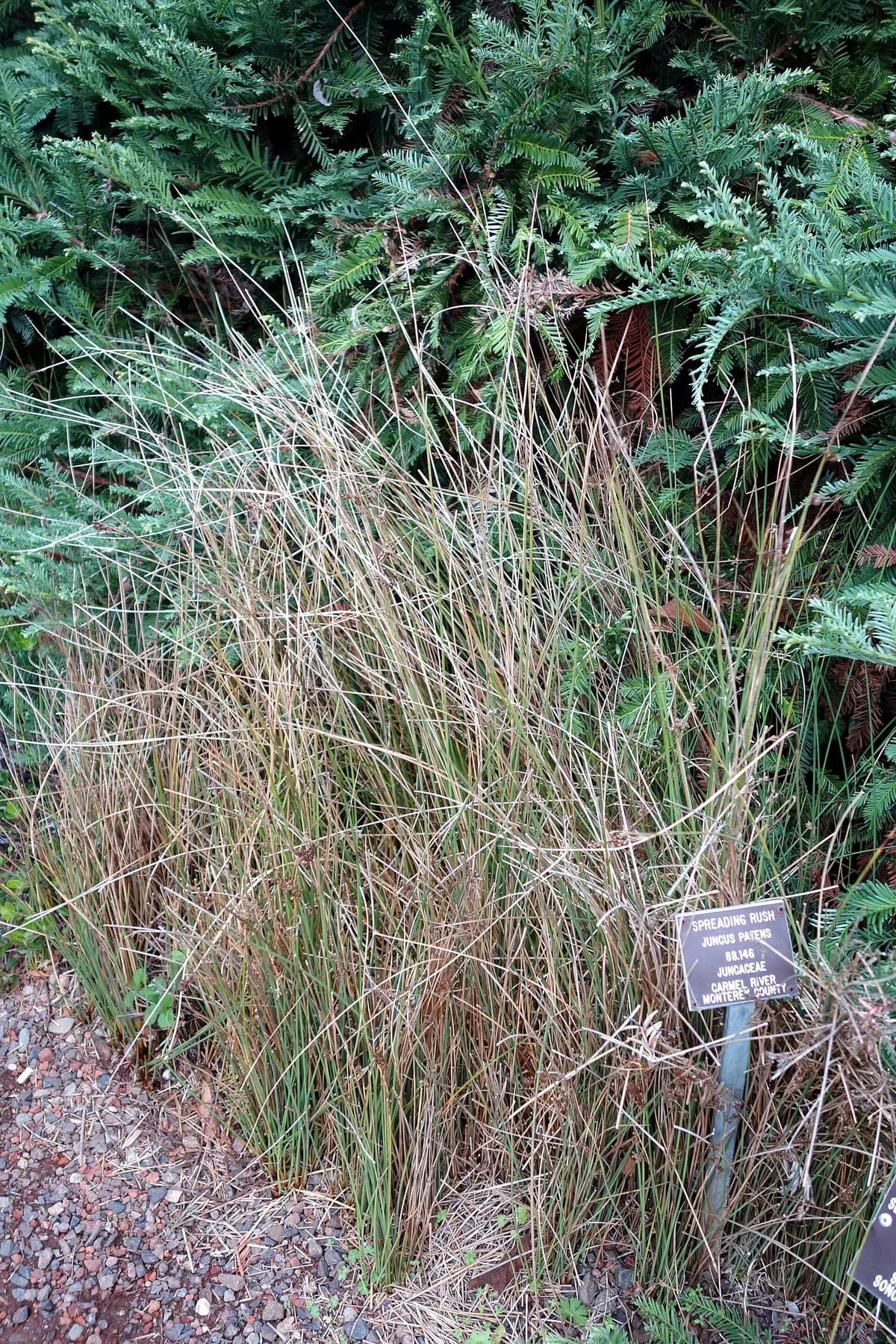
Spreading rush is an attractive, clumping perennial with blue-gray upright stems that create a distinctive architectural form. It grows 1-3 feet tall and maintains its structure year-round, providing visual interest in both modern and naturalistic garden designs.
Growing Spreading Rush
Grow Spreading Rush in full sun and low water. Mature plants reach 12 to 36 inches tall and spread 12 to 24 inches wide. Expect low maintenance to keep it looking intentional in a front yard.
How to care for Spreading Rush, by region
How to care for Spreading Rush where it is actually grown: year-round basics plus what to do each season, region by region, with the sources for each.
Care guidance last updated: October 2026
Central California Foothills and Coastal Mountains (includes San Francisco, CA)
Year-round
California gray rush is an easy, evergreen clumper that likes sun and handles both wet and dry spots.
- It grows in full sun.
- It tolerates a variety of soils, including slow-draining ones.
- Once settled in, it can get by on about one summer watering a month.
- It is evergreen and the clumps slowly spread over time.
- It handles cold down to about 15 degrees F.
Fall
In fall, it stays evergreen and needs little attention.
- It is evergreen, so the clump keeps its color.
- It is rated easy to care for.
Winter
Winter wet and cold are fine for this rush.
- It tolerates cold down to about 15 degrees F.
- It tolerates slow-draining soil and seasonal flooding.
Spring
In spring, give it sun and let the clump spread at its own pace.
- Full sun suits it.
- It grows in clumps that slowly spread over time.
- It does fine in slow-draining or damp soil.
Summer
Summer water needs are low once it is settled in, though it is happiest where soil stays moist.
- Once settled in, about one summer watering a month is the most it needs.
- It does well in dry areas with minimal summer water.
- In the wild it is usually found where soil stays moist all year.
Sources: Calscape: Juncus patens, Las Pilitas: Juncus patens
Sierra Nevada (includes South Lake Tahoe, CA)
Year-round
Year-round care for spreading rush around South Lake Tahoe, CA: full sun, flexible soil, and moderate water while it settles in.
- It grows in full sun, and the Saving Water Partnership also lists partial shade.
- It tolerates a variety of soils and does fine in slow-draining spots, and it also works in rain gardens.
- Calscape lists moderate to high water needs, and established plants need at most about one summer watering a month.
- It grows about 1 to 3 feet tall and about 3 feet wide as an evergreen clump.
- Calscape rates the care as easy and lists cold tolerance to 15 F.
- Calscape lists cold tolerance only to 15 F, so treat it as a trial plant where winters are colder than that.
The upright gray-green clumps read as a tidy, intentional accent in a rain garden or border.
Sources: Calscape: Juncus patens (Common Rush), Sonoma-Marin Saving Water Partnership: Juncus patens
Southern California/Northern Baja Coast (includes Los Angeles, CA)
Year-round
California gray rush is a California native rush confirmed to occur in Los Angeles County, and its evergreen gray-green clumps hold up well through both LA's wet winters and dry summers once established.
- Plant in full sun to partial shade in soil that drains well but can also handle an occasional soggy spot, such as a low point in a rain garden.
- Water regularly through the first season to help roots establish, then taper to occasional deep watering.
- This rush tolerates the range of soils common in Los Angeles yards, from clay to sandy or decomposed-granite mixes, as long as it is not left bone dry for long stretches.
- Trim only individual brown or damaged stems at the base as needed, this rush stays tidy with very little routine grooming.
Its neat, upright gray-green clumps hold a manicured look year round, an HOA-friendly choice for a front-yard border or rain garden feature.
Fall
Fall is a light-maintenance season for California gray rush in Los Angeles, mostly grooming and easing into the return of winter rain.
- Remove individual dead or browned leaves at the base as needed, this rush needs very little other grooming going into fall.
- Keep up light, occasional watering into fall until winter rains take over.
- Cooling fall temperatures make it a good time to plant new gray rush, since transplants face less heat stress.
- Its low, evergreen clumps add little dry material compared with fall-dormant ornamental grasses, worth noting near structures during Santa Ana wind season.
Winter
Winter is Los Angeles's rainy season, when California gray rush gets most of its water naturally and is due for its biggest grooming of the year if it needs it.
- Let winter rain supply most or all of the water this rush needs during the wet season.
- If a clump looks tired, ragged, or overgrown, cut the entire plant to the ground in late winter to spark vigorous new spring growth.
- This rush tolerates an occasional soggy spot after a storm without issue.
- Hold off on fertilizer through winter, lean soil suits this plant.
Spring
Spring is bloom time for California gray rush in Los Angeles, and a good window for planting as winter rains start to taper off.
- Watch for small, inconspicuous flower clusters near the stem tips from spring into summer.
- Spring is a good, low-stress time to plant new gray rush, using regular water until roots are established.
- As rainfall tapers off through spring, move new plantings onto a regular watering schedule rather than relying on rain alone.
- If a clump looks ragged after winter, trim individual leaves to the ground rather than shearing the whole plant.
Summer
Summer is the driest stretch of the year in Los Angeles, and California gray rush handles it well once established, needing only occasional water.
- Give established clumps occasional deep watering through summer, roughly once a month, more often in fast-draining decomposed granite or sandy soil.
- This rush is well suited to hot, dry summers once established, and is a go-to choice for a summer-dry rain garden design.
- Newer plantings may need more frequent water than fully established clumps during hot summer stretches.
- Skip fertilizer in summer, this rush does fine in lean soil.
Sources: Calscape: Juncus patens (Common Rush), Calflora: Juncus patens, Sonoma-Marin Saving Water Partnership: Juncus patens
In an HOA neighborhood
Spreading Rush is an HOA-friendly choice. Maintenance level: low. Tidiness: 4 out of 5.
Works well in: front yard, foundation, street edge, mid zone.
- May require periodic grooming to remove brown tips
Wildlife value
This rush provides habitat for beneficial insects including bees and beetles. The dense clumps also offer shelter for small wildlife and nesting materials for birds.
Common questions
- When does Juncus patens bloom?
- Juncus patens produces small, inconspicuous flowers from April through June, appearing along the upper portions of its rounded stems.
- How much water does Juncus patens need?
- Established plants tolerate low water and periods of dryness, but they also handle regular moisture well, making them adaptable to both dry borders and seasonally wet spots like swales or pond edges.
- What kind of light does Juncus patens prefer?
- This rush grows best in full sun but will also tolerate part sun or part shade, especially in hotter inland climates where some afternoon shade reduces stress.
- Do pollinators use Juncus patens?
- Bees and beetles have been observed visiting the flowers, though the plant's grass-like blooms are modest compared to showier garden species.
- Does Juncus patens stay green year round?
- Yes, it is evergreen, keeping its upright blue-green clumps of foliage through all seasons rather than dying back in winter.
- Is Spreading Rush toxic to dogs?
- Spreading Rush is not flagged as toxic to dogs by Plants For A Future (PFAF). This verdict does not come from the ASPCA.
- Is Spreading Rush toxic to cats?
- Spreading Rush is not flagged as toxic to cats by Plants For A Future (PFAF). This verdict does not come from the ASPCA.
- Is Spreading Rush HOA-friendly?
- Spreading Rush is generally an HOA-friendly choice in the right placement, with low maintenance.
These answers were drafted with an AI model from this plant's data. Verify care details with a local expert.
Native range data from vouchered herbarium specimen records and regional native plant society lists. Pollinator and host plant associations compiled from GBIF, iNaturalist, and published ecological literature.
If something looks wrong
Common plant problems, and what to check first
These come up on almost any plant. Each guide lists the likely causes in the order they are worth ruling out, with one thing to check before you act on any of them, and links to the source it came from.
- It is dying right after planting
- Leaves turning yellow
- Wilting even though I watered it
- Brown crispy leaf tips
- Bugs on the plant
Ready to grow Spreading Rush? Add it to your garden in Pollinator Patch to track it and get season-by-season care guidance.