Spurred Butterfly Pea
Centrosema virginianum
Last reviewed: July 2026
Toxicity unknown
Spurred Butterfly Pea (Centrosema virginianum) is not listed by the ASPCA Animal Poison Control Center (opens in new tab) or the other sources we check, so we have no verdict for it either way. Absence from those lists is not a clearance. If your pet shows symptoms after eating any plant, call the ASPCA at (888) 426-4435.
Light
part sun
Water
low
Size
120"–144" H × 6"–12" W
Bloom
Mar, Apr, May, Jun, Jul, Aug, Sep, Oct, Nov
Native to
AL, AR, DE, FL and 12 more states
Pollinators
butterflies, nectar insects
Before you buy
Your city may pay you to plant this
Cities and water utilities offer rebates for replacing lawn with native and water-wise plants. We track 452 programs across 44 states, each with a link to the provider and the date we last checked it.
Find rebates in your areaBrowse plants for this ecoregion
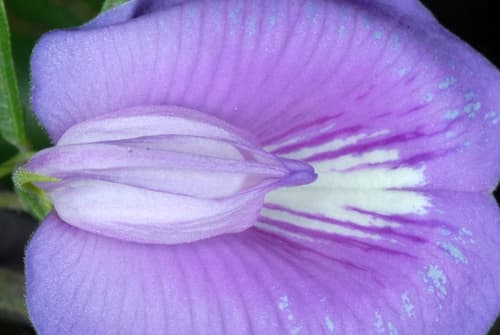
Spurred Butterfly Pea is a native Texas vine that produces small purple flowers with distinctive spurs from spring through fall. This climbing perennial needs support structures and can reach 10-12 feet tall while staying relatively narrow.
How to care for Spurred Butterfly Pea, by region
How to care for Spurred Butterfly Pea where it is actually grown: year-round basics plus what to do each season, region by region, with the sources for each.
Care guidance last updated: September 2026
Mississippi Valley Loess Plains (includes Memphis, TN)
Year-round
A native twining vine for Memphis area gardens with showy purple pea-like flowers, easy sun and soil needs, and a bonus as a butterfly host plant.
- This vine is native to your part of Tennessee, so it fits naturally into a native or pollinator garden bed.
- It is a twining vine that climbs by wrapping around supports, or it can be left to sprawl as a groundcover if there is nothing for it to climb on.
- Give it full sun to part shade and well drained soil. It tolerates sandy, poor soil and does not need fertilizer because it fixes its own nitrogen.
- Water it while it gets established, then cut back to occasional watering during hot, dry stretches once it is settled in.
- It is a caterpillar host plant for the long-tailed skipper and northern cloudywing butterflies, so it feeds more than just pollinators.
- Pinch the growing tips now and then to keep it bushy instead of stringy.
Fall
Fall in Memphis brings the first frost, which ends this vine's top growth for the year.
- Memphis usually sees its first fall frost in late October to early November, and that is what blackens and ends the vine's top growth for the season.
- Once frost has killed the top growth, cut the dead vine back to a few inches above the soil.
- Leave a light layer of mulch over the root area afterward, since a herbaceous vine like this relies on its roots to come back next spring.
- If you want extra seed for next year, collect a few pods before that first hard frost hits.
Cutting back the frost-killed vine right after it blackens keeps a front bed looking tidy for HOA-conscious neighbors headed into winter.
Winter
Winter is dormant season here. There is nothing to do above ground until spring.
- Expect no visible growth. The vine is dormant and regrows from its root next spring rather than overwintering as a full plant.
- Skip watering and fertilizing completely while it is dormant.
- Leave the cut back stems and mulch in place rather than digging around the root area.
- If nothing resprouts by late May, when Memphis is reliably warm, replant, since a harder than usual winter can still kill the roots.
Spring
Spring is planting and establishment season for this vine in Memphis, timed to the last frost.
- Plant seeds or nursery starts after Memphis's last frost, usually in early to mid April.
- Nick the tough seed coat and soak seeds in water overnight before planting to help them sprout faster.
- Put up a trellis, fence, or other support right away since the vine starts twining as soon as it takes off.
- Keep the soil evenly moist while the young plant is putting down roots, then ease off once it is growing well.
Summer
Summer is peak bloom and peak heat in Memphis, and this vine needs the least help once it is established.
- Expect the heaviest flowering from June through September, which lines up with Memphis's hottest stretch.
- An established plant needs little extra water. Add some only during multi week dry spells.
- Guide new twining stems onto their own support so the vine climbs where you want instead of into a neighboring shrub or fence.
- Skip the fertilizer. Rich soil tends to push more leaf growth and fewer flowers on this plant.
Sources: Lady Bird Johnson Wildflower Center, Centrosema virginianum plant profile, NC State Extension Plant Toolbox, Centrosema virginianum, Florida Native Plant Society, Centrosema virginianum profile
Want these tasks as reminders timed to your yard? Pollinator Patch turns this guidance into a season-by-season care plan for the plants you actually grow.
In an HOA neighborhood
Spurred Butterfly Pea takes more care to keep looking intentional in a front yard. Maintenance level: low. Consider it for backyard or mid-zone beds rather than the street edge.
Works well in: backyard only.
- Requires support structure
- Can appear messy
Wildlife value
The purple blooms attract butterflies and other nectar-seeking insects throughout its extended blooming season. This native vine provides important pollinator habitat from March through November.
Common questions
- How much sun does Spurred Butterfly Pea need?
- Spurred Butterfly Pea grows best in part sun conditions.
- When does Spurred Butterfly Pea bloom?
- Spurred Butterfly Pea blooms in March, April, May, June, July, August, September, October, and November.
- Where is Spurred Butterfly Pea native?
- Spurred Butterfly Pea (Centrosema virginianum) is native to AL, AR, DE, FL and 12 more states, per vouchered herbarium specimen records and regional native plant society lists.
- What pollinators does Spurred Butterfly Pea attract?
- Spurred Butterfly Pea draws butterflies and nectar insects.
- Is Spurred Butterfly Pea HOA-friendly?
- Spurred Butterfly Pea takes more care to look intentional in a front yard. Consider it for backyard or mid-zone beds rather than the street edge.
Native range data from vouchered herbarium specimen records and regional native plant society lists. Pollinator and host plant associations compiled from GBIF, iNaturalist, and published ecological literature.
If something looks wrong
Common plant problems, and what to check first
These come up on almost any plant. Each guide lists the likely causes in the order they are worth ruling out, with one thing to check before you act on any of them, and links to the source it came from.
- It is dying right after planting
- Leaves turning yellow
- Wilting even though I watered it
- Brown crispy leaf tips
- Bugs on the plant
Ready to grow Spurred Butterfly Pea? Add it to your garden in Pollinator Patch to track it and get season-by-season care guidance.
Planning a bed around it? Start a free plan with this plant
Not sure where to start? Take the 2-minute yard quiz