Vervain
Verbena lasiostachys
Last reviewed: September 2026
Vervain (Verbena lasiostachys) is a perennial forb native to CA, OR. It blooms in April, May, June, July, and August. The flowers draw butterflies and native bees.
Toxicity unknown
Vervain (Verbena lasiostachys) is not listed by the ASPCA Animal Poison Control Center (opens in new tab) or the other sources we check, so we have no verdict for it either way. Absence from those lists is not a clearance. If your pet shows symptoms after eating any plant, call the ASPCA at (888) 426-4435.
Light
full sun
Water
medium
Size
12"–24" H × 24"–36" W
Bloom
Apr, May, Jun, Jul, Aug
Native to
CA, OR
Pollinators
butterflies, native bees
Before you buy
Your city may pay you to plant this
Cities and water utilities offer rebates for replacing lawn with native and water-wise plants. We track 460 programs across 44 states, each with a link to the provider and the date we last checked it.
Find rebates in your areaPicture natives in your own yard
Upload a photo of your yard and Patch Vision shows a rendering of it planted with natives for your region, like Vervain.


Browse plants for this ecoregion
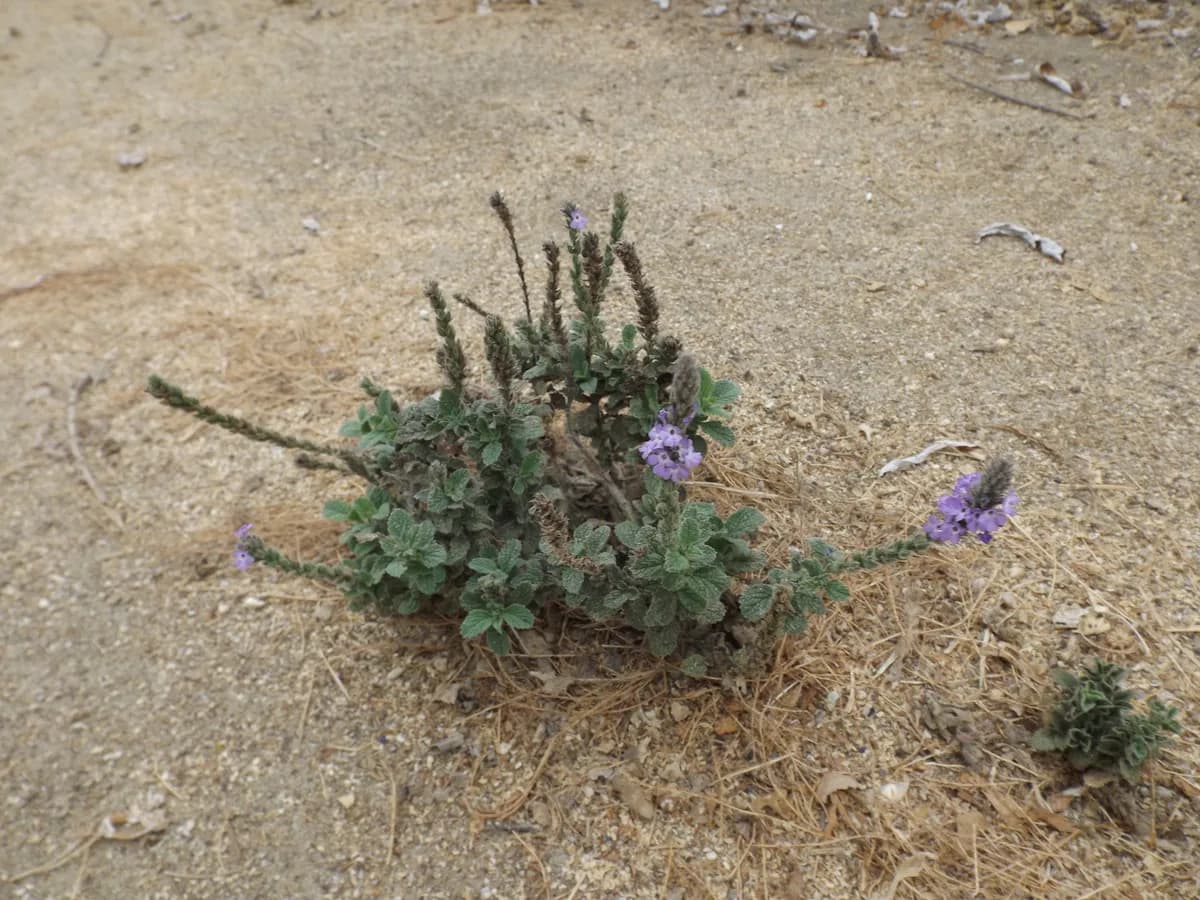
A sprawling perennial with rough-textured leaves and slender spikes of small purple flowers that bloom over a long season. It grows in open grassland and disturbed sites, spreading loosely with age.
Growing Vervain
Grow Vervain in full sun and medium water. Mature plants reach 12 to 24 inches tall and spread 24 to 36 inches wide.
How to care for Vervain, by region
How to care for Vervain where it is actually grown: year-round basics plus what to do each season, region by region, with the sources for each.
Care guidance last updated: September 2026
Central California Foothills and Coastal Mountains (includes San Francisco, CA)
Year-round
Western vervain is native to California's coast and Coast Ranges, and San Francisco's cool foggy summers and mild wet winters suit it well once it is established. It is an easygoing, fast-spreading perennial with a long bloom season.
- Plant in full sun. Coastal fog keeps summer heat mild here, so afternoon shade is not needed.
- Once established, water no more than once a week in summer. Established plants tolerate both dry spells and heavier winter rain.
- It tolerates a range of soils, including sand and clay, as long as drainage is reasonable.
- Cut plants back after a bloom flush to keep the habit tidy and encourage rebloom.
- This species is a documented host plant for a number of California butterfly and moth caterpillars, so leaving some seed heads and foliage in place over winter benefits them.
It spreads by seed and root, so edge the bed or use a mowed strip to keep it looking intentional rather than weedy for HOA-conscious front yards.
Fall
Bloom often continues into fall in San Francisco's mild autumn weather, tapering off as the first rains return.
- Reduce or stop supplemental watering once fall rains begin.
- Cut back leggy stems after the last bloom flush to tidy the plant before winter.
- Seed set in fall self-sows readily, so deadhead spent spikes near pathways or shared property lines if you want to limit spread.
- Skip fall feeding. This species performs best in average to lean soils.
Winter
Winters around San Francisco are mild and wet, and established western vervain plants generally coast through them without special protection.
- Rainfall alone is normally enough irrigation through winter. Do not add supplemental water in wet years.
- In spots with heavy clay soil, check drainage. This species tolerates wet soil but not prolonged standing water.
- Frost is rare in San Francisco proper. Plants in colder inland microclimates may show some dieback that regrows in spring.
- This is a low-maintenance season. Skip fertilizing and let the plant go semi-dormant.
Spring
Spring is western vervain's main growth push in the San Francisco area, fueled by the tail end of the rainy season.
- Let late-season rain do the watering. Supplemental irrigation is usually not needed yet.
- This is a good time to divide crowded clumps or move seedlings while the soil is still workable and moist.
- First flower spikes typically open in mid to late spring, and the bloom period continues for months.
- Pull emerging seedlings early if you want to keep the plant contained near a front walk or property line.
Summer
San Francisco's dry, fog-cooled summers are western vervain's comfort zone. It keeps flowering with very little supplemental water.
- Water at most once a week, and skip watering entirely in foggy weeks when soil stays moist.
- Deadhead spent spikes to keep flowers coming through the season.
- Full sun works well here since coastal fog moderates afternoon heat. Warmer inland pockets of the Bay Area may do better with light afternoon shade.
- Watch for spread into neighboring beds or lawn edges during this active growth period.
Keep an eye on spread along shared borders during peak summer growth so it does not creep into a neighbor's bed.
Wildlife value
Its long bloom period provides a steady nectar source for butterflies and native bees through much of the growing season.
Common questions
- How much sun does Vervain need?
- Vervain grows best in full sun conditions.
- When does Vervain bloom?
- Vervain blooms in April, May, June, July, and August.
- Where is Vervain native?
- Vervain (Verbena lasiostachys) is native to CA, OR, per vouchered herbarium specimen records and regional native plant society lists.
- What pollinators does Vervain attract?
- Vervain draws butterflies and native bees.
Native range data from vouchered herbarium specimen records and regional native plant society lists. Pollinator and host plant associations compiled from GBIF, iNaturalist, and published ecological literature.
If something looks wrong
Common plant problems, and what to check first
These come up on almost any plant. Each guide lists the likely causes in the order they are worth ruling out, with one thing to check before you act on any of them, and links to the source it came from.
- It is dying right after planting
- Leaves turning yellow
- Wilting even though I watered it
- Brown crispy leaf tips
- Bugs on the plant
Ready to grow Vervain? Add it to your garden in Pollinator Patch to track it and get season-by-season care guidance.