Western Ironweed
Vernonia baldwinii
Last reviewed: August 2026
Western ironweed is a full sun prairie forb that produces clusters of deep purple flowers from June through November across grasslands and pastures of the central and southern Great Plains and Midwest.
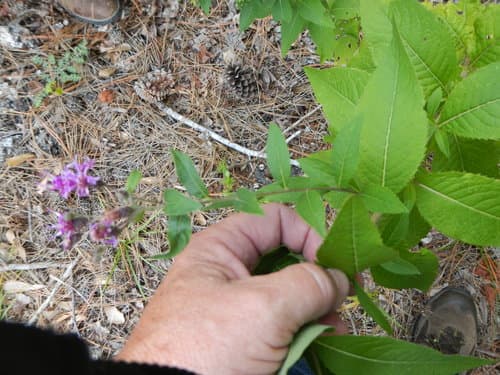
Toxicity unknown
Western Ironweed (Vernonia baldwinii) is not listed by the ASPCA Animal Poison Control Center (opens in new tab) or the other sources we check, so we have no verdict for it either way. Absence from those lists is not a clearance. If your pet shows symptoms after eating any plant, call the ASPCA at (888) 426-4435.
Light
full sun
Water
low
Size
36"–60" H × 12"–24" W
Bloom
Jun, Jul, Aug, Sep, Oct, Nov
Native to
AR, CO, IA, IL and 8 more states
Pollinators
butterflies, bees
Before you buy
Your city may pay you to plant this
Cities and water utilities offer rebates for replacing lawn with native and water-wise plants. We track 452 programs across 44 states, each with a link to the provider and the date we last checked it.
Find rebates in your areaBrowse plants for this ecoregion
Western Ironweed is a tall native perennial that produces clusters of vibrant purple flowers from summer through late fall. This drought-tolerant wildflower grows in an upright, somewhat narrow form and goes dormant in winter. Its long blooming period and low water needs make it valuable for sustainable landscapes.
Growing Western Ironweed
Grow Western Ironweed in full sun and low water. Mature plants reach 36 to 60 inches tall and spread 12 to 24 inches wide. Expect low maintenance to keep it looking intentional in a front yard.
How to care for Western Ironweed, by region
How to care for Western Ironweed where it is actually grown: year-round basics plus what to do each season, region by region, with the sources for each.
Care guidance last updated: July 2026
Cross Timbers (includes Fort Worth, TX)
Year-round
Western Ironweed is a tall native perennial wildflower, native to prairies and open ground across North Texas, valued for its clusters of deep reddish purple flowers that draw butterflies and bees from early summer into fall.
- Give it full sun and let the soil dry between waterings; once established it tolerates North Texas heat and drought with little to no supplemental water.
- Expect a mature clump 3 to 5 feet tall and 2 to 3 feet wide, so place it toward the back of a bed or away from walkways.
- Space new plants 24 to 36 inches apart to give the clump room to fill in and keep airflow good.
- In heavy black clay, plant it high on a slight mound or amend for drainage; in the sandier soils west of the metro it will need more frequent watering through its first summer.
Reads as an intentional prairie-style planting when kept to a defined clump with a mown or edged border, rather than left to spread loosely along a fence line.
Fall
Blooming continues into fall, and cooler weather also makes this a good season to divide crowded clumps or add new plants.
- Deadhead spent flower clusters in October to tidy the look, or leave some seed heads standing since birds feed on them.
- Divide overgrown clumps in October or November with a spade, separating rooted sections to replant or share.
- After the first hard freeze (typically mid November) and once foliage has died back, cut stems to 6 to 8 inches.
- Skip fertilizer this time of year; this plant does not need feeding to perform well.
Deadheading spent blooms in October keeps the bed looking maintained through the fall flowering period.
Winter
Western Ironweed goes fully dormant in winter, dying back to the ground until new growth returns in spring.
- Leave the cut back clump undisturbed through winter; no watering is needed during dormancy.
- If stems were not cut back in fall, trim them to 4 to 6 inches above ground before new growth starts in late February.
- This plant is hardy through USDA zone 8a to 8b winters, so a typical short hard freeze or an occasional severe Arctic outbreak will not damage the dormant root system.
- Mark the spot if the bed is otherwise bare, so the dormant clump is not mistaken for a weed and accidentally dug up.
A dormant, cut back clump can look bare through winter; a mulch ring or plant marker signals it is an intentional planting, not neglect.
Spring
Spring is the best time to put new Western Ironweed in the ground, and established clumps send up fresh growth from the base as the weather warms.
- Plant new nursery starts after the last frost (mid March) so roots have time to establish before summer heat arrives.
- Cut back any dead top growth left over from winter to about 2 inches once new shoots appear at the base.
- Water new plantings twice a week for the first 4 to 6 weeks, then taper off as roots establish.
- By late May expect new growth to reach 12 to 18 inches; no pruning is needed at this stage.
New spring growth stays low and clumped, reading as an intentional bed rather than volunteer weeds, especially with a defined edge.
Summer
Summer is when Western Ironweed puts on its show, with tall stems topped by clusters of reddish purple flowers that keep blooming through the hottest weeks.
- Established plants need little to no supplemental water even during July and August dry spells; water only during extended stretches with no rain.
- Pinch or cut stems back by about one third in early June if you want a shorter, bushier plant that is less likely to flop.
- Bees and butterflies work the flower clusters from June into fall; no action needed, just leave them undisturbed.
- Add a support ring around the clump if wind or heavy bloom weight causes stems to lean.
Tall flowering stems can look unkempt if they flop into a walkway or lawn edge; a support ring or early June pinch keeps the look tidy and intentional through the hottest months.
Sources: Lady Bird Johnson Wildflower Center Native Plant Database: Vernonia baldwinii, USDA PLANTS Database: Vernonia baldwinii plant profile (VEBA2)
Texas Blackland Prairies (includes Dallas, TX)
Year-round
Western Ironweed is a tall native perennial wildflower, native to prairies and open ground across North Texas, valued for its clusters of deep reddish purple flowers that draw butterflies and bees from early summer into fall.
- Give it full sun and let the soil dry between waterings; once established it tolerates North Texas heat and drought with little to no supplemental water.
- Expect a mature clump 3 to 5 feet tall and 2 to 3 feet wide, so place it toward the back of a bed or away from walkways.
- Space new plants 24 to 36 inches apart to give the clump room to fill in and keep airflow good.
- In heavy black clay, plant it high on a slight mound or amend for drainage; in the sandier soils west of the metro it will need more frequent watering through its first summer.
Reads as an intentional prairie-style planting when kept to a defined clump with a mown or edged border, rather than left to spread loosely along a fence line.
Fall
Blooming continues into fall, and cooler weather also makes this a good season to divide crowded clumps or add new plants.
- Deadhead spent flower clusters in October to tidy the look, or leave some seed heads standing since birds feed on them.
- Divide overgrown clumps in October or November with a spade, separating rooted sections to replant or share.
- After the first hard freeze (typically mid November) and once foliage has died back, cut stems to 6 to 8 inches.
- Skip fertilizer this time of year; this plant does not need feeding to perform well.
Deadheading spent blooms in October keeps the bed looking maintained through the fall flowering period.
Winter
Western Ironweed goes fully dormant in winter, dying back to the ground until new growth returns in spring.
- Leave the cut back clump undisturbed through winter; no watering is needed during dormancy.
- If stems were not cut back in fall, trim them to 4 to 6 inches above ground before new growth starts in late February.
- This plant is hardy through USDA zone 8a to 8b winters, so a typical short hard freeze or an occasional severe Arctic outbreak will not damage the dormant root system.
- Mark the spot if the bed is otherwise bare, so the dormant clump is not mistaken for a weed and accidentally dug up.
A dormant, cut back clump can look bare through winter; a mulch ring or plant marker signals it is an intentional planting, not neglect.
Spring
Spring is the best time to put new Western Ironweed in the ground, and established clumps send up fresh growth from the base as the weather warms.
- Plant new nursery starts after the last frost (mid March) so roots have time to establish before summer heat arrives.
- Cut back any dead top growth left over from winter to about 2 inches once new shoots appear at the base.
- Water new plantings twice a week for the first 4 to 6 weeks, then taper off as roots establish.
- By late May expect new growth to reach 12 to 18 inches; no pruning is needed at this stage.
New spring growth stays low and clumped, reading as an intentional bed rather than volunteer weeds, especially with a defined edge.
Summer
Summer is when Western Ironweed puts on its show, with tall stems topped by clusters of reddish purple flowers that keep blooming through the hottest weeks.
- Established plants need little to no supplemental water even during July and August dry spells; water only during extended stretches with no rain.
- Pinch or cut stems back by about one third in early June if you want a shorter, bushier plant that is less likely to flop.
- Bees and butterflies work the flower clusters from June into fall; no action needed, just leave them undisturbed.
- Add a support ring around the clump if wind or heavy bloom weight causes stems to lean.
Tall flowering stems can look unkempt if they flop into a walkway or lawn edge; a support ring or early June pinch keeps the look tidy and intentional through the hottest months.
Sources: Lady Bird Johnson Wildflower Center Native Plant Database: Vernonia baldwinii, USDA PLANTS Database: Vernonia baldwinii plant profile (VEBA2)
Want these tasks as reminders timed to your yard? Pollinator Patch turns this guidance into a season-by-season care plan for the plants you actually grow.
In an HOA neighborhood
Western Ironweed is an HOA-friendly choice. Maintenance level: low. Tidiness: 2 out of 5.
Works well in: mid zone, backyard only.
- May flop without support
- Best in less formal zones
Wildlife value
This plant is excellent for supporting butterflies and native bees with its abundant nectar-rich purple blooms. The extended flowering season from June through November provides crucial late-season food sources when many other plants have finished blooming.
Common questions
- When does western ironweed bloom?
- Western ironweed blooms from June through November, with dense clusters of small purple flowers that persist into fall, providing color in prairies and roadsides long after many spring wildflowers have faded.
- What growing conditions does western ironweed need?
- It grows best in full sun and tolerates low to medium soil moisture, which lets it handle dry summers in prairies, pastures and roadside ditches without extra watering.
- What pollinators visit western ironweed?
- Bees and butterflies visit the purple flower heads for nectar, and the plant is often listed as a useful late season nectar source in prairie and pollinator garden plantings.
- Does western ironweed die back in winter?
- Yes, it is an herbaceous perennial forb. The above ground growth dies back after frost and new stems emerge from the base the following spring.
- Is Western Ironweed HOA-friendly?
- Western Ironweed is generally an HOA-friendly choice in the right placement, with low maintenance.
These answers were drafted with an AI model from this plant's data. Verify care details with a local expert.
Native range data from the World Checklist of Vascular Plants (Kew). Pollinator and host plant associations compiled from GBIF, iNaturalist, and published ecological literature.
If something looks wrong
Common plant problems, and what to check first
These come up on almost any plant. Each guide lists the likely causes in the order they are worth ruling out, with one thing to check before you act on any of them, and links to the source it came from.
- It is dying right after planting
- Leaves turning yellow
- Wilting even though I watered it
- Brown crispy leaf tips
- Bugs on the plant
Ready to grow Western Ironweed? Add it to your garden in Pollinator Patch to track it and get season-by-season care guidance.
Planning a bed around it? Start a free plan with this plant
Not sure where to start? Take the 2-minute yard quiz