Quick answer: It depends on the species. Common milkweed (Asclepias syriaca) spreads by rhizomes and forms clones (Lady Bird Johnson Wildflower Center), and it can grow into large patches (University of Vermont Extension). Butterfly weed (Asclepias tuberosa) has a taproot and swamp milkweed (Asclepias incarnata) grows as a clump, and UNH Extension names both as less aggressive choices. "Invasive" is the wrong word for any of the three, because the federal definition requires a non-native species (Executive Order 13112). Tropical milkweed (Asclepias curassavica) is the non-native one, and it is the species with a real caution (Xerces Society).
Key takeaways
- Monarch Joint Venture says neither the federal government nor any state lists milkweeds as noxious weeds, and that how invasive a plant is depends on the species and where it is planted (Monarch Joint Venture).
- Common milkweed "spreads via rhizomes and forms small to large clones" (Lady Bird Johnson Wildflower Center). Missouri Botanical Garden says that habit may be seen as aggressive in a home garden (Missouri Botanical Garden).
- Butterfly weed has a taproot, so large plants are hard to divide or move (University of Illinois Extension). Swamp milkweed's roots radiate out from the center as a clump (Wild Ones).
- Milkweeds can self-seed if the pods split open on the plant, so pod removal limits seedlings and does nothing about rhizomes (Missouri Botanical Garden, UNH Extension).
- Tropical milkweed is a non-native species that Xerces does not recommend planting, and Florida lists it as a Category II invasive (Xerces Society, UF/IFAS Extension).
Is milkweed invasive?
Not in the way that word is used officially. Executive Order 13112 defines an invasive species as an alien species whose introduction does or is likely to cause economic or environmental harm or harm to human health, and it defines a native species as one that historically occurred in that ecosystem (U.S. Department of the Interior, Executive Order 13112). By that definition a plant that belongs in your region cannot be invasive there, however pushy it is in a garden bed.
Monarch Joint Venture says the same thing from the milkweed side. Neither the federal government nor any states list milkweeds as noxious weeds, and the invasiveness of any plant depends on the characteristics of the species and where it is planted. It names common milkweed as the example of a species that can be aggressive in garden settings or disturbed areas (Monarch Joint Venture). So the useful word for common milkweed is "aggressive" or "spreads," and the useful question is whether you have the room for it.
The answer changes by species, which is why the rest of this post goes one at a time.
Common milkweed: the one that spreads
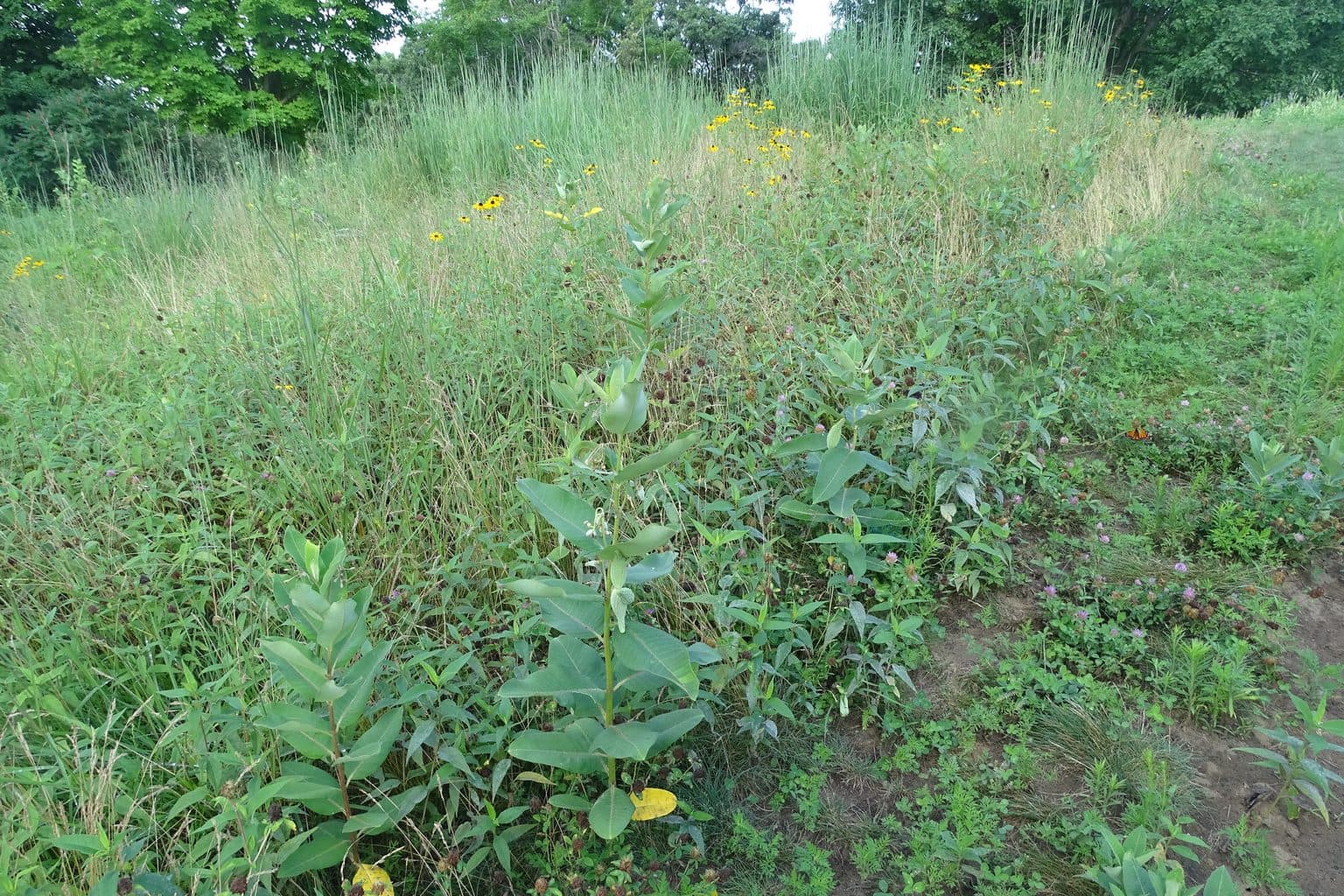
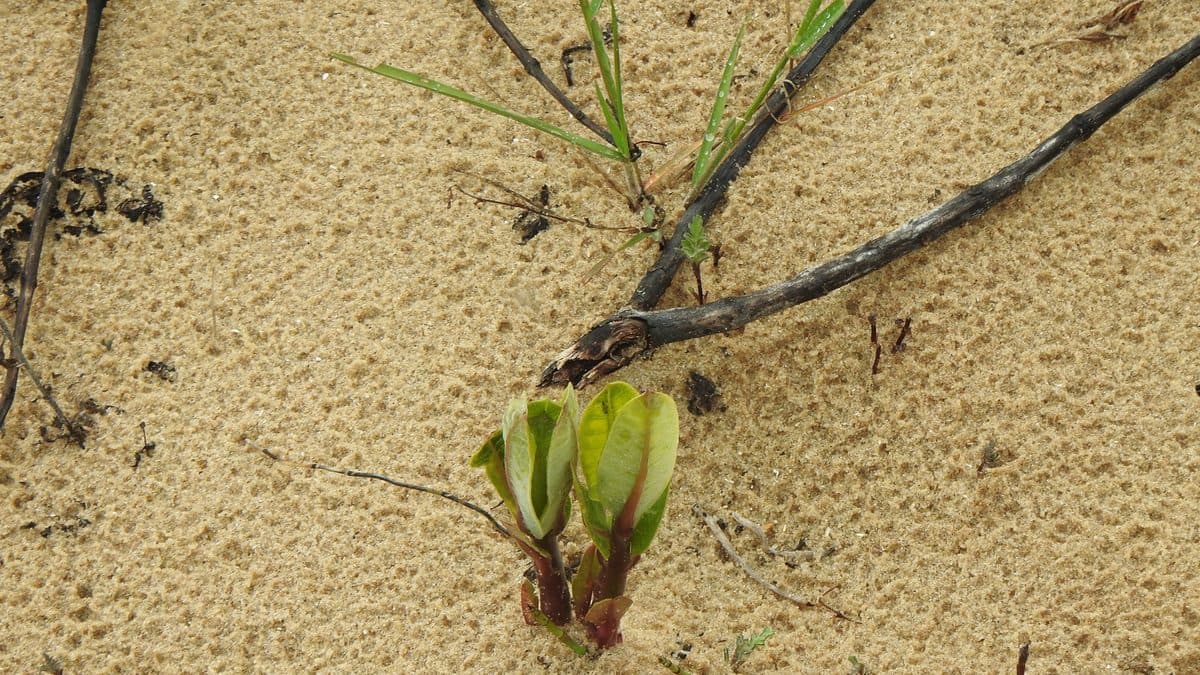
The Lady Bird Johnson Wildflower Center lists the native range of common milkweed as Saskatchewan to New Brunswick, south to Georgia, and west through Tennessee to Kansas and Iowa. It describes the plant as spreading via rhizomes and forming small to large clones, and calls it the best species at colonizing disturbed sites (Lady Bird Johnson Wildflower Center). A rhizome is an underground stem. Each one can send up new shoots some distance from the stem you planted, which is how one plant becomes a patch.
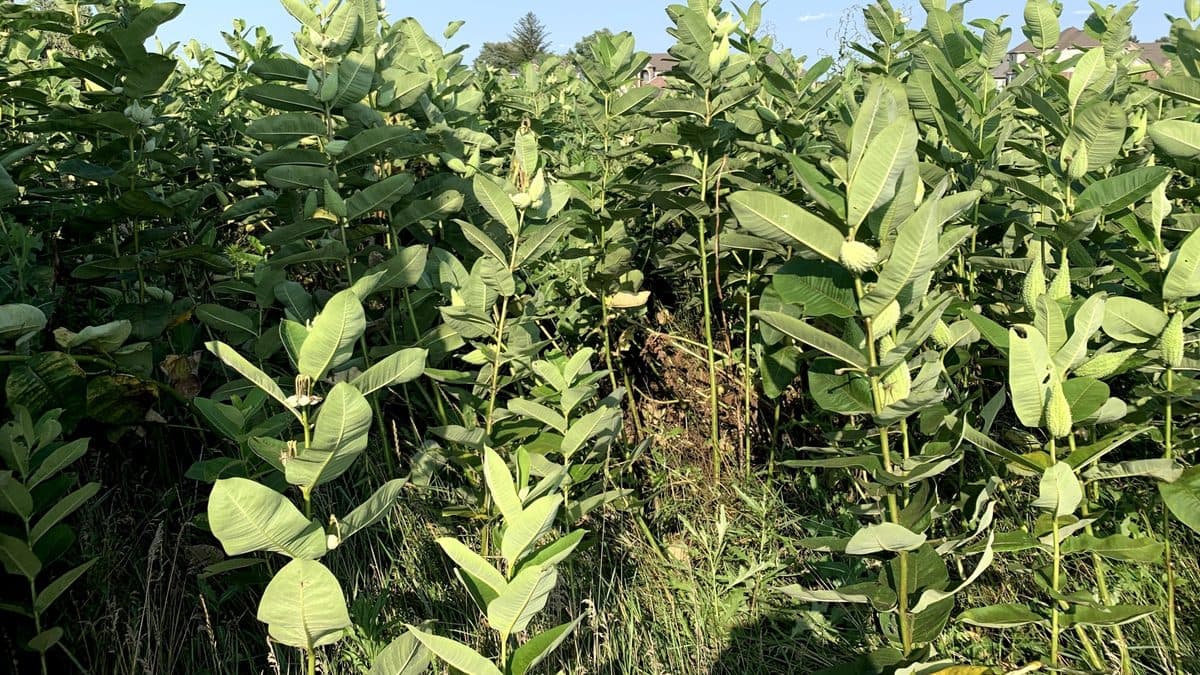
University of Vermont Extension says common milkweed can grow into large patches by underground rhizomes and tends to grow in colonies when conditions suit it (University of Vermont Extension). Missouri Botanical Garden puts the garden side plainly: some milkweed species naturally spread by rhizomes, which lets them form colonies in the wild, and that growth strategy may be seen as aggressive in home gardens (Missouri Botanical Garden). UNH Extension, answering a gardener whose milkweed was taking over a perennial bed, says an established common milkweed can spread from its rhizomatous root system (UNH Extension).

The Wildflower Center also calls it a "fugitive species" that struggles to compete with other vegetation, and says it is surprisingly rare in Midwest prairies (Lady Bird Johnson Wildflower Center). Put together, it moves fast into bare or disturbed ground and holds less well in a crowded planting. A new bed with open soil is the kind of ground it takes to.
Seed is a second way milkweed spreads
Rhizomes are only half of it. Missouri Botanical Garden says milkweeds may also self-seed in the landscape if the pods are not removed before splitting open (Missouri Botanical Garden). The Missouri Department of Conservation describes swamp milkweed seeds with silky parachutes that let the seeds be dispersed far from the parent plant (Missouri Department of Conservation). Common milkweed seed carries the same silky fluff, which you can see in the photo below.
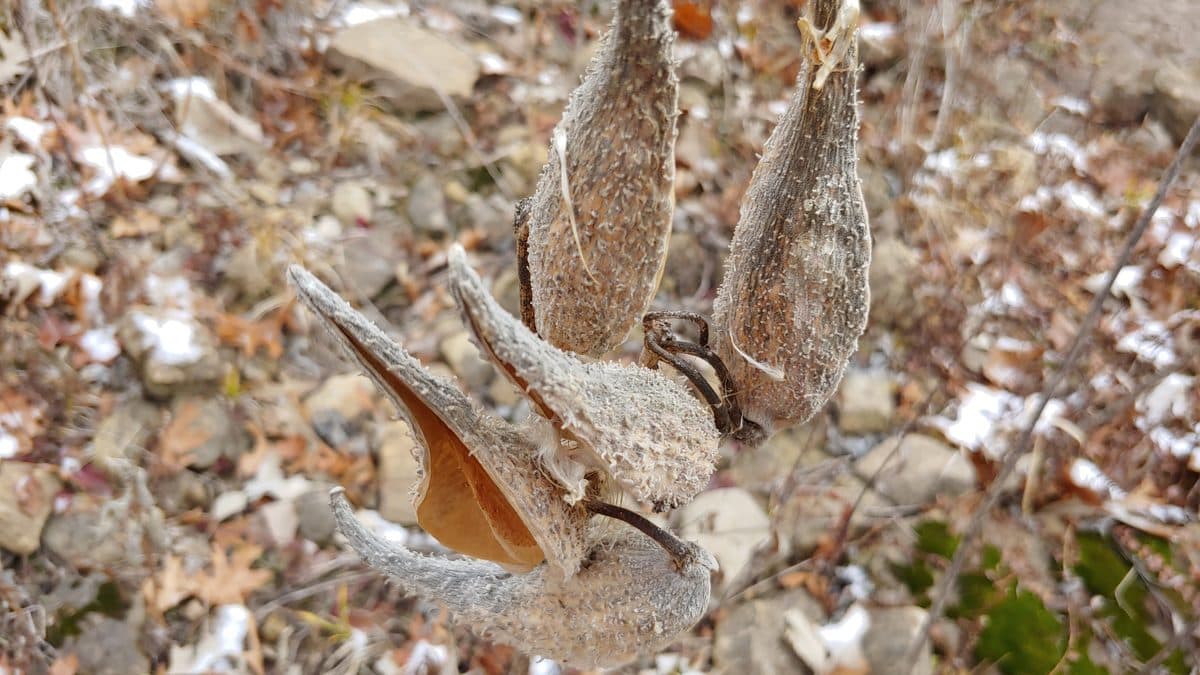
Removing pods before they open limits seedlings. It does nothing about the rhizomes, so a patch that spreads underground keeps spreading. UNH Extension lists removing immature seed pods and hand-pulling plants as ways to limit spread (UNH Extension). Digging a stray shoot out along with the stem it comes from is my own suggestion, not a method from a source I read.
Butterfly weed: a taproot that stays put
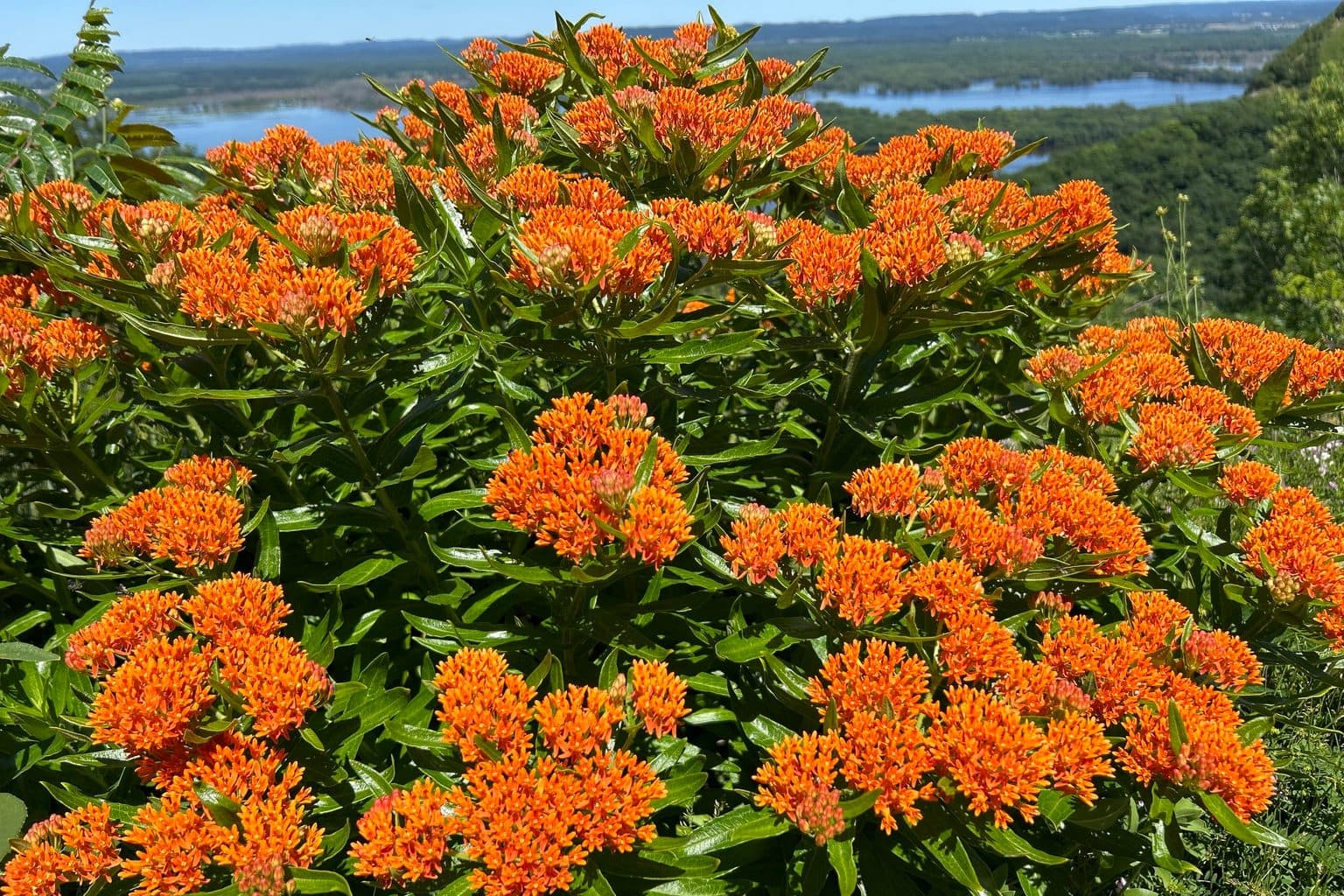
Butterfly weed is native from Ontario to Newfoundland, south to Florida, west to Texas and north through Colorado to Minnesota (Lady Bird Johnson Wildflower Center). It grows from a taproot, a single deep main root. University of Illinois Extension says division and transplanting of large plants is difficult because of the tap root system (University of Illinois Extension). Wild Ones adds that butterflyweeds have taproots, which helps them thrive in dry, poor soil, and that taproots cannot be divided (Wild Ones, reposted by Loudoun Wildlife Conservancy). UNH Extension says butterflyweed tends to grow in clumps (UNH Extension).
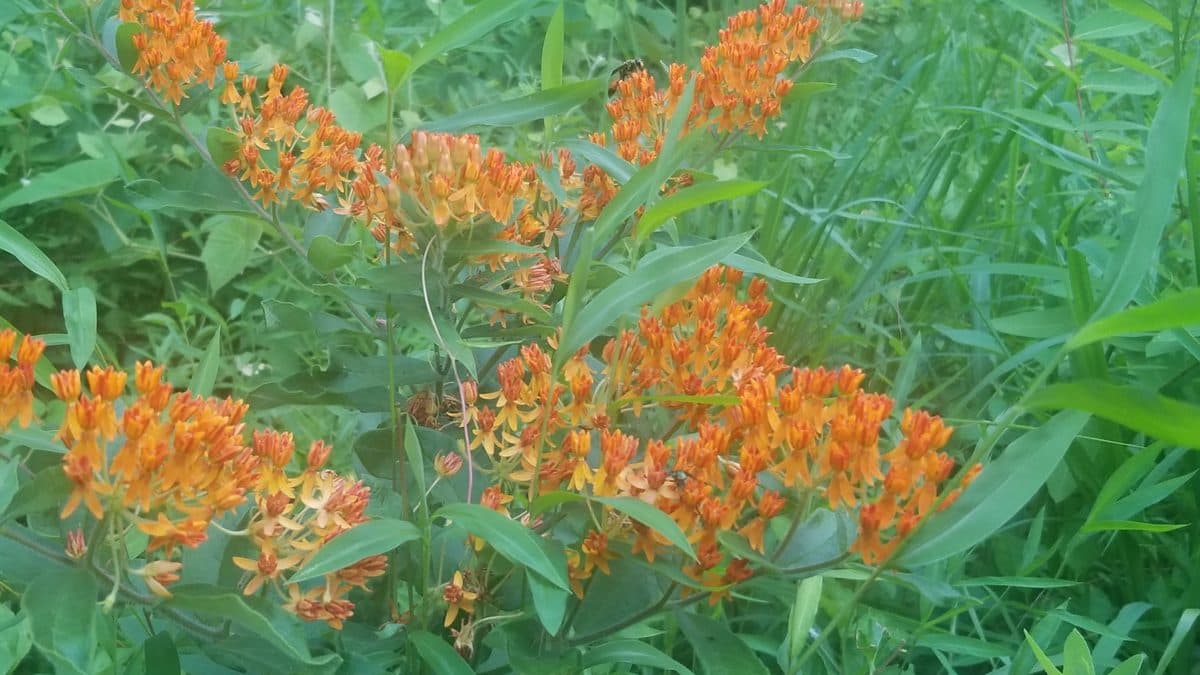
I did not find a source that says butterfly weed spreads by rhizomes. The sources I read describe a taproot and a clump. The Wildflower Center says established plants become thicker each year, so expect the clump to widen slowly, and expect it not to like being moved (Lady Bird Johnson Wildflower Center). Decide where it goes the first time. The butterfly weed regional care guide covers water and winter by ecoregion.
Swamp milkweed: a clump that likes wet ground
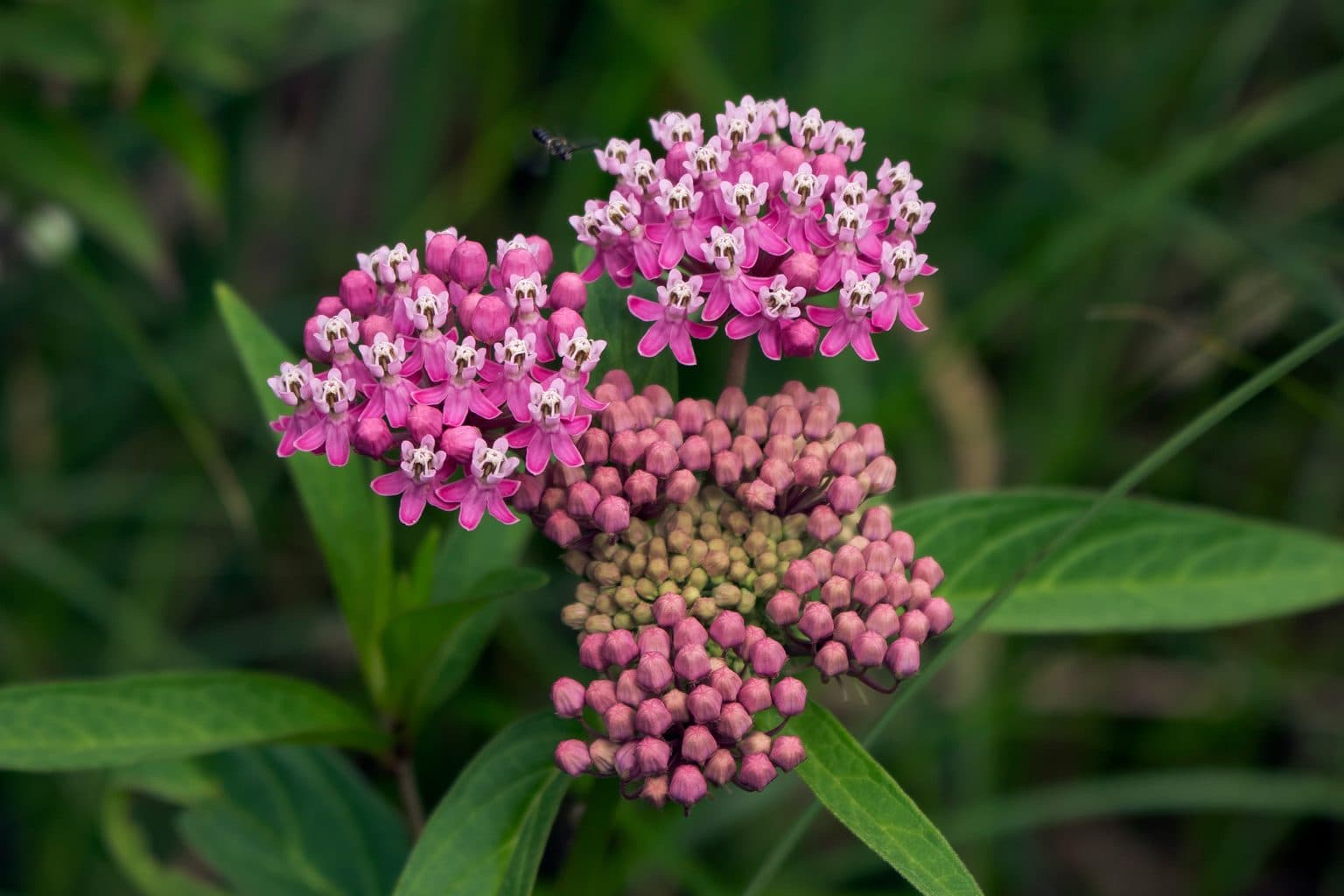
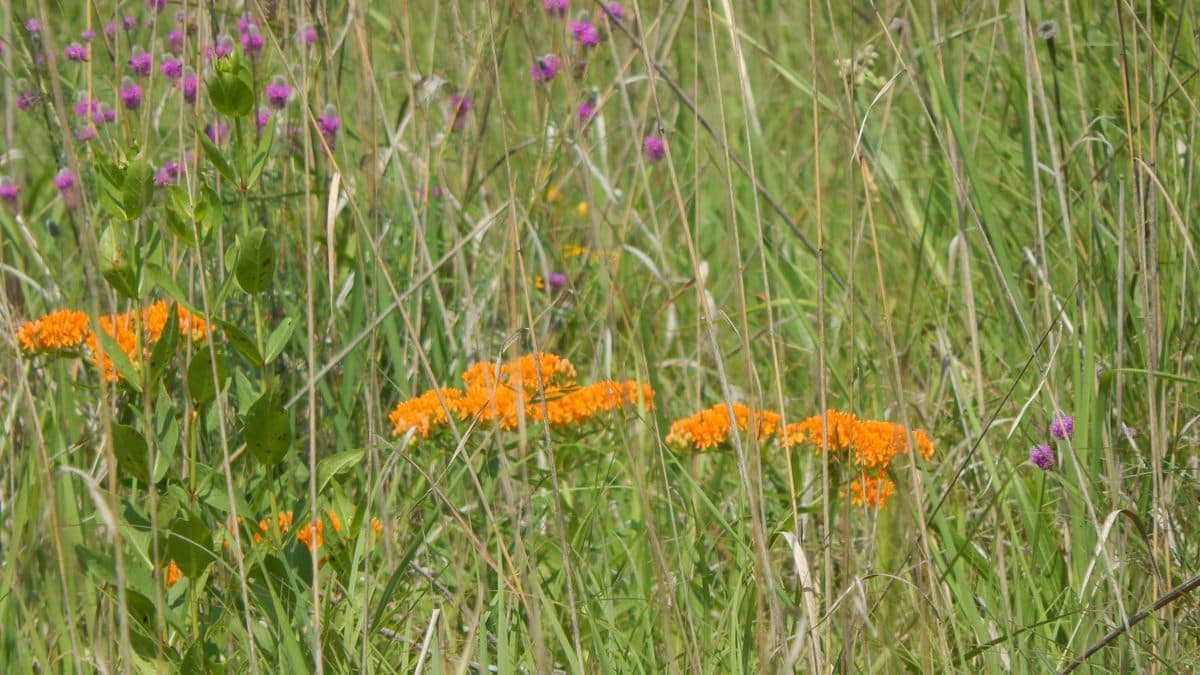
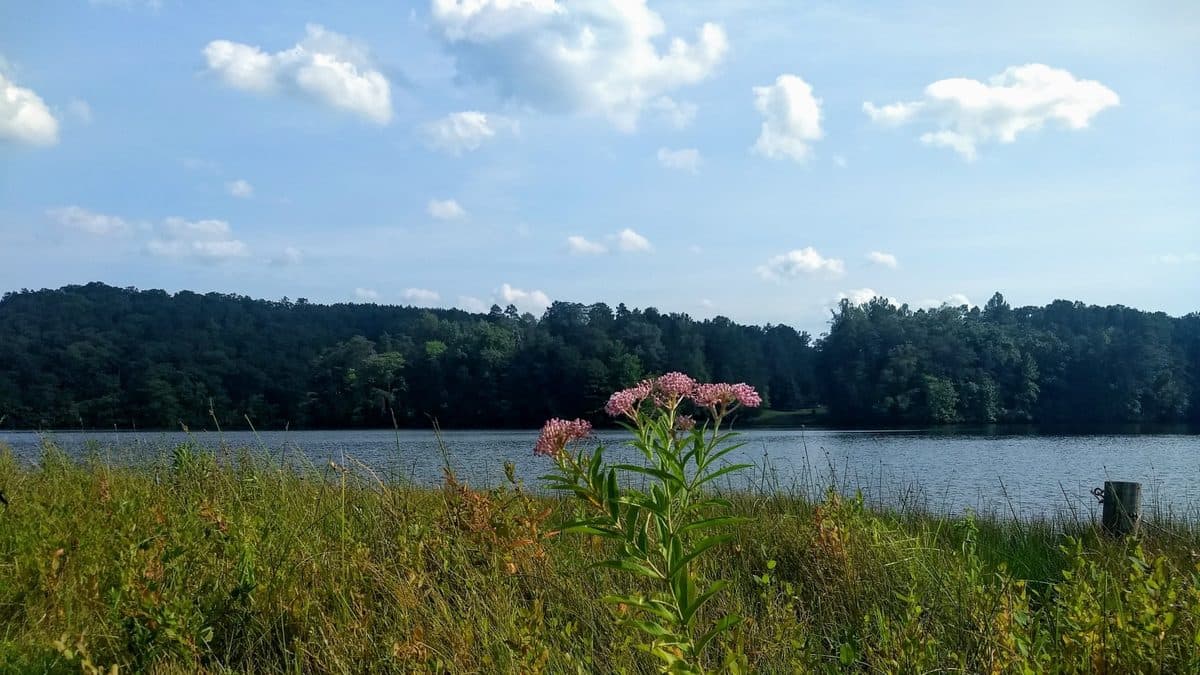
Swamp milkweed is native from New England south to Georgia, west to Louisiana and Texas, and north to North Dakota. The Wildflower Center describes a stately clump of upright stems, most often found on the margins of flooded plains, lakes, ponds, waterways, marshes and swamps, and says it thrives in mucky clay soils (Lady Bird Johnson Wildflower Center). Wild Ones describes its roots as the most conventional looking of the three, simply radiating out from the center as a clump (Wild Ones, reposted by Loudoun Wildlife Conservancy).
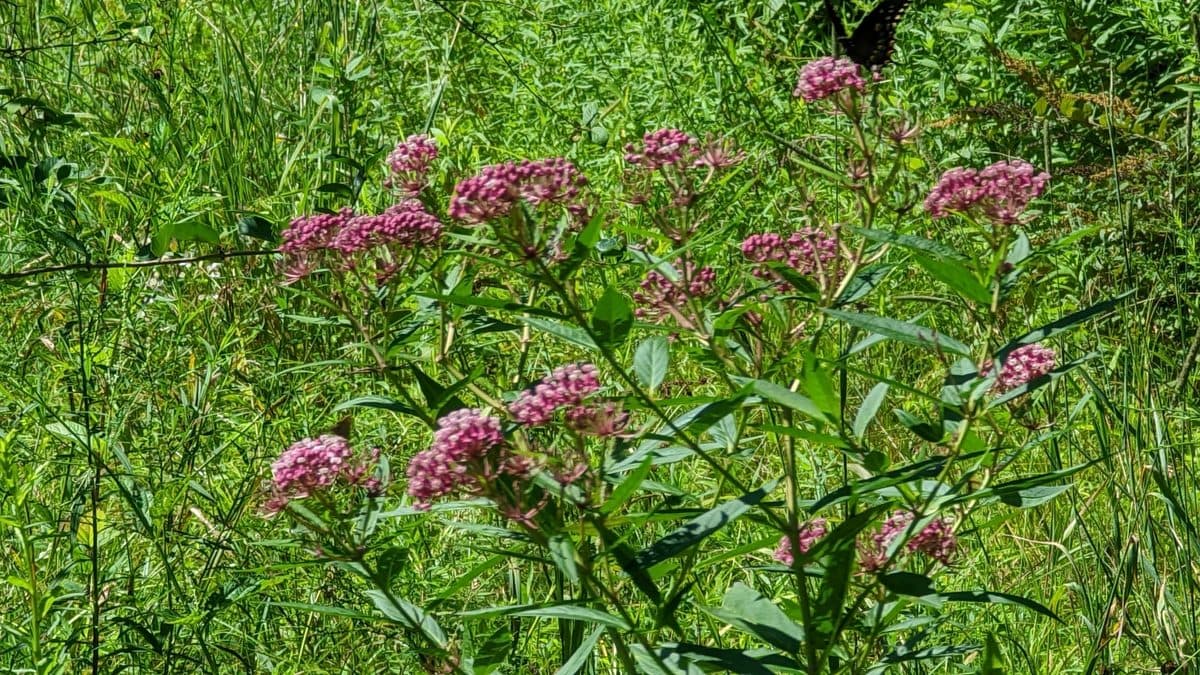
Swamp milkweed does make seed. The Wildflower Center says it is easy to start from seed, and the Missouri Department of Conservation describes the parachuted seed that travels (Lady Bird Johnson Wildflower Center, Missouri Department of Conservation). No source I read measures how much it seeds around a garden, so I will not put a number on it. Cutting seed heads before the pods split is the same move as for any milkweed. The swamp milkweed regional care guide has the watering notes by region.
Tropical milkweed: the one with a real caution
This is the milkweed worth being careful with, though how far it spreads has nothing to do with why. Xerces describes tropical milkweed as a non-native species and says it becomes a problem where it remains evergreen through winter, because the parasite Ophryocystis elektroscirrha (OE) can build up on the plant over multiple generations of caterpillars. Xerces says, "we do not recommend planting tropical milkweed" (Xerces Society). Monarch Joint Venture cites research linking monarchs that breed on tropical milkweed through the winter to higher infection (Monarch Joint Venture).
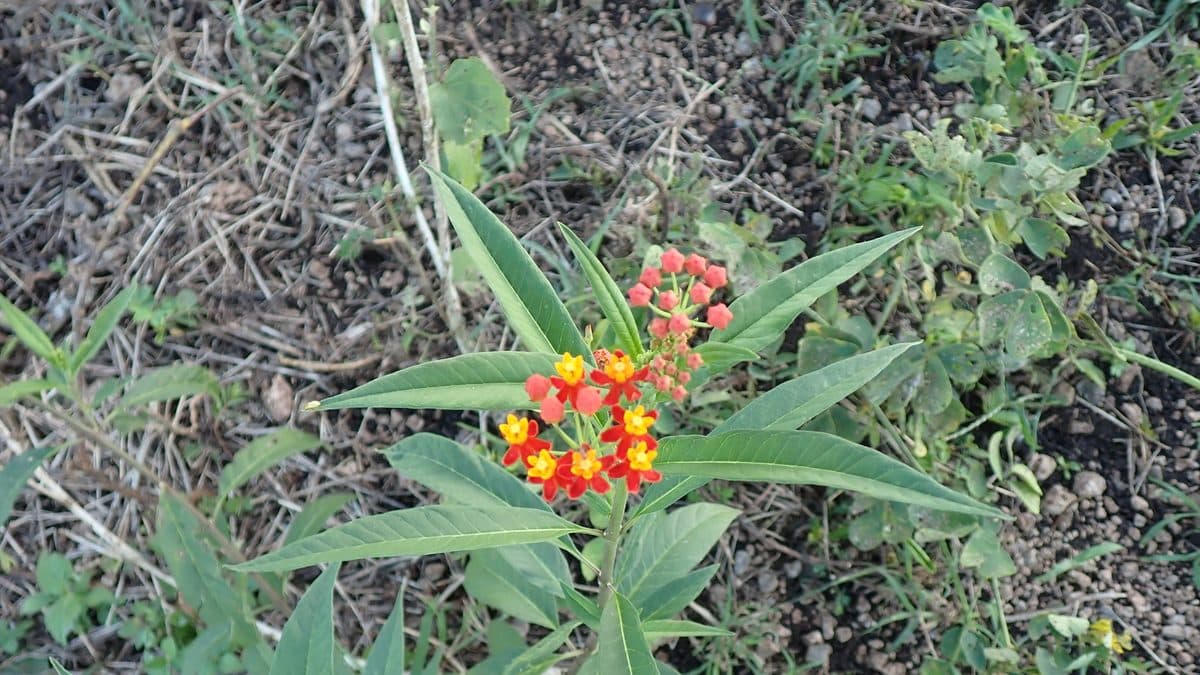
Florida also lists it. UF/IFAS Extension in Hillsborough County says tropical milkweed is a Category II invasive on the Florida Invasive Species Council list as of June 2025, because it can host the OE parasite and grows year-round in Central Florida (UF/IFAS Extension, Hillsborough County). The same page recommends swamp milkweed, aquatic milkweed and butterfly weed as native choices. For the Florida-specific list, see native milkweed for Florida.
The three natives side by side
| Species | How it grows | Source |
|---|---|---|
| Common milkweed (A. syriaca) | Spreads by rhizomes and forms clones. Can be aggressive in a garden. | Wildflower Center, Missouri Botanical Garden |
| Butterfly weed (A. tuberosa) | Taproot and clump. Hard to divide or move. | University of Illinois Extension, UNH Extension |
| Swamp milkweed (A. incarnata) | Clump of upright stems. Sets parachuted seed. | Wildflower Center, UNH Extension, Missouri Dept. of Conservation |
Which one to plant
Start from where each species is native, because that is what the Wildflower Center ranges above describe. Then match the habit to the space. A small bed or a front yard that has to stay tidy wants a clump former. UNH Extension suggests swamp milkweed and butterflyweed as less aggressive native replacements for a gardener whose common milkweed is taking over (UNH Extension). A back corner, a field edge or a large naturalized area is where common milkweed has the room to do what it does.
If you already have common milkweed in the wrong place
Milkweed is also toxic to dogs, which is a separate question from spreading. See is milkweed toxic to dogs for the ASPCA listing, and milkweed in an HOA front yard for how to place it where it will not draw a notice. The common milkweed regional care guide has the care rules by ecoregion.
People also ask
Is milkweed invasive?
Native milkweeds are not invasive by the federal definition, which requires a non-native species (Executive Order 13112). Monarch Joint Venture says no state or federal government lists milkweeds as noxious weeds, though common milkweed can be aggressive in gardens (Monarch Joint Venture). Tropical milkweed is non-native, and Florida lists it as a Category II invasive (UF/IFAS Extension).
Does common milkweed spread?
Yes. The Wildflower Center says it spreads via rhizomes and forms small to large clones, and University of Vermont Extension says it can grow into large patches by underground rhizomes (Lady Bird Johnson Wildflower Center, University of Vermont Extension). It also self-seeds if pods split open (Missouri Botanical Garden).
Which milkweed does not spread?
Butterfly weed and swamp milkweed are the usual answers. UNH Extension says they tend to grow in clumps and calls them less aggressive than common milkweed (UNH Extension). Both can still drop seed, so remove pods if you want to limit seedlings (Missouri Botanical Garden).
How do I stop milkweed from taking over my garden?
Remove immature seed pods and hand-pull plants you do not want (UNH Extension). Removing pods stops seedlings and does not stop rhizomes. If the patch keeps coming back, replace it with swamp milkweed or butterfly weed, whichever is native where you live (Lady Bird Johnson Wildflower Center).
See which milkweed is native where you live
Pollinator Patch shows the native milkweeds for your ZIP code and the care rules for your ecoregion. Care is free for every plant you own, native or not, and the milkweed pages cover water, winter and cutback by region.