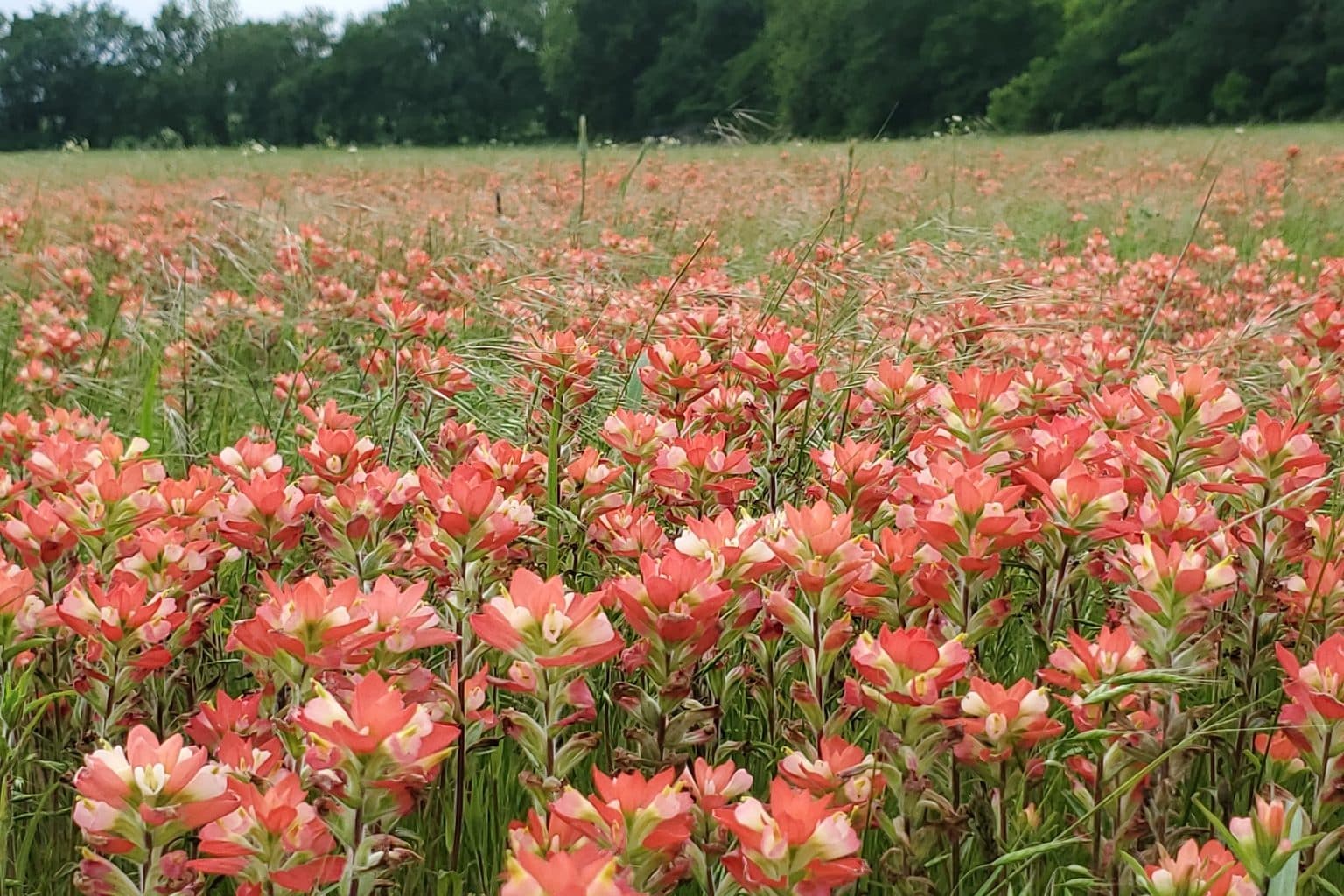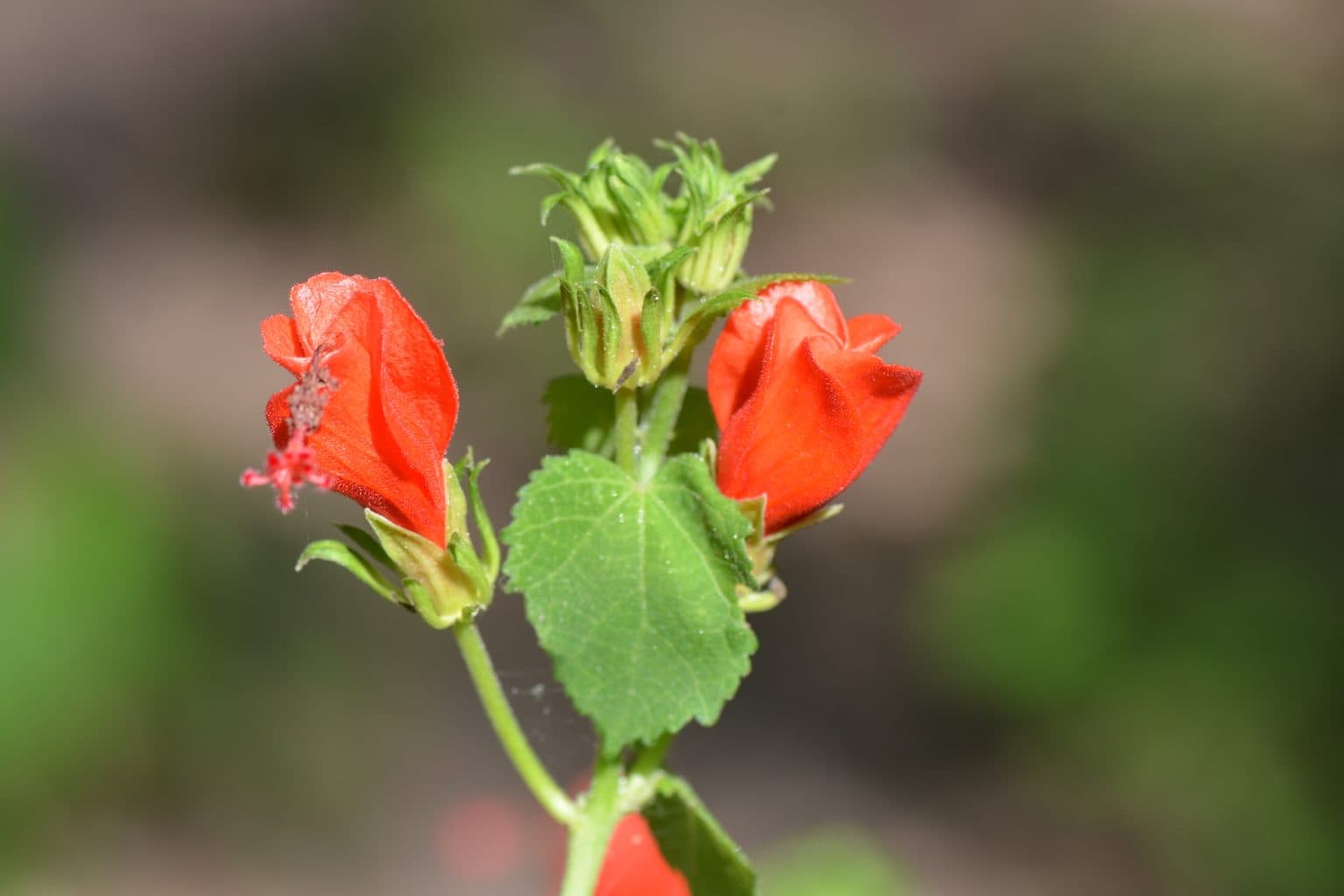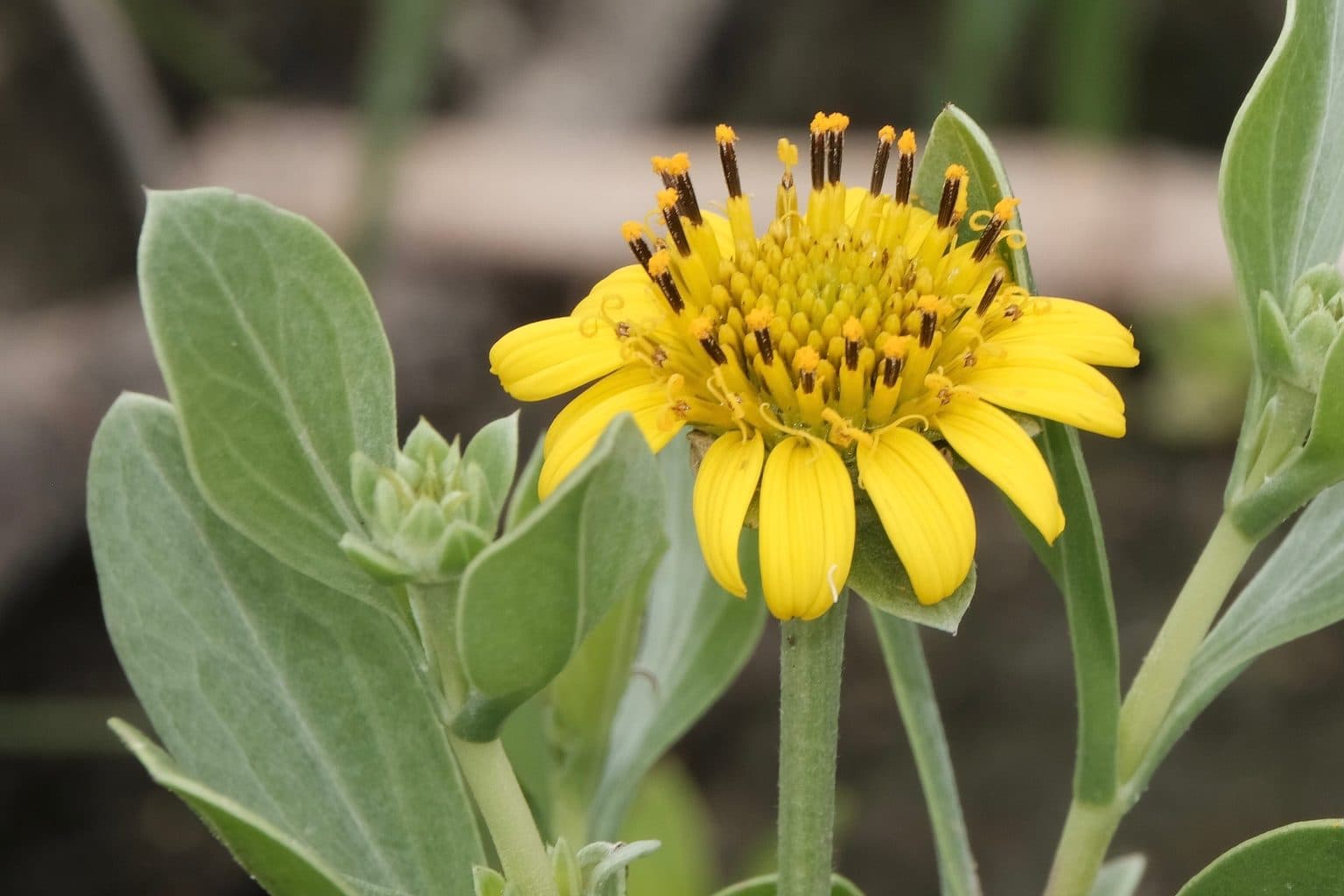
Quick answer: For native plants Corpus Christi yards can use, start with six that a Coastal Bend water utility list or the Wildflower Center ties to the coast: sea ox-eye, Gulf muhly, Indian blanket, Texas frogfruit, Turk's cap, and Texas lantana. Sea ox-eye, Gulf muhly, Indian blanket, frogfruit, and Turk's cap carry a salt tolerance note in those sources. Texas lantana does not, so keep it back from the spray.
Gardening near Corpus Christi means sandy ground in some places, heavy clay in others, and salt in the air closer to the water. Native plants Corpus Christi gardeners choose from a coastal list are a sensible start.
This list is built for the Gulf Coast Prairies and Marshes around Corpus Christi. We checked each plant on its Lady Bird Johnson Wildflower Center (opens in new tab) page, and matched it to the Coastal Bend plant list from San Patricio Municipal Water (opens in new tab), written by the Aransas/San Patricio Master Gardeners. That page shows no publication date. Its notes use words like native and salt tolerant.
Salt spray, sandy soil, and wind: what the sources say
The Native Plant Society of Texas South Texas Chapter describes the Coastal Bend (opens in new tab) as barrier islands with dune systems, clay flats inland, and marshes and wet prairies farther in. So a yard here may be sand, clay, or something in between, and the table lists each plant's soil note.
We only call a plant salt tolerant when a page says so. Wind is the gap. None of the pages we opened rates wind tolerance, so this post makes no wind claim for any plant. If your lot takes a steady gulf breeze, ask a local nursery which of these they have seen hold up.
| Plant | Light | Soil note | Size |
|---|---|---|---|
| Sea ox-eye | Sun | Wet, brackish sands or muds, salt tolerant | Up to about 4 ft |
| Gulf muhly | Sun | Sandy, sandy loam, clayey, rocky | 1.5 to 3 ft |
| Indian blanket | Sun to part shade | Sandy or calcareous, well drained | Up to about 2 ft |
| Texas frogfruit | Sun to part shade | Sand to clay, poor drainage and saline soils okay | Up to about 6 in |
| Turk's cap | Part shade to shade | Sandy, loamy, clay, limestone | Up to about 10 ft, often shorter |
| Texas lantana | Full sun | Poor, well-drained soils | Up to about 6 ft |
Six native plants for Corpus Christi gardeners
Sea ox-eye (Borrichia frutescens)
The coastal specialist. The Wildflower Center (opens in new tab) gives its range as coastal areas from Maryland to Texas and its habitat as marshes, tidal flats, and lagoons. The page calls it salt tolerant and says it has been used as a border or foundation plant. It forms colonies, blooms yellow in July and August, and offers nectar for bees and butterflies. The page lists soil moisture as moist and water use as medium, so it suits a spot that stays damp more than a dry sandy strip. It is not on the San Patricio list, so our regional tie for it is the coastal range alone.
Gulf muhly (Muhlenbergia capillaris)
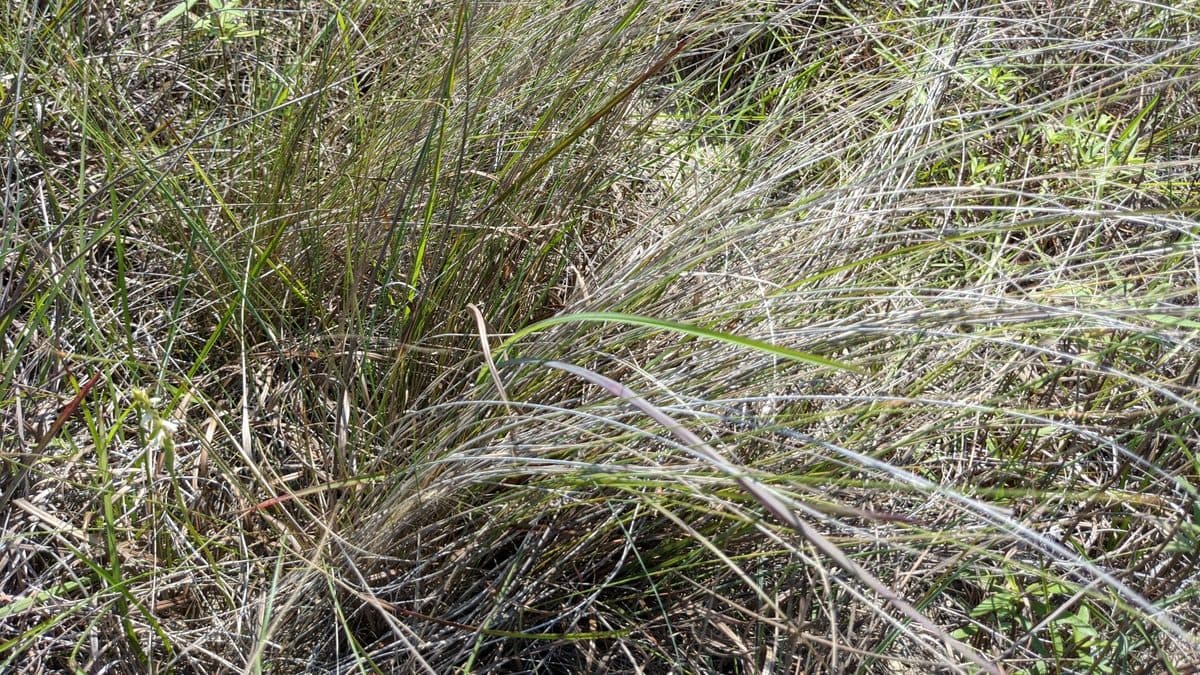
San Patricio Municipal Water calls it a native grass and very salt tolerant. The Wildflower Center adds sun, sandy to clayey soils, and pink and purple bloom in October. It lists water use as low to medium and rates deer resistance high. See our note on Gulf muhly and dogs.
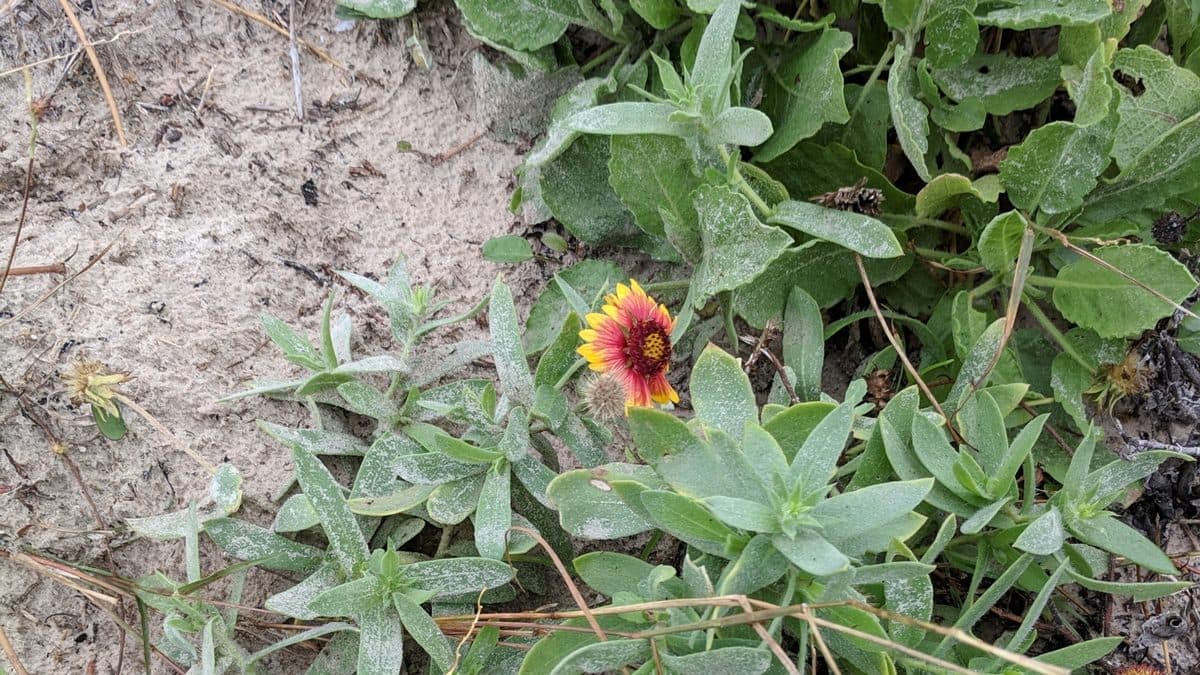
Indian blanket (Gaillardia pulchella)
Also called firewheel. The San Patricio list calls it very salt tolerant and low water, without a native note. The Wildflower Center (opens in new tab) places it in prairies across the western two-thirds of Texas and says good drainage is its only requirement. Rich soil gives large, floppy plants with few flowers, and it is a short-lived perennial in warm, coastal areas. Bloom runs May through August in red, yellow, and brown, and it attracts butterflies.
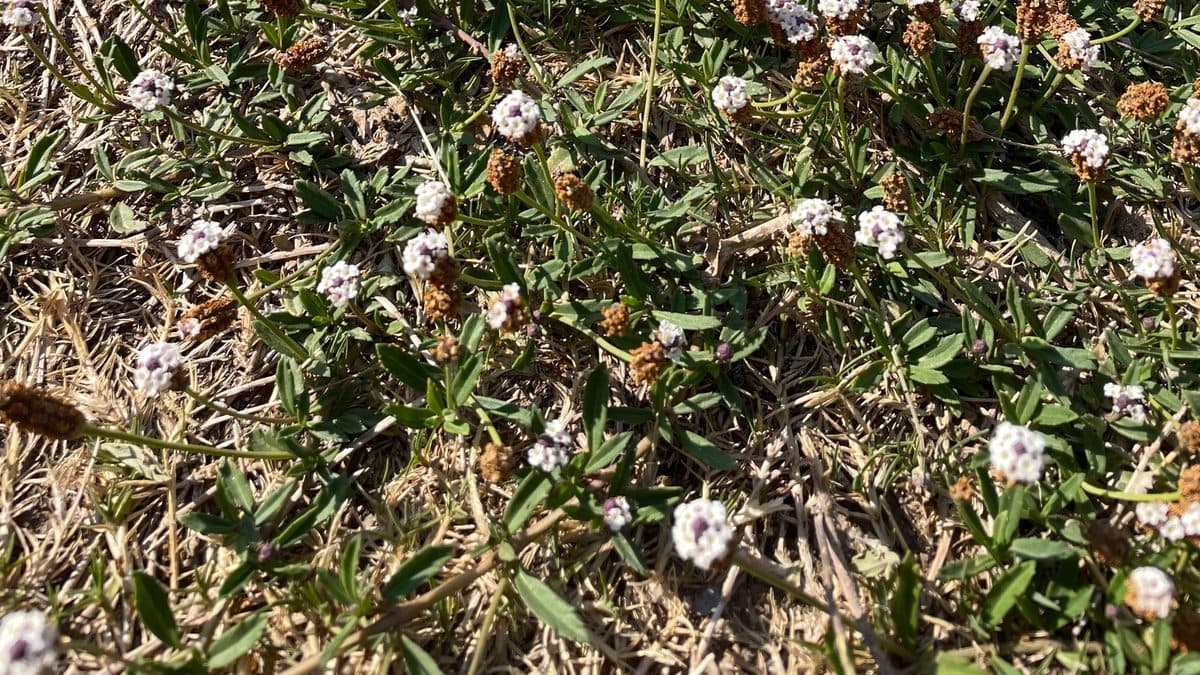
Texas frogfruit (Phyla nodiflora)
A low groundcover that San Patricio calls an evergreen native and salt tolerant. The Wildflower Center (opens in new tab) says poor drainage and saline soils are okay and lists habitats from ditches to beaches. It tolerates drought and flooding, goes dormant in hard winters, and hosts the Phaon crescent, buckeye, and white peacock butterflies. Our frogfruit and dogs page covers pets.
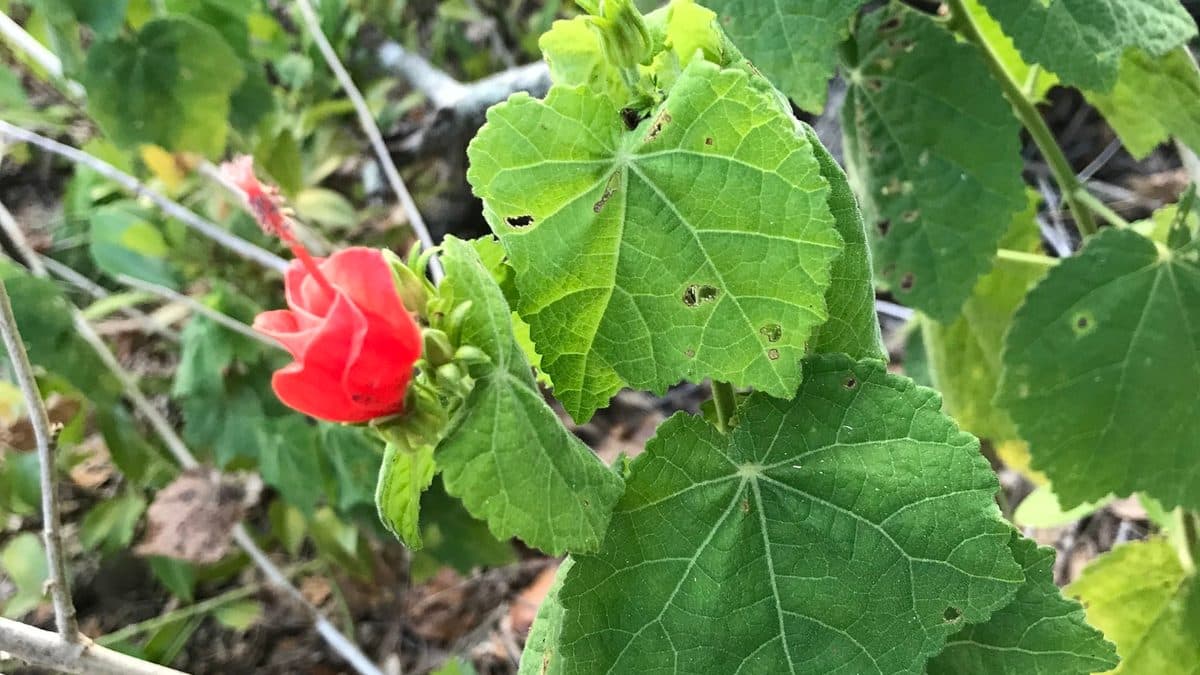
Turk's cap (Malvaviscus arboreus var. drummondii)
The shade pick. San Patricio lists it with an S, and the Wildflower Center (opens in new tab) gives its soils as sandy, loamy, clay, and limestone. That page puts its native range at central Texas east to Florida, so it is a Texas native that reaches the coast through the utility list. It prefers part shade, blooms red from May through November, feeds hummingbirds and butterflies, and tolerates drought. We also cover Turk's cap and dogs.
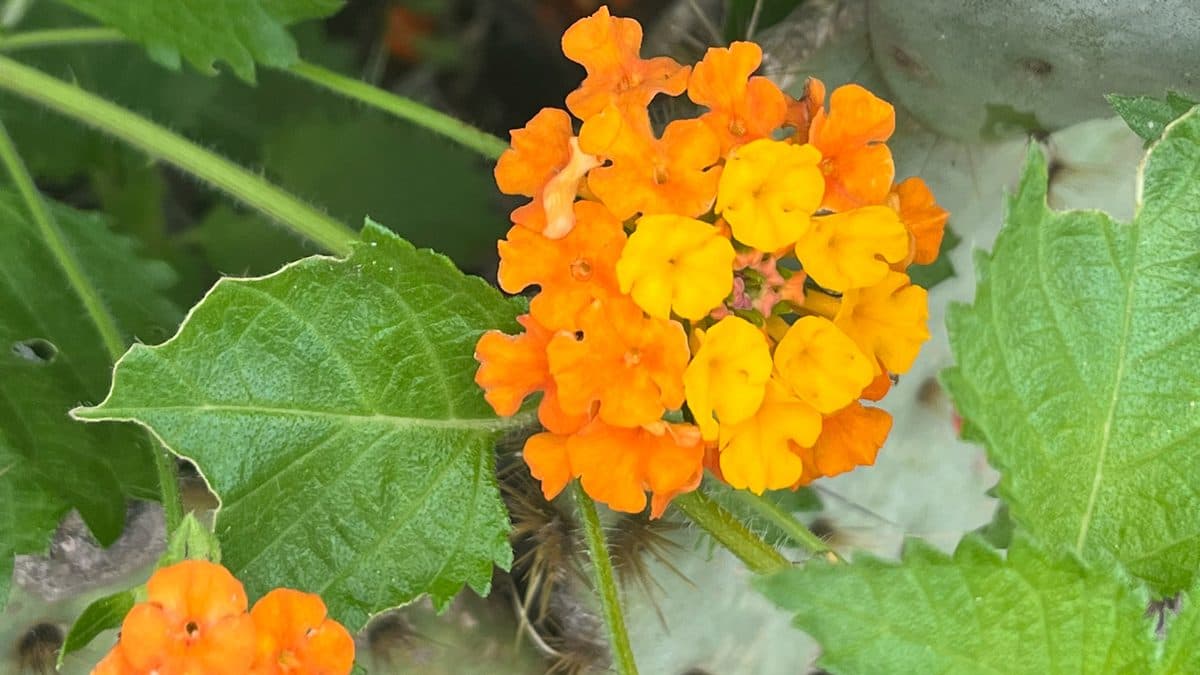
Texas lantana (Lantana urticoides)
San Patricio calls it an evergreen native. The Wildflower Center (opens in new tab) describes a full-sun shrub for dry, poor, well-drained soil that grows in sand and blooms red, orange, and yellow from April to October. Neither source mentions salt, so this is the one to keep back from the water. The same page says the blue-black fruit is poisonous and the leaves can cause a skin rash. If a pet eats any, call the ASPCA Animal Poison Control Center at (888) 426-4435.
Fitting native plants into a Corpus Christi bed
Match each plant to its light and drainage first, because a plant that suits its spot has an easier time with everything else. Put the salt-rated plants where the air is saltiest and the shade and sun plants where the light suits them. Turk's cap goes in shade, Gulf muhly and Indian blanket in sun, and frogfruit fills the edges. Sea ox-eye suits wet, brackish ground.
The salt ratings here are labels from the sources, not field tests of ours, and exposure varies from lot to lot. Start with a small bed and watch it through a full year before you repeat a plant across the yard. A local nursery or the Master Gardeners who wrote the San Patricio guide can tell you what has done well near you.
Pick two or three and repeat them so the bed looks intentional from the street. That is also an HOA-friendly habit. For the statewide picture, read best native plants for Texas, and see protecting Texas natives in a freeze. Our Texas rebates page lists current water programs.
People also ask
What native plants grow near Corpus Christi?
San Patricio Municipal Water's Coastal Bend list calls Gulf muhly, Texas frogfruit, and Texas lantana native, and the Wildflower Center ties sea ox-eye to coastal Texas. Indian blanket and Turk's cap are on the same list with salt tolerance notes.
Which native plants tolerate salt?
The Wildflower Center calls sea ox-eye salt tolerant and says frogfruit takes saline soils. San Patricio marks Gulf muhly and Indian blanket as very salt tolerant, and Turk's cap as salt tolerant. Texas lantana has no salt note in either source.
Do these plants handle wind?
We could not confirm it. None of the sources we opened rates wind tolerance for these plants, so we make no claim. A local nursery can tell you what has held up in your area.
Want the list for your own ZIP?
Pollinator Patch matches native plants to your ZIP and ecoregion, then helps you lay them out by sun and height.