Agarita
Berberis trifoliolata
Last reviewed: September 2026
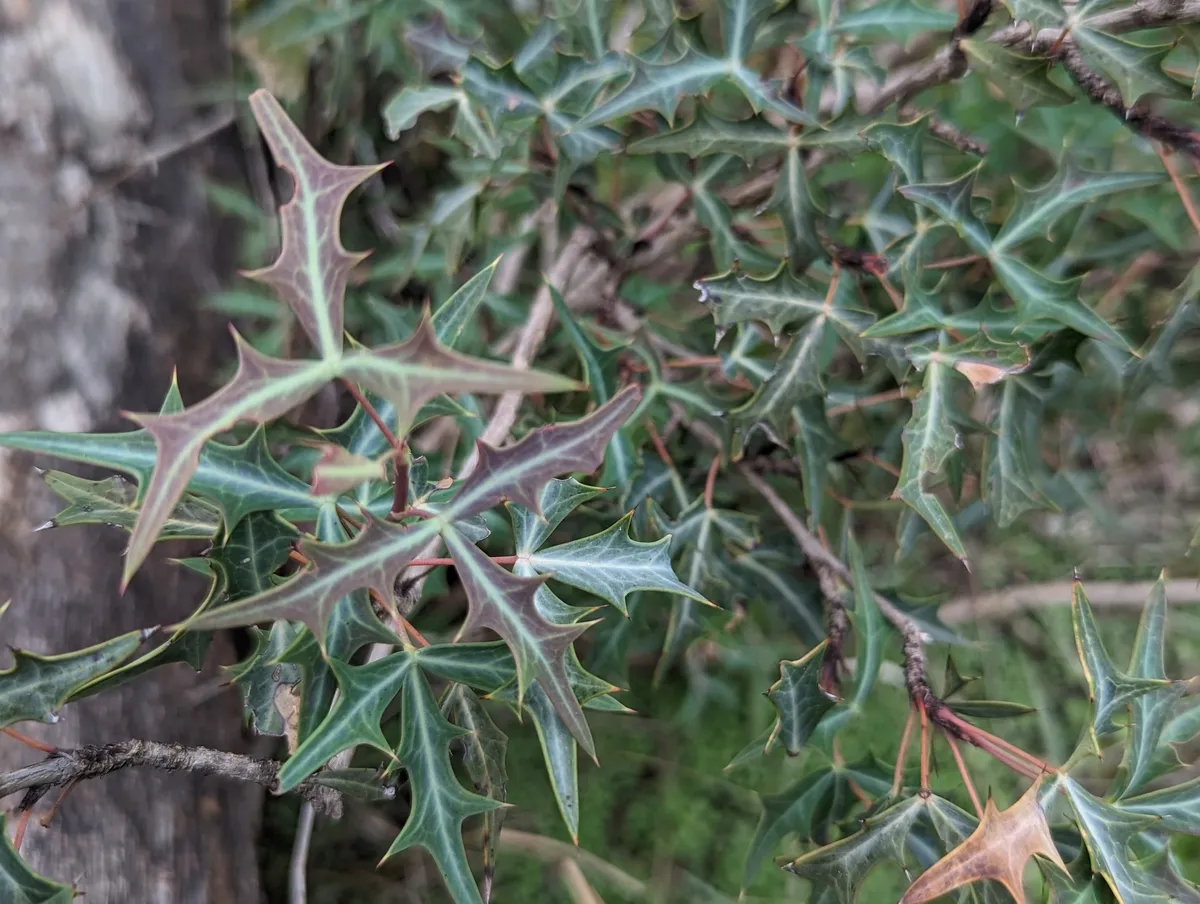
Berberis trifoliolata, commonly called agarita, is a spiny evergreen shrub with holly-like blue-green leaves that blooms small yellow flowers from March through May. It thrives in full sun on dry, rocky, well-drained sites and needs little water once established.
Toxicity unknown
Agarita (Berberis trifoliolata) is not listed by the ASPCA Animal Poison Control Center (opens in new tab) or the other sources we check, so we have no verdict for it either way. Absence from those lists is not a clearance. If your pet shows symptoms after eating any plant, call the ASPCA at (888) 426-4435.
Light
full sun
Water
low
Size
36"–72" H × 36"–72" W
Bloom
Mar, Apr, May
Native to
AZ, NM, TX
Pollinators
butterflies, bees, nectar insects
Before you buy
Your city may pay you to plant this
Cities and water utilities offer rebates for replacing lawn with native and water-wise plants. We track 452 programs across 44 states, each with a link to the provider and the date we last checked it.
Find rebates in your areaBrowse plants for this ecoregion
Agarita is a sturdy native shrub with holly-like leaves and clusters of fragrant yellow flowers in spring. It produces red berries that are prized for jelly-making and attracts wildlife throughout the growing season.
Growing Agarita
Grow Agarita in full sun and low water. Mature plants reach 36 to 72 inches tall and spread 36 to 72 inches wide. Expect low maintenance to keep it looking intentional in a front yard.
How to care for Agarita, by region
How to care for Agarita where it is actually grown: year-round basics plus what to do each season, region by region, with the sources for each.
Care guidance last updated: August 2026
Cross Timbers (includes Fort Worth, TX)
Year-round
Agarita is a thorny, evergreen shrub that is native to this part of North Texas and needs very little care once it settles in. Its fragrant yellow late winter flowers are one of the first nectar sources for native bees each year.
- Plant in full sun to light shade, spacing shrubs 4 to 6 feet apart since they spread into thickets 3 to 6 feet tall and wide.
- In heavy black clay, plant high on a slight mound or work in coarse sand for drainage; in the sandier soils west of the metro it drains on its own but needs water more often through the first summer.
- Water deeply once a week for the first growing season, then taper to occasional deep soaking during extended dry spells once established.
- Wear thick gloves when pruning or weeding nearby, the spiny, holly-like leaflets scratch.
- The plant spreads by root suckers over time, pull or clip unwanted shoots at the base if you want to keep it to one clump instead of a thicket.
Fall
Fall is a good second window to plant or transplant agarita since mild weather lets roots establish before next summer, though established shrubs need little attention now.
- Plant new agarita in October or November while the soil is still warm and the air has cooled, giving roots months to settle in before summer.
- Water new fall plantings once a week through the first two months if rain is scarce.
- Established shrubs need no regular watering in fall unless the season runs unusually dry.
- Save any shaping or sucker removal for this season, after the summer heat has passed and before spring flowering begins.
- As an evergreen, agarita keeps its leaflets year round, so there is no fall leaf drop to clean up.
Because agarita stays green through fall while deciduous neighbors go bare, it keeps a front bed looking maintained with no extra work.
Winter
Agarita stays evergreen and mostly dormant through the North Texas winter, needing almost no care beyond occasional freeze protection for young plants.
- Established agarita tolerates the region's typical short freezes without protection, it is winter hardy through USDA zone 7 to 9, which covers the local 8a to 8b range.
- During a severe Arctic outbreak, cover shrubs under one year in the ground with a frost cloth overnight.
- Skip watering in winter unless there has been no rain for several weeks and the soil is dry several inches down.
- Late winter, January into early February, is the last window for any structural pruning before spring flowering starts.
- Watch for the first fragrant yellow flowers as early as late February, a sign the shrub is breaking dormancy.
Its structured, evergreen form holds visual interest through winter when many neighboring beds look bare.
Spring
Spring is agarita's main show, fragrant yellow flowers followed by the year's new leaflet growth, and the best window to put a new shrub in the ground.
- Plant new agarita after the last frost (mid March) so roots have time to establish before summer heat arrives.
- Expect fragrant yellow flowers from February into April, among the earliest nectar sources for native bees in North Texas.
- Water new plantings twice a week for the first six weeks, then cut back to once a week.
- Hold off on pruning until after the flowers and developing berries finish, usually by early summer, so you do not cut off the year's fruit.
- A light flush of new blue green leaflets in April and May is normal new growth and needs no action.
Spring flowers and fresh leaflet growth read as an intentional, healthy planting rather than a neglected corner of the yard.
Summer
Once established, agarita is one of the toughest shrubs for a North Texas summer, needing little to no supplemental water even through the hottest weeks.
- Shrubs in the ground more than one year rarely need summer water beyond an occasional deep soak during a multi-week dry stretch.
- First-summer plantings still need weekly deep watering through July and August since their roots have not spread out fully yet.
- Red berries ripen and drop through early summer, expect some fruit litter under the plant and sweep it off pavement as needed.
- Skip fertilizer and pruning in the hottest weeks, both push new growth the plant cannot support in 100F afternoons.
- Keep a 2 to 3 inch mulch ring around the base, pulled back a few inches from the trunk, to hold soil moisture.
Dropped berries can stain a sidewalk or driveway if left, sweeping them promptly keeps the front bed looking tended.
Sources: Lady Bird Johnson Wildflower Center: Mahonia trifoliolata, Missouri Botanical Garden Plant Finder: Mahonia trifoliolata
Texas Blackland Prairies (includes Dallas, TX)
Year-round
Agarita is a thorny, evergreen shrub that is native to this part of North Texas and needs very little care once it settles in. Its fragrant yellow late winter flowers are one of the first nectar sources for native bees each year.
- Plant in full sun to light shade, spacing shrubs 4 to 6 feet apart since they spread into thickets 3 to 6 feet tall and wide.
- In heavy black clay, plant high on a slight mound or work in coarse sand for drainage; in the sandier soils west of the metro it drains on its own but needs water more often through the first summer.
- Water deeply once a week for the first growing season, then taper to occasional deep soaking during extended dry spells once established.
- Wear thick gloves when pruning or weeding nearby, the spiny, holly-like leaflets scratch.
- The plant spreads by root suckers over time, pull or clip unwanted shoots at the base if you want to keep it to one clump instead of a thicket.
Fall
Fall is a good second window to plant or transplant agarita since mild weather lets roots establish before next summer, though established shrubs need little attention now.
- Plant new agarita in October or November while the soil is still warm and the air has cooled, giving roots months to settle in before summer.
- Water new fall plantings once a week through the first two months if rain is scarce.
- Established shrubs need no regular watering in fall unless the season runs unusually dry.
- Save any shaping or sucker removal for this season, after the summer heat has passed and before spring flowering begins.
- As an evergreen, agarita keeps its leaflets year round, so there is no fall leaf drop to clean up.
Because agarita stays green through fall while deciduous neighbors go bare, it keeps a front bed looking maintained with no extra work.
Winter
Agarita stays evergreen and mostly dormant through the North Texas winter, needing almost no care beyond occasional freeze protection for young plants.
- Established agarita tolerates the region's typical short freezes without protection, it is winter hardy through USDA zone 7 to 9, which covers the local 8a to 8b range.
- During a severe Arctic outbreak, cover shrubs under one year in the ground with a frost cloth overnight.
- Skip watering in winter unless there has been no rain for several weeks and the soil is dry several inches down.
- Late winter, January into early February, is the last window for any structural pruning before spring flowering starts.
- Watch for the first fragrant yellow flowers as early as late February, a sign the shrub is breaking dormancy.
Its structured, evergreen form holds visual interest through winter when many neighboring beds look bare.
Spring
Spring is agarita's main show, fragrant yellow flowers followed by the year's new leaflet growth, and the best window to put a new shrub in the ground.
- Plant new agarita after the last frost (mid March) so roots have time to establish before summer heat arrives.
- Expect fragrant yellow flowers from February into April, among the earliest nectar sources for native bees in North Texas.
- Water new plantings twice a week for the first six weeks, then cut back to once a week.
- Hold off on pruning until after the flowers and developing berries finish, usually by early summer, so you do not cut off the year's fruit.
- A light flush of new blue green leaflets in April and May is normal new growth and needs no action.
Spring flowers and fresh leaflet growth read as an intentional, healthy planting rather than a neglected corner of the yard.
Summer
Once established, agarita is one of the toughest shrubs for a North Texas summer, needing little to no supplemental water even through the hottest weeks.
- Shrubs in the ground more than one year rarely need summer water beyond an occasional deep soak during a multi-week dry stretch.
- First-summer plantings still need weekly deep watering through July and August since their roots have not spread out fully yet.
- Red berries ripen and drop through early summer, expect some fruit litter under the plant and sweep it off pavement as needed.
- Skip fertilizer and pruning in the hottest weeks, both push new growth the plant cannot support in 100F afternoons.
- Keep a 2 to 3 inch mulch ring around the base, pulled back a few inches from the trunk, to hold soil moisture.
Dropped berries can stain a sidewalk or driveway if left, sweeping them promptly keeps the front bed looking tended.
Sources: Lady Bird Johnson Wildflower Center: Mahonia trifoliolata, Missouri Botanical Garden Plant Finder: Mahonia trifoliolata
Want these tasks as reminders timed to your yard? Pollinator Patch turns this guidance into a season-by-season care plan for the plants you actually grow.
In an HOA neighborhood
Agarita takes more care to keep looking intentional in a front yard. Maintenance level: low. Consider it for backyard or mid-zone beds rather than the street edge.
Works well in: backyard only.
- Height exceeds typical HOA-friendly range
Wildlife value
The spring blooms provide nectar for bees, butterflies, and other beneficial insects. Birds seek out the nutritious red berries in summer and fall.
Common questions
- When does agarita bloom?
- Agarita blooms in early spring, typically from March through May, producing small clusters of fragrant yellow flowers before its red berries form.
- What pollinators are attracted to agarita?
- Agarita flowers draw bees, butterflies, and other nectar-seeking insects, making it a useful early-season nectar source in dry shrubland settings.
- How much water does agarita need?
- Agarita is drought tolerant and prefers low to moderate water. Established plants generally do not need supplemental irrigation except in extended dry spells.
- What kind of light does agarita grow best in?
- Agarita grows best in full sun but will also tolerate part sun or light shade, especially in hotter climates where some afternoon shade can reduce stress.
- Is agarita evergreen or deciduous?
- Agarita keeps its spiny, holly-like blue-green leaves year round, so it is considered an evergreen shrub.
- Is Agarita HOA-friendly?
- Agarita takes more care to look intentional in a front yard. Consider it for backyard or mid-zone beds rather than the street edge.
These answers were drafted with an AI model from this plant's data. Verify care details with a local expert.
Native range data from vouchered herbarium specimen records and regional native plant society lists. Pollinator and host plant associations compiled from GBIF, iNaturalist, and published ecological literature.
If something looks wrong
Common plant problems, and what to check first
These come up on almost any plant. Each guide lists the likely causes in the order they are worth ruling out, with one thing to check before you act on any of them, and links to the source it came from.
- It is dying right after planting
- Leaves turning yellow
- Wilting even though I watered it
- Brown crispy leaf tips
- Bugs on the plant
Ready to grow Agarita? Add it to your garden in Pollinator Patch to track it and get season-by-season care guidance.
Planning a bed around it? Start a free plan with this plant
Not sure where to start? Take the 2-minute yard quiz